
Construction buyers comparing core-drilling equipment should specify the working setup before comparing models. The supplier photographs show stand-mounted machines, not a verified range of every mounting or power configuration.
Define the Hole and Working Position
Record the diameter, depth and orientation, together with the substrate and access.
Keep reinforcement or other embedded materials in the application description.
Separate the intended opening from the machine capacity. A required hole size is a buyer input, not proof that the pictured equipment can drill it.
| Requirement | Buyer input |
|---|---|
| Hole dimensions | Diameter and depth |
| Substrate | Actual material and embedded conditions |
| Orientation | Direction and working position |
| Access | Space for machine, stand and feed travel |
Check Stand Fixing and Feed Travel
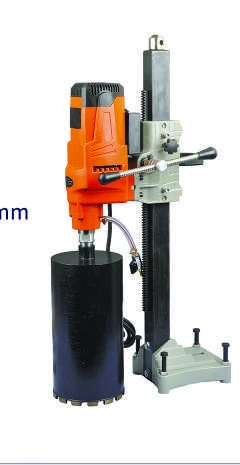
A drilling stand supports and guides the machine, but its fixing method must suit the site and the manufacturer’s instructions.
Column appearance does not prove travel or fixing capacity.
Identify the supplied configuration and permitted fixing method.
Compare the documented carriage travel with the drilling requirement.
A stand supports controlled feed, but its fixing method must suit the installation. Choose the arrangement from the equipment instructions and site assessment.
Match Spindle and Core Bit
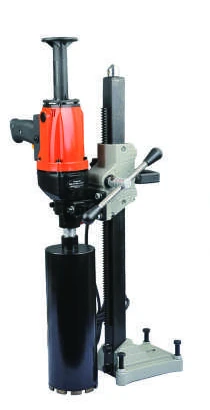
Connection geometry and the machine’s documented operating limits must match the selected bit.
A requested bit diameter is not proof that a particular motor can drive it.
Record spindle thread or interface and the bit reference.
Identify machine, stand and bit separately in the purchase list.
The core-bit connection and spindle connection must be checked as a pair. An adapter also needs its own compatibility record.
Compare the equipment views in the Diamond Core Drilling Machines collection with the required mounting and spindle arrangement.
Record Power and Water Requirements
Use the selected model’s nameplate and manual for electrical requirements and water use.
Check site services and handling arrangements before purchase.
Water use and electrical protection must be considered together. Do not infer wet or dry approval from a photograph or a hose connection alone.
| Site service | Source for checking |
|---|---|
| Electrical supply | Machine nameplate and installation requirements |
| Water use | Machine/bit operating instructions |
| Water management | Site procedure and permitted working setup |
| Safety controls | Manufacturer’s commissioning and use instructions |
Build a Clear Equipment Enquiry
Separate the required configuration from optional requests.
Do not infer handheld availability, drilling capacity, motor power or accessories from a general product image.
State which components are included in the requested system. A machine, stand and core bit should not be treated as an unspecified universal kit.
Review the core drilling machine collection with the hole, site and interface requirements prepared together.
Frequently Asked Questions
Can motor power alone determine drilling suitability?
No. Check the selected model’s operating limits and the complete drilling setup.
Does a product image confirm drilling capacity?
No. Capacity requires the identified model specification.
Which components should be named on an enquiry?
Machine, stand configuration, spindle connection and intended core bit.
Can any stand fixing method be used?
Use a fixing method permitted by the machine and site requirements.
Where should electrical information come from?
The selected model’s nameplate and operating/installation documentation.
Conclusion
Buy a documented drilling setup that matches the hole and site. Preserve the model, stand, spindle and bit connection in the approval record so later replacements remain compatible.