Illustrated polishing workshop scene
AXIMET · PROFESSIONAL B2B TOOL SUPPLY

Buffing & Polishing Discs

Source buffing and polishing discs from AXIMET for your finishing operation. Start with the workpiece and required surface, then select a tool construction, any required compound and a mounting system suited to the machine.

  • Choose contact that suits the finishing stage.
  • Match the tool, any required compound and machine as one process.
  • Assess the result on your actual workpiece.
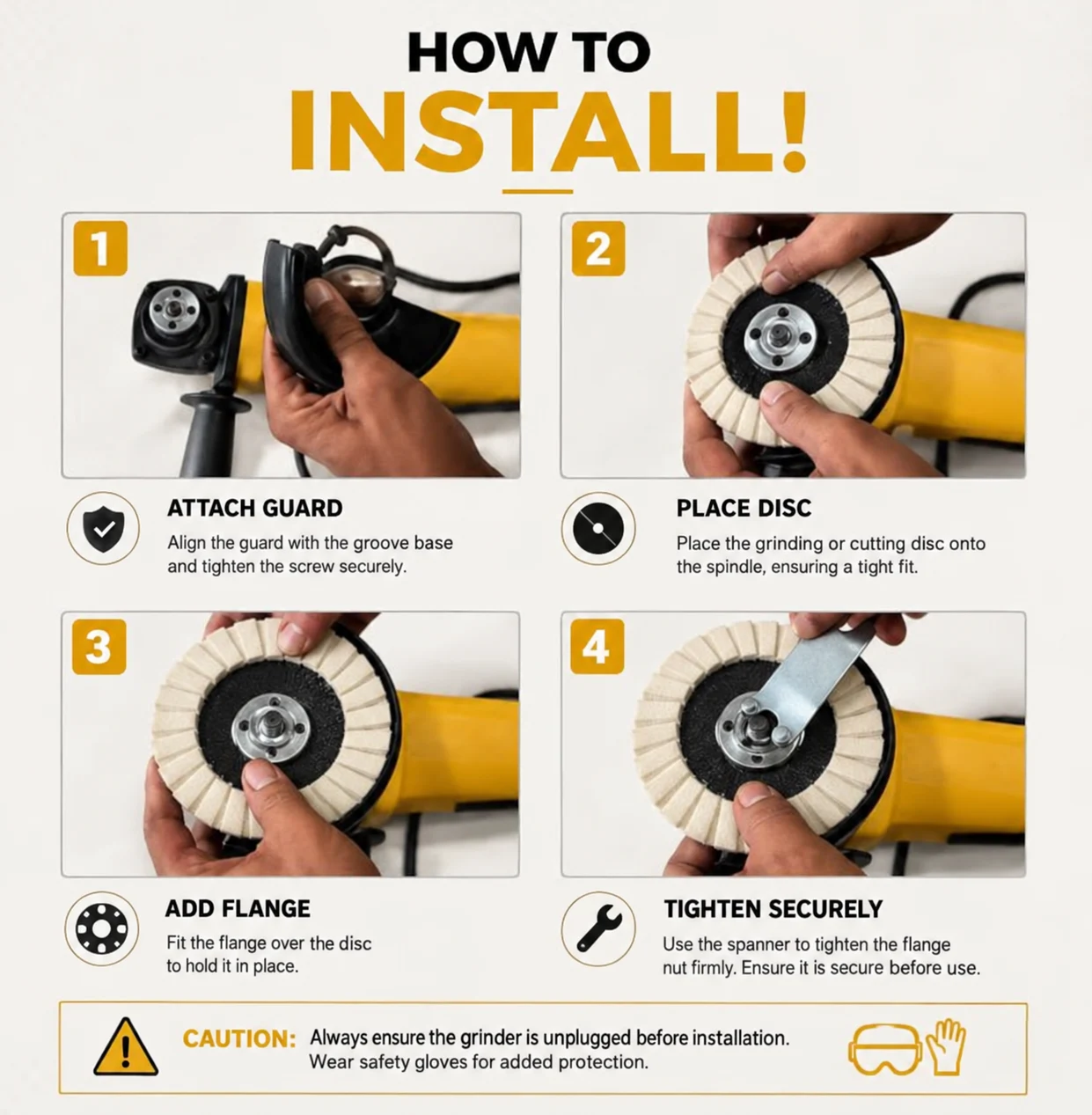
Illustrated disc assembly sequence
CATEGORY DEFINITION · PRODUCT DETAIL

Read the working face and mounting arrangement together

Use the illustrated assembly sequence to understand the different mounting-side components. The exact disc and machine instructions govern the actual setup; a generic assembly picture does not approve a grinder conversion or substitute for the specified clamping arrangement.

Choose the Finish Before the Disc

A bright surface, a blended surface and a mirror-like appearance are different requirements. The right buffing or polishing disc depends on the condition you start with and the result you need. A product name alone does not describe that change.

Buffing and polishing tools work through their contact with the surface, sometimes together with a separate polishing compound. The construction affects how that contact is delivered. The machine, tool and compound therefore need to be considered together. A familiar diameter or similar-looking face does not establish that two products perform the same finishing operation.

For purchasing, an acceptable finished sample is often more useful than a description such as “high shine.” It gives the selection a visible target and makes a trial easier to judge. Include any features that must remain intact, such as a defined edge, an existing surface texture or a coated area that must not be altered.

    Review the Selection Guide →
    PRODUCT VIEWS

    Working form and product identification

    Use complementary views of the pictured construction to describe your requirement.

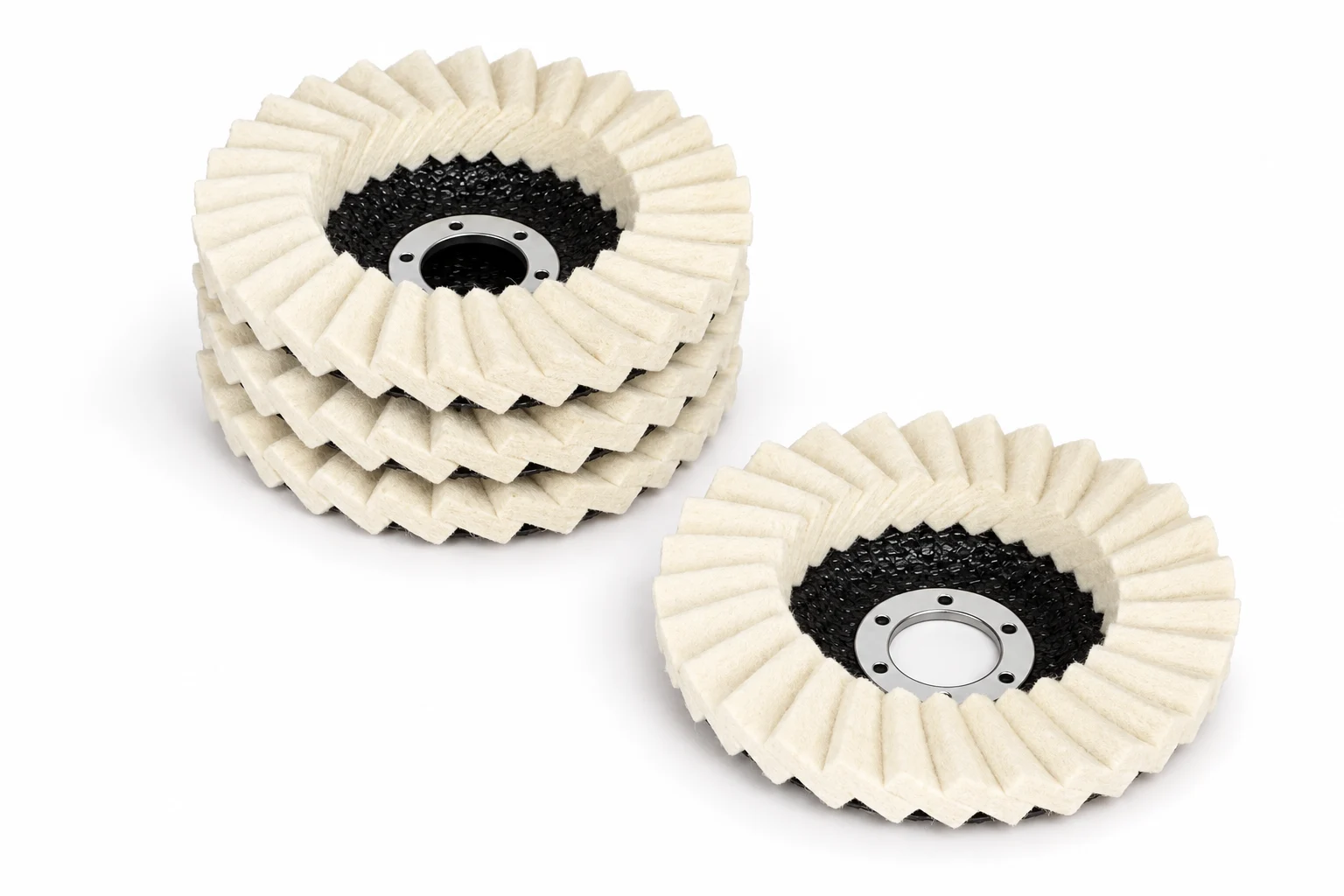
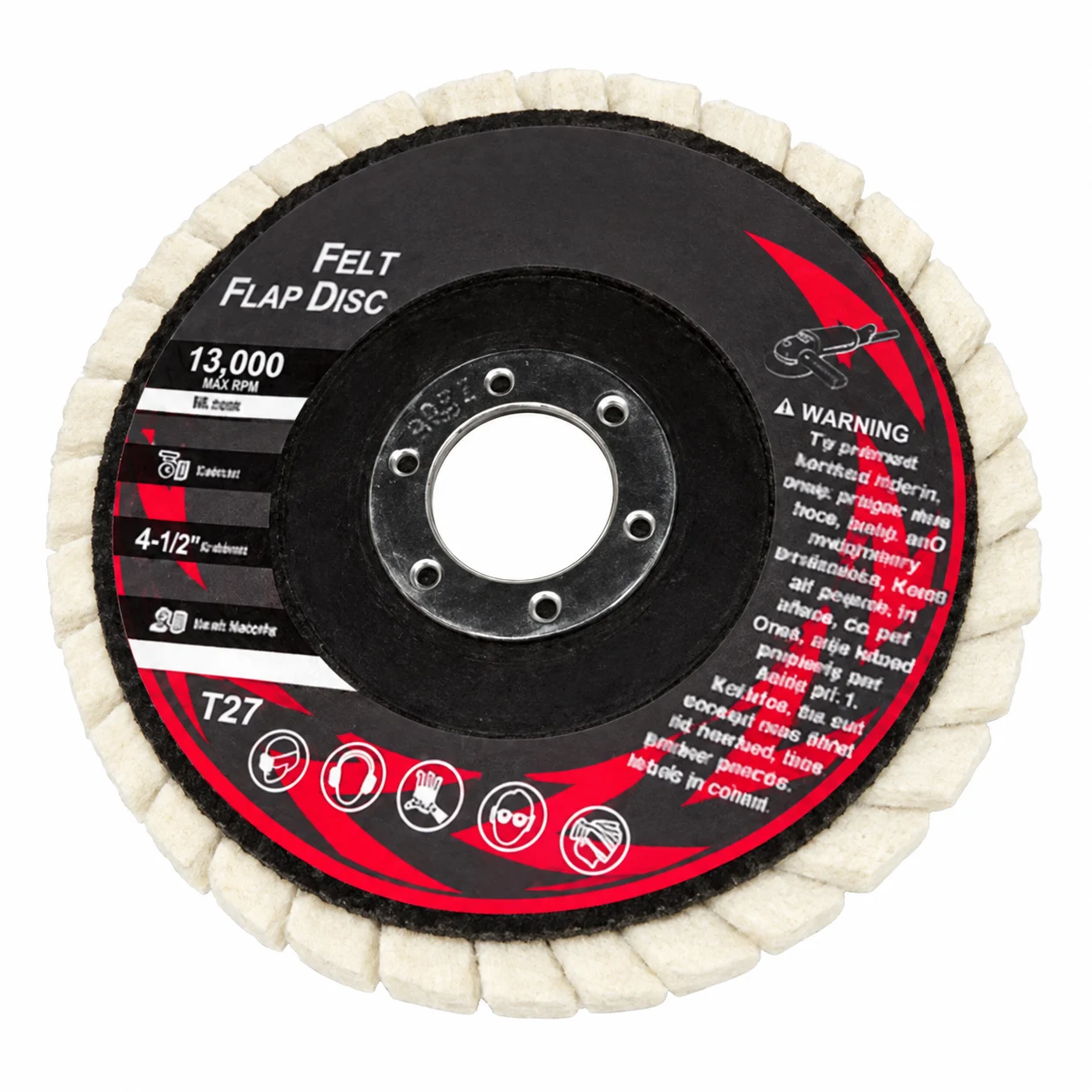
    Use these two views as a single product reference: the face explains the working construction, while the rear explains which side meets the mounting arrangement. For a useful comparison, describe the full disc rather than only its visible outside diameter. Include the side profile, the type of holder used on the machine and the finishing stage you want to carry out. A stack in a photograph does not define a package quantity, and a printed label should not be used as a universal specification for similar-looking polishing tools.

    Keep the distinction between a polishing flap construction and a coated-abrasive grinding flap disc clear during purchasing. Similar circular layouts can place very different working materials against the part. The intended process, mounting system and applicable instructions determine the choice; the words “disc” or “flap” do not make the products substitutes. This distinction is especially useful when an existing reference has been described loosely as a grinder pad, buffing wheel or polishing disc.

    Polishing discs showing overlapping flaps and central mounting openings
    01 · WORKING FACE

    Overlapping-flap polishing-disc form

    The front view shows overlapping light-coloured flaps arranged around a central opening, with the working elements supported by a backing structure. The inclined view helps distinguish the working face from the mounting side and shows why a flat face-on silhouette is not enough to describe this product. Describe the construction as well as the requested finishing operation when comparing an existing disc. Appearance alone does not establish fibre composition, abrasive content, hardness, a permitted workpiece or a speed rating. Use the identified item and its instructions for those decisions.

    • Compare working-face construction and side profile together.
    • Identify the mounting side before selecting the machine setup.
    Request specifications · Overlapping-flap polishing-disc form →
    Back and central mounting opening of a polishing disc
    02 · MOUNTING FACE

    Central opening and supported backing

    The rear view shows the central opening, surrounding metal centre and backing side of the pictured polishing disc. This is a complementary view of the same construction, not a second diameter or a separate grade. A visible hole does not give its measured bore or establish a threaded connection. When sending a replacement reference, include the machine spindle or holder information alongside the disc description. Do not assume a fit because an opening in a photograph looks similar to the accessory already fitted to a grinder.

    • Match the actual attachment and clamping arrangement.
    • Use the product’s own identification and instructions when assessing a replacement.
    Request specifications · Central opening and supported backing →
    B2B SELECTION GUIDE

    How to choose buffing and polishing discs

    Start with the workpiece and customer task, then define specifications, packaging and OEM scope.

    Build the Process Around the Starting Surface

    Polishing follows the condition of the workpiece. A surface with pronounced grinding marks requires a different process from one that has already been prepared for final polishing. Starting with the final polishing tool does not remove the need for the earlier work.

    Starting ConditionSelection PriorityResult to Judge
    Visible scratches or preparation marksAn appropriate preparation sequence before final polishingWhether the preceding marks have been removed to the required level
    A prepared surface needing further refinementTool and compound suited to the next finishing stageUniformity of the surface after the stage
    A surface ready for final polishingA compatible finishing tool and compound combinationAppearance against the agreed finished sample
    A shaped part with edges or recessesContact form and access suited to the featureFinish in the relevant area without unacceptable change to the feature

    Judge each stage on its own purpose. Removing an earlier scratch pattern and producing the final appearance are related tasks, but they are not the same acceptance point. Moving to a finer finishing stage too soon can leave the earlier defects visible in a brighter surface.

    The workpiece material belongs in this decision. Material, initial condition and required finish should travel together in the inquiry. Avoid transferring a successful combination to a different substrate solely because the desired appearance has the same name.

    What Tool Construction Changes

    The working face influences how the tool contacts the part and carries out the stated operation. Contact area, flexibility and edge access can affect where a tool reaches and how the finish develops. These are useful selection considerations; they do not make one construction the best choice for every surface.

    A broad, accessible face gives a different contact problem from a recess, an internal contour or a narrow edge. Choose the form around the feature that actually needs finishing. A larger tool that cannot reach the working area is not an improvement over a smaller suitable one.

    Material names also need a construction behind them. “Felt” or “cloth” alone does not fully specify a finished tool. The way the material is arranged, supported and attached matters to its use. The product's application information should connect that construction to the proposed finishing method.

    Keep product dimensions in their correct roles. Diameter describes the tool's outside size; other relevant dimensions describe its working form and mounting. They should be assessed against the available clearance and the machine arrangement, rather than treated as an isolated size preference.

    Match the Disc to the Complete Machine Setup

    A polishing disc for a grinder must suit the particular machine and attachment system. An angle grinder, a dedicated polisher, a bench machine and a drill-driven accessory are different setups. A tool listed for one does not become suitable for another merely because a mounting part can be made to fit.

    Start with the machine model and its instructions. Then compare the consumable's permitted mounting, dimensions and speed with the complete arrangement. Include any specified support, backing pad, arbor or flange. A matching center hole answers only one part of the compatibility question.

    Where a product uses a backing system, the disc and support must be the combination intended for that use. Do not assume that every backed pad accepts every disc of the same diameter. Likewise, a threaded connection and a plain bore are different interfaces, even when the tools look similar from the front.

    Speed is a limit as well as a process setting. Never exceed the maximum rotational speed marked for the polishing tool. Use the product and machine instructions to establish the permitted operating arrangement; there is no single RPM recommendation for every buffing wheel or polishing disc.

    A variable-speed machine still requires a compatible tool and mounting. Turning the control down does not resolve an incorrect attachment or an unsuitable machine type. If the intended arrangement requires changes to the machine's prescribed setup or protection, resolve that mismatch before selecting the consumable.

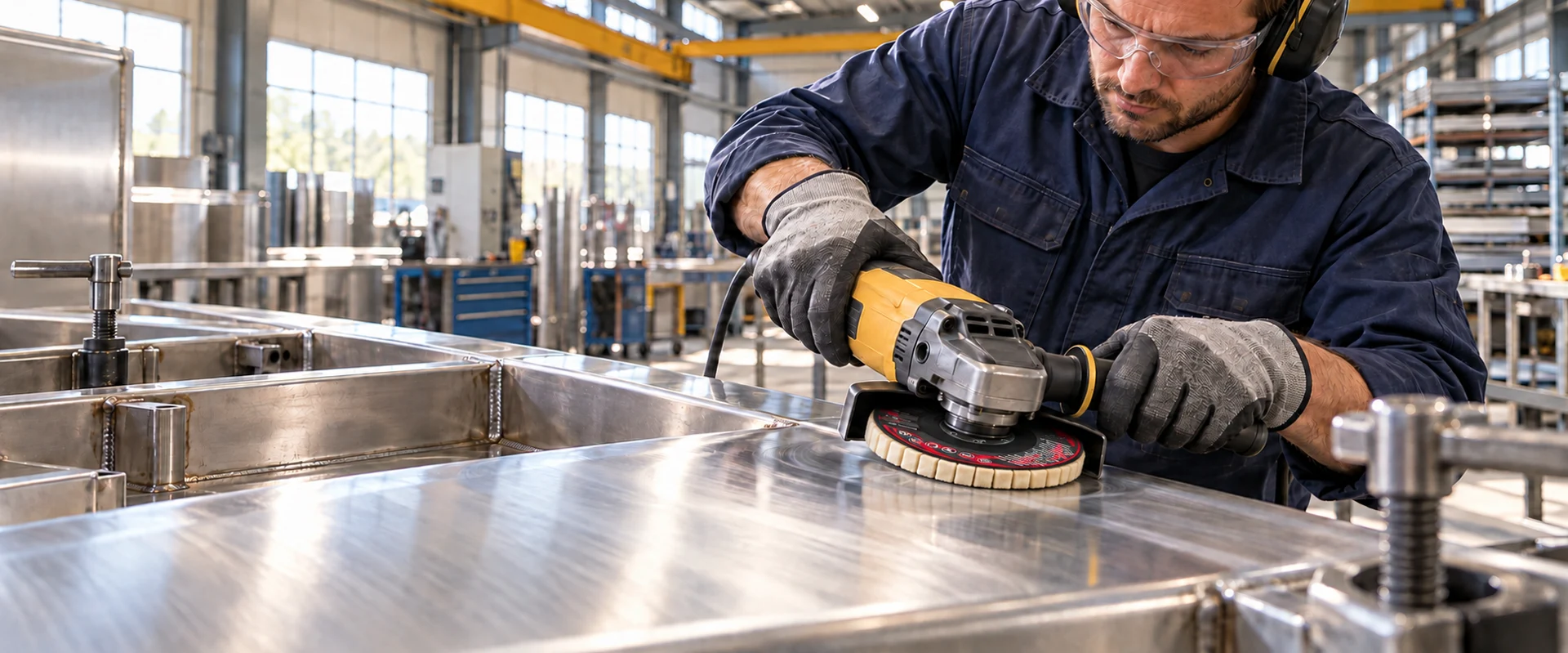
    Send your machine, accessory reference and intended operation to discuss the selection.

    Send Selection Requirements →
    INDUSTRIAL APPLICATIONS

    Match the product family to the workpiece and task

    Start with the actual workpiece and operation rather than assuming that a familiar product name guarantees the right result.

    Select the Tool and Compound Together

    A polishing compound is part of the process where the selected tool calls for one. Its application, the tool construction and the finishing stage need to agree. A compound suitable for one operation is not automatically the right choice for the next.

    Use the compound manufacturer's description and product reference to identify its role. Colour alone is not a reliable specification across different suppliers. Terms such as pre-polishing and final polishing are more useful when tied to the stated workpiece and the result expected at that stage.

    Adding a finer compound does not necessarily turn a preparation tool into a final-finishing tool. The starting surface and the tool's own construction remain part of the result. Evaluate the combination instead of changing one component while assuming the rest of the process is equivalent.

    If a tool is already working successfully, include the compound reference with the replacement inquiry. It helps distinguish a request to replace a consumable from a request to change the finishing process. Keep the identity of the tool and the compound separate so that each can be assessed on its own instructions.

    PRODUCT COMPARISON

    Compare product families before building the assortment

    Buffing Disc, Polishing Wheel or Pad?

    Disc, wheel and pad describe overlapping supplier categories, rather than one interchangeable product. Their construction and attachment matter more than the label on an inquiry. A stitched cloth wheel, a felt tool and a backed polishing pad can require different mounting and operating arrangements.

    TermWhat the Name DescribesWhat Decides Whether It Fits
    Buffing or polishing discA disc-shaped finishing toolWorking construction, attachment, machine and intended process
    Buffing wheelA wheel-form tool used for a stated finishing operationWheel construction, spindle or arbor arrangement, dimensions and permitted speed
    Polishing padA pad used with its specified support and attachmentPad construction, backing system, machine and compatible process
    Coated-abrasive flap discOverlapping abrasive flaps used for the stated abrasive operationAbrasive specification, workpiece, machine and required surface preparation
    Felt flap polishing toolA polishing construction using felt arranged in flapsThe tool's polishing application, mounting and compound guidance

    A flap-shaped construction does not automatically make a tool a grinding flap disc. Felt flap tools belong to a different selection discussion from coated-abrasive products used for stock removal or abrasive surface preparation. Equally, a cloth buffing wheel is not interchangeable with a flat pad because both are described as polishing accessories.

    When replacing a consumable, compare its front, side and mounting face. Together, those views reveal more about its identity than a single catalog photograph. Retain the existing product reference where available, particularly if the present combination already produces an acceptable finish.

    Compare tools by their intended function and complete machine setup.

    Describe the construction and operation you need to compare.

    Compare for My Program →
    PURCHASING DETAILS

    Prepare a useful product inquiry

    A useful inquiry identifies the accessory, the machine and the job together.

    Buy Against the Work Your Customer Performs

    For an importer or distributor, the application description needs to survive beyond the first purchase. A product sold as a general polishing accessory can be interpreted far more broadly than the operation for which it was selected. Keep the intended machine, attachment and finishing role clear in the item description used with your customers.

    Where an order contains several items, separate them by the actual consumable and mounting rather than grouping unlike tools under one polishing-disc label. A bench-mounted wheel and a backed disc create different buying and replacement needs, even if both contribute to a bright finish.

    Price comparisons should use an acceptable finished part as their reference. The consumable price is only one part of the job. Preparation, finishing time, tool changes and any rework can change the overall comparison. Use the trial to understand those consequences rather than assigning a predicted life or output figure without evidence.

    State packing or labeling requirements alongside the quantities when requesting a quotation. Keep those commercial requirements separate from the working specification so a packaging preference does not obscure which tool is being priced. Include the destination market and the date the goods are needed for the order discussion.

    Send your item reference and application details.

    Discuss My Item →
    SAMPLE SELECTION

    Compare samples against your application

    Use representative samples and agreed application conditions when comparing items.

    Compare Finishes on Representative Parts

    Use a test piece that represents the workpiece material, starting condition and geometry of the planned operation. A demonstration on an easier flat surface may not show how the tool behaves in the feature your customer needs to finish.

    Agree what counts as acceptable before the trial. That may be an approved sample, a specified surface requirement or an agreed visual comparison. Use the same basis when assessing competing products, rather than allowing each offer to be judged against a different finish.

    Keep the preparation sequence, machine, mounting, compound and operating method consistent enough for the comparison to mean something. If one of those changes, note the change alongside the result. Otherwise, an apparent improvement in the disc may actually come from the preceding preparation or a different process condition.

    Inspect the features that matter to the part, not only its brightest area. Look at the intended working surface, the accessible edges and any detail that must retain its form. A result is useful for approval only when it meets the complete requirement.

    For ongoing work, the approved sample links the product choice to a finish the buyer can recognize. It also makes a later substitution easier to assess. Similar packaging or the same general product name is not enough to establish that a replacement produces an equivalent result.

    Discuss the sample and the result you want to assess.

    Discuss Sample Requirements →
    ITEM IDENTIFICATION

    Repeat-order identification: Buffing & Polishing Discs

    Request Buffing & Polishing Discs for Your Application

    Send AXIMET the disc or wheel reference, required dimensions, mounting detail and quantity by item. Include the workpiece, its starting condition, the finish you need and the machine model. A photograph of the existing tool and a finished sample will help explain the requirement when the product name is uncertain.

    Send Your Tool Reference, Machine and Required Finish

    For repeat supply, use one item description that keeps the working construction, mounting form and requested dimensions together. If your purchasing system groups several finishing consumables under one stock heading, give each physical construction its own reference so the receiving team can distinguish it. Include a current sample or clear front, rear and side views when a name has been used inconsistently. This keeps an inquiry for the pictured polishing form separate from a request for a cloth wheel, a backed pad or a coated-abrasive grinding disc.

    Specify quantities against each identified item rather than estimating them from a product photograph. A photograph of several discs shows the product from useful angles, but is not a pack specification or a minimum-order offer. Tell AXIMET how the consumable will be used and which description should accompany your requirement. Any requested identification or packaging arrangement belongs with the particular item being discussed; it should not obscure the technical match between the disc, the holder and the workpiece.

      Send Item Requirements →
      CONTINUE YOUR SELECTION

      Related products and selection guidance

      B2B FAQ

      Buffing & Polishing Discs: questions from professional buyers

      01What Is the Difference Between a Felt Polishing Disc and an Abrasive Flap Disc?

      A felt polishing disc is used for surface refinement or gloss with a compound suited to the tool and workpiece. A coated-abrasive flap disc uses abrasive grains for preparation or material removal. They serve different stages. Choose by the required operation and construction, rather than treating their similar circular shapes as interchangeable.

      02How Do I Choose a Polishing Disc for Stainless Steel, Aluminium or Brass?

      Identify the metal, starting surface and required finish before selecting the disc and compound. Include the part’s shape, accessible working area and any edges that must retain their form. Check that the identified tool and compound are intended for that material, then compare the result on a representative workpiece against an agreed finish.

      03Can a Polishing Disc Remove Deep Grinding Marks?

      Deep scratches usually require an appropriate surface-preparation sequence before final polishing. Going straight to a finishing disc can leave earlier marks visible beneath a brighter surface. Judge the result of each preparation stage before progressing. For production approval, use the same starting condition and an agreed surface requirement rather than judging brightness alone.

      04Can I Use a Buffing or Polishing Disc on an Angle Grinder?

      Use it only when the specific disc, attachment and machine instructions permit that combination. Check the mounting interface, dimensions, required support and permitted speed together. A matching centre hole does not establish compatibility. A bench-mounted buffing wheel is not automatically suitable for an angle grinder, and variable speed alone does not resolve an incorrect mounting arrangement.

      05What RPM Should I Use for a Polishing Disc?

      Follow the operating recommendation for the identified disc and machine. The maximum marked RPM is a limit, not a target polishing speed; the recommended working speed can be substantially lower. Check that the machine can provide the required operating range as well as the correct mounting. Do not transfer another disc’s speed rating to a similar-looking product.

      06Which Polishing Compound Should I Use With a Felt Disc?

      Choose a compound specified for your workpiece material and finishing stage, following the tool and compound instructions. Pre-polishing and final polishing can require different combinations. Identify the compound by its product reference and intended application rather than colour alone. When requesting a replacement disc, include the compound already producing an acceptable result.

      07How Can I Reduce Heat Marks and Scratches During Polishing?

      Follow the specified working speed and the disc and compound instructions. Start each different polishing paste with a fresh, unused felt disc so coarser material is not carried into a finer stage. If unwanted marks appear, review surface preparation, disc condition and the process before continuing. Test the revised combination on a representative part before batch production.

      08What Should I Send for a Bulk Polishing Disc Quotation?

      Send the product reference or clear front, rear and side photographs, required dimensions, mounting details and machine model. Add the workpiece, starting condition, compound, target finish and quantity by item, together with packing requirements and destination. If samples are needed, describe the evaluation criteria. Request item-specific MOQ and lead-time confirmation with the quotation.

      REQUEST A QUOTE

      Request Buffing & Polishing Discs for Your Application

      Send the product reference, machine and application details, together with quantities by item. Your inquiry will retain this product context.

      We use these details only to prepare and follow up your quotation.

      Chat on WhatsApp