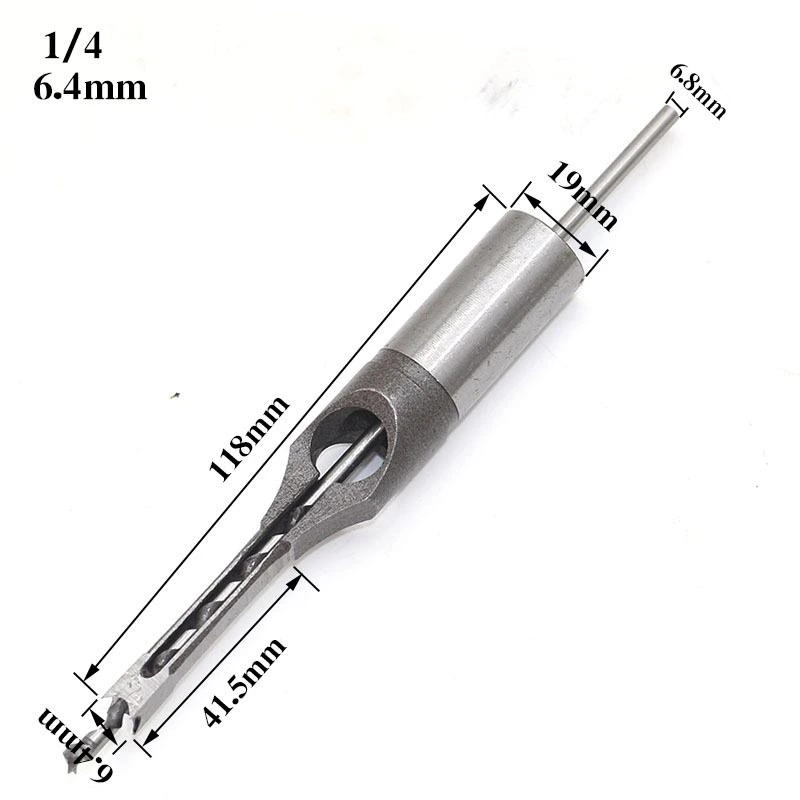
6 and 6.4 mm Mortising Pairs
Select the specified small mortise width; compare both 6.4 mm configurations where existing machines require different inner auger shanks.

Source matched hollow chisels and inner augers for woodworking mortisers, with cutting widths from 6 to 12.7 mm for machinery dealers, furniture manufacturers and industrial woodworking suppliers.
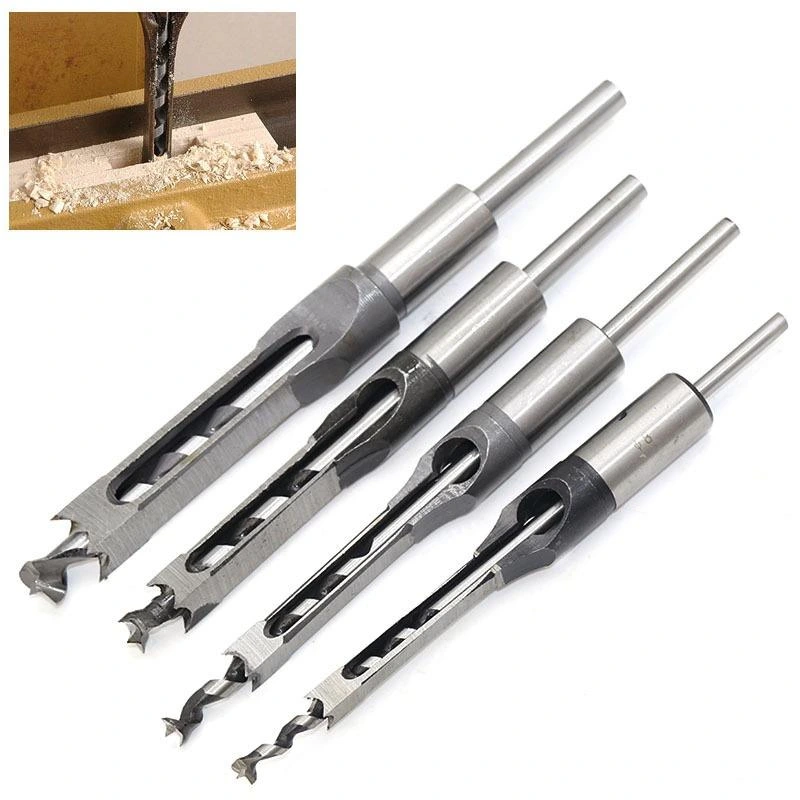
Select the mortise width for the joint, then compare both machine connections. The stationary hollow chisel and rotating inner auger have separate fitting requirements, so the complete pair defines the tool your customer needs to order.
Start with the customer's mortise-and-tenon drawing or established replacement requirement. Cutting width identifies the joint opening; the chisel collar and auger shank identify the machine connections. Keeping those decisions together gives you a usable shortlist before discussing quantities. The range below includes nine widths, with alternative configurations at 6.4, 8, and 9.5 mm. Those alternatives are separate paired options rather than interchangeable components.
Select the specified small mortise width; compare both 6.4 mm configurations where existing machines require different inner auger shanks.
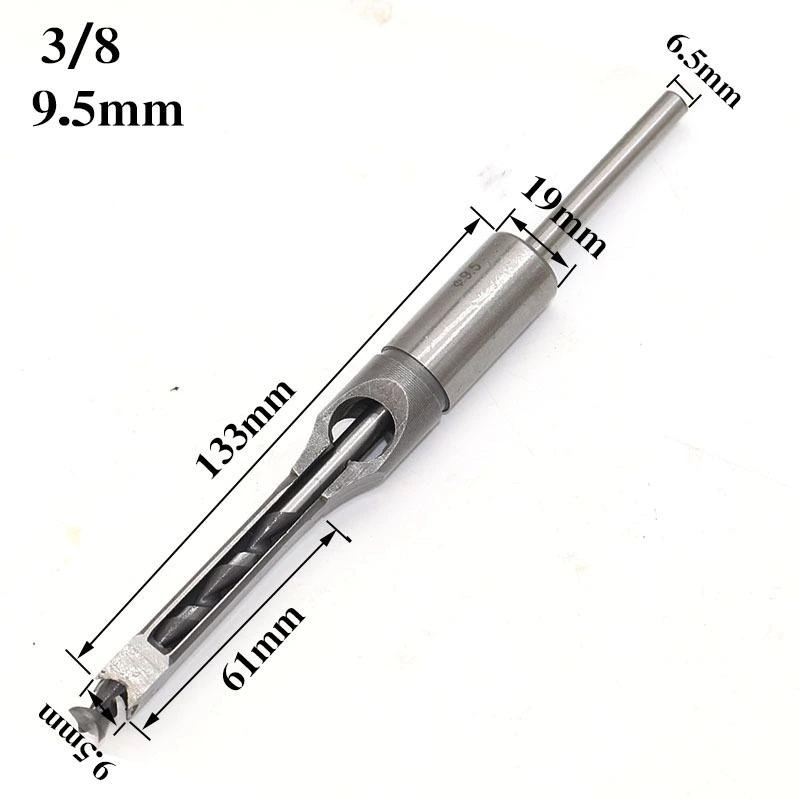
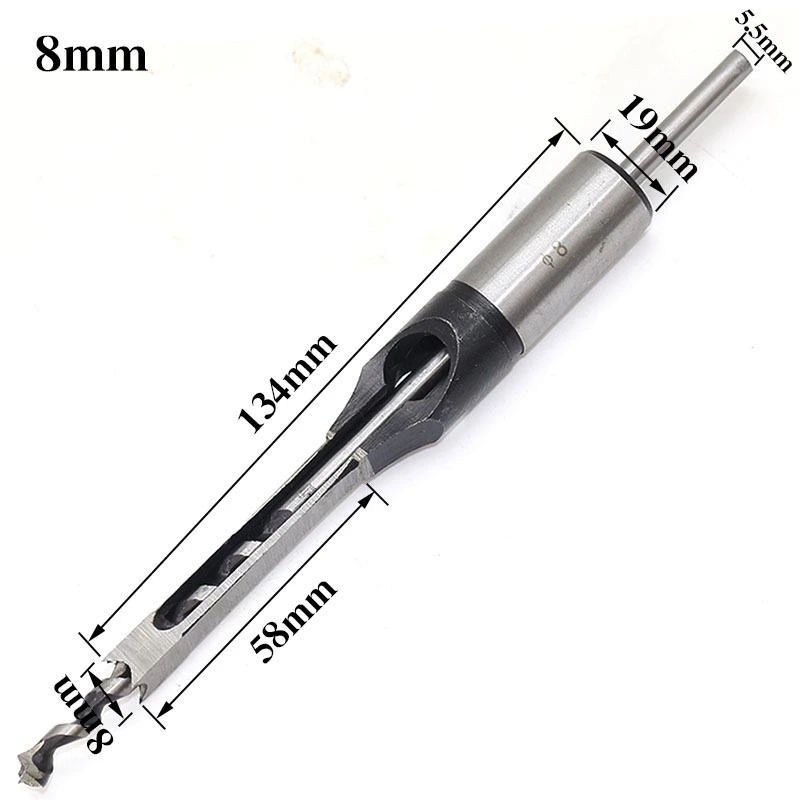
Choose intermediate widths for the customer's joint, then use the paired dimensions to distinguish the two 8 and 9.5 mm options.
Keep these larger widths distinct; select the exact joint size and check machine capacity before adding a pair to your order.
The assembly configurations carry nominal 1/4-inch, 3/8-inch, and 1/2-inch labels at 6.4, 9.5, and 12.7 mm respectively. Use the stated metric cutting width and full configuration on the inquiry. In particular, 6 mm is a different selection from 6.4 mm, and 12.5 mm is a different selection from 12.7 mm. A nearby size can change the fit of an established joint.
Shortlist your widths: Include the corresponding chisel and auger dimensions when requesting prices for repeated sizes.
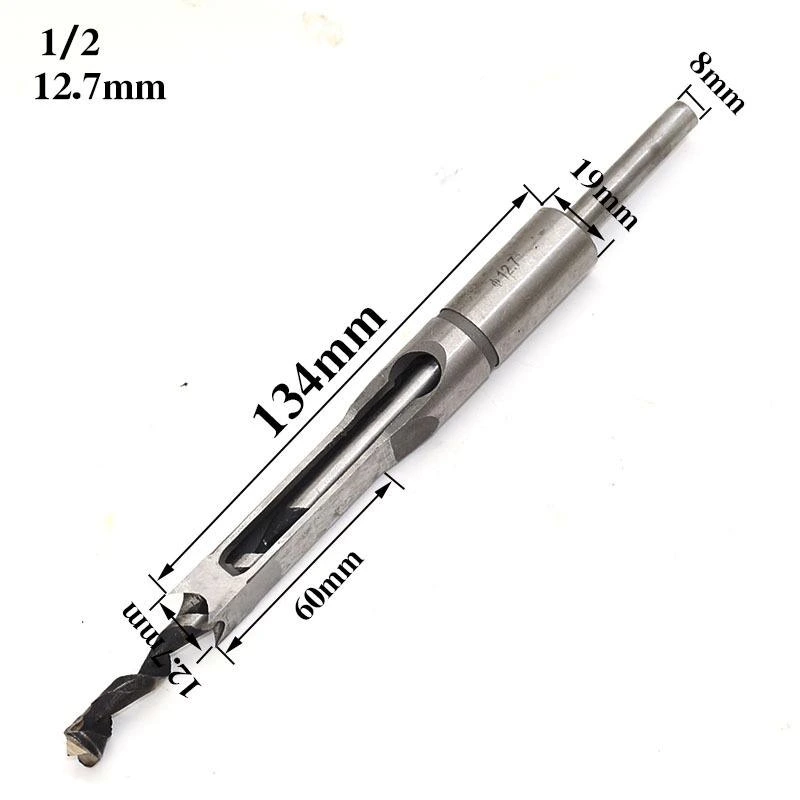
Each table row identifies one hollow chisel and its corresponding inner auger. All dimensions are in millimeters except the stated nominal inch labels. These hollow chisel mortiser bits share a 19 mm chisel clamping diameter, while auger shanks and component lengths vary. Read across the complete row when comparing a replacement or preparing a mixed order. The two tables distinguish the dimensional configurations; they do not define separate performance grades.
| Mortise Width | Nominal Inch Label | Chisel Clamping Diameter | Chisel Body Length | Chisel Slot Length | Auger Shank Diameter |
|---|---|---|---|---|---|
| 6.4 mm | 1/4 in. | 19 | 118 | 41.5 | 6.8 |
| 8 mm | — | 19 | 134 | 58 | 5.5 |
| 9.5 mm | 3/8 in. | 19 | 133 | 61 | 6.5 |
| 12.7 mm | 1/2 in. | 19 | 134 | 60 | 8 |
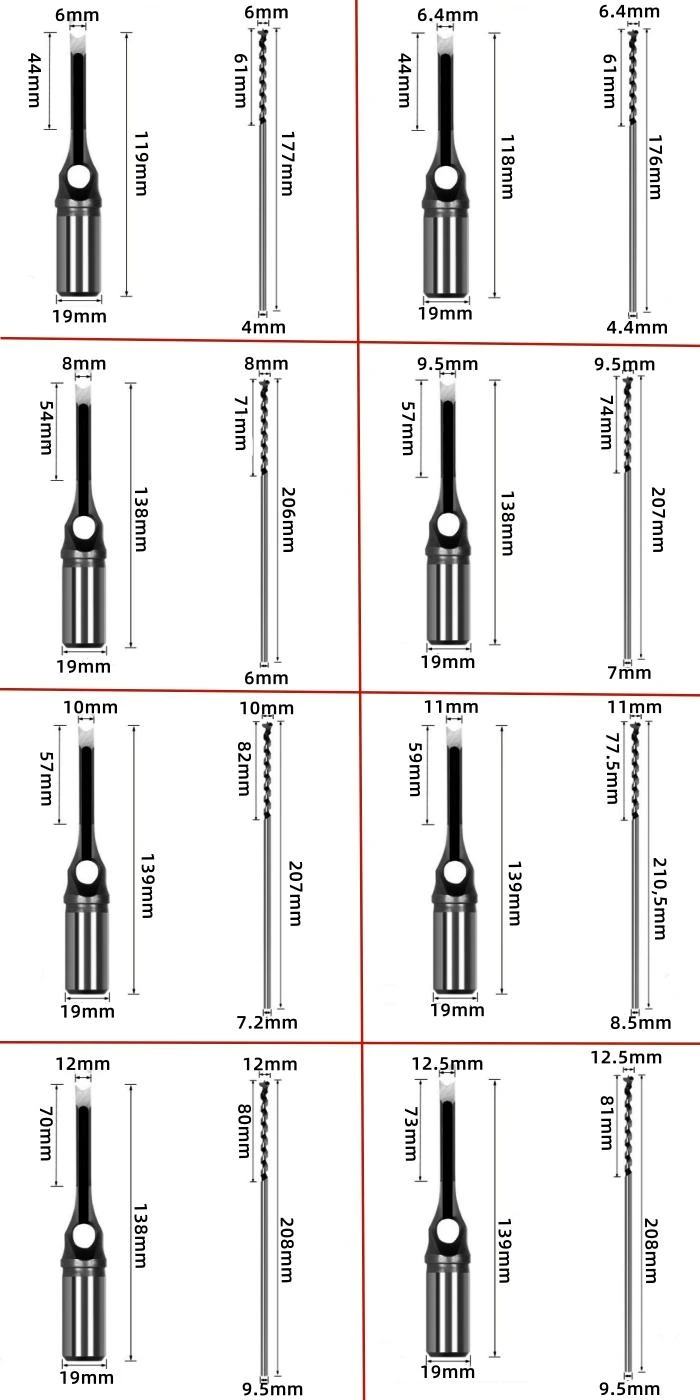
| Mortise Width | Chisel Clamping Diameter | Chisel Body Length | Chisel Slot Length | Auger Shank Diameter | Auger Overall Length | Auger Flute Length |
|---|---|---|---|---|---|---|
| 6 mm | 19 | 119 | 44 | 4 | 177 | 61 |
| 6.4 mm | 19 | 118 | 44 | 4.4 | 176 | 61 |
| 8 mm | 19 | 138 | 54 | 6 | 206 | 71 |
| 9.5 mm | 19 | 138 | 57 | 7 | 207 | 74 |
| 10 mm | 19 | 139 | 57 | 7.2 | 207 | 82 |
| 11 mm | 19 | 139 | 59 | 8.5 | 210.5 | 77.5 |
| 12 mm | 19 | 138 | 70 | 9.5 | 208 | 80 |
| 12.5 mm | 19 | 139 | 73 | 9.5 | 208 | 81 |
Chisel body length excludes the protruding auger tail. Chisel slot length describes the side opening, not maximum mortise depth. Auger overall length and flute length are separate dimensions and do not establish working depth on their own. Keep each row intact when specifying the pair; a longer component from another row does not create an approved deeper-cutting combination.
Forms the square boundary of the mortise while the inner auger removes wood from its center.
Cuts within the stationary outer chisel as the machine drives the two components in their respective positions.
Provides the outer chisel connection across all twelve listed dimensional configurations for comparison with the machine holder.
Connects the inner cutting tool to the chuck independently of the outer chisel's fixed clamping section.
Provides an opening in the chisel body; the stated slot dimension describes that feature rather than cutting capacity.
Offers specified mortise sizes from 6 to 12.7 mm for joints requiring different tenon widths.
A replacement order needs two machine-side checks: the holder must accept the outer chisel, and the chuck must accept the inner auger shank. The listed 19 mm collar answers the first dimensional question only. Compare the selected pair with the actual holder, bushing, chuck, and installation space before committing a quantity for one machine or several customer models.
The 8 mm assembly configuration combines a 19 mm chisel collar with a 5.5 mm auger shank and a 134 mm chisel body. The other 8 mm configuration has the same collar, a 6 mm auger shank, and a 138 mm chisel body. Both cut an 8 mm mortise, but a width-only order leaves important fitting dimensions unresolved.
The same distinction matters at 9.5 mm: the assembly configuration has a 6.5 mm auger shank and 133 mm chisel body, while the configuration with separate component lengths has a 7 mm shank and 138 mm body. Select the configuration that matches the machine and existing tool requirement instead of taking the cutting width from one row and the shank from another.
A nominal 3/4 inch equals 19.05 mm. The stated 19 mm chisel collar must therefore remain 19 mm on your purchasing specification. Use the machine manufacturer's actual holder or approved bushing requirements to assess fit. A compatible collar does not establish that the chuck, available head space, or machine capacity suits every listed pair.
For replacement inquiries, send the machine model together with measurements or a drawing of the existing tool. A machine brand alone cannot identify every fitting arrangement within that brand. If your channel serves several mortiser models, separate their fitting requirements before choosing a shared assortment.
Check a replacement configuration: Send the existing collar, auger shank, and component lengths with the required mortise width.
Procurement starts with the finished joint. State its width, length along the timber, required depth, and position in the component, together with the timber species and section. These details distinguish the cutting size you need from the machine's available travel and clearance. They also give a sample evaluation a practical purpose: checking the pair against the joint your customer will actually produce.
The square chisel determines a single cutting width. Successive cuts extend the opening along the workpiece, so mortise length is a separate requirement. A buyer making several joint lengths may need one cutting width; a buyer making different tenon widths may need several pairs. Use the drawing to distinguish these orders before selecting an assortment.
For a blind mortise, state the required tenon seating depth and any clearance beneath it. The auger tip and chisel cutting end do not create identical bottom geometry. Assess that relationship with the selected pair and machine setup, especially where the drawing leaves little space below the joint. Do not convert a 70 mm or 73 mm chisel slot into a depth rating.
For hardwood or softwood production, use the intended species, section, and mortise dimensions for a sample evaluation. Assess the joint fit, entry edges, mortise walls, and chip clearing in the customer's machine. Record the pair and application used so the evaluation relates to the eventual order. Timber condition, workholding, installation, and edge condition all affect the result; nominal width alone cannot predict it.
The listed dimensions support selection. They do not establish a universal hardwood capacity, cutting life, or feed setting. If application fit is central to your purchase, include the actual timber and joint requirement in the inquiry rather than requesting a generic “woodworking bit.”
For service and replacement orders, identify the chisel and auger as a working pair. Matching mortise widths do not establish compatible internal geometry, component lengths, or shanks. Compare the existing pair with the complete selected configuration. Where the relationship between a separate replacement and the original component cannot be established, specify the corresponding pair rather than combining unrelated tools.
The 6.4 mm assembly option has a 118 mm chisel body, 41.5 mm slot, and 6.8 mm auger shank. The other 6.4 mm configuration retains the 118 mm chisel body but uses a 44 mm slot and 4.4 mm auger shank, with a 176 mm auger overall length. Neither is fully described by “6.4 mm, 19 mm collar.” Retain the complete selected dimensions for the replacement inquiry.
Keep each auger associated with its chisel when handling service tools. Installation clearance and alignment must follow the relevant machine and cutting-pair instructions; one setting should not be transferred across every configuration. For sharpening, use methods and tools suited to the chisel and auger separately. Regrinding does not correct an incorrect fitting or a bent component. Include service expectations in a purchase discussion where customers need replacement planning alongside the initial order.
For timber rails and stiles, select the pair from the specified tenon width and machine fittings. The mortise length follows the joint drawing and sequence of cuts. A buyer standardizing a frame family should identify which components share the same width and which need another pair. Include timber thickness and mortise position when evaluating the joint, since the cutting size alone does not determine alignment.
Leg components may require mortises on adjoining faces. Select the width for each joint and review the remaining timber between the openings, required depth, and machine access. Where a furniture line uses several leg sections, separate their cutting requirements before assigning quantities. A longer auger does not by itself establish a deeper joint capacity; the complete tool, workpiece, and machine arrangement must suit the operation.
For batches of timber cabinet frames or joinery components, evaluate the selected pair in the intended section and species with its matching tenon. Check the finished joint before assigning a configuration to the production order. If different product lines share a mortise width but run on different machines, compare collar, auger shank, and lengths for each line rather than buying by joint width alone.
For a dealer supplying existing mortiser users, start with the customer's original cutting width and fitting dimensions. A photograph helps identify the component, while measurements distinguish similar-looking pairs. Separate the cutting pair from any holder, attachment, or bushing requirement in the quotation. This keeps the replacement inquiry focused on the equipment the customer already owns and the tool dimensions that need to be preserved.
The right order structure depends on whether you are maintaining one established setup, covering several machine fittings, or supplying a range of joint widths. Use the table to choose the information needed for each buying route. Quantity follows the selected configuration, so two pairs with the same cutting width may still require separate order lines.
| Buying Requirement | Selection Priority | Information to Keep With the Order |
|---|---|---|
| Replace a complete cutting pair | Preserve the established joint width and both machine connections | Full dimensional row, original tool measurements, and quantity of pairs |
| Replace an inner auger only | Establish compatibility with the existing hollow chisel before selection | Existing pair drawing or measurements and the required replacement relationship |
| Stock several mortise widths | Select widths used in customer joints, then identify fitting variants | Width list, configuration for each width, and quantity per configuration |
| Supply one width to several machines | Compare holder, chuck, clearance, and capacity for each machine | Machine details and a separately identified pair for each fitting requirement |
| Evaluate a production application | Assess the selected pair in the intended machine and timber | Joint drawing, species, workpiece section, and evaluation quantity requested |
A hollow chisel and auger pair serves square-sided woodworking mortises. A conventional wood drill serves round-hole operations. Keep those requirements distinct when assembling a woodworking order; our wood drill bits cover the broader wood-boring category. Mortising pairs require a suitable machine arrangement that holds the outer chisel stationary while driving the auger.
Build your inquiry around the pairs you need to buy. Width coverage, fitting coverage, quantities, and packing requirements are separate decisions. Listing them clearly gives a quotation a defined scope and makes it easier to compare individual replacements with a mixed-size requirement. The product photographs identify components; they do not establish a prepacked assortment or an attachment kit.
A distributor serving metric joint drawings may need the distinct 6, 8, 10, 11, 12, and 12.5 mm widths. A channel receiving nominal inch requests may also need the 6.4, 9.5, and 12.7 mm assembly configurations. Use actual customer demand to select the widths; the labels alone do not determine machine compatibility.
For repeated widths, decide which dimensional configuration serves each machine requirement. For example, a requirement for both 8 mm configurations should name the 134 mm body/5.5 mm shank pair separately from the 138 mm body/6 mm shank pair. The same distinction applies to the two 6.4 and 9.5 mm options. This is fitting coverage within a width, rather than an additional mortise size.
One cutting pair comprises one hollow chisel and its corresponding inner auger. For mixed-size orders, state the quantity of pairs against every selected configuration. Four chisels with four matching augers represent four cutting pairs, not eight mortise sizes. If you require a component separately, identify it explicitly and provide the matching information rather than including it in a general pair count.
Separate initial evaluation quantities from the proposed purchasing quantity where both are relevant. If you are considering a continuing requirement, include the expected ordering pattern for discussion without assuming inventory or delivery terms. Quote requirements should reflect your actual procurement schedule and destination.
State whether your receiving operation needs individual pair identification, mixed-size grouping, or separate inner packing by configuration. Include any requested label language, item references, and carton information in the inquiry so the quotation can address them. Keep the chisel and corresponding auger identifiable through receiving and onward distribution, especially where two configurations share the same cutting width.
For a proposed assortment, provide its exact pair list and quantities. A group photograph is not a bill of materials, and an attachment pictured beside tools is not evidence that it belongs in the purchase. If holders, bushings, or mortising attachments are needed, list them separately as requested items rather than treating them as included components.
If your buying process uses samples, identify the configuration and the machine and timber in which it will be assessed. Compare the received dimensions with the selected pair, inspect for visible damage, and evaluate the resulting joint under the intended conditions. These are buyer acceptance steps; agree the relevant purchase criteria in the quotation discussion.
Retain the selected dimensional configuration and joint requirement with your purchasing record. For a later order, those details identify the requested product more reliably than a general description such as “square hole drill bit.” Where the customer changes the machine, timber, or joint, review that change before assuming the earlier selection remains suitable.
Discuss your assortment: Send widths, fitting variants, quantities, packing requirements, and destination for a defined quotation.
Compare application fit, equipment compatibility and the supply configuration when preparing your purchasing requirement.
Choose the cutting width for the required mortise, then use the complete paired dimensional row to identify the chisel and auger.
Compare the outer-chisel clamping diameter and inner-auger shank separately. Include the machine details and available working clearance in the inquiry.
Keep the paired component dimensions attached to the selected configuration. State whether the requirement is for complete pairs, replacements or an assortment of widths.
Only select them for a drill press equipped with a compatible mortising attachment approved for that machine and operation. The outer chisel requires a stationary holder while the chuck drives the inner auger. A conventional hand drill does not provide that arrangement. For a distributor inquiry, identify the machine and attachment requirement separately; a chisel-and-auger pair does not automatically include either item.
No universal fit should be assumed. A nominal 3/4 inch equals 19.05 mm, while these chisels have a stated 19 mm clamping diameter. Compare the actual holder or approved bushing requirements with that dimension. Also check the chosen auger shank and installation space. Acceptance at the chisel collar establishes only one part of the machine connection.
No. It describes the side opening in the chisel body. Working depth depends on the selected pair, installation, workpiece, and machine capacity. State the depth your joint needs rather than ordering from a slot dimension. For blind mortises, also distinguish tenon seating depth from the deepest point created by the auger tip when reviewing the joint requirement.
Identify the existing chisel and auger dimensions so the replacement relationship can be assessed. The same nominal mortise width does not prove that another auger has suitable geometry, length, or fitting dimensions. Specify the corresponding complete pair when component compatibility cannot be established. Separate-component supply and quantities belong in the quotation request; the dimensional tables do not promise independent availability.
Begin with the mortise drawing and the machine's fitting and capacity requirements. Include the hardwood species, workpiece section, and required depth in the inquiry. Evaluate the selected pair in those conditions, checking the resulting joint, cutting edges, and chip clearing. A result in another timber does not establish the same production performance, and this range is not assigned a universal hardwood capacity.
Send the cutting width, complete dimensional configuration, and quantity per pair. Add the machine model and holder, auger shank, and clearance details where fitting needs review. Include timber, joint depth, requested packing or identification, destination, and required timing. For mixed orders, list each configuration separately. Measurements and photographs of an existing tool are useful when its original part number is unavailable.
Send AXIMET your required hollow chisel mortiser bits as a list of paired configurations and quantities. Include the customer mortise drawing or existing tool measurements where the selection must preserve a specific joint and machine fit. Add the destination, requested timing, and any packing or identification requirements so the quotation can address the complete purchasing requirement.
Request pricing for your selected pairs.