Left-Hand Cutting:
Drills cut in reverse rotation for the specified drilling operation.

Source left-hand drill bit sets for industrial distributors, with defined HSS assortments and a separate cobalt configuration for buyers comparing contents and sizes.
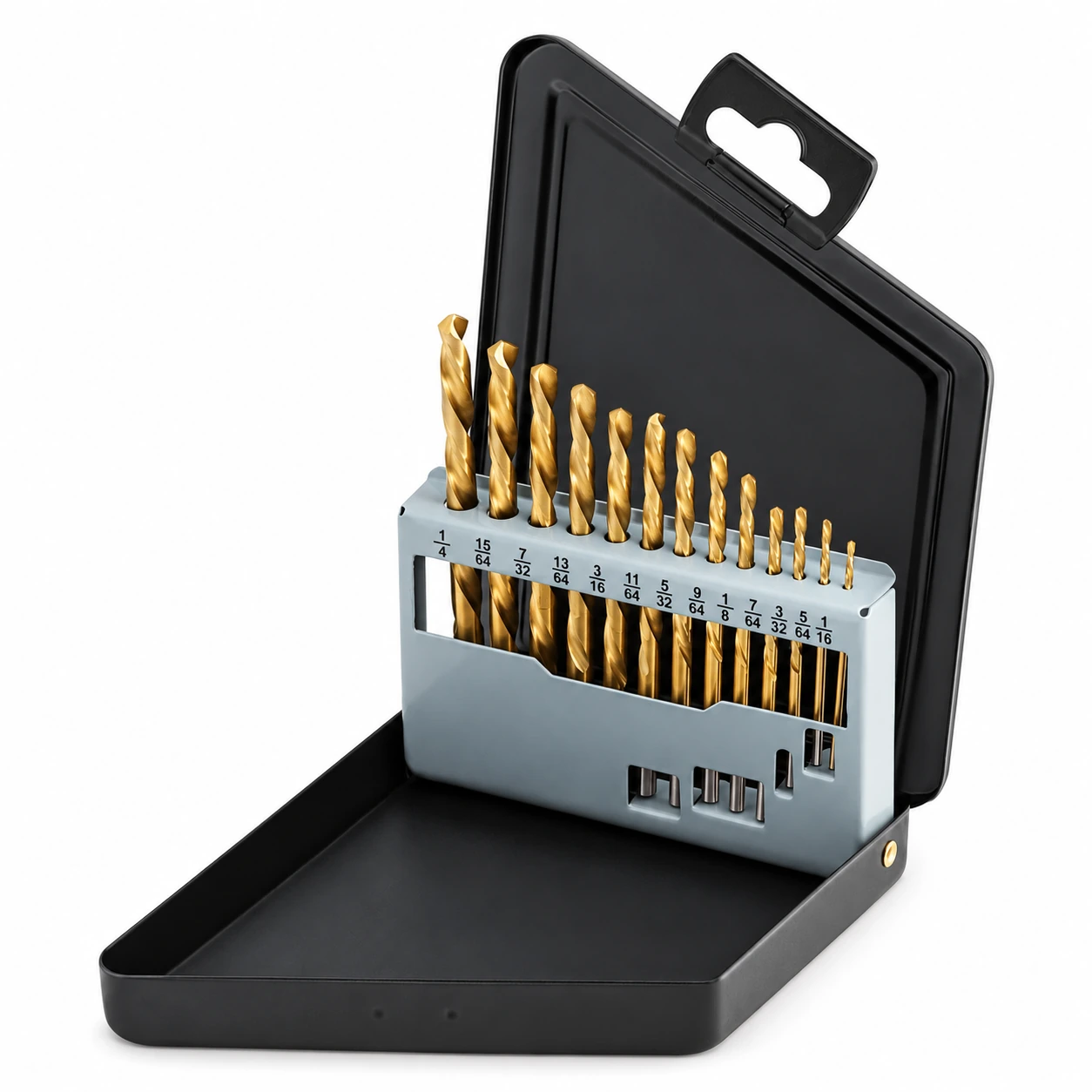
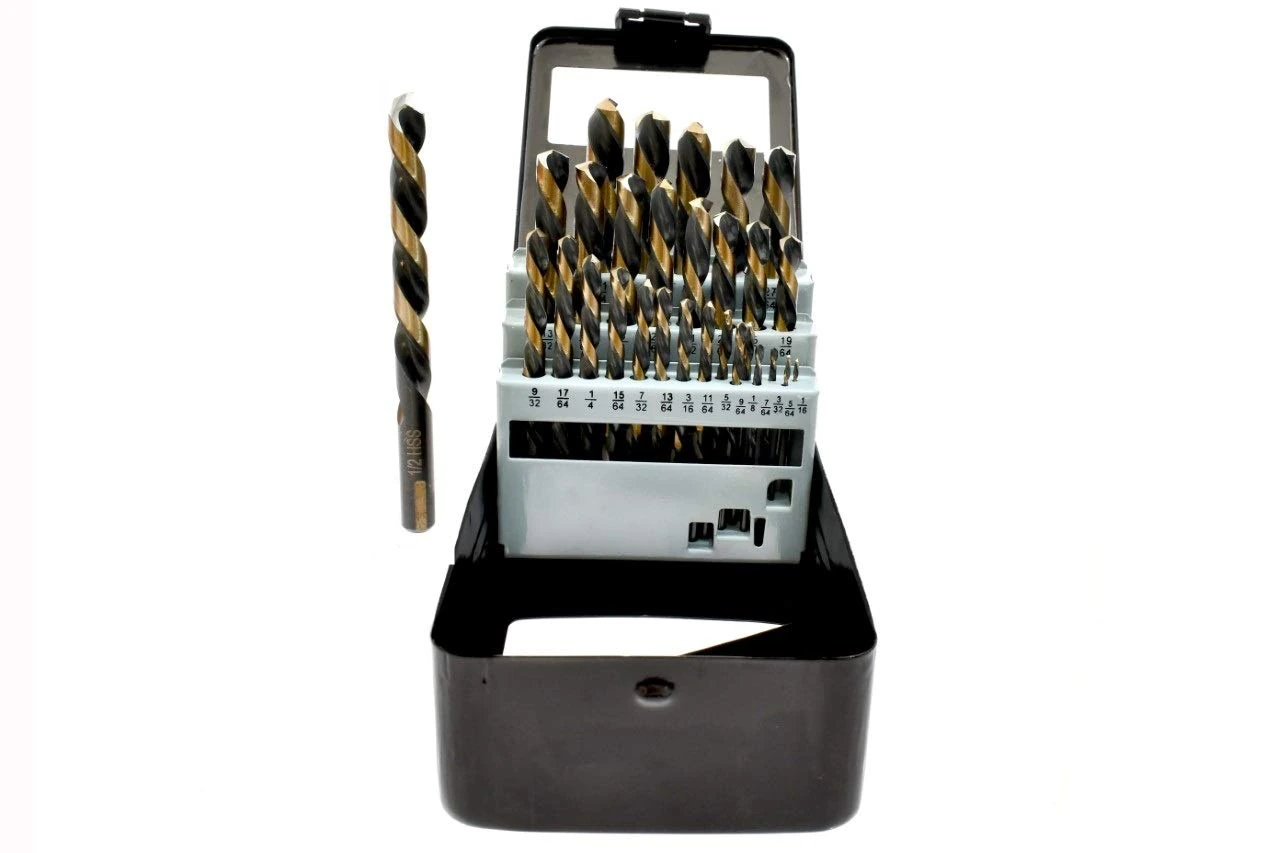
Choose the size sequence your customers use before comparing case counts. Sets with the same maximum diameter can include different intermediate sizes; the repeated-size cobalt assortment is separate from fractional HSS configurations.
The following configurations contain high-speed steel left-hand drills with standard points, an uncoated finish and jobber-length construction, supplied in a metal case. The count refers to drill bits, not a combined total of drills, extractors and holders.
| Drill Count | Size System | Included Size Coverage | Size Progression | Selection Focus |
|---|---|---|---|---|
| 13 | Fractional inch | 1/16–1/4 in | 1/64 in increments | Closely spaced smaller fractional sizes |
| 15 | Fractional inch | 1/16–1/2 in | 1/32 in increments | A wider diameter span with fewer intermediate sizes |
| 21 | Fractional inch | 1/16–3/8 in | 1/64 in increments | Smaller and medium fractional sizes at closer intervals |
| 26 | Letter | A–Z | Letter-size sequence | Jobs specified by letter drill designation |
| 29 | Fractional inch | 1/16–1/2 in | 1/64 in increments | 1/16–1/2 in with finer intermediate coverage |
| 60 | Wire gauge | #60–#1 | Numbered drill-size sequence | Jobs specified by number rather than fractional diameter |
An inch assortment is not a metric assortment, and letter or wire-gauge drills are not substitutes for every fractional size. Select the system used in your maintenance instructions, customer orders or existing tool inventory.
Drills cut in reverse rotation for the specified drilling operation.
The six HSS configurations share this length classification.
The listed HSS sets use standard-point drills.
Material and finish are specified together for these six assortments.
The HSS sets are supplied in metal cases.
Fractional, letter and wire-gauge configurations have separate contents.
These features describe the HSS configurations in the table. The 15-piece cobalt assortment has its own material and repeated-size schedule, so it remains a separate purchasing option.
A 13-piece set and a 29-piece set both begin at 1/16 inch, but their upper limits differ. The 13-piece assortment stops at 1/4 inch; the 29-piece assortment continues to 1/2 inch. Both use 1/64-inch spacing. A buyer serving smaller fastener repairs may value the compact range, while a workshop covering a broader diameter range needs the additional sizes.
The two fractional sets reaching 1/2 inch also differ. The 15-piece HSS assortment advances by 1/32 inch, whereas the 29-piece assortment advances by 1/64 inch. Their minimum and maximum diameters match, but their intermediate coverage does not. For example, 5/64 inch belongs to the finer progression and is absent from the 1/32-inch progression.
This matters when a repair procedure or an extractor specifies a particular pilot-hole diameter. Selecting the next available drill from a coarser assortment can change the hole size. Check the required diameter rather than choosing whichever tool looks closest.
Fractional sizes are convenient when customers already order drills in inches. The smaller HSS set provides 1/64-inch steps through 1/4 inch, and the larger fractional options extend that progression or use wider spacing. Keep fractions in the original specification when preparing your catalogue. A rounded millimetre conversion should not become a replacement diameter on an order.
The 26-piece letter set contains A through Z. These are drill-size designations, not grades or model codes. Choose this assortment where the working specification calls for letter drills. Its purpose is different from buying twenty-six fractional tools, even though the total count happens to be similar.
The 60-piece wire-gauge set contains numbered sizes #60 through #1. The numbers identify the drill-size system; they are not a measure of wire cutting capacity or the number of extractors supplied. Number progression also should not be read as equal diameter increments.
If your customers mainly use a few specific sizes, compare their requirements with the actual included sequence. A broader set can provide more choices, but it cannot replace checking the diameter required for a particular job. For orders combining several size systems, keep each assortment identifiable so workshop staff can return drills to the correct rack.
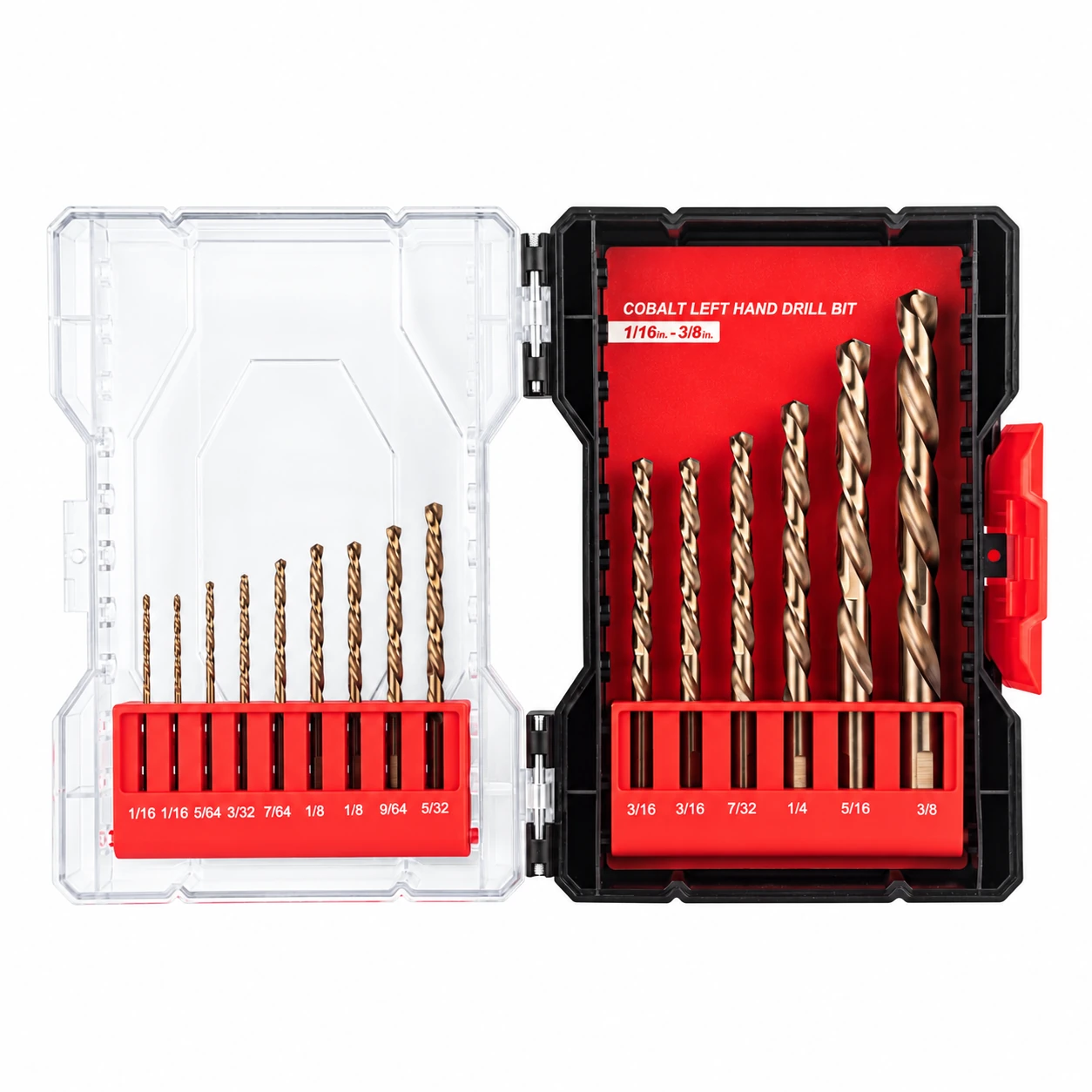
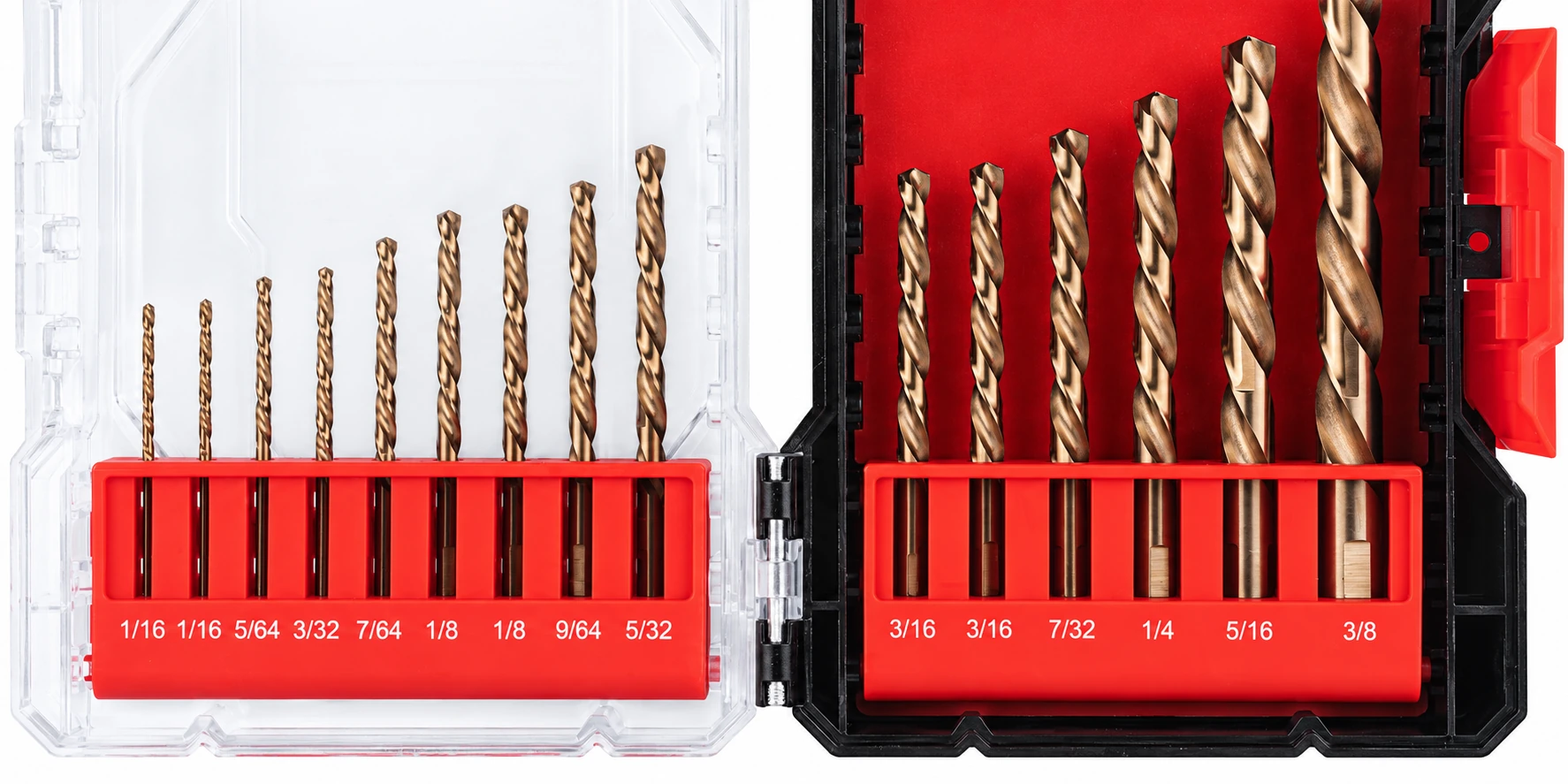
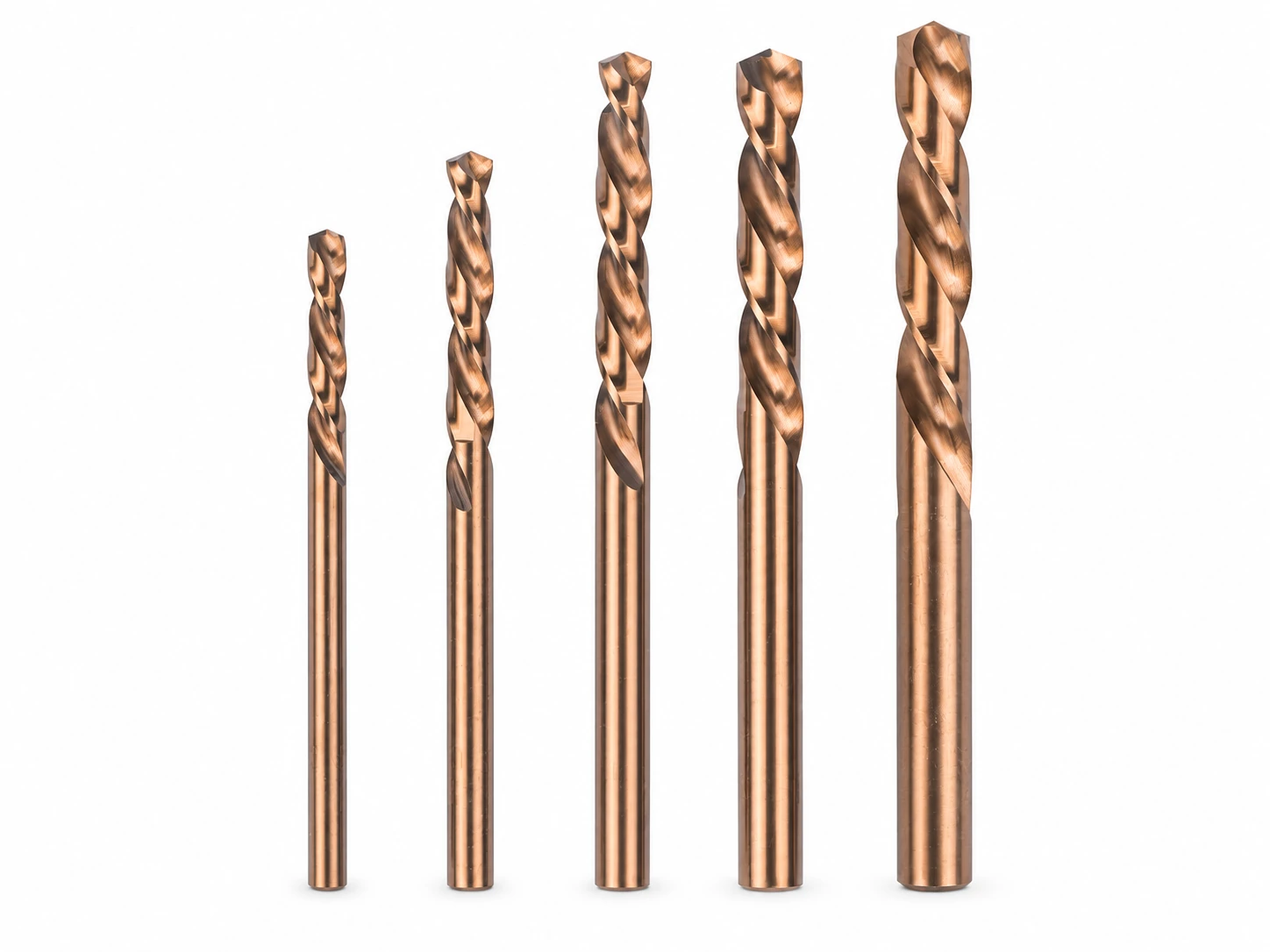
The pictured 15-piece cobalt left-hand drill set covers 1/16–3/8 inch and includes repeated sizes. It is a different configuration from the 15-piece HSS set covering 1/16–1/2 inch in the comparison table.
Repeated sizes serve a different stocking purpose from additional diameters: they provide more than one drill at selected positions rather than extending the range. Count the tools and the distinct diameters separately when comparing assortments. Fifteen tools do not necessarily mean fifteen different sizes.
Choose between HSS and cobalt in relation to the actual fastener material, its hardness and the drilling conditions. Cobalt identification alone is not a promise that a drill will cut every hardened bolt, broken tap or extractor. The material being drilled and the condition of its exposed surface still matter.
Keep the specified material and finish separate on the order. A gold-coloured surface does not, by itself, identify a coating or prove cobalt content. For this cobalt option, use its own size range and repeated-size configuration rather than borrowing the description of another fifteen-piece set.
The open-case views show separate 13-, 15- and 29-piece configurations. Use the accompanying rack details to identify visible sizes. The 15-piece cobalt view belongs to the cobalt assortment described above; it does not illustrate the 15-piece HSS specification. The 13- and 29-piece photographs show their own case layouts, while the ordered material and finish must follow the selected configuration.
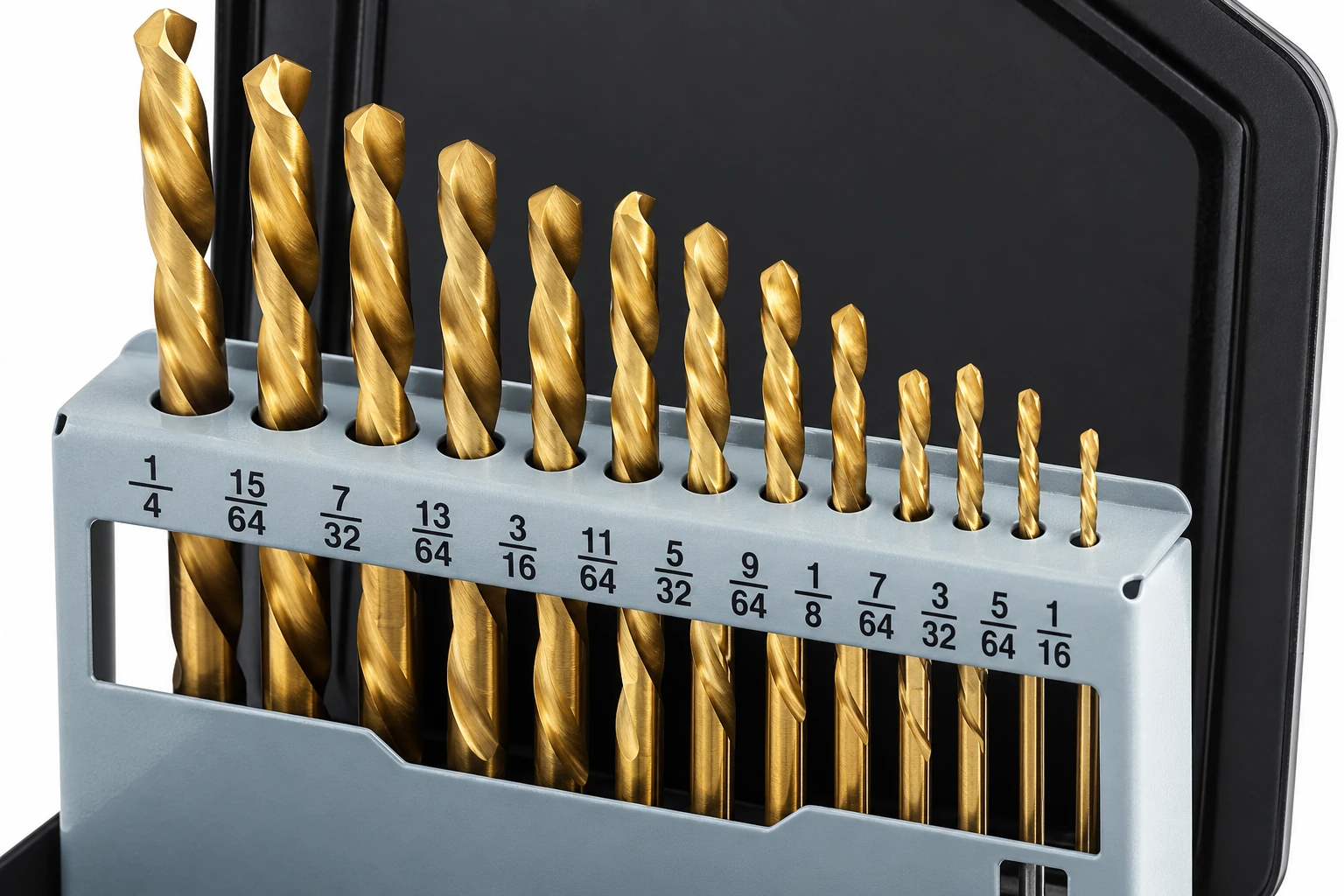
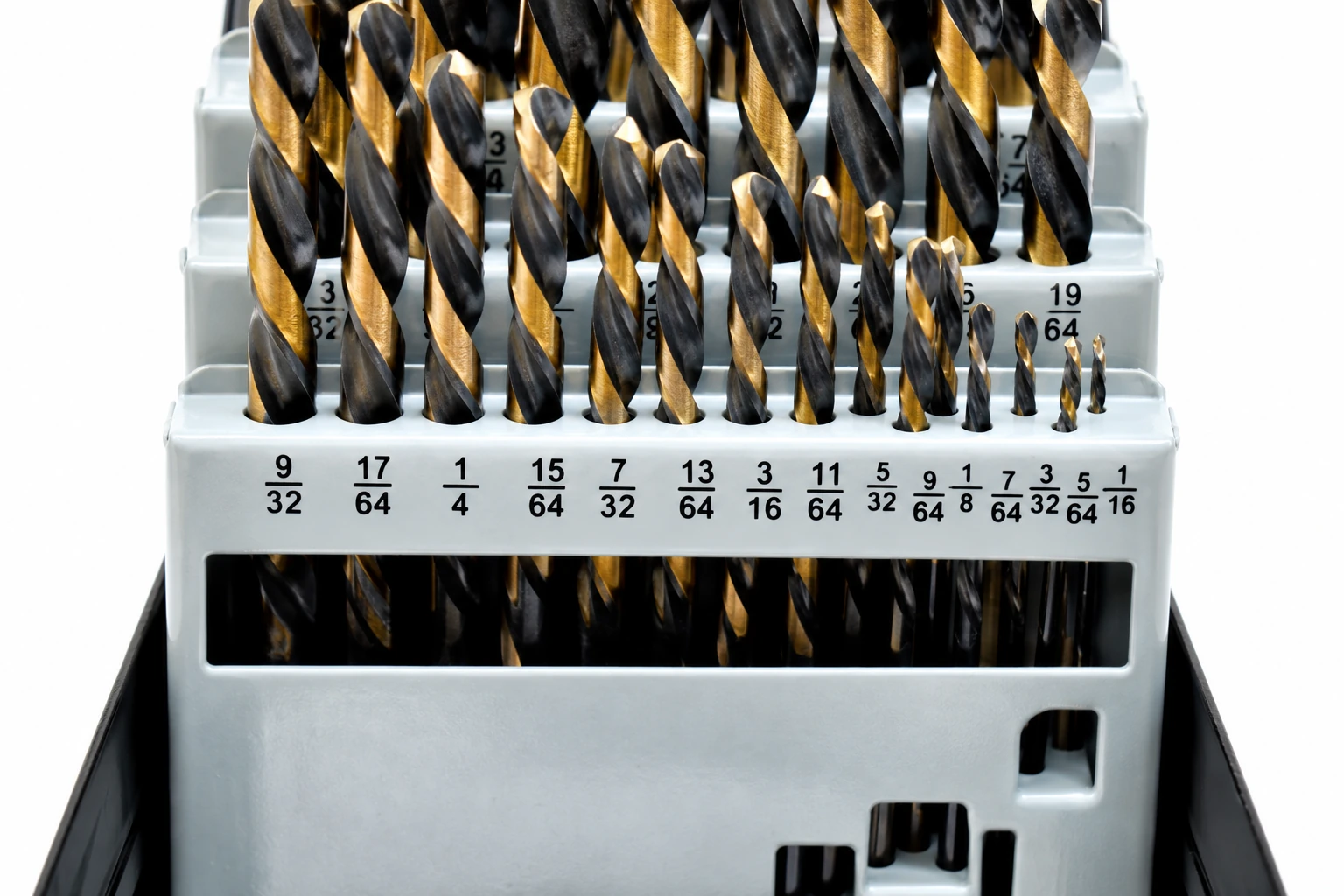
The six HSS assortments listed above use jobber-length drills. Jobber length balances reach and general workshop use, but the class name is not an exact overall-length or flute-length measurement for every diameter. Where a fixture, recess or nearby component restricts access, check the dimensions of the relevant drill sizes.
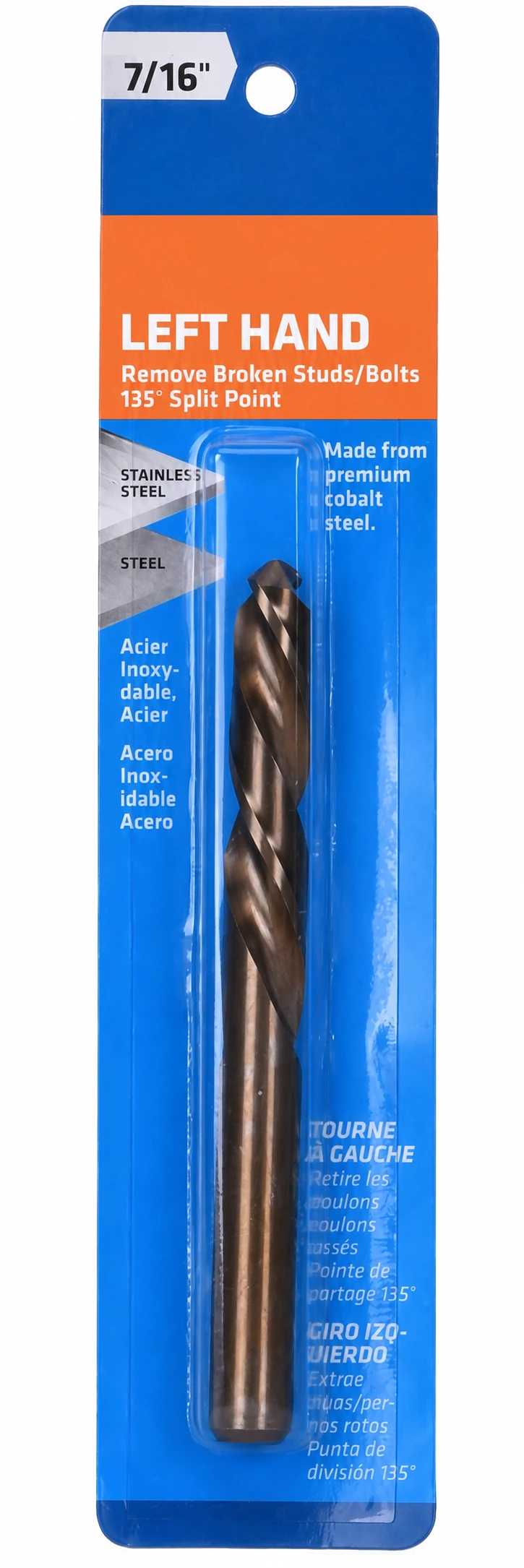
Match the shank to the holding equipment as well. A conventional round shank needs a compatible drill chuck. Related quick-change examples use a 1/4-inch hex interface; they are separate from the drill-only contents listed here. A 7/16-inch marking on an individual round-shank drill identifies its drill diameter, not a 7/16-inch hex connection.
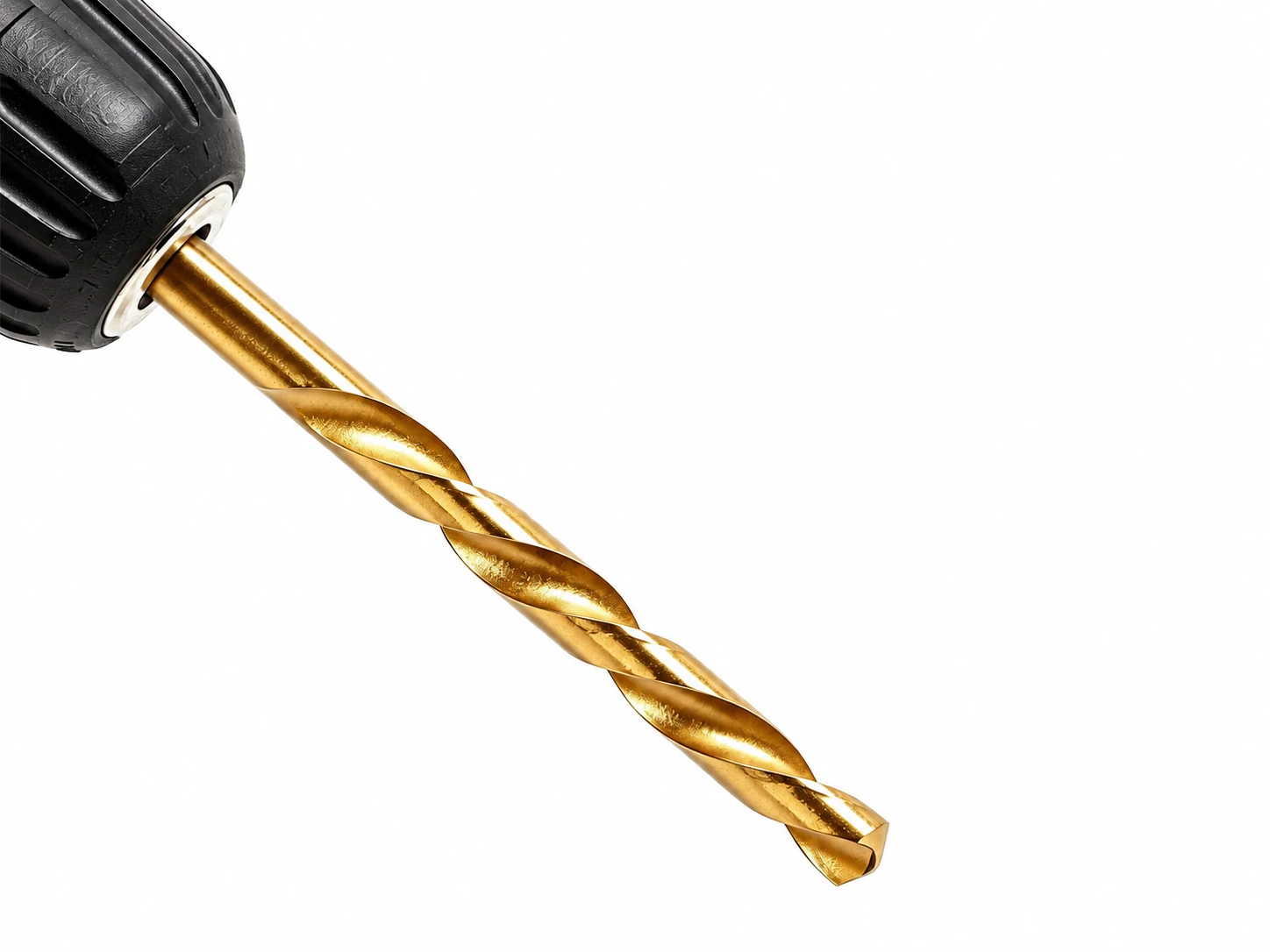
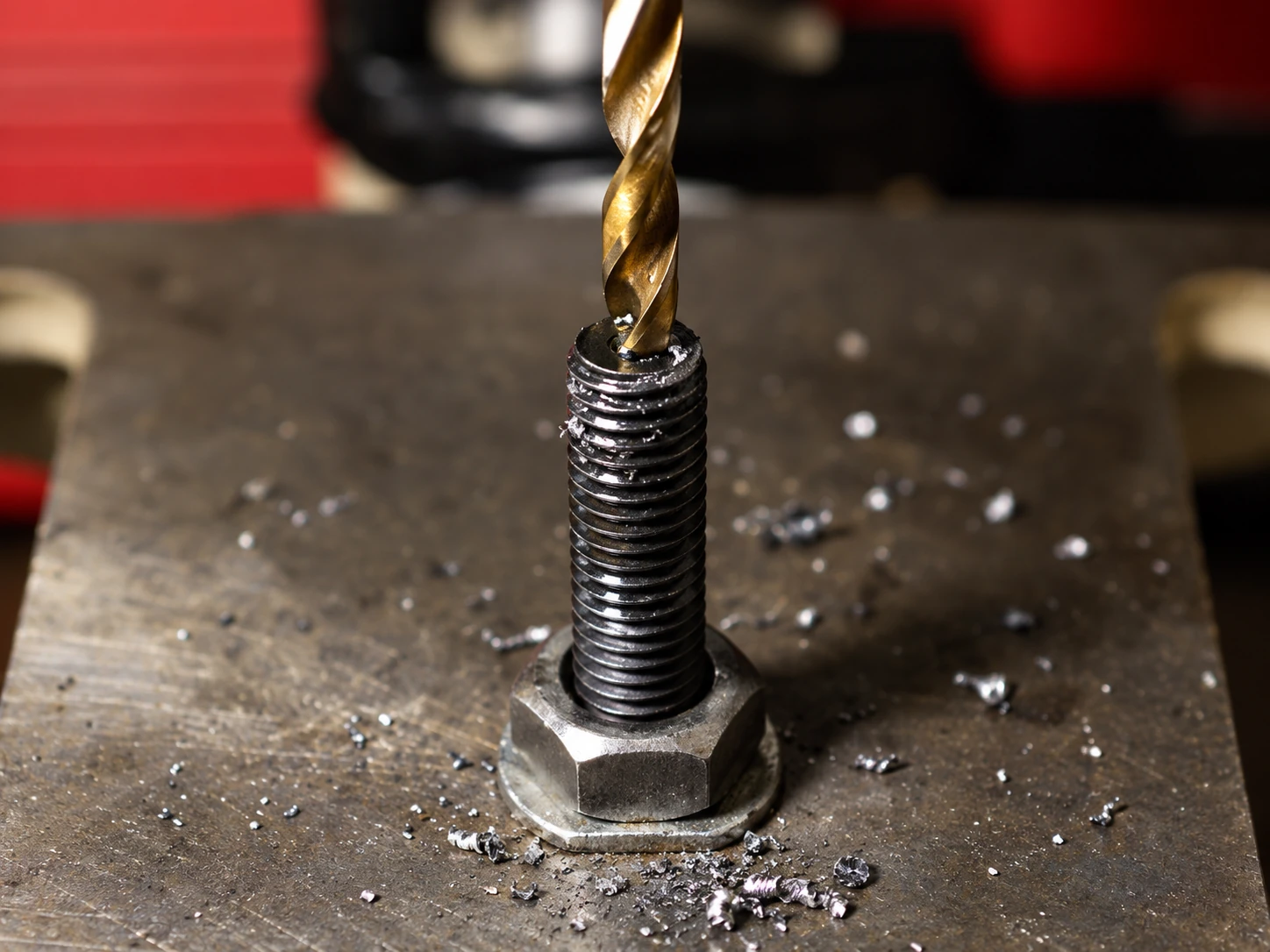
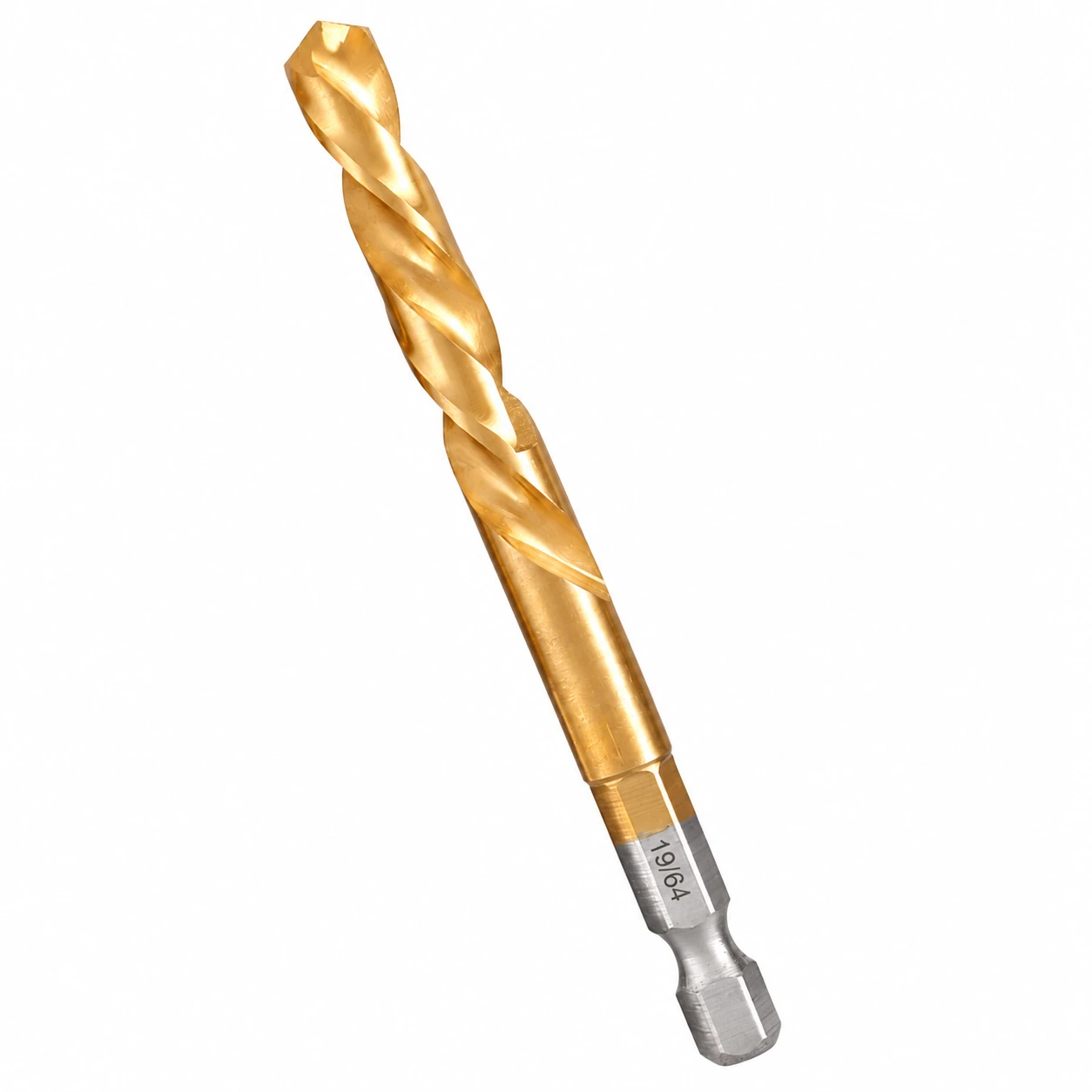
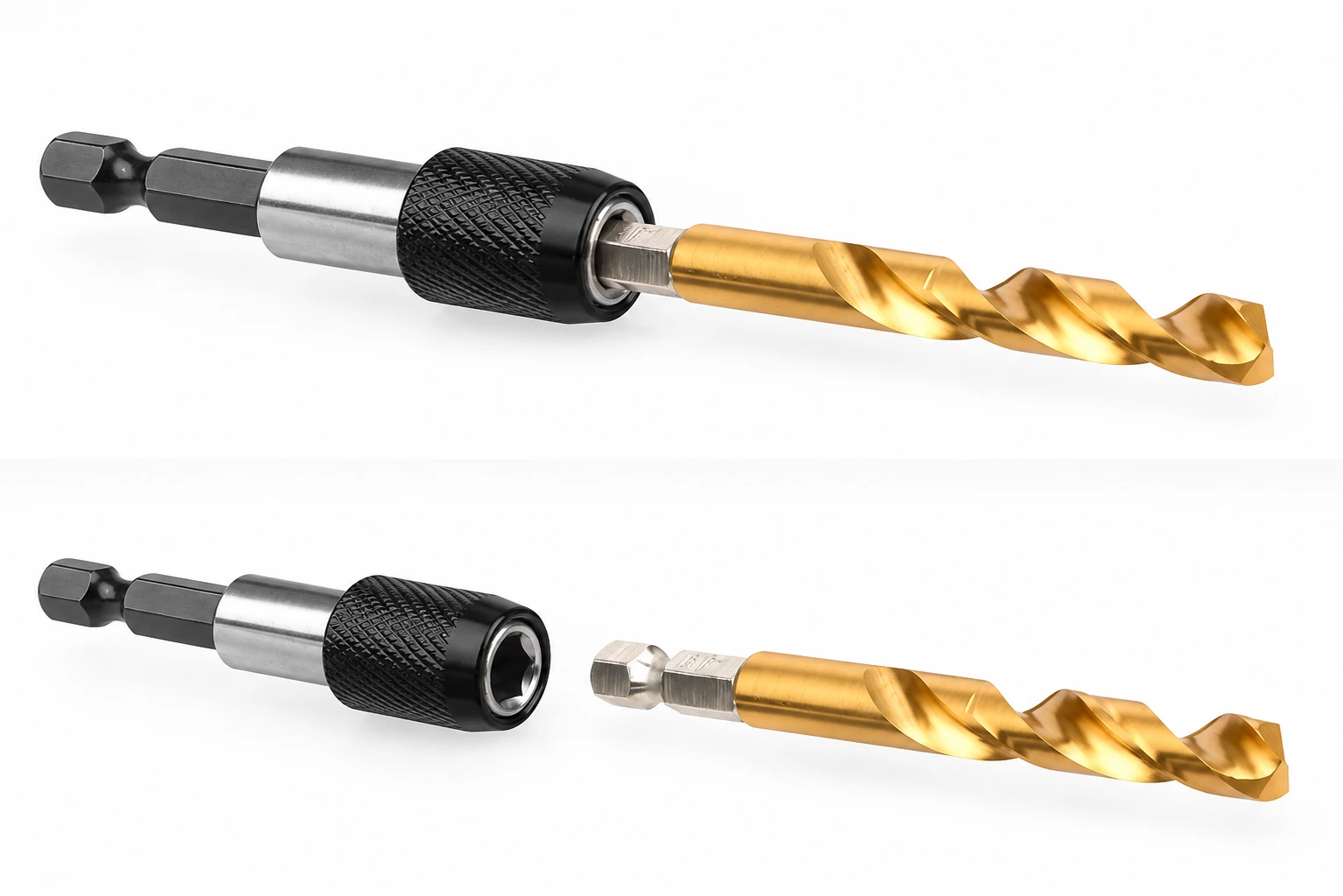
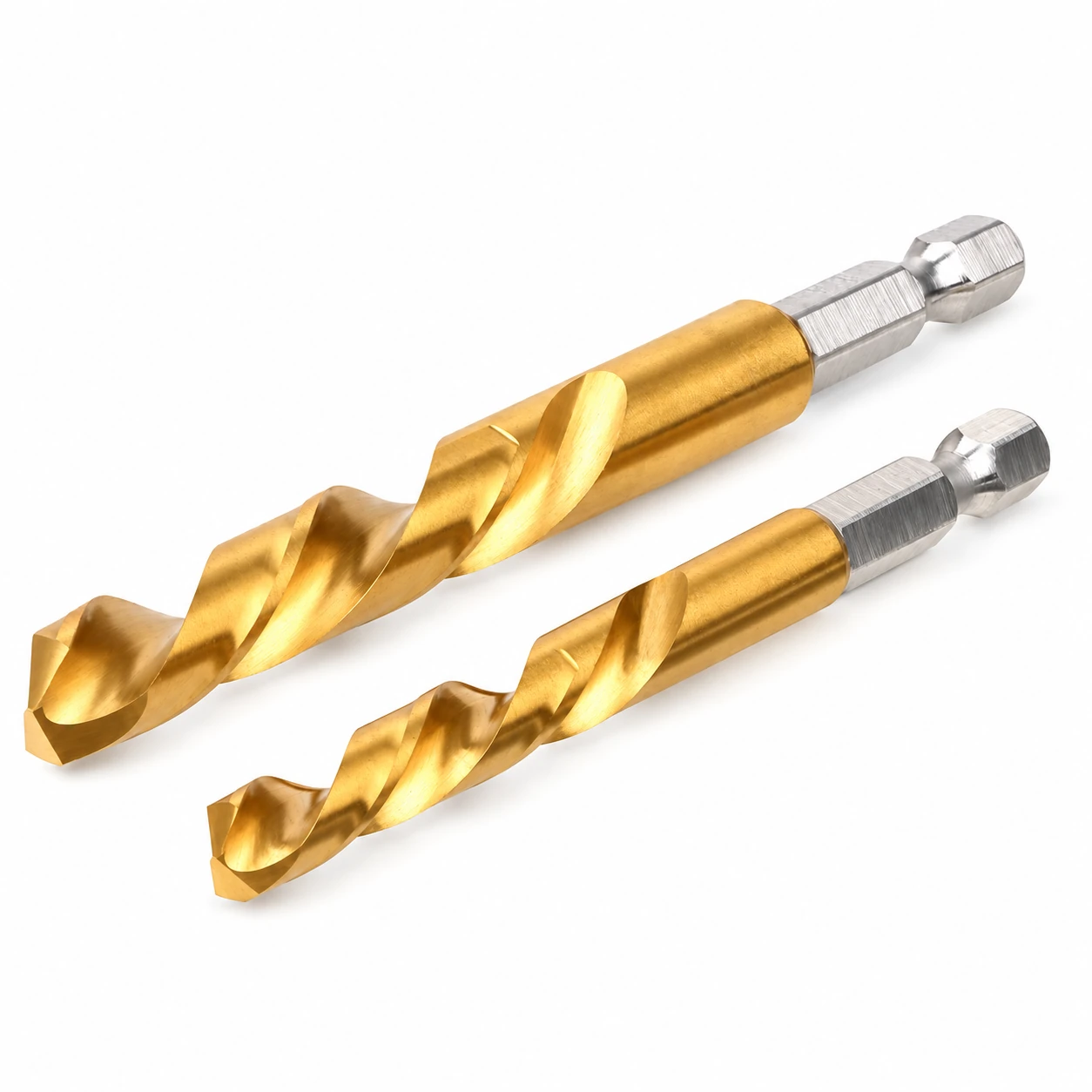
A drill-only assortment suits maintenance customers who already use an extraction system or need drilling tools independently. A combined kit also supplies gripping tools for a later removal stage. Choose the supply format around the workshop's repair procedure. Counting every component as a drill size makes two quite different offers appear comparable when they are not.
| Purchasing Requirement | Suitable Order Description | What the Contents Must Identify |
|---|---|---|
| Replace or introduce a drilling assortment | Selected drill-only configuration | Material, size sequence and number of drills |
| Supply drilling and extraction together | Separately described mixed repair kit | Drill count and extractor types/counts |
| Replenish a heavily used diameter | Individual replacement drill | Diameter, point, length class and shank |
| Replace a specific accessory | Holder or extractor ordered separately | Interface or extractor identity and required quantity |
A left-hand drill produces a hole; an extractor grips the prepared fastener. For a repair system using both, the drill diameter must suit the chosen extractor's pilot requirement. A larger kit does not resolve that pairing automatically. The purpose of the contents list is to make the purchased tools identifiable before they reach the workshop.
Review the screw extractor range for associated gripping tools. The broken-bolt extractor guide covers the broader repair decision; this product page focuses on set configurations and purchasing.
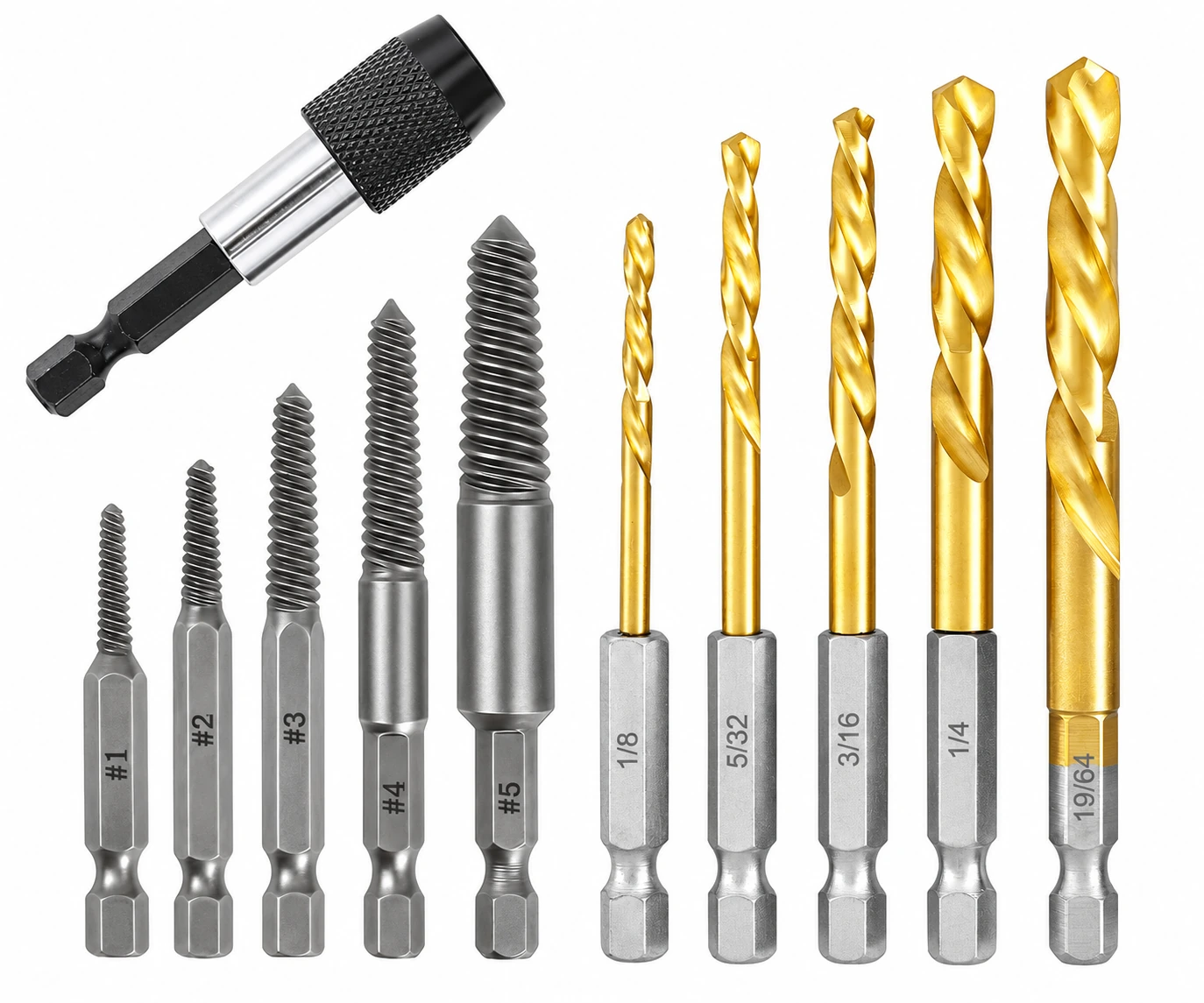
Related product galleries show three mixed arrangements alongside the drill-only assortments. Their component counts should stay separate:
| Related Arrangement | Component Breakdown | How to Compare It |
|---|---|---|
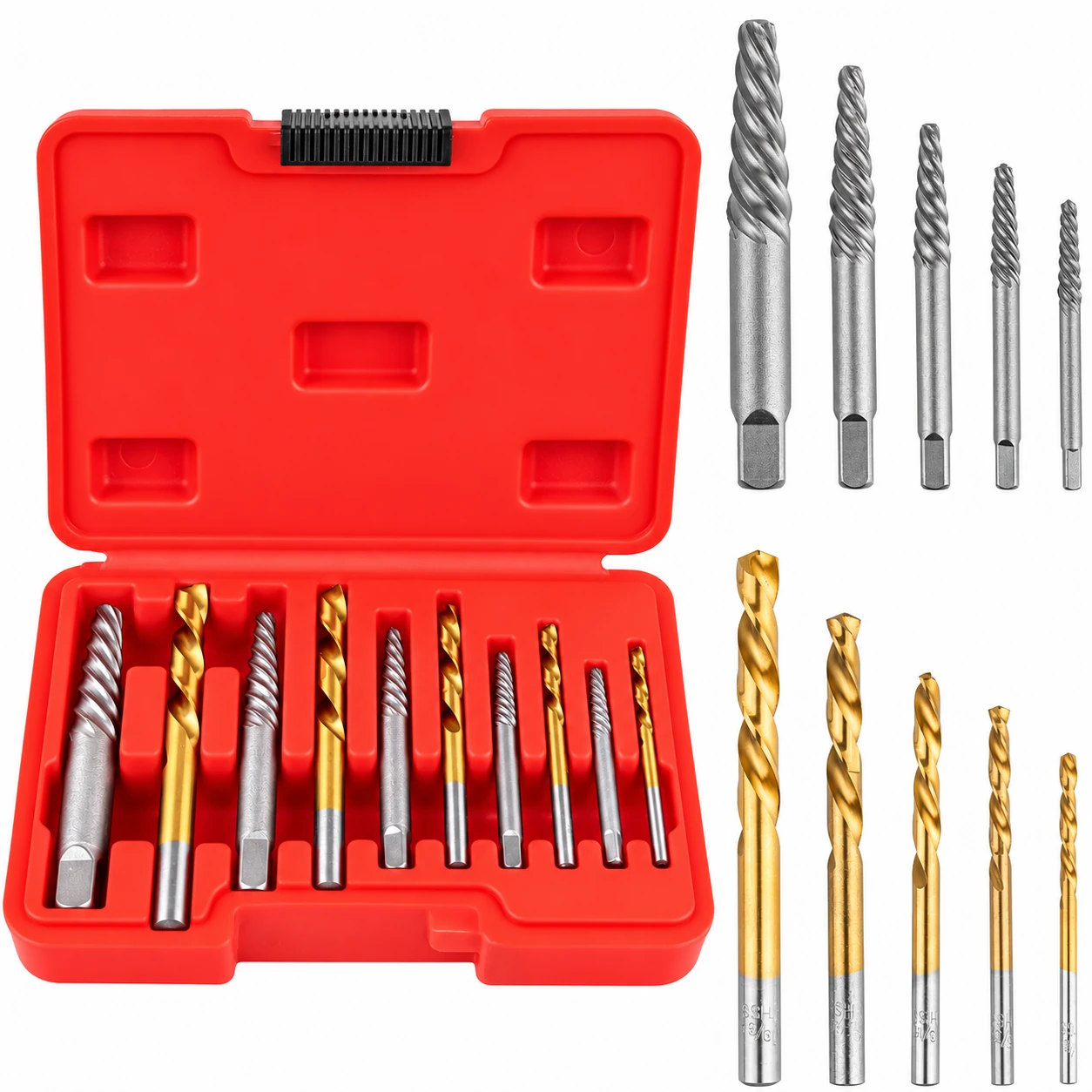
| 10-piece mixed kit | 5 drills and 5 extractors | Five drilling tools, not ten drill diameters |
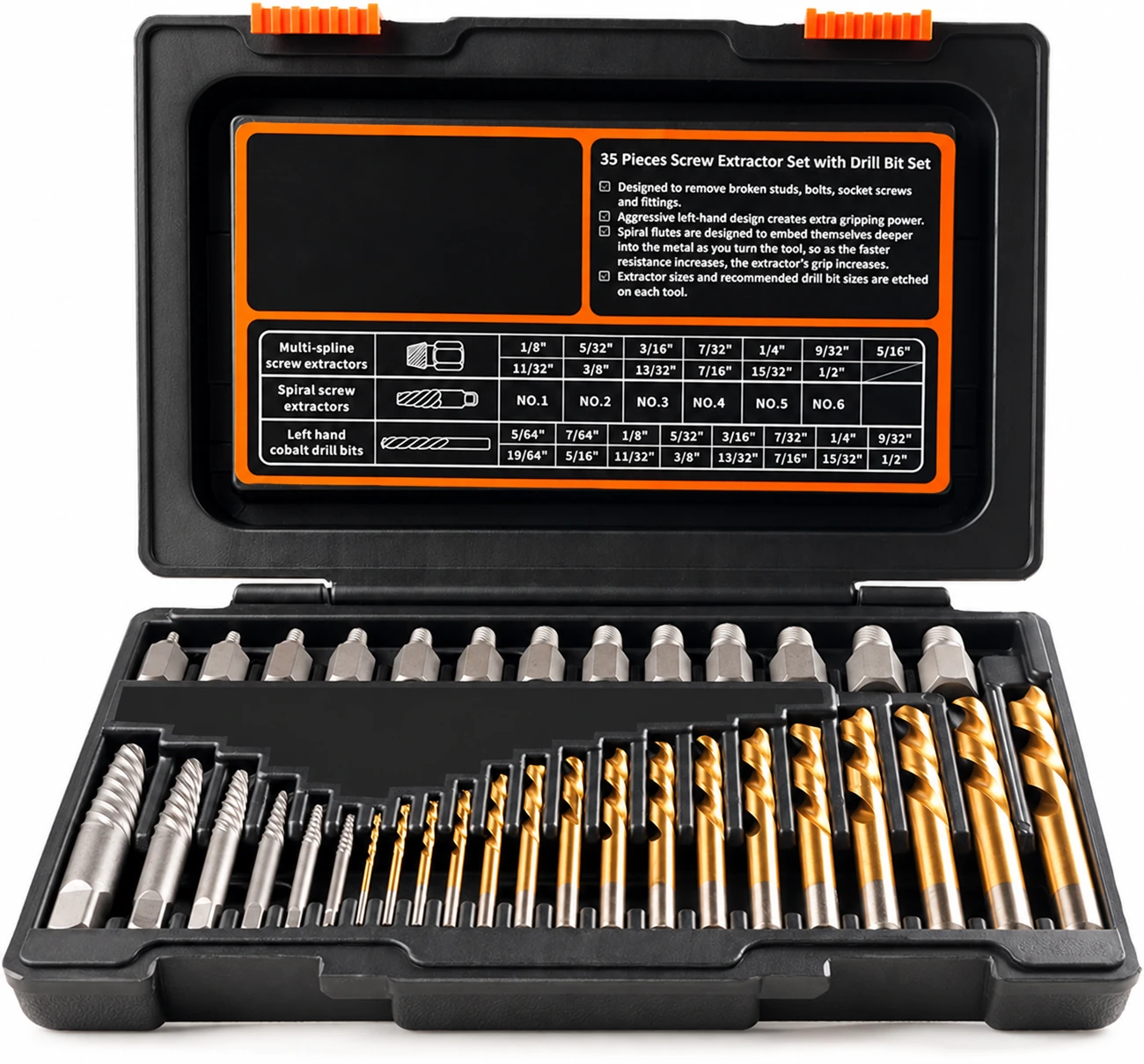
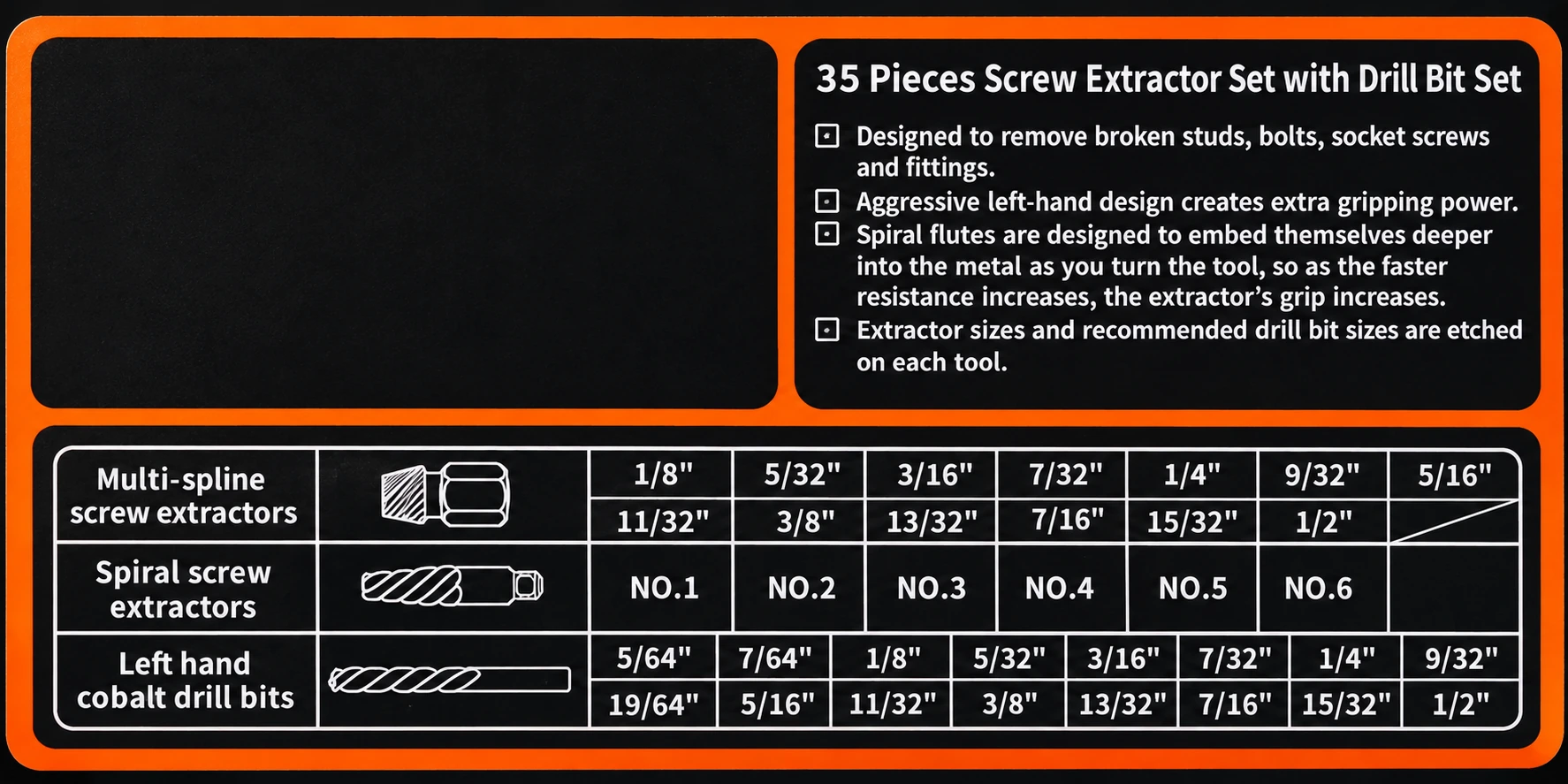
| 35-piece mixed kit | 16 drills, 13 multi-spline extractors and 6 spiral extractors | A drilling-and-extraction assortment, not a 35-drill or 60-drill set |
| 11-component arrangement | 5 drills, 5 extractors and 1 holder | The holder counts as a component, not a cutting tool |
These related arrangements are separate products, not additional contents included with the drill-only sets. Compare them when your customers need both stages of a fastener-removal task.
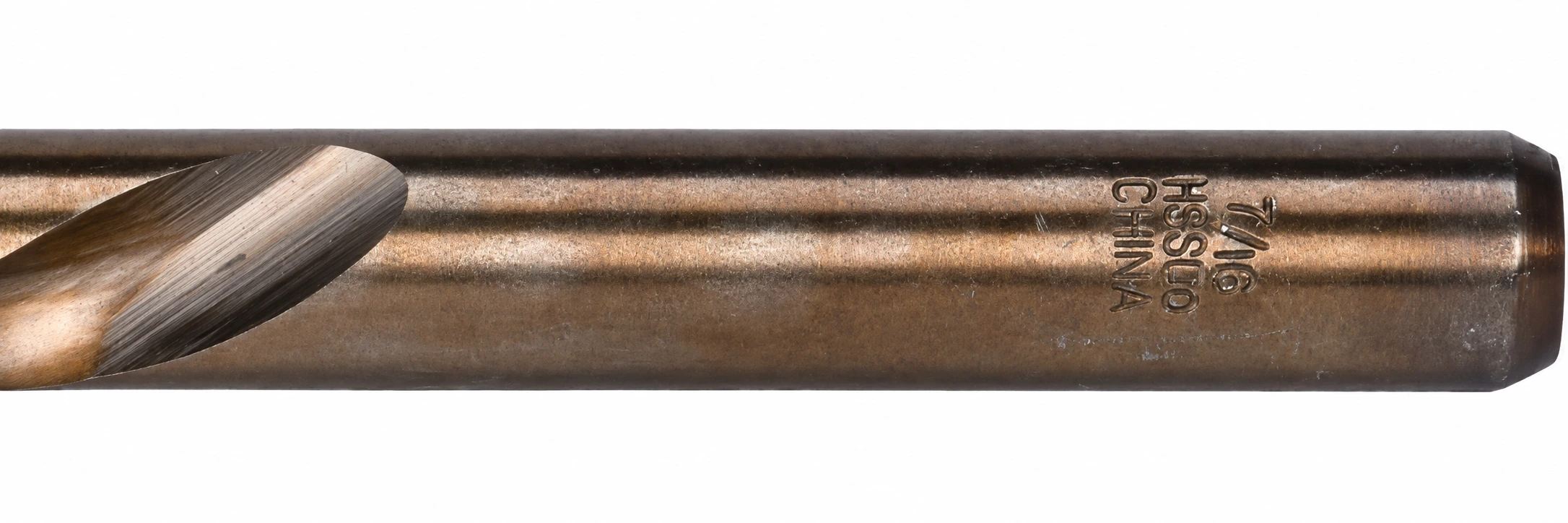
Individual drill examples also show an alternative to buying another complete case when a particular size is required. The 7/16-inch round-shank cobalt drill shown in the gallery is an individual option. Its presence beside the sets does not add that size to an assortment whose published range ends at 1/4 or 3/8 inch.

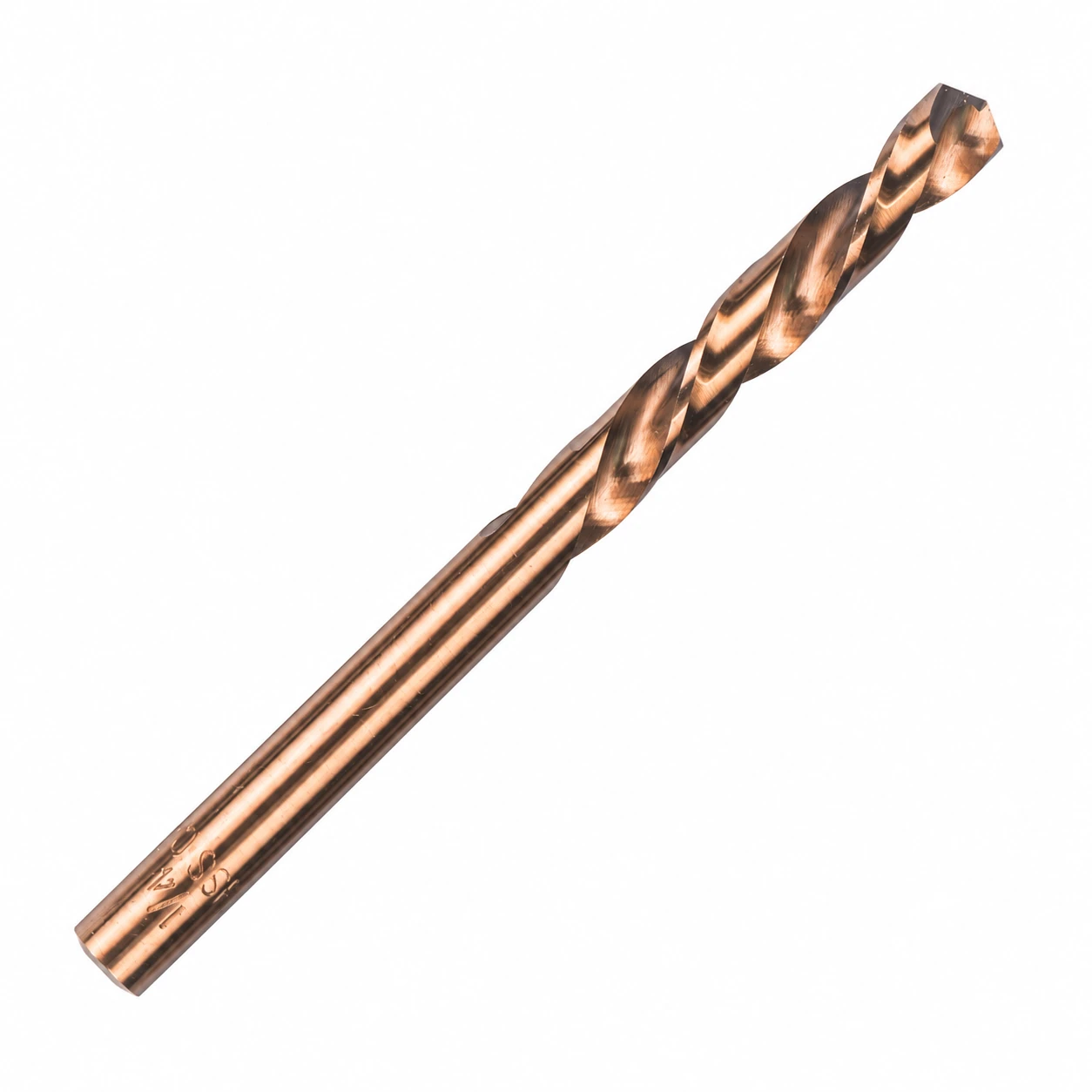
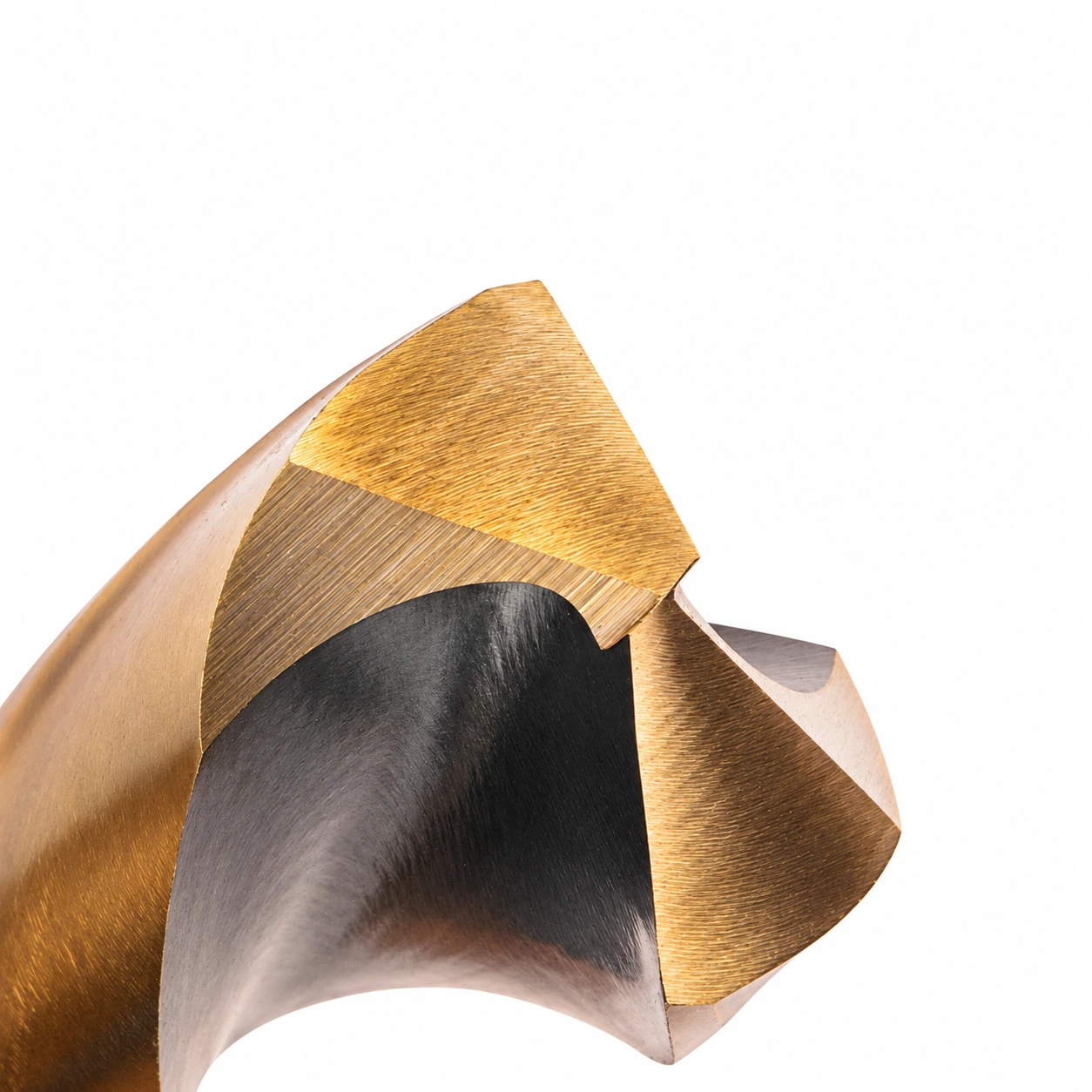
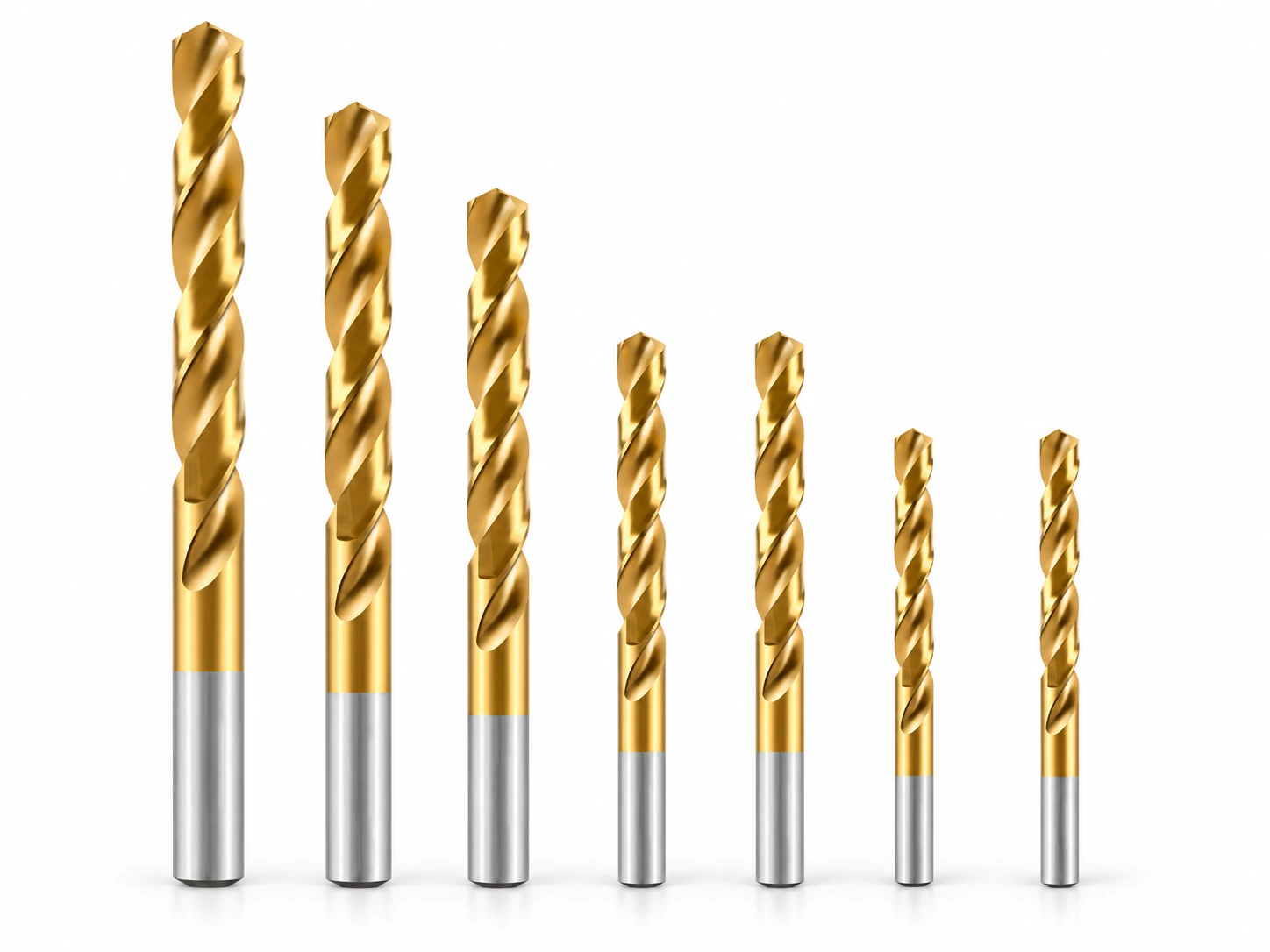
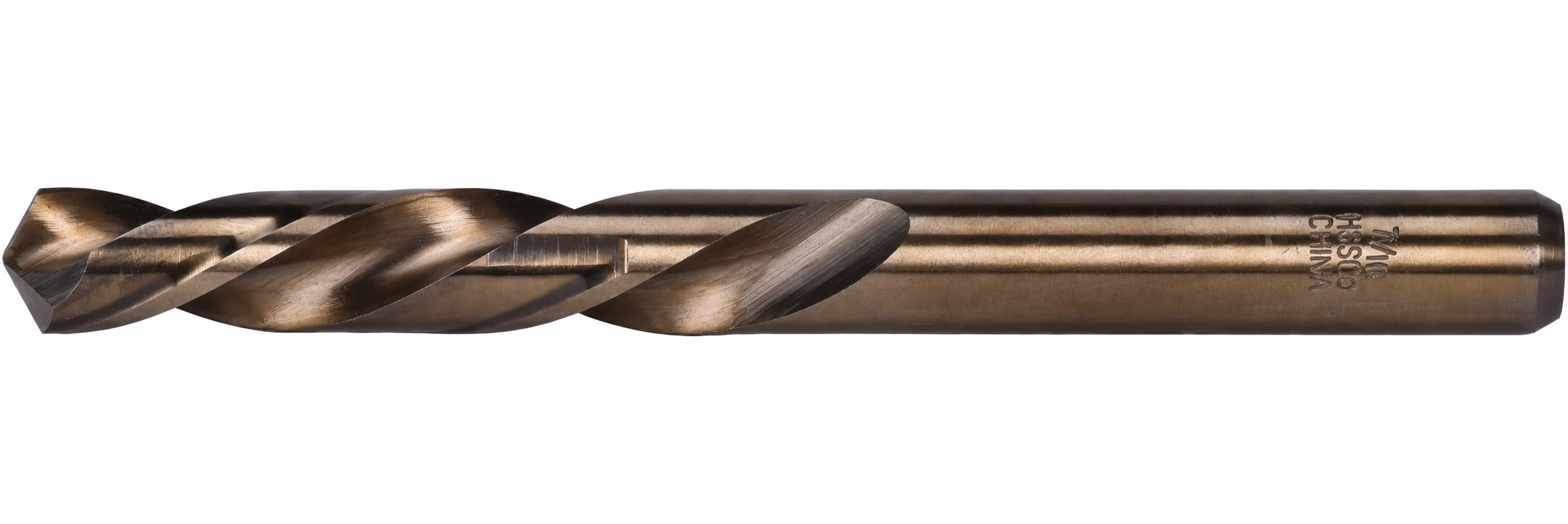
For maintenance distributors serving smaller fractional requirements, the 13-piece HSS set offers a defined 1/16–1/4-inch range. For customers requiring intermediate sizes through 1/2 inch, the 29-piece HSS configuration provides the finer 1/64-inch progression. These are concrete coverage choices; selecting between them does not require changing the material category or treating every workshop as having the same demand.
For a repeated-size cobalt assortment, compare the number of tools at each diameter with the workshop's expected replacement needs. Repeated positions provide additional tools at selected sizes rather than additional diameter coverage. Keep that logic in the sales description so a customer choosing cobalt does not expect the same sequence as the fifteen-piece HSS alternative.
A mixed wholesale order can list several configurations as separate lines, each with its own quantity. State whether the quantity means complete sets or individual drills. Identify separately priced accessories and replacement sizes outside those set lines. This creates a practical quotation schedule without implying that a photographed holder or an extractor is included in every case.
The order reference is the selected configuration and its full size schedule. For the HSS sets, retain material, standard point, uncoated finish, jobber-length class and metal-case description alongside the drill count. For the separate cobalt assortment, retain its own range and repeated-size quantities. This keeps quotations and subsequent replenishment attached to the same product description.
If your sales channel requires particular labels, barcodes, languages or outer packing, describe those requirements with the quotation request. Keep the set designation and size system readable. The label for a 60-piece numbered-drill assortment should make #60–#1 clear; its headline count should not suggest sixty fractional sizes. Packaging requirements are considered for the selected order rather than inferred from a different case photograph.
For a repeat purchase, retain the agreed contents schedule and case reference. If you require replacements as well as complete sets, add diameter-by-diameter quantities on separate lines. Include the material, point and length requirements where they must match the original tools.
A useful initial quotation line reads: “13-piece HSS left-hand jobber drill set, 1/16–1/4 inch in 1/64-inch increments, standard point, uncoated, metal case,” followed by the quantity of sets and destination. Other configurations need their own contents description. That level of detail makes offers comparable while keeping freight, packaging requests and commercial terms attached to the actual order.
Compare application fit, equipment compatibility and the supply configuration when preparing your purchasing requirement.
Compare the size sequence and quantities. Keep the 15-piece HSS assortment separate from the repeated-size 15-piece cobalt configuration.
Distinguish drill-only assortments from mixed drill-and-extractor kits. Related gallery photographs do not change the contents of the selected set.
Identify the set, quantity and packing requirements. Use the contents list for quotations, samples and repeat orders.
Choose a set containing the pilot-hole diameters required by your repair method or extractor instructions. The 13-piece fractional set covers 1/16–1/4 inch in 1/64-inch steps; the 29-piece extends the same progression to 1/2 inch. Coverage alone does not establish suitability for a fastener's material, hardness or remaining wall thickness. A drill set does not guarantee that a seized bolt will unscrew.
No. The HSS jobber-length set covers 1/16–1/2 inch in 1/32-inch increments. The separate pictured cobalt assortment contains fifteen drills covering 1/16–3/8 inch, with repeated sizes. Compare material, individual size coverage and quantities at each size. Ordering by piece count alone can select a different assortment from the one your customers expect.
The drill-only configurations in the HSS comparison table contain drills in a metal case. Extractors and holders shown in related galleries belong to separately described arrangements. For example, the 35-piece mixed kit contains sixteen drills and nineteen extractors. It is not a larger version of the 29-piece drill-only set, and its contents do not apply to other cases.
Yes. Left-hand drills are intended to cut in reverse rotation. During drilling into a right-hand-threaded fastener, that direction can help loosen it, but corrosion, damage and seizure can prevent removal. The direction needed for a particular fastener-removal task also depends on the thread direction. Do not assume a tool marked left-hand is intended only for left-hand-threaded bolts.
Ask for the required individual sizes and quantities, identifying the original material, length class, point type and shank type. Keep fractional, letter and wire-gauge designations distinct. The listed HSS sets use standard points; separate uncoated fractional individual drills include split-point configurations. Specify the point when matching replacements. If you need a different length or interface, describe that requirement rather than treating it as a direct replacement. Availability and purchasing terms are addressed in the quotation for the selected tools.
Provide the set configuration, material, quantity of sets and delivery destination. For a repeated-size assortment, identify the required size-and-quantity breakdown. Include any labelling, packaging or private-label request as a separate requirement for review. If you are still choosing the configuration, state the required diameters and intended work material so the quotation addresses the appropriate assortment.
Tell AXIMET which assortment fits your customers: fractional HSS, A–Z letter, #60–#1 wire gauge or the separate 15-piece cobalt configuration. Include your order quantity and delivery destination. If replenishment is the priority, list the individual sizes you need alongside the set request.
Request a Quotation