
Use the comparison as a controlled buying record. It should identify the application, the exact tool variants, the evidence reviewed and every field still requiring supplier confirmation.
Create One Cutting Schedule for Every Machine
Define the materials, normal and maximum panel or solid-stock dimensions, cut direction, required repeatability, finish allowance and production frequency. Separate routine ripping from occasional wide work and identify any operations that should be performed on another machine. This schedule becomes the common basis for capacity, table and fence comparisons. Without it, each supplier may demonstrate a different easy task and the buyer cannot distinguish machine performance from sample selection.
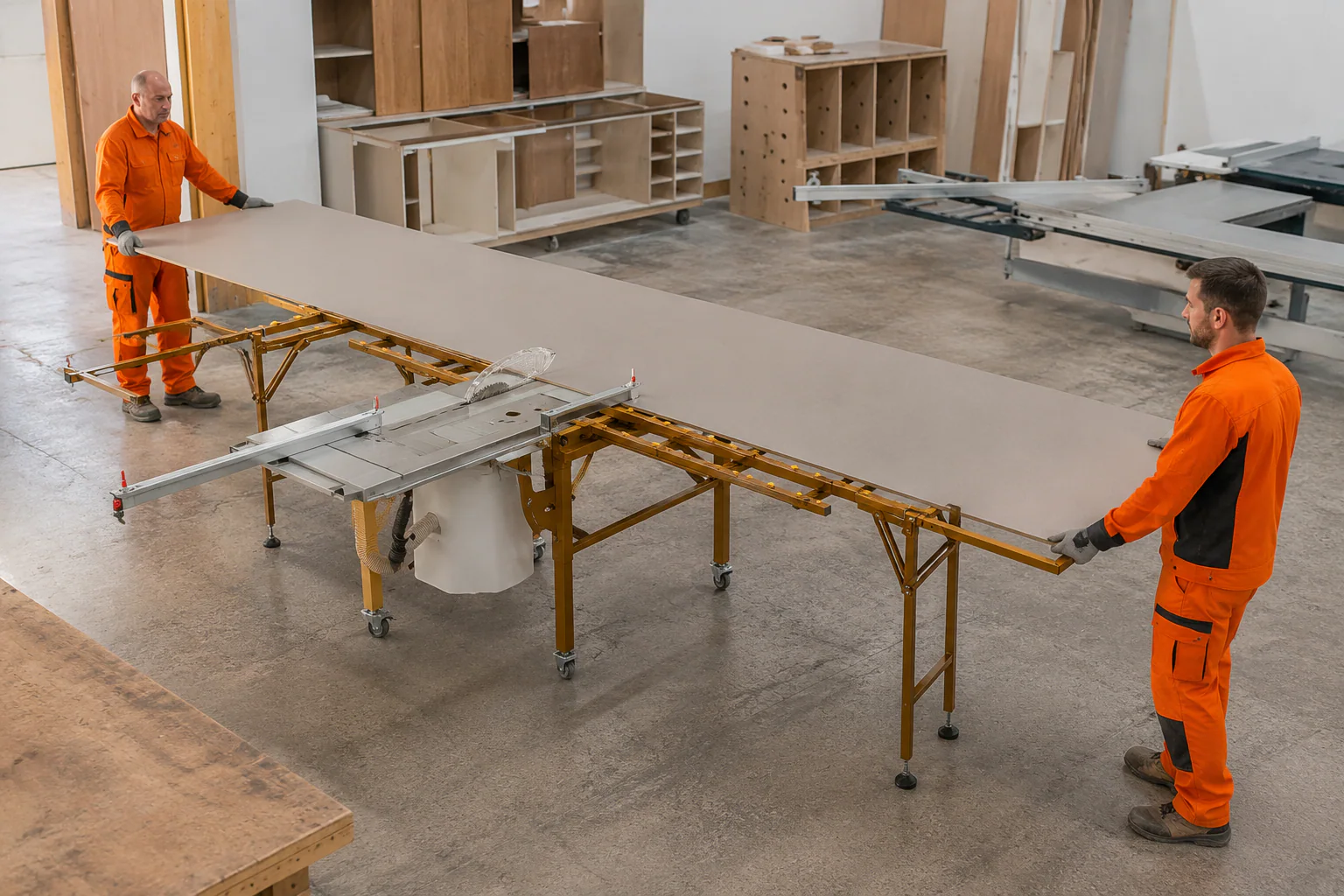
Include material loading, infeed and outfeed paths and the number of operators available for large work. A cabinet saw may have a substantial table yet still require extensions, outfeed support or shop-floor changes for the planned stock. Record space constraints and the desired relationship to extraction, electrical supply and downstream assembly. The comparison should evaluate the complete working cell, not only the cabinet footprint.
Translate the production schedule into weighted evaluation cases. A workshop that mostly rips prepared boards but occasionally handles wide panels should not score every operation equally. Record frequency, consequence of error, material-handling burden and downstream finishing needs. This makes the comparison reflect business use and prevents an impressive but rare demonstration cut from outweighing the machine's normal daily tasks.
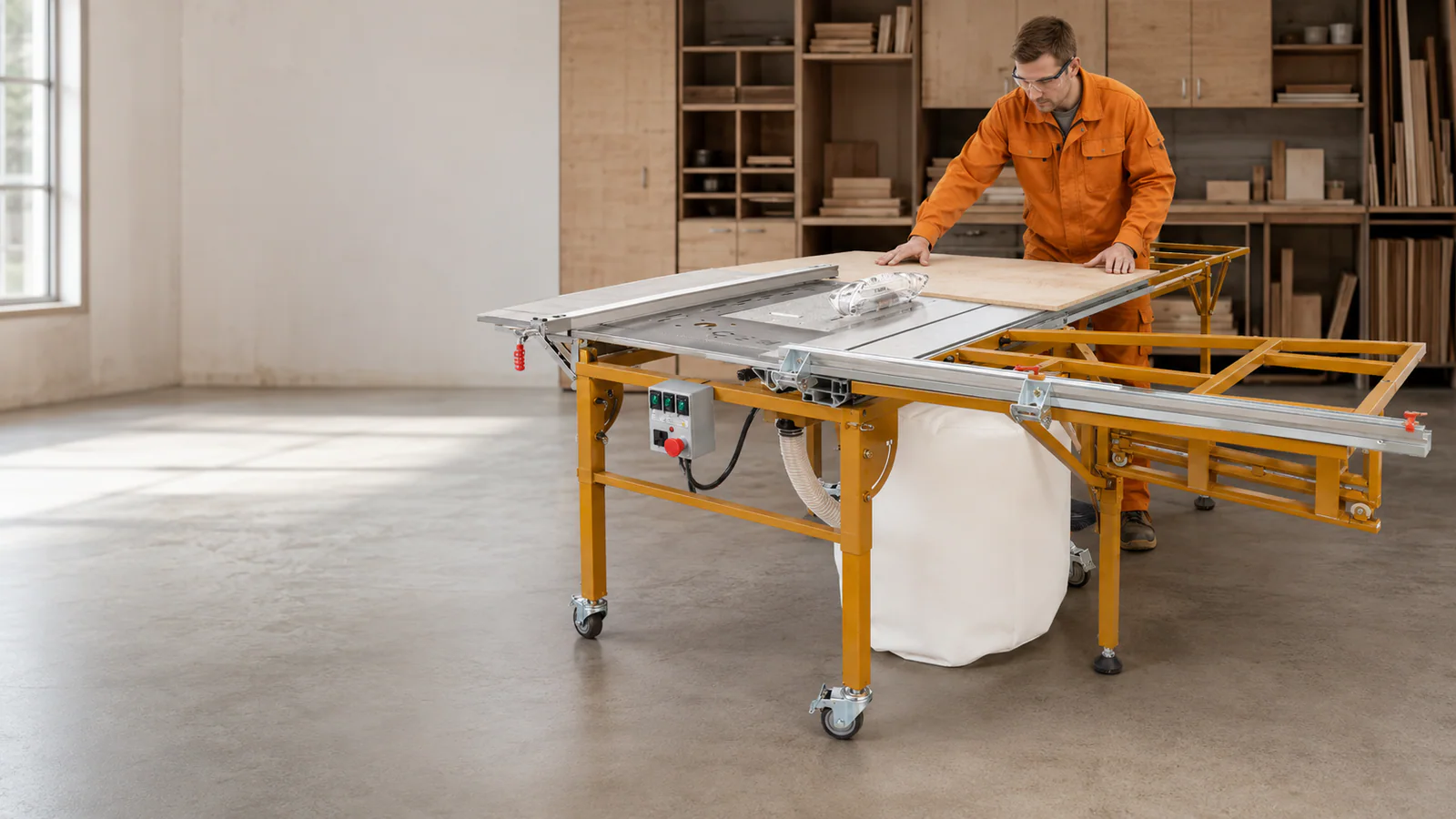
Compare Table, Fence and Support Geometry
Ask for controlled dimensions and construction descriptions for the main table, extensions, fence travel and support components. Check how the fence locks, references the table and remains aligned through its useful range. Do not infer precision from the size of a rail or the appearance of a handwheel. The evaluation should include the normal operator adjustment sequence and the method used to verify alignment after transport and installation.
For wide or long work, identify which extensions and outfeed components are included and how they are supported. A quotation with a larger-looking table may omit pieces shown in promotional images. Create a line-item matrix for cast or fabricated sections, rails, fence, extension wings, outfeed support and mobile base if relevant. Verify that floor loading, leveling and access suit the installation site before treating the configuration as complete.
Inspect the fence and table as an operating system, including the route for moving, locking and checking the fence. Note how extensions and supports are joined, where stock can catch and whether reference surfaces remain usable through the normal range. Confirmed dimensions belong in the configuration record; subjective impressions should be supported by repeatable sample checks rather than converted into unsupported accuracy claims.
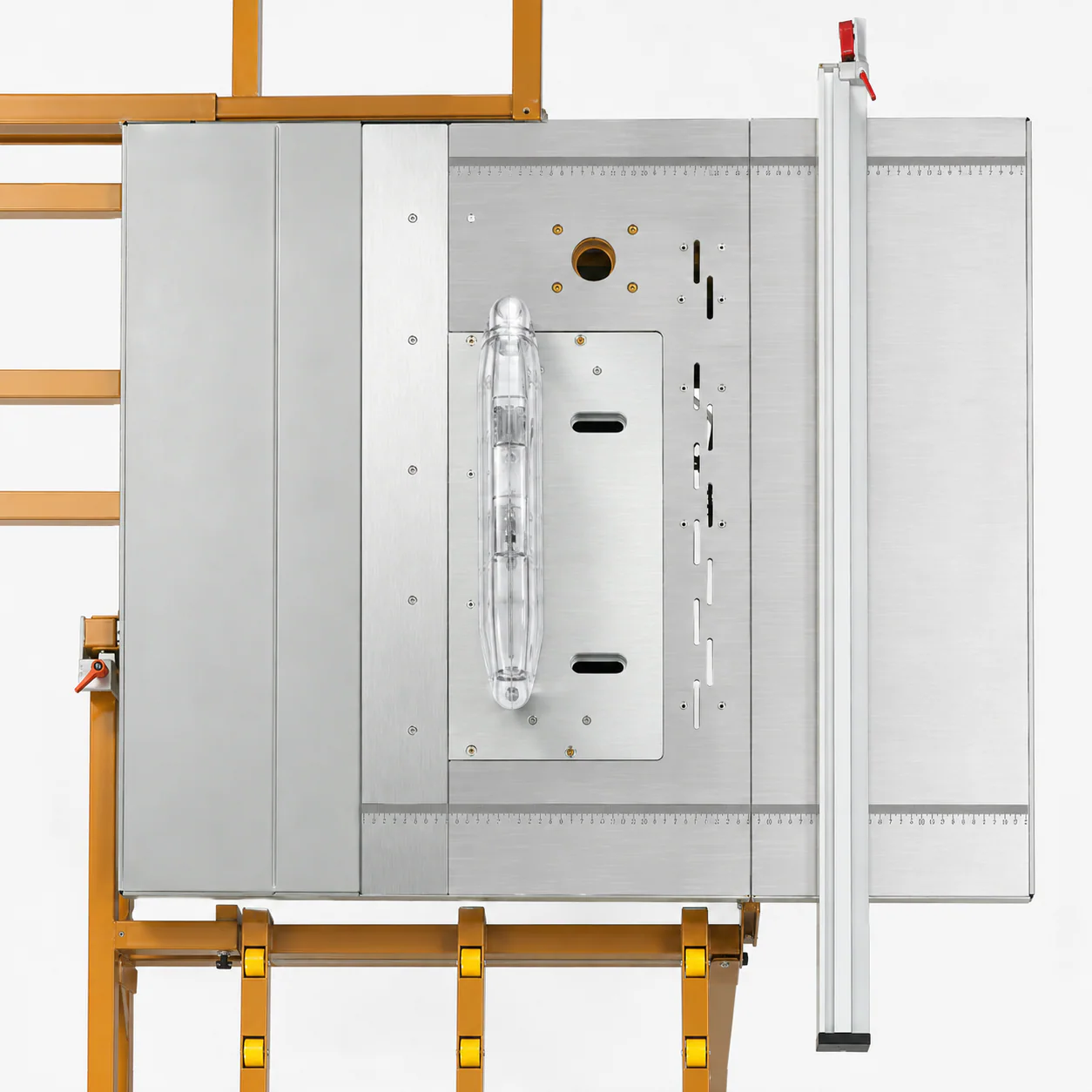
Review Blade, Arbor, Guard and Cutting Interface
Confirm the permitted blade diameter, bore or arbor interface, kerf and relevant guarding components from the exact machine documentation. Blade compatibility cannot be established from diameter alone. The riving knife or splitter, guard, throat insert, flange and any scoring or auxiliary system must match the selected setup. Keep model-specific values in the comparison rather than transferring them between similar cabinet saws.
Ask which blade is included and whether it is intended for commissioning or for the buyer's actual material. During samples, use equivalent blade construction and condition wherever practical. Record blade identity, setup and guard configuration so that one machine is not favored by a more suitable consumable. Any blade change required for a planned operation should be included in workflow and training evaluation.
Cutting-system comparison should document every installed interface during the trial. Record blade identity, insert, guard, riving knife or splitter and any approved accessory relevant to the cut. If one supplier demonstrates an optional component, show it as optional in the matrix. This avoids awarding an advantage to a configuration that is not actually included in the quoted machine.
Assess Power and Duty Without Relying on One Number
Electrical rating is an important controlled field, but it does not by itself establish cut quality, usable duty or suitability for every material. Confirm the destination voltage, frequency, phase where applicable, plug or connection responsibility and required site preparation. Compare exact model data and installation instructions. Do not publish or infer motor output, current demand or production capacity beyond the approved source.
A representative cutting trial should use the normal material and feed workflow and should observe cut result, machine behavior and recovery between operations. If continuous production is expected, request evidence and operating guidance relevant to that duty instead of extrapolating from a short demonstration. Keep power-system differences visible in the quotation because electrical variants may affect installation, documentation and SKU control.
Electrical planning should include the machine location and responsibility for connection, isolation and verification. Request the applicable information early enough for the destination workshop to assess readiness. A different motor or supply version may require a separate SKU and document set. Do not infer output from a nameplate field alone, and do not treat local installation work as part of the supplier's scope unless the quotation says so.
| Requirement | Tool A | Tool B |
|---|---|---|
| Application | Confirm | Confirm |
| Machine/interface | Record | Record |
| Dimensions/depth | Approve | Approve |
| Sample/revision | Trace | Trace |
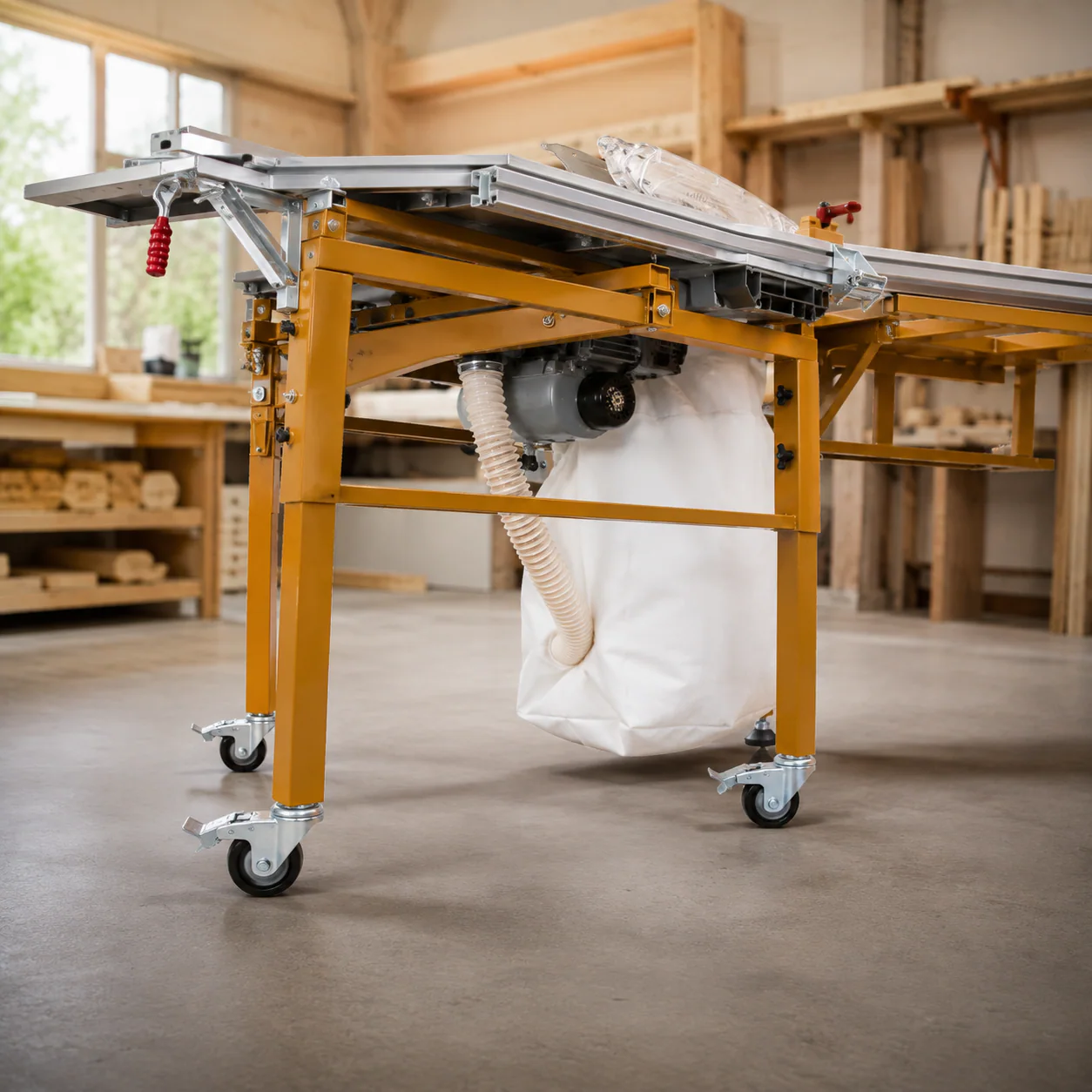
Trace Dust From the Blade to the Workshop System
Compare dust collection as a path: below-table enclosure, upper guard pickup where present, internal transitions, outlet, hose and the workshop extractor. A port on the cabinet does not prove that dust is captured effectively at every source. Inspect areas where debris can accumulate and how they are accessed after isolation. The buyer should state whether collection components, hoses and adaptors are part of the machine supply or site infrastructure.
Use the intended material and blade in sample evaluation and observe both visible escape and internal accumulation without converting a brief test into a universal efficiency claim. Review cleaning frequency and access to the lower cabinet, blade area and filters or separators elsewhere in the system. A fair comparison holds the extraction source and operating method constant or clearly records differences.
Dust comparison should use the same stock, blade and extraction source wherever practical. If that cannot be done, record the differences rather than assigning a simple winner. Observe accumulation after an agreed sequence and inspect accessible collection paths only after correct isolation. The result should identify configuration and housekeeping implications, not promise a universal collection percentage unsupported by a controlled test.
Compare Adjustment, Maintenance and Commissioning
Review the procedures for fence alignment, blade-to-table alignment, insert changes, riving-knife adjustment, belt or drive inspection where applicable, lubrication points and access to switches and extraction paths. Identify which tasks belong to normal operators and which require qualified service. A machine with strong sample results may still impose unacceptable downtime if routine adjustments are inaccessible or replacement items cannot be identified.
Commissioning requirements should cover unloading, assembly, leveling, electrical connection, guard installation and verification before cutting. Ask what documentation, tools and inspection records are supplied. For imported equipment, define responsibility for destination electrical work and do not assume plug-and-play installation. Packaging and receiving checks should protect and verify tables, rails, fence and alignment-sensitive components.
Commissioning evidence should remain with the machine record. Retain receiving condition, assembly checks, alignment verification, installed guards, electrical sign-off where required and the approved sample result. This helps distinguish shipping or setup issues from product design during later review. It also gives distributors a repeatable handover process instead of relying on informal knowledge from the first installation.
Normalize Quotations and Approve the Final Configuration
Create a matrix with the same fields for every offer: exact model, table and extensions, fence, blade and arbor scope, guards, extraction components, electrical version, included accessories, documentation, packaging, installation responsibility and spare or wear items. Separate confirmed facts from optional features and open questions. Price comparison begins only after these differences are visible.
Approve a representative sample and retain the configuration identity and acceptance result. If an OEM program changes branding or packaging, maintain the same technical baseline unless a change is reviewed in writing. Repeat orders should reference the approved revision. This closes the gap between an online cabinet-saw comparison and a procurement record that receiving, service and sales teams can use.
Score each offer only after open fields are resolved or visibly penalized as unknown. Use the same headings, evidence standard and acceptance sample for every supplier. Document why a configuration was selected, including any tradeoff in capacity, support, extraction, service or delivery scope. The comparison then remains auditable when prices change or a repeat order is proposed, without claiming a permanent market ranking.
What Should Buyers Check Before Choosing a Cabinet Table Saw?·View available products·Contact AXIMET
Frequently Asked Questions
What are the most important cabinet saw comparison fields?
Compare the workpiece envelope, table and fence system, blade and guarding interface, electrical version, dust path, service access, included components and representative sample result.
Is motor rating enough to select a cabinet saw?
No. It is one controlled field. Work support, blade system, alignment, extraction, operating duty and installation requirements also determine suitability.
How should fence systems be compared?
Review useful travel, locking and reference method, alignment verification, rail and extension scope, operator adjustment and performance with the normal stock range.
Do cabinet saw quotations include everything shown in photos?
Not necessarily. Require a line-item list for table extensions, fence, rails, blade, guards, extraction parts, tools and optional accessories.
How should sample cuts be normalized?
Use equivalent representative material, blade suitability, extraction and acceptance criteria, and record every setup difference that could affect the result.
What commissioning information is needed?
Confirm unloading, assembly, leveling, electrical connection, alignment checks, guard installation, documentation and responsibility for destination-site work.
How are substitutions controlled?
Retain the approved model and configuration revision and require written review before changing tables, fence, drive, blade interface, electrical version, accessories or packaging identity.
Conclusion
A cabinet saw comparison becomes useful when every machine is measured against one cutting schedule and one supply matrix. Compare table and fence support, blade interface, power evidence, dust path, service access and commissioning, then approve representative cuts. The result is not a promotional ranking but a controlled decision between complete workshop configurations.