
Use the comparison as a controlled buying record. It should identify the application, the exact tool variants, the evidence reviewed and every field still requiring supplier confirmation.
Define the Contractor Table Saw Category
A contractor table saw is generally understood as a workshop-capable saw that retains some provision for movement or a less massive base than a traditional cabinet saw. An open stand leaves the motor, belt area or lower blade zone more exposed and can reduce visual bulk, while an enclosed base can improve debris containment and provide a more integrated mounting structure. Neither layout alone proves power, accuracy or duty cycle. Buyers should identify the actual base, trunnion support, motor location and wheel arrangement instead of relying on the category name.
Category boundaries become blurred because some current machines combine an enclosed cabinet-like base with mobility, while some jobsite saws use substantial rolling stands and wide fences. The useful distinction is how the complete system is installed, moved, supported and maintained. Ask whether the saw is intended to remain aligned in one workshop position, move occasionally between work cells, or travel daily. That operating pattern affects table material, extension support, stand stiffness, electrical connection and the amount of setup verification required after movement.
For a valid comparison, record the exact model and photographed configuration. Note whether extension wings, mobile base, stand, dust shroud, blade guard, riving knife and miter gauge are included, optional or supplied locally. A bare-machine photograph cannot establish the delivered system. This category definition prevents a low quoted price for a stripped unit from being compared with a complete saw that already includes support and safety components.
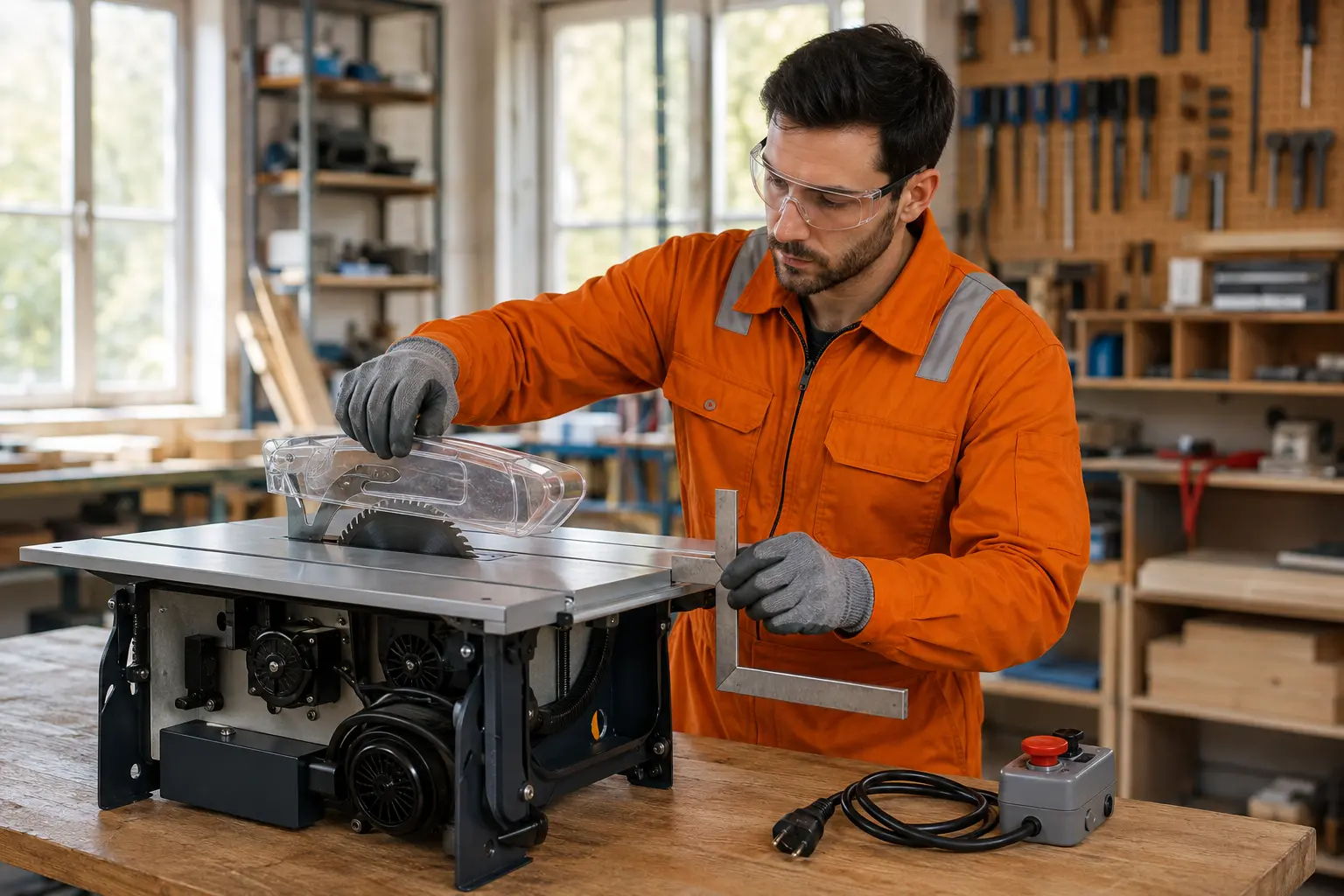
Contractor vs Jobsite and Portable Table Saws
Jobsite and portable table saws prioritize transport, compact storage and quick deployment. They commonly integrate carry points, folding or rolling stands, compact tables and onboard accessory storage. A contractor saw may still be movable, but it is more often selected for a stable working position and a larger support system. The trade-off is not simply weight: a portable machine can be easy to move yet require auxiliary tables for long stock, while a contractor configuration can occupy more floor area but need fewer temporary supports during routine ripping.
Compare the full ready-to-cut footprint, not the carton or bare saw dimensions. Include the fence rails, right-side rip area, operator position, infeed clearance and outfeed path. A site installer may value a unit that passes through doors and loads into a vehicle. A small production shop may prefer a contractor saw that stays assembled, preserves its support arrangement and avoids daily stand deployment. The correct choice follows movement frequency, stock size and available floor space rather than a generic claim that one category is more professional.
Portability also changes the acceptance test. A jobsite system should be checked after unfolding, rolling or carrying because its references may be disturbed during transport. A contractor saw that moves only occasionally can be evaluated in its normal workshop position, including leveling and extraction connection. In both cases, confirm blade size, arbor interface, cutting depth and rip capacity for the exact model. Do not transfer figures between related-looking machines or assume a marketing category guarantees a particular cutting envelope.
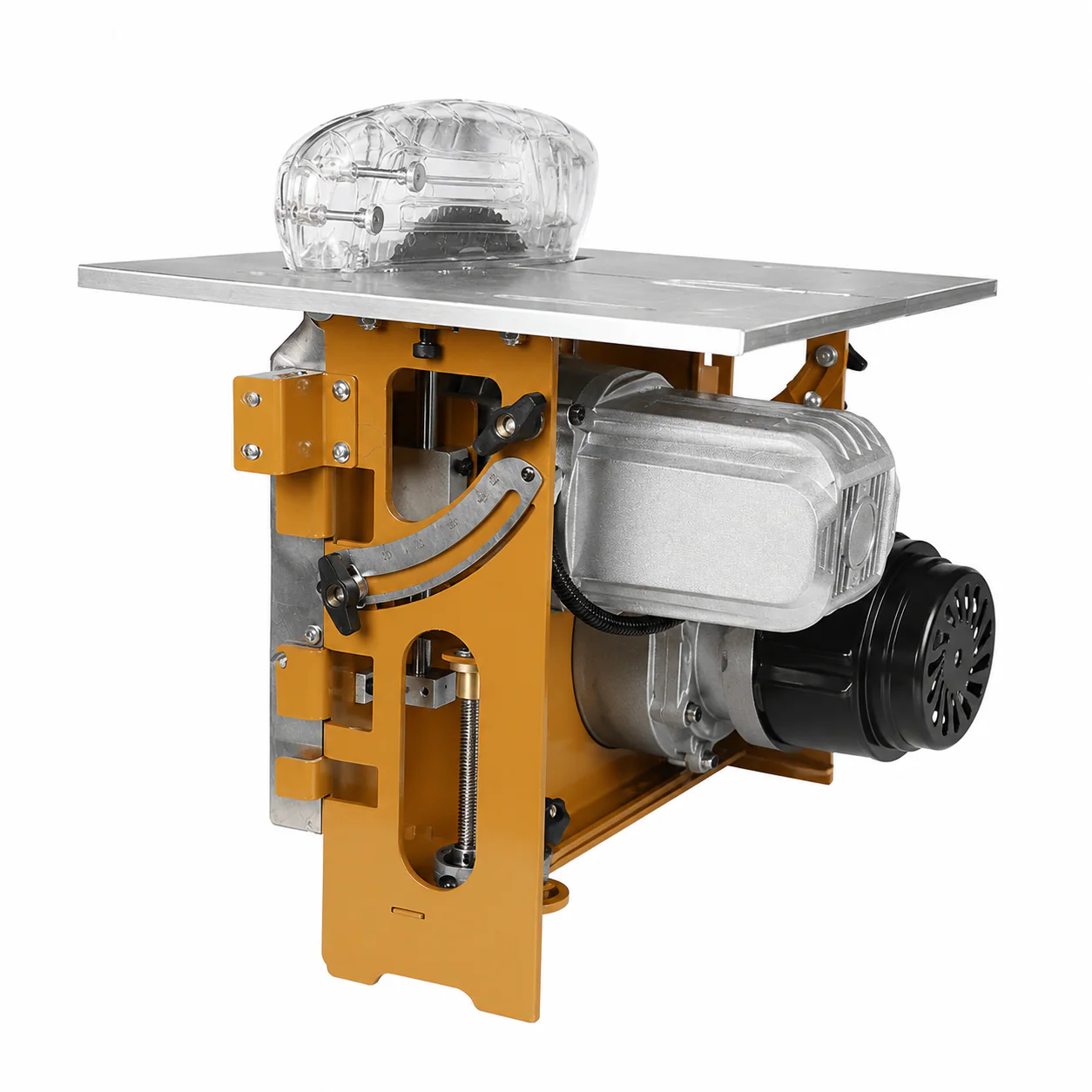
Contractor vs Hybrid and Cabinet Table Saws
Hybrid table saws are marketed as a bridge between lighter contractor formats and cabinet machines, but the term covers different constructions. An enclosed base, internal motor location or cabinet-style appearance does not by itself establish the trunnion design, table support or service access. Cabinet saws are normally considered stationary workshop equipment with a substantial base and integrated dust path. They may suit buyers who prioritize a fixed production cell, but they also demand deliberate delivery, positioning, electrical and extraction planning.
A contractor-to-cabinet comparison should examine consequences, not status. A heavier stationary system may resist movement during large-stock handling, yet it can be harder to relocate or install in an upper-floor shop. An open contractor stand can offer direct access for inspection, while an enclosed cabinet can manage airflow and debris differently. Maintenance teams should review blade-change access, belt or drive access where applicable, adjustment points and cleaning routes. These details influence downtime more directly than the category printed in a product title.
Hybrid and cabinet options may be appropriate when the saw is part of a repeatable panel or solid-wood cell with permanent infeed and outfeed support. A contractor configuration may be more practical when floor plans change, production is mixed or the saw must be repositioned. The comparison should not claim that one type always cuts more accurately. Accuracy depends on the complete machine, alignment, blade, fence, stock support and operator method, and must be verified with the model and representative material under consideration.
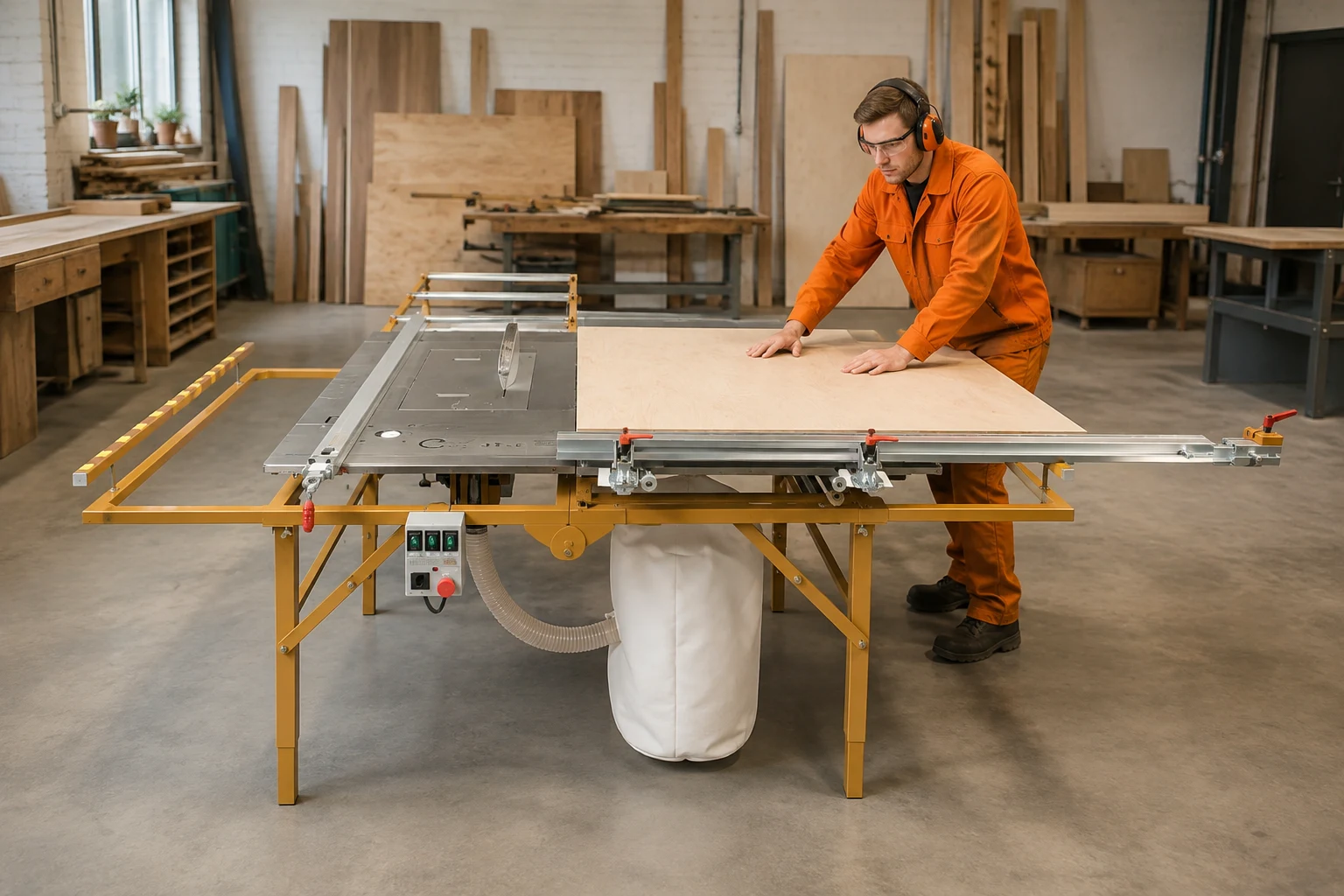
Compare Motor, Rip Capacity, Fence and Table Support
Motor configuration should be described by verified electrical and mechanical fields. Request rated input or output as defined by the manufacturer, voltage, frequency, phase, plug or connection method, and any destination-specific supply requirement. Also identify whether the drive arrangement is direct or uses another transmission method when that information is confirmed. A larger rating cannot be treated as proof of a cleaner cut because blade selection, feed, alignment, material and support all affect the result. Electrical compatibility must be resolved before price comparison.
The cutting envelope requires several connected dimensions: blade diameter, arbor size, maximum cutting depth at stated blade angles, rip capacity relative to the fence, crosscut support and usable table area. Buyers should distinguish maximum published capacity from their normal work mix. A wide rip figure has limited value if the stock cannot be supported safely, and a deep nominal cut does not answer whether the required blade and guard configuration is approved. Ask for drawings or controlled specification sheets when dimensions affect a quotation.
Fence construction deserves a practical check across the required travel. Review rail support, locking action, reference faces, adjustment method and whether extensions change the setup. The miter gauge and its table slot should be identified separately because crosscut and angled work use a different reference path. Cast, fabricated or other table and wing materials should be confirmed rather than inferred from photographs. For comparison samples, use the same stock, blade condition, target dimension and measuring method, then record setup changes instead of publishing an unsupported universal tolerance.
| Requirement | Tool A | Tool B |
|---|---|---|
| Application | Confirm | Confirm |
| Machine/interface | Record | Record |
| Dimensions/depth | Approve | Approve |
| Sample/revision | Trace | Trace |
Compare Mobility, Dust Collection and Workshop Space
Mobility can mean built-in wheels, an optional mobile base, lifting with handling equipment or partial disassembly. Each method has a different effect on floor loading, leveling, extraction hoses and electrical cables. Record the path from receiving point to working position, including doors, ramps and turning space. If the saw moves within a workshop, check how wheel locks or leveling feet establish a stable cutting position. A machine should never be judged mobile from a photograph without confirming the complete configured mass and approved handling method.
Dust performance depends on capture points and airflow through the whole system. Compare the lower blade enclosure, upper guard pickup when present, outlet locations, hose sizes and access for settled debris. The presence of a dust port is not a result. A fair trial uses the same material, blade and compatible extractor, then checks visible escape and accumulation without implying a laboratory efficiency value. Open-stand and enclosed-base machines may require different hose routing and cleaning routines, so the workshop plan should show both extraction and maintenance clearance.
Space planning includes more than machine footprint. Add fence travel, extension wings, normal stock length, operator stance, push-stick use, offcut control and access for blade changes or service. A cabinet saw may fit physically but block a material route; a portable saw may store compactly but consume a similar working envelope once supports are deployed. Mark the ready-to-cut area on the floor plan and examine conflicts with doors, benches and extraction ducts before selecting a category.
Match the Saw Type to the Buyer and Application
Installation contractors and mobile crews usually give priority to vehicle loading, stairs, rapid setup and storage security. A jobsite or portable saw may suit that route when its confirmed capacity covers the required cuts and a safe support plan is available. Small joinery shops may favor a contractor saw because it can remain assembled while retaining some ability to move during layout changes. Production workshops with fixed utilities and frequent large-stock processing may evaluate hybrid or cabinet machines as part of a permanent cell.
Distributors need a different comparison lens. They should separate market labels from controlled model data, identify which stands and extensions fit each saw, and make electrical variants visible in offers. Service capability also matters: request manuals, adjustment procedures, replacement references and an escalation route for components that affect safe setup. Stocking one apparently universal accessory across several saw families without confirmed compatibility can create more risk than carrying clearly defined kits.
Application fit should be demonstrated with representative work rather than an ideal showroom cut. Define material type, dimensions, rip or crosscut operation, finish allowance, frequency and downstream process. Observe stock handling, fence setting, offcut path, dust connection and operator corrections. The resulting record can show why one format fits the buyer without claiming that it is best for every workshop. If a required value remains unavailable, keep it as an open quotation question rather than filling it from a neighboring model.
Build a Complete Contractor Table Saw RFQ
A contractor table saw RFQ should begin with application data: material families, normal and maximum stock dimensions, required operations, shift pattern or usage frequency, destination and available floor area. Follow with requested blade diameter, arbor, cutting depth, rip capacity, table and extension arrangement, fence, miter gauge, guard and riving-knife scope. These are requested fields, not assumed AXIMET specifications. Suppliers can then respond against one structure instead of offering non-equivalent packages.
Create a comparison table with separate columns for jobsite or portable, contractor, hybrid and cabinet candidates. Rows should cover base construction, mobility method, motor configuration, voltage and phase, blade system, cutting envelope, table support, fence, miter equipment, extraction points, overall working space, maintenance access, documentation and included accessories. Add a source column for each answer so a catalog statement, drawing, sample observation and supplier confirmation are not treated as the same type of evidence.
Commercial scope belongs beside technical scope. Request packaging dimensions when handling depends on them, installation responsibilities, spare and wear-part references, warranty terms as officially offered, and the status of optional components. State the sample or pre-shipment checks required for the order, but do not invent acceptance tolerances. A complete RFQ makes price differences explainable and reduces the chance that an apparently cheaper quote excludes the stand, extensions, blade, guarding or electrical version needed by the buyer.
Compare table saw categories and buying criteria·View available products·Contact AXIMET
Frequently Asked Questions
What is the main difference between a contractor table saw and a jobsite saw?
A jobsite saw is normally organized around frequent transport, compact storage and fast deployment. A contractor saw is more often used as a stable workshop machine that can still be repositioned. The boundary is not fixed, so compare the actual stand or base, ready-to-cut footprint, table support, fence, electrical configuration and movement method. Capacity and accuracy must be verified for the exact models rather than inferred from either category name.
How does a contractor table saw differ from a cabinet table saw?
Contractor formats may use an open stand or a lighter base and may be easier to relocate. Cabinet saws are generally planned as stationary equipment with an enclosed base and permanent utilities. The meaningful comparison includes trunnion and table support, motor and drive arrangement, extraction path, service access, installation route and working space. An enclosed cabinet alone does not prove a particular power level, cutting capacity or accuracy.
Which buyers usually consider a contractor table saw?
Small and medium woodworking shops, mixed-production workshops, training environments and buyers who expect occasional machine movement may consider the format. It can also interest distributors serving customers between portable jobsite work and fixed cabinet-saw production. Suitability depends on confirmed stock dimensions, operations, support, utilities and expected frequency. A representative cutting and handling review is more useful than choosing by buyer label alone.
Which motor and voltage details belong in a comparison?
Ask for the manufacturer's definition of motor rating, voltage, frequency, phase, connection or plug, and destination-specific supply requirements. Where confirmed, identify the drive arrangement and overload or switching scope included with the machine. Do not convert one electrical number into a cutting-performance claim. The workshop electrician or responsible installer should verify that the proposed variant matches the local supply and installation plan.
How should rip capacity be compared?
Record the fence-based rip capacity for the exact configuration and note any rails or extensions required to achieve it. Compare that figure with normal stock, not only the largest occasional panel. Check table support, fence travel, infeed and outfeed arrangements and offcut control at the same time. Also request blade diameter, arbor and stated cutting depth because rip width alone does not describe the complete cutting envelope.
Does an enclosed base guarantee better dust collection?
No. Enclosure can help define an airflow path, but performance also depends on the lower blade housing, upper pickup if fitted, outlet and hose arrangement, compatible extractor, material and cleaning access. Compare machines under equivalent conditions and inspect where debris escapes or settles. Avoid assigning an efficiency percentage unless it comes from an applicable controlled test for the exact system.
What information should a buyer send with a contractor table saw inquiry?
Provide material types, normal and maximum stock sizes, rip and crosscut needs, destination power, available working space and whether the saw must move. List required blade, arbor, cutting depth, rip capacity, table, fence, miter gauge, extensions, guarding and extraction fields for supplier response. Ask the quotation to distinguish included, optional and locally supplied items and to identify the exact model revision and electrical variant.
Conclusion
A contractor table saw earns consideration when a buyer needs workshop support and cutting scope without committing automatically to a fully stationary cabinet format. The decision becomes clearer after contractor, jobsite, portable, hybrid and cabinet candidates are compared on the same electrical, cutting, support, mobility, extraction and space fields. Use the RFQ table to expose missing components and unresolved dimensions, then select the category that fits the actual material route—not the most impressive label.