A magnetic drill should be selected around the hole, workpiece and working environment rather than one headline specification. Motor input, maximum drilling diameter or machine weight can help narrow the range, but none of these values explains the complete application. A professional comparison begins with the required hole diameter and depth, then checks whether the workpiece provides a suitable mounting surface and enough space for the machine and cutter system.
Function requirements come next. If your application needs adjustable speed, reverse, tapping or pipe drilling, state that requirement before comparing model names. Similar housings or suffixes do not prove that two magnetic drilling machines have identical functions. The final step is to match the machine with the cutter interface, accessories, electrical configuration and any OEM presentation required for your market.
Use a requirement-led selection process
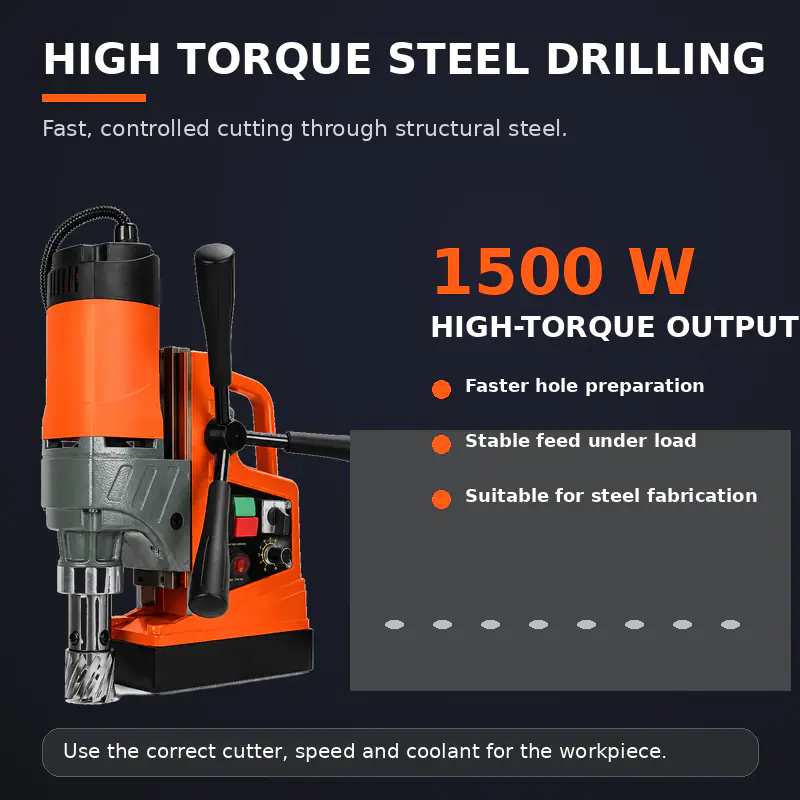
Select a magnetic drill from the required hole, workpiece, mounting surface and working environment before comparing power, maximum diameter or weight. These headline values can narrow a range, but they cannot confirm the complete drilling setup.
Start with hole diameter and cutting depth
Define the complete diameter and cutting-depth range before selecting a machine. The largest requested hole is only one boundary; cutter compatibility, available stroke, mounting space and the smaller holes used in repeated work also affect the shortlist.
The listed maximum drilling diameter is an upper capacity reference for a specific model. It does not mean that every cutter type, cutting depth or interface can be used automatically. The machine capacity, annular cutter range, pilot pin and connection method must be checked as a system. For a distributor building a product range, the expected customer applications and most frequently requested hole sizes are also useful when deciding which capacities to stock.
When drilling depth varies, include the deepest required cut in the inquiry. Cutter length and machine stroke both matter, but stroke alone does not confirm that a specific cutter assembly will fit. AXIMET can compare the confirmed machine data with the applicable cutter information once the diameter and depth requirements are clear.
- Required minimum and maximum hole diameter
- Cutting or drilling depth for each size group
- Expected cutter material and interface
- Single application or broader distributor range
Check the workpiece before the machine
Describe the workpiece material, shape, thickness, flatness, coating and available magnetic contact area before accepting a model recommendation. Rated magnetic holding force is a controlled product value, not a guarantee of identical holding on every surface.
Flat steel plate, structural beams, fabricated sections, curved components and pipe applications present different mounting conditions. Curved workpieces should not be treated as flat-base applications without checking the applicable configuration. For pipe drilling, AX8120E has confirmed pipe-range data of Ø165–219 mm. Other curved-workpiece requirements need model-specific review rather than an assumption based on that range.
If drawings or photographs can clarify the workpiece geometry and drilling position, they can be included with the inquiry. The purpose is not to replace technical confirmation, but to reduce ambiguity about available mounting area, nearby obstructions and access around the intended hole.
Consider working position and access
Balance machine capacity and weight against the actual access around the drilling point. A lighter drill can improve handling in restricted areas, but it is not suitable if the required diameter, stroke, function or mounting condition falls outside the confirmed configuration.
Measure the area around the drilling point. Allow for the machine body, feed movement, handle clearance, cutter length and any adaptor or chuck. Also identify whether the work is completed on a workshop bench, a large fixed structure or at an installation or maintenance location. Vertical, overhead or restricted-position requirements should be stated clearly so the setup can be reviewed against the selected model information.
For portable work, carrying weight matters, but reducing weight should not override the required drilling capacity. For fixed workshop use, repeatability across a defined hole schedule may be more important than choosing the smallest machine.

Compare capacity, speed, stroke and weight
Read capacity, rated input, no-load speed, stroke, holding information and net weight together. No single value proves application fit, cutting speed or tool life; the model data must be reviewed against the cutter, workpiece and working position.
These values should be read together. Higher motor input does not automatically make one machine the correct choice, and a higher no-load speed does not by itself prove faster cutting or longer tool life. Cutter diameter, cutter material, workpiece condition and feed practice also affect the operation. Some confirmed AXIMET models have one listed speed, while others show an adjustable speed range.
The 18-model collection page provides a controlled comparison of diameter, rated input, speed, holding or pipe information, stroke and weight. Use it to create a shortlist, then confirm functions and accessories from the applicable model data before quotation.
- Maximum drilling diameter: does the model cover the required hole range?
- No-load speed: is it fixed or shown as an adjustable range?
- Stroke: does the documented feed travel fit the planned setup?
- Holding information: does the workpiece require flat or specialized mounting review?
- Net weight: can the machine be positioned in the available working area?
Magnetic Drill Selection Factors
| Selection Factor | What You Should Confirm | Why It Matters |
|---|---|---|
| Hole Capacity | Minimum and maximum hole diameter plus cutting depth | Prevents selection based only on the largest headline diameter |
| Speed | Fixed or adjustable speed range | Different cutter sizes and applications may require different operating conditions |
| Stroke | Feed travel and complete cutter assembly fit | Stroke alone does not confirm that every cutter and adaptor combination will fit |
| Mounting Condition | Workpiece shape, thickness, flatness and contact area | Rated magnetic force does not represent every real mounting surface |
| Machine Weight | Access, working position and handling requirements | The lightest machine is not always the best choice if capacity is insufficient |
| Required Functions | Variable speed, reverse, tapping or pipe drilling | Functions must be checked on the selected model rather than assumed from appearance |


For a model-by-model comparison, review theAXIMET magnetic drill rangeto compare available capacities, functions and configurations before creating your shortlist.
Specify the functions you actually need
State adjustable speed, reverse, tapping or pipe-drilling requirements before comparing model codes. Similar housings and suffixes do not prove identical controls, so every required function must be confirmed in the applicable model data.
Adjustable speed can be relevant when the planned tool and hole range require different operating conditions. Reverse is a separate function and should be confirmed independently. Tapping requirements need the thread size, workpiece information and the exact model function to be reviewed. Pipe drilling requires the applicable mounting configuration and confirmed workpiece range.
This approach also prevents confusion between models with similar names. AXIMET model data contains fixed-speed and adjustable-speed configurations, but the page should not infer functionality from E, RE, D or G naming alone.


Match the drill with the annular cutter
Treat the machine, annular cutter, pilot pin, adaptor and chuck as one controlled hole-making system. Diameter, cutting depth, cutter material and shank interface must match both the application and the selected magnetic drill.
AXIMET product materials include HSS and carbide-tipped annular cutter families. Documented interface ranges include Weldon, One-touch, FEIN Quick-in and threaded options. These names describe available cutter families; they do not mean that every interface fits every magnetic drill. Compatibility is checked against the selected machine and cutter variant.
When comparing HSS and TCT annular cutters, begin with the workpiece, hole diameter, cutting depth, machine capacity and interface. Do not apply the specifications of one cutter family to the other, and do not assume a universal performance difference without the relevant product and application data.
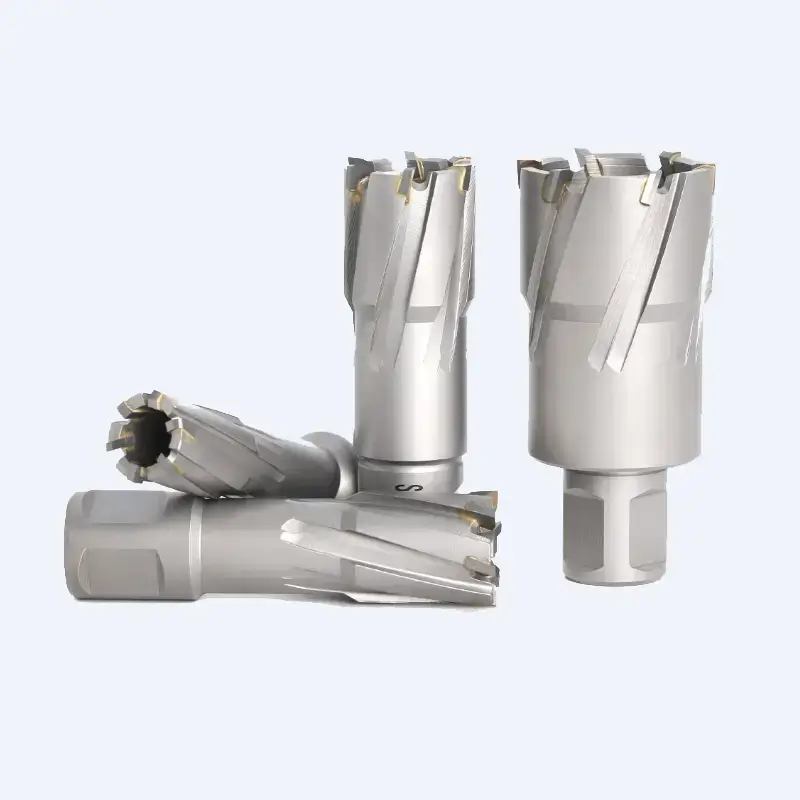
For available cutter materials, shank systems and B2B supply options, review theAXIMET annular cutter rangebefore finalizing the machine and cutter combination.
Choose around the industrial application
Use the industry name only as context, then select from the actual workpiece, hole schedule, access and mounting position. Two buyers in the same industry can require different machines because their drilling conditions are not identical.
These application names are useful starting points, but they do not replace the drilling specification. Two buyers in the same industry can need different machines because their workpieces, hole ranges and access conditions differ. Provide the actual task information instead of asking for a general model for an entire industry.
For distributors, application coverage can help shape the stocked range. A focused portfolio may combine compact machines for restricted work, general fabrication capacities and selected higher-capacity or specialized configurations, provided each model is represented with its confirmed data.
Magnetic Drill Selection by Buyer Requirement
| Buyer Requirement | Selection Direction | Confirm Before Quotation |
|---|---|---|
| Restricted Working Space | Compact magnetic drill | Hole capacity, cutter length and handle clearance |
| General Steel Fabrication | Standard portable magnetic drill | Hole range, speed, stroke and mounting surface |
| Multiple Cutter Diameters | Variable-speed configuration | Actual speed range, cutter material and interface |
| Drilling and Threading | Tapping-capable configuration | Thread size, tapping function and workpiece information |
| Pipe Drilling | Pipe-compatible configuration | Pipe diameter, curvature and applicable mounting range |
| Distributor Product Range | Mix of compact, general and specialized models | Local demand, accessories, voltage, packaging and reorder requirements |
For distributors, the objective is not to stock every available configuration. A more practical range covers the most common local applications first, then adds specialized models where customer demand justifies them.
You can also reviewAXIMET industrial drilling and cutting applicationsto compare product systems used for steel fabrication, structural work, shipbuilding and industrial metalworking.
Confirm electrical and market requirements
Record destination voltage, frequency and plug in the quotation and order documents, even when a reference electrical value appears in the comparison table. Keep these requirements separate from labels, manuals, packaging and other market presentation decisions.
Importers and private-label buyers should also define labeling, manual language, packaging and branding requirements. AXIMET has confirmed support for logo, color, label, packaging and manual coordination. These presentation decisions are separate from the technical configuration, so they should not be used to change or overwrite model specifications.
Keeping technical and commercial requirements in separate parts of the inquiry makes comparison easier. It also helps ensure that a model recommendation, cutter package and OEM presentation refer to the same confirmed supply scope.
For voltage, plug, branding, packaging or private-label requirements,send your specification to AXIMETso the commercial configuration can be reviewed separately from the machine specification.
Prepare a complete recommendation request
Send one requirement package covering the workpiece, hole sizes, cutting depths, position, functions, cutter interface, accessories, quantity, destination and electrical version. A complete request lets the supplier compare controlled models without guessing.
Attachments such as a specification sheet, requirement list, workpiece drawing or application photograph can help clarify the request. They should support, not replace, the written diameter, depth, material and interface information.
- Workpiece material, shape and thickness
- Required hole diameters and cutting depths
- Working position and available mounting area
- Required speed, reverse, tapping or pipe-drilling function
- Annular cutter material and interface
- Pilot pins, adaptors, chucks or related accessories
- Quantity, destination country, voltage and plug
- Logo, label, packaging and manual requirements
Use this magnetic drill selection checklist
Use the checklist to verify that the inquiry defines the drilling task and the commercial supply scope. Its purpose is to identify a small, reviewable model shortlist—not to select automatically from the largest specification.
- Have you defined the full hole diameter and depth range?
- Have you described the workpiece material, shape and mounting surface?
- Have you measured access around the drilling point?
- Have you stated the working position and handling requirements?
- Have you listed every required control or special function?
- Have you identified the cutter interface and accessories?
- Have you confirmed voltage, plug and destination requirements?
- Have you separated technical specifications from OEM presentation?
Frequently Asked Questions
Should You Choose a Magnetic Drill by Power Alone?
No. Motor power is only one selection factor. You should first confirm the required hole diameter and cutting depth, then compare the workpiece, mounting condition, speed, stroke, machine weight, cutter compatibility and required functions. A higher-power machine is not automatically the best choice for every drilling application.
What Size Magnetic Drill Do I Need?
Choose the machine around your full hole diameter and cutting-depth range rather than the largest hole only. Also check the available mounting area, machine stroke, cutter interface and working space. If you are buying for distribution, consider the hole sizes your customers request most often before deciding which capacities to stock.
Does Every Magnetic Drill Support Variable Speed or Reverse?
No. Magnetic drills are available with different control configurations. Variable speed, reverse and tapping should be confirmed separately for the selected model. Do not assume that machines with similar housings or model names provide the same functions.
Can You Use a Magnetic Drill on Thin, Curved or Coated Steel?
The mounting condition must be checked before selecting the machine. Steel thickness, curvature, coatings, surface contamination, flatness and available magnetic contact area can affect the setup. Do not treat the listed magnetic holding force as a guarantee that the same holding condition will be achieved on every workpiece.
Can a Magnetic Drill Be Used Horizontally or Overhead?
Horizontal, vertical, overhead and restricted-position drilling requirements should be identified before the machine is selected. Suitability depends on the selected model, mounting surface, available access and complete operating setup. Do not assume that a machine suitable for flat workshop drilling is automatically suitable for every working position.
How Do You Choose Between HSS and TCT Annular Cutters?
Start with the workpiece, hole diameter, cutting depth, machine capacity and cutter interface. HSS and TCT annular cutters belong to different cutter families, so their specifications should be checked separately. The machine, cutter, pilot pin and connection system should be treated as one complete hole-making system.
What Information Should You Send a Magnetic Drill Supplier?
Provide the workpiece material and shape, required hole diameters, cutting depths, working position, available mounting area, required functions, annular cutter interface, accessories, quantity, destination country, voltage and plug. For OEM orders, also include branding, labeling, packaging and manual-language requirements.
Conclusion
Choosing a magnetic drill is a system decision, not a comparison of motor power or maximum drilling diameter alone. Start with the required hole diameter and cutting depth, then confirm the workpiece, mounting surface and available access. Use those requirements to compare capacity, speed, stroke, weight and functions before matching the machine with the correct annular cutter and accessories. For importers and distributors, voltage, plug, packaging and OEM requirements should be confirmed separately before quotation. A complete application brief makes it easier to shortlist suitable models and reduces the risk of ordering a machine that does not fit the intended work.
Need Help Selecting the Right Magnetic Drill?
Compare the available AXIMET magnetic drill configurations or send us your hole size, workpiece, cutting depth and required functions. We can review the available machine and annular cutter combination against your application.
This guide is limited to confirmed AXIMET product information, catalog data, FAQ data and approved application and product materials. Final compatibility and specifications are confirmed against the selected model or product table.