
This guide gives industrial buyers and distributors a controlled method for defining the package, comparing suppliers and approving repeat orders without inventing performance values, compatibility or commercial terms.
Define the drilling package from the application
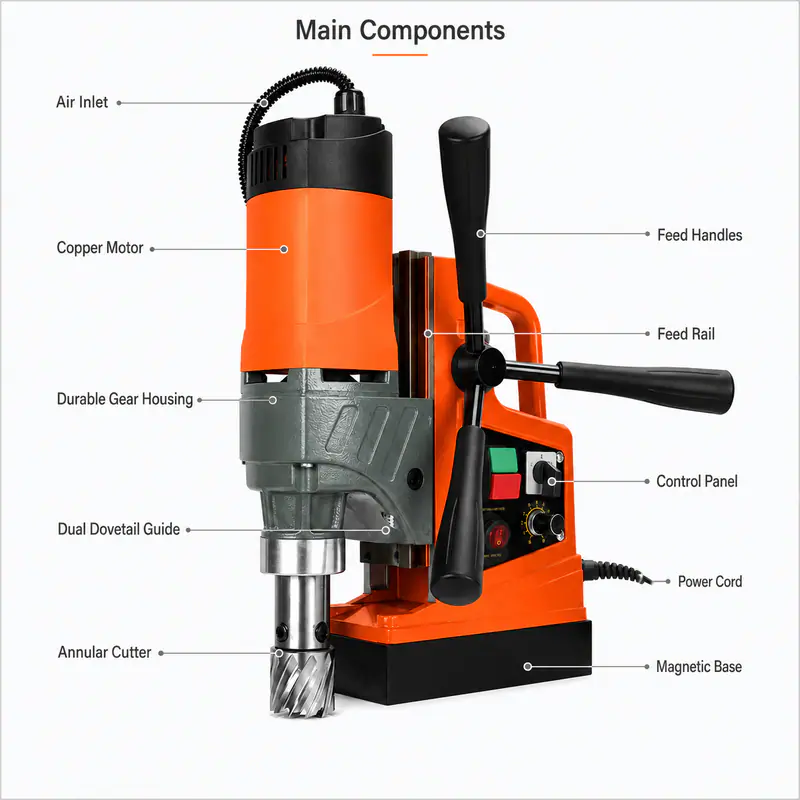
Specify the workpiece, hole schedule, working position and magnetic drill before choosing cutters, pilot pins, chucks or adaptors. Accessories should close a defined system requirement, not create one after the machine has been selected. A magnetic drilling package is more than a machine accompanied by a box of parts. The useful starting point is the drilling task: workpiece material and condition, hole diameters, cutting depths, number and location of holes, available access and working position. Record whether the work will be performed on plate, structural sections, pipe or another confirmed surface, and identify any restriction around the drilling area. This application brief determines which machine capacity, cutter range and supporting items need to be reviewed together.
For procurement teams, a written application brief also makes competing quotations comparable. One supplier may include an annular-cutter holder, pilot pins and a coolant arrangement while another may quote only the machine. Both offers can appear to describe a complete magnetic drill package even though their usable scopes differ. Require each bidder to respond against the same fields and identify excluded or pending items. Do not convert an unconfirmed accessory into a purchase-order assumption.
Distributors should apply the same logic to range planning. Separate accessories required for a specific machine-and-cutter combination from optional items intended to broaden the offer. A controlled core range can then be linked to supported machine models and cutter interfaces, while less common combinations remain subject to confirmation.
Confirm the machine spindle and cutter interface
Record the exact machine model, spindle or holder arrangement and the cutter shank. A shared product category or nominal cutter diameter does not prove that the connection is compatible. The connection chain begins at the magnetic drill and continues through any arbor, chuck or adaptor to the cutting tool. AXIMET product materials reference several interface concepts across relevant ranges, including Weldon, One-touch, FEIN Quick-in and threaded arrangements. Their presence in the wider portfolio does not mean every interface is available on every model or cutter series. The quotation must identify the exact combination being supplied.
When a drill chuck is requested for twist drills, confirm the chuck and connection required by the selected machine rather than adding a generic chuck line. When an adaptor is proposed, record both sides of the connection and the intended tool. Also check whether the complete assembly fits the machine stroke and available working space. These details belong in the technical approval record because a dimensionally correct cutter can still be unusable when the interface chain is incomplete.
For replacement orders, use the approved model and accessory reference. Photographs and broad descriptions can help identify a requirement, but they should not replace a traceable reference where compatibility matters. If one accessory is intended for several machines, list every machine and confirm each combination.
Match annular cutters and pilot pins as a controlled pair
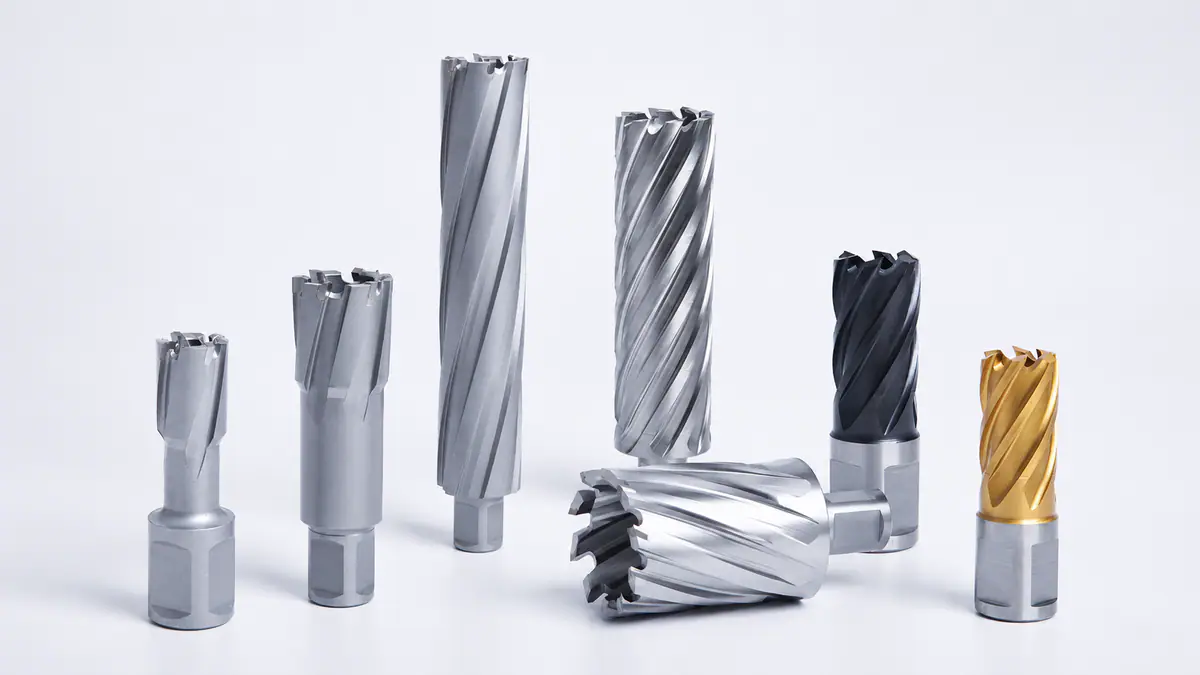
Select the cutter family, diameter and cutting depth first, then confirm the pilot pin specified for that exact range. Pilot pins should not be treated as universal packing items. An annular cutter order needs more than the nominal hole diameter. Record whether the requirement is for the confirmed HSS or TCT family, the exact diameter, cutting depth and shank. Keep the controlled tables for the two product families separate. A size or depth available in one range does not establish the same availability in another, and similar appearance does not prove interchangeability.
The pilot pin performs a defined role within the selected cutter assembly and must be matched to the cutter construction and depth. Include its reference or confirmed compatibility on the same purchase line or package schedule. If more than one cutting depth is ordered, do not assume that one pilot pin covers all variants. Ask the supplier to map the cutter and pilot-pin combinations explicitly so receiving and warehouse teams can keep the sets together.
For distributor packaging, label the cutter family, size, depth and corresponding accessory identity clearly. This reduces picking errors and supports repeat ordering. Where the product source does not confirm a pilot-pin mapping, leave the field pending rather than copying a reference from a similar cutter.
Review coolant, chip removal and operating support
Confirm the coolant arrangement and operating accessories supported by the selected machine and cutter. Do not invent a fluid type, feed value or universal operating method when the controlled source does not provide it. Coolant delivery and chip evacuation affect how a drilling package is used, but the required arrangement depends on the confirmed machine and cutter configuration. Identify whether the quoted machine includes or supports a relevant coolant component and what is included in the package. If a separate bottle, tank, hose or connection is proposed, list it as a distinct item with its compatibility status.
Operating guidance must remain within the applicable machine and cutter documentation. A buyer should not infer cutting speed, feed, lubricant type or service interval from a different diameter or series. If the quotation does not establish those values, request the correct instructions or mark them for technical confirmation. This evidence-safe approach is particularly important when the package will be resold under a distributor programme and local teams may rely on supplied documentation.
The review should also consider safe chip clearing and access around the cutter without turning the purchasing guide into an operating manual. Users must follow the supplied instructions and site safety controls. Procurement must ensure the necessary supported components and documentation are present.
Separate included items, optional accessories and consumables
Create three lists for every quotation: included with the machine, optional additions and consumable or replacement items. This prevents scope gaps and duplicate purchasing. A catalogue image often shows a machine beside cutters, pilot pins, chucks or other equipment, but an image does not establish the sales package. Ask the supplier to state the included contents for the exact model and quotation. Then list optional items the buyer wants added, followed by replacement or consumable requirements.
Use quantities and references, not only accessory names. A request for pilot pins should link each quantity to its cutter range and depth. A request for an adaptor should state the incoming and outgoing interface. For electrical or powered accessories, confirm the relevant model and electrical context. Do not assume that a component shown for one market or model is supplied in every package.
This separation improves price comparison. A lower machine price may exclude items included elsewhere, while a larger accessory bundle may contain products the buyer does not need. Normalize the package before judging total procurement cost, and keep freight, spare requirements, packaging and documentation visible as separate commercial fields.
| Package field | Record | Approval control |
|---|---|---|
| Machine | Model and electrical configuration | Exact quotation reference |
| Cutter | Family, size, depth and shank | Series-specific table |
| Accessories | Pilot pin, chuck, adaptor and coolant scope | Compatibility confirmed |
| Supply | Included, optional and replacement items | Quantity and packaging |
Control electrical, packaging and private-label details
Treat voltage, frequency, plug, labels, manuals and private-label presentation as controlled order fields. Branding choices cannot be allowed to obscure the underlying model and compatibility references. A magnetic drill is an electrical product, so the quotation should record the confirmed voltage, frequency and plug requirement for the destination. Do not infer electrical configuration from a photograph or a quotation prepared for another market. If more than one destination is involved, separate the quantities and electrical requirements.
For OEM or private-label programmes, distinguish product identity from brand presentation. Logo, label, carton artwork, colour presentation and inserts can be discussed where available, but the approved machine model, cutter family and accessory references must remain traceable. Ask which files, samples and approvals are required without assuming a minimum order, tooling charge or delivery time that has not been confirmed.
Packaging should keep small compatible parts identifiable through receiving, storage and end-customer delivery. Agree how pilot pins, adaptors and other accessories will be labelled and grouped. If a mixed package is proposed, include a packing-list structure that connects each component to the supported machine or cutter range.
Approve the package with one final compatibility checklist
Release the order only after the machine, cutters, pilot pins, interfaces, included contents, optional items, electrical data, packaging and required documents agree across the quotation and approval record. The final review should reconcile the application brief, technical schedule and commercial quotation. Confirm the magnetic drill model and capacity fields used for selection; cutter family, sizes, depths and shanks; pilot-pin mapping; chuck or adaptor details; coolant scope; included and optional contents; electrical configuration; quantities; labeling; packaging and documentation.
Incoming inspection can use the same schedule. Receiving teams can verify model identity, visible condition, ordered quantities, markings, package contents and agreed accessory references. Any dimensional or performance acceptance must follow the controlled specification or agreed method. Factory or product photographs provide context but do not replace shipment-specific evidence when that evidence is required by the buyer.
For repeat orders, reference the approved package revision. If the machine, cutter range, market configuration or packaging changes, treat the change as a new approval item instead of assuming backward compatibility. This creates a traceable system from application to quotation, receiving and replenishment while avoiding unsupported universal claims.
Continue the package review by comparingmagnetic drilling machines, checking the controlledannular cutter families, reading theHSS versus TCT comparison, andsending AXIMET a complete requirement schedule.
Frequently Asked Questions
Are magnetic drill accessories universal?
No. Compatibility must be confirmed for the exact machine, spindle or holder, cutter shank, cutting depth and intended use.
What should a buyer send before requesting a package quotation?
Send the workpiece and hole schedule, working position, intended machine, cutter families and sizes, depths, interfaces, quantities, electrical destination, packaging and documentation requirements.
Can one pilot pin be used with every annular cutter?
Do not assume that it can. The pilot pin should be mapped to the confirmed cutter family, construction and cutting depth.
Does a product photograph define what is included?
No. Images provide context but do not establish sales-package contents. Included, optional and replacement items must be listed in the quotation.
How should two magnetic drill packages be compared?
Normalize the machine, cutters, pilot pins, chucks, adaptors, coolant scope, electrical data, quantities, packaging and documents before comparing total cost.
What should be checked for private-label supply?
Keep model and compatibility references controlled while confirming logo, labels, carton, manuals and approval steps separately.
What controls a repeat order?
Use the approved package reference and revision, and recheck every configuration or packaging change.
Conclusion
A reliable magnetic drilling package is approved as a complete, traceable system. Begin with the application, confirm every interface, distinguish included and optional items, and control electrical, packaging and documentation fields. Keep unresolved compatibility visible until it is confirmed.
The completed schedule should remain useful after quotation. Procurement can use it to compare equivalent offers, engineering or product teams can use it to close compatibility questions, receiving can verify the delivered identities and quantities, and warehouse teams can keep matched cutters and pilot pins together. When a distributor repeats the order, the approved revision provides a stable baseline instead of rebuilding the package from photographs or old email descriptions. Any proposed substitution should be assessed as a controlled change because a similar name or diameter does not establish the same shank, depth, accessory mapping or package content.
This process does not require unsupported performance promises. It requires clear application facts, controlled product references and visible decisions. Where AXIMET documentation confirms a model, cutter family or interface, record that source. Where a term, accessory or commercial field is still open, mark it pending and request confirmation. The result is a package that can be quoted, approved and replenished with less ambiguity while preserving the boundary between technical compatibility, optional presentation and the buyer's destination-market requirements.
This guide is limited to the confirmed AXIMET product, catalog and FAQ materials. Final product compatibility and specifications are confirmed against the selected model or product table.