
Pipe drilling changes the mounting problem: a flat magnetic base cannot achieve the same contact on a curved surface that it achieves on plate.
Use the comparison as a controlled buying record. It should identify the application, the exact tool variants, the evidence reviewed and every field still requiring supplier confirmation.
Start with the hole and assembly requirement
Record pipe outside diameter, wall condition, hole diameter, depth and whether the line or fabrication is installed. These details determine access and mounting geometry.
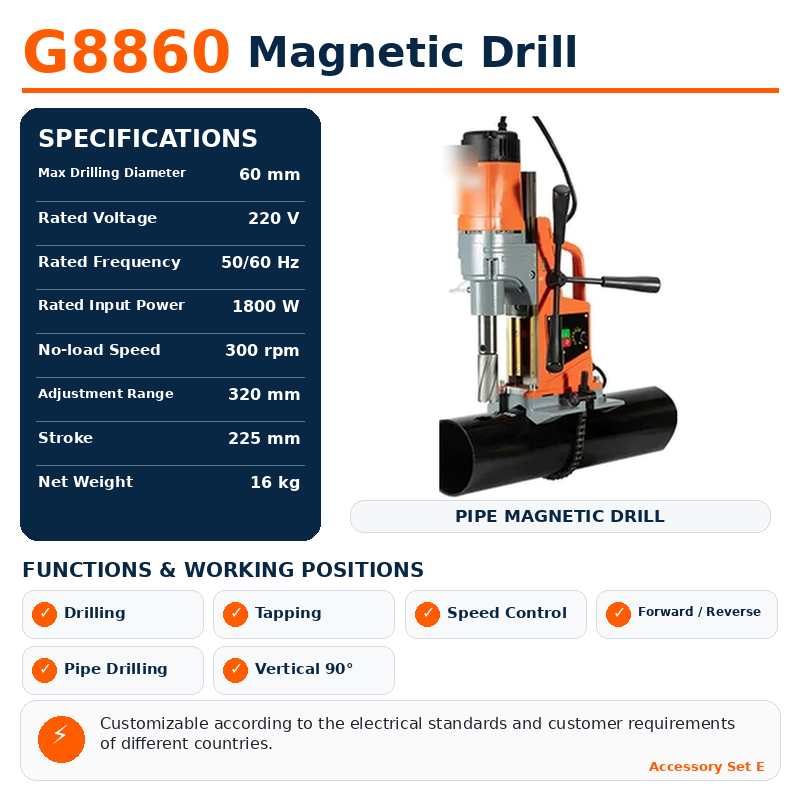
Compare cutting structure and operating behavior
Annular cutting can reduce the material removed for larger holes, but cutter type, depth, pilot arrangement and lubrication still require confirmation.
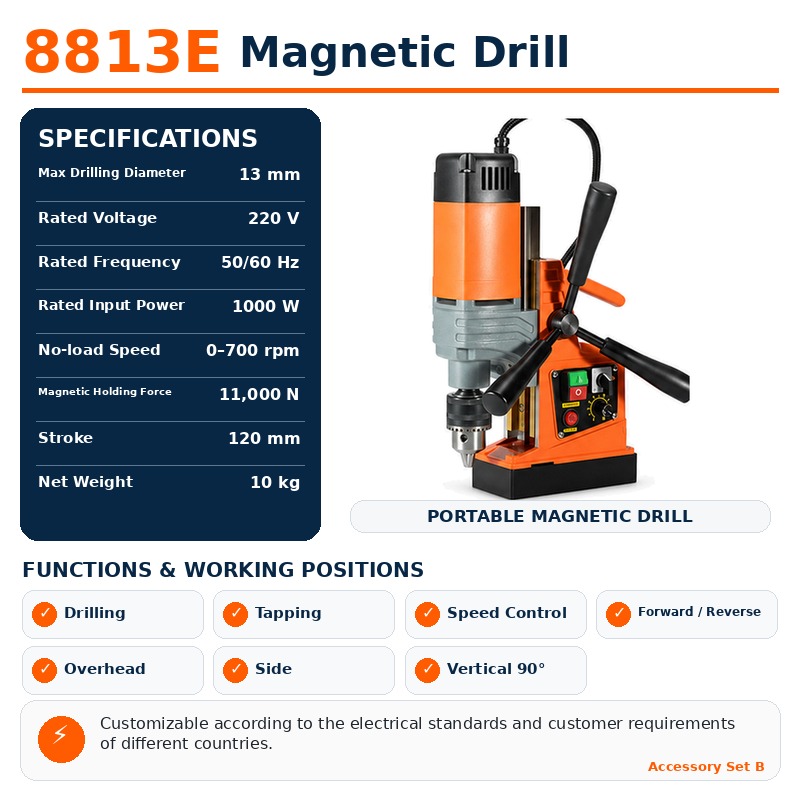
Confirm machine, interface and workholding
Curvature reduces the magnetic contact area. Use only the pipe adaptor, chain or other retention arrangement approved for the selected machine and application.
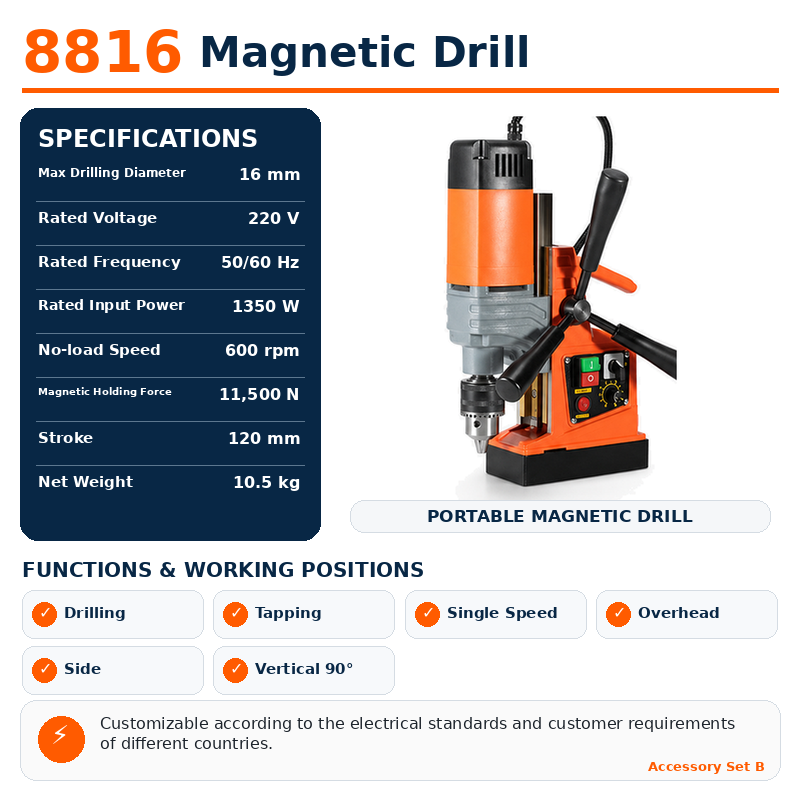
Specify dimensions and controlled product fields
Confirm base dimensions, adaptor range, machine clearance, feed travel and cutter connection. Nearby welds, fittings and obstructions may decide which orientation is practical.
| Requirement | Tool A | Tool B |
|---|---|---|
| Application | Confirm | Confirm |
| Machine/interface | Record | Record |
| Dimensions/depth | Approve | Approve |
| Sample/revision | Trace | Trace |
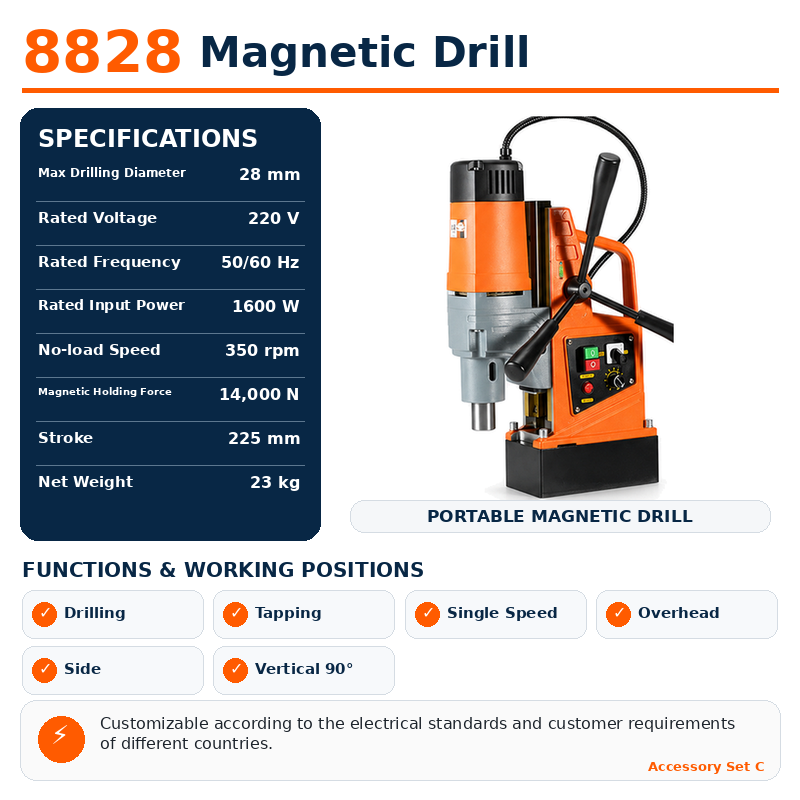
Evaluate samples with a stated method
Test the full setup on representative pipe, including secondary retention, before approving the method. Watch for movement, poor seating and interrupted cutting.
Build a clear distributor assortment
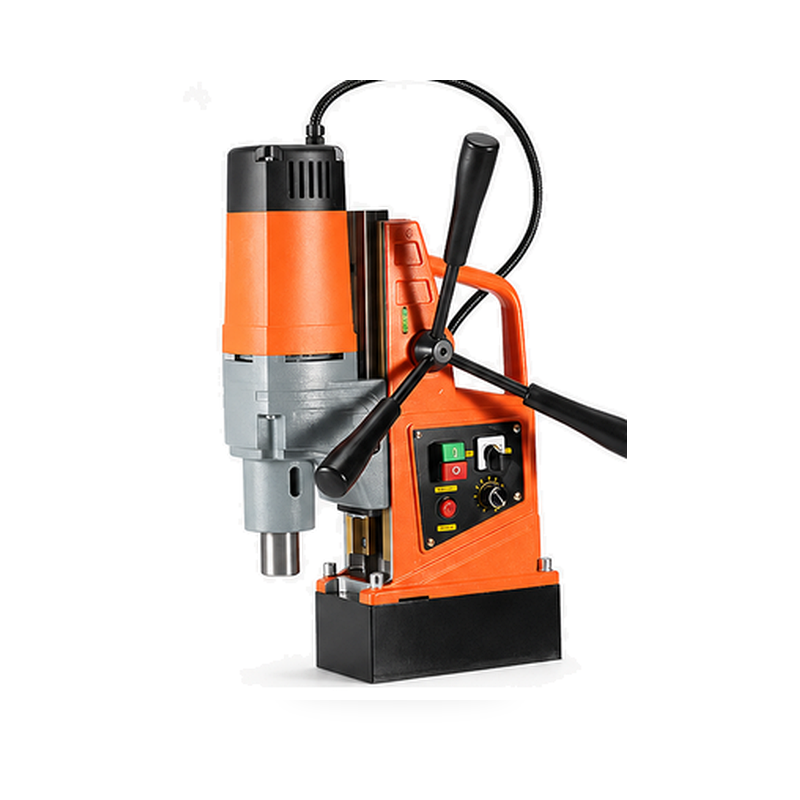
A supplier range should state which machines have a verified pipe-mounting solution and the applicable pipe range instead of presenting every magnetic drill as pipe-ready.

Release quotations and repeat orders
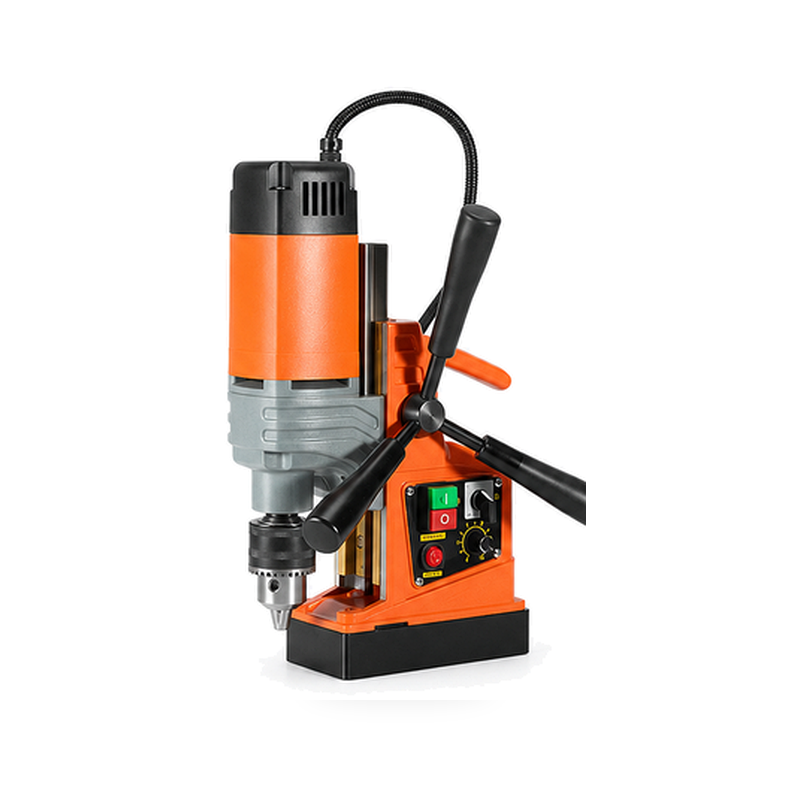
The quotation should list machine, mounting adaptor, chains or straps, cutter system and included safety accessories as separate controlled items.
Magnetic Drills·Magnetic Drill Safety·Portable vs Heavy-Duty·Request Pipe Drilling Review
Frequently Asked Questions
Can a standard magnetic base hold directly on pipe?
Curvature reduces contact; use only a mounting and retention method verified for the machine and pipe.
Does rated magnetic force apply unchanged on curved steel?
No. Published force under controlled contact conditions does not represent every pipe surface.
What pipe information does a supplier need?
Outside diameter, wall and surface condition, hole diameter and depth, position, access and quantity.
Is secondary retention required?
Follow the selected machine and mounting system instructions; pipe and non-horizontal work commonly require a verified backup restraint.
Which cutter is used for pipe holes?
Choose from the material, diameter, depth, machine interface and cutting conditions; do not assume one cutter fits every pipe job.
Conclusion
Pipe magnetic drilling is primarily a mounting and retention decision. Define the curved workpiece and hole, then verify the machine, adaptor, restraint and cutter as one system.