
Use the comparison as a controlled buying record. It should identify the application, the exact tool variants, the evidence reviewed and every field still requiring supplier confirmation.
Start with the Saw and Work Environment
Record the saw manufacturer, exact model, base dimensions, mounting-hole pattern and approved attachment method before evaluating a stand. Photographs and approximate width are insufficient because fastener locations, underside obstructions and load paths may differ. If adapters or mounting brackets are required, identify their part references and orientation. A claim of universal compatibility should be treated as a request for a documented fit list or a controlled trial, not permission to drill or improvise connections.
Map the work environment from storage to cutting position. Indoor shop floors, unfinished jobsite slabs, thresholds, ramps, stairs and vehicle beds place different demands on feet, wheels and handles. Also note dust hoses, power cables and available setup area. A stand that rolls smoothly on a clean floor may be awkward on debris or unable to turn through a narrow route. Environmental review should follow any surface limitations in the stand instructions.
Material handling influences the frame even when the saw itself is compact. Long boards can apply overturning forces as their weight transfers across the table. Wide stock can pull an operator away from a balanced stance. Define normal workpiece dimensions, feed direction, auxiliary tables and who controls the offcut. That information lets the buyer evaluate leg spread and support attachment without converting a static capacity label into proof of stability during every cut.
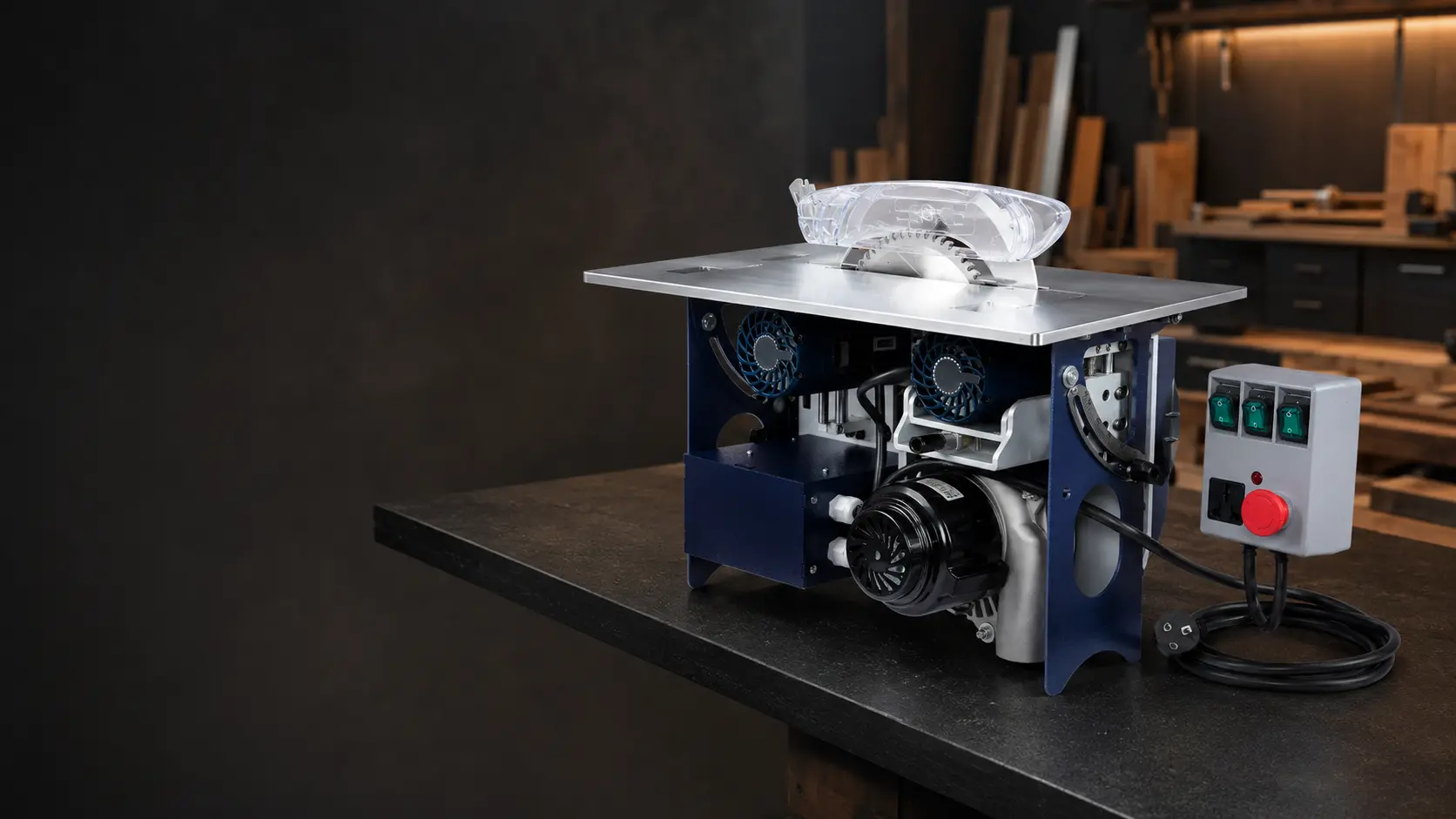
Compare Folding, Rolling and Fixed Stand Designs
A folding stand reduces storage volume by collapsing legs or frames, but buyers should inspect the hinge, lock and sequence required before work. Confirm whether the saw remains attached while folding and what the instructions permit during lifting. Loose accessories need a storage plan. A compact folded outline is valuable only if protruding brackets, wheels or handles still fit the vehicle and storage bay, so request dimensions for the actual configured stand rather than the empty frame.
Rolling stands use wheels for movement in one or both operating states. Wheel diameter, position, axle support, brakes and ground clearance affect route suitability, but no single wheel format is best everywhere. A gravity-rise design links frame movement and deployment so the operator can raise or lower the assembly through a controlled motion. Observe pinch zones, balance and lock engagement with the intended saw fitted. Do not assume a similar-looking mechanism follows the same sequence.
A fixed stand may be the better choice when the saw stays in one cell and storage volume is unimportant. It can avoid folding joints and may accept permanent infeed or outfeed planning, although its stability still depends on design, mounting and floor contact. Universal stands use brackets or adjustable rails to serve multiple saws; their benefit is inventory flexibility, while their main risk is an unverified interface. Distributors should maintain a saw-to-bracket compatibility matrix for every package offered.
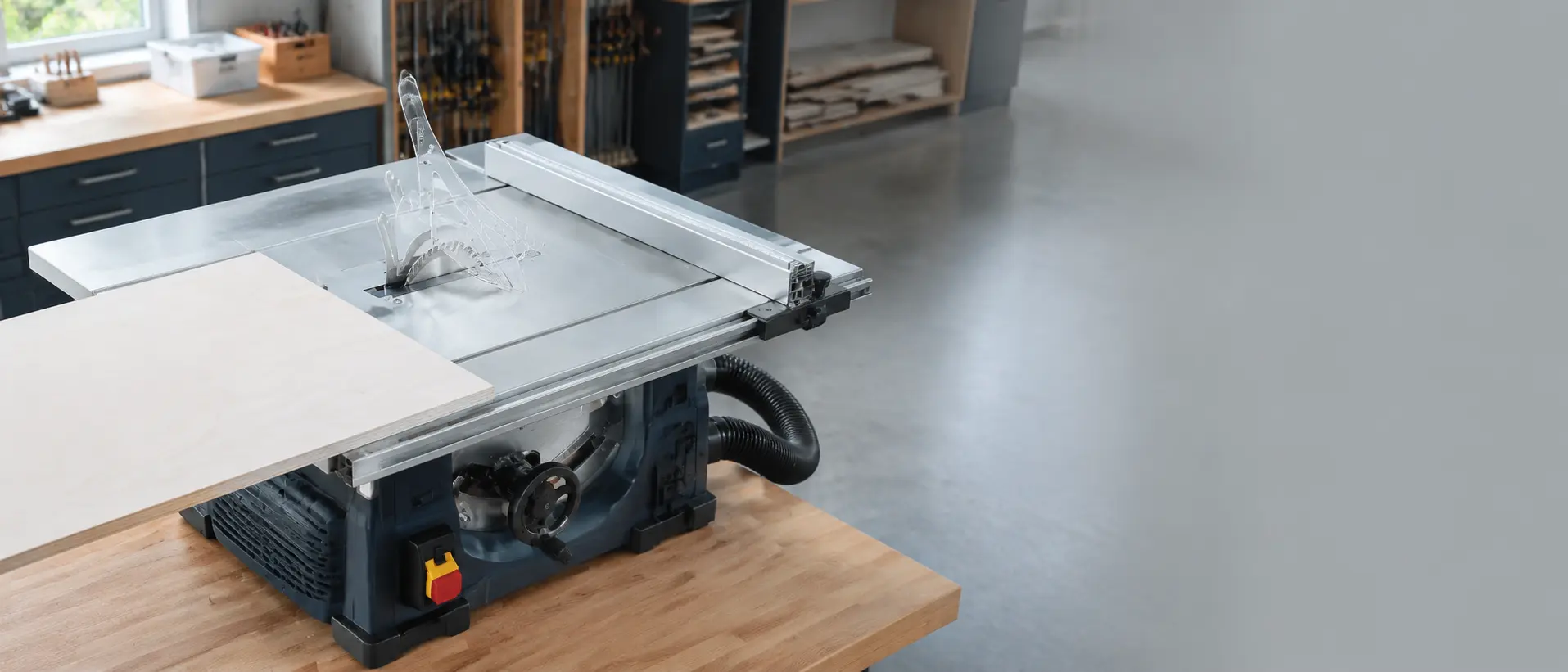
Confirm Mounting Pattern, Capacity and Stability
Mounting holes should be checked in two directions with an identified datum, including hole diameter, fastener access and any raised features beneath the saw. Confirm bracket spacing and whether bolts, washers, lock nuts, spacers or tool-free clamps are specified. Fastener grade and tightening method must come from controlled instructions. Enlarging holes, omitting spacers or clamping against a plastic housing can alter the load path and should not be used to make an incompatible stand appear acceptable.
Load capacity must refer to the exact stand and the manufacturer's stated conditions. Determine whether the figure covers the saw only or another defined load case; never add saw and workpiece masses to a label without knowing how it was established. Dynamic feed force, long-stock leverage and uneven floors are separate stability considerations. If the required rating is missing, keep it open in the RFQ and request evidence rather than publishing a convenient number.
Inspect leg geometry in the deployed state. Contact points should sit firmly, locks should fully engage, and the mounted saw should not rock under permitted checks. Leveling provisions can help on appropriate surfaces, but they do not make a severely uneven site suitable. Apply test forces only through an approved acceptance method. Observe movement while placing representative stock on planned supports and stop the trial if attachment, joints or feet behave unexpectedly.
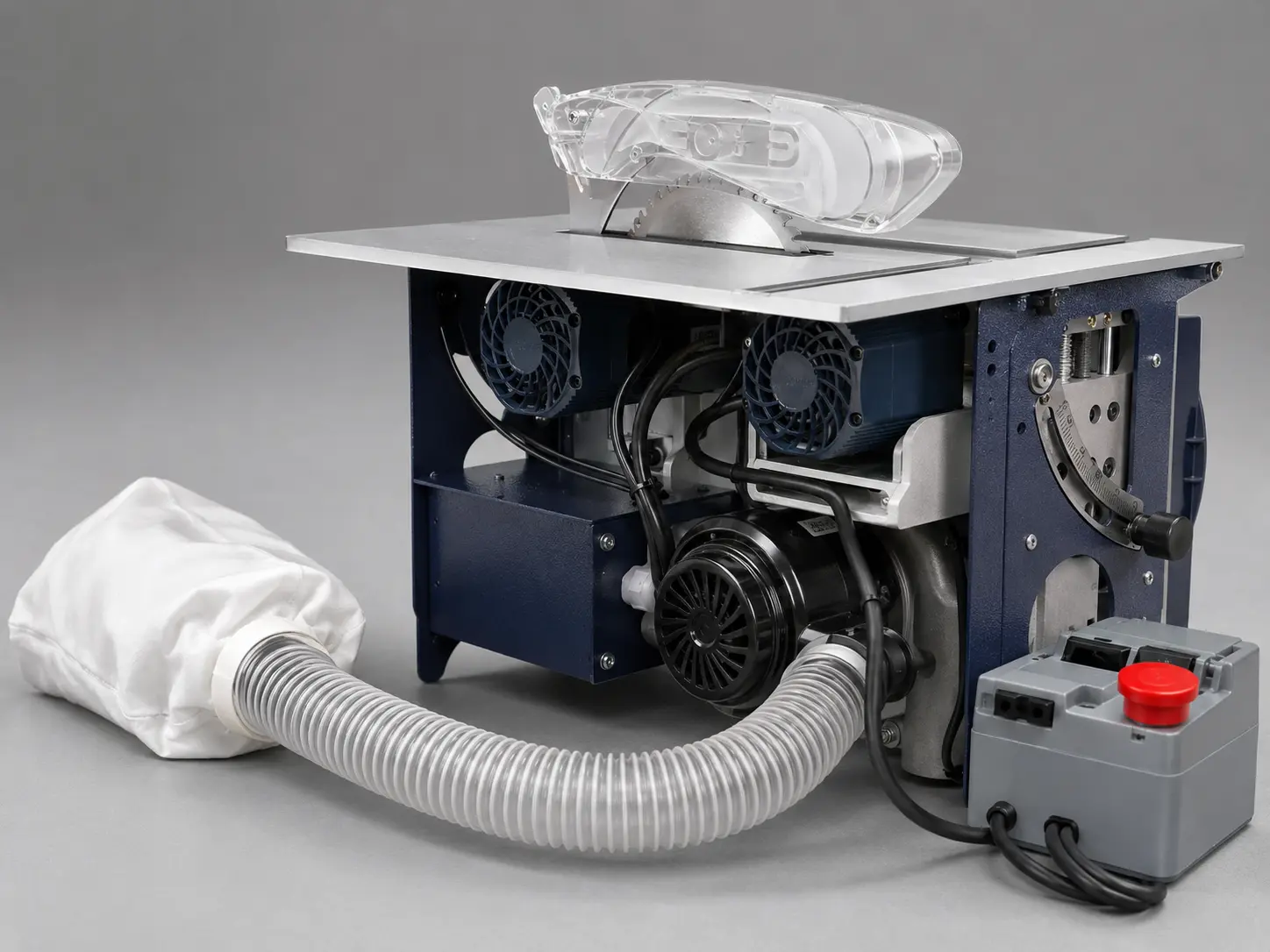
Evaluate Working Height and Material Support
Working height is measured with the saw mounted and the stand fully deployed. It affects operator posture, control and relationship to auxiliary surfaces. A nominal stand height can be misleading if mounting brackets raise the saw table or if feet require adjustment. Test the actual operator group and normal work rather than selecting a universal ergonomic value. Where several saw models share a stand, record the finished table height for each approved combination.
Long-board support may come from stand-mounted extensions, separate rollers or workshop tables. Check adjustment range, locking, lateral position and whether a support remains level when loaded within its approved use. The support should carry weight without pushing stock sideways or lifting it from the saw table. Infeed and outfeed functions may require different placement, and an outfeed support must not obstruct offcuts or the operator's safe movement.
Extension support creates additional forces on the stand. Identify whether each extension is part of the stand design, a compatible accessory or independent local equipment. A photograph showing a roller does not make it included. For quotation comparison, list the number of supports, their mounting hardware and folded storage position. Test the complete material route because a stable empty stand can still become difficult to control when a long board transfers weight beyond the leg footprint.
| Requirement | Tool A | Tool B |
|---|---|---|
| Application | Confirm | Confirm |
| Machine/interface | Record | Record |
| Dimensions/depth | Approve | Approve |
| Sample/revision | Trace | Trace |
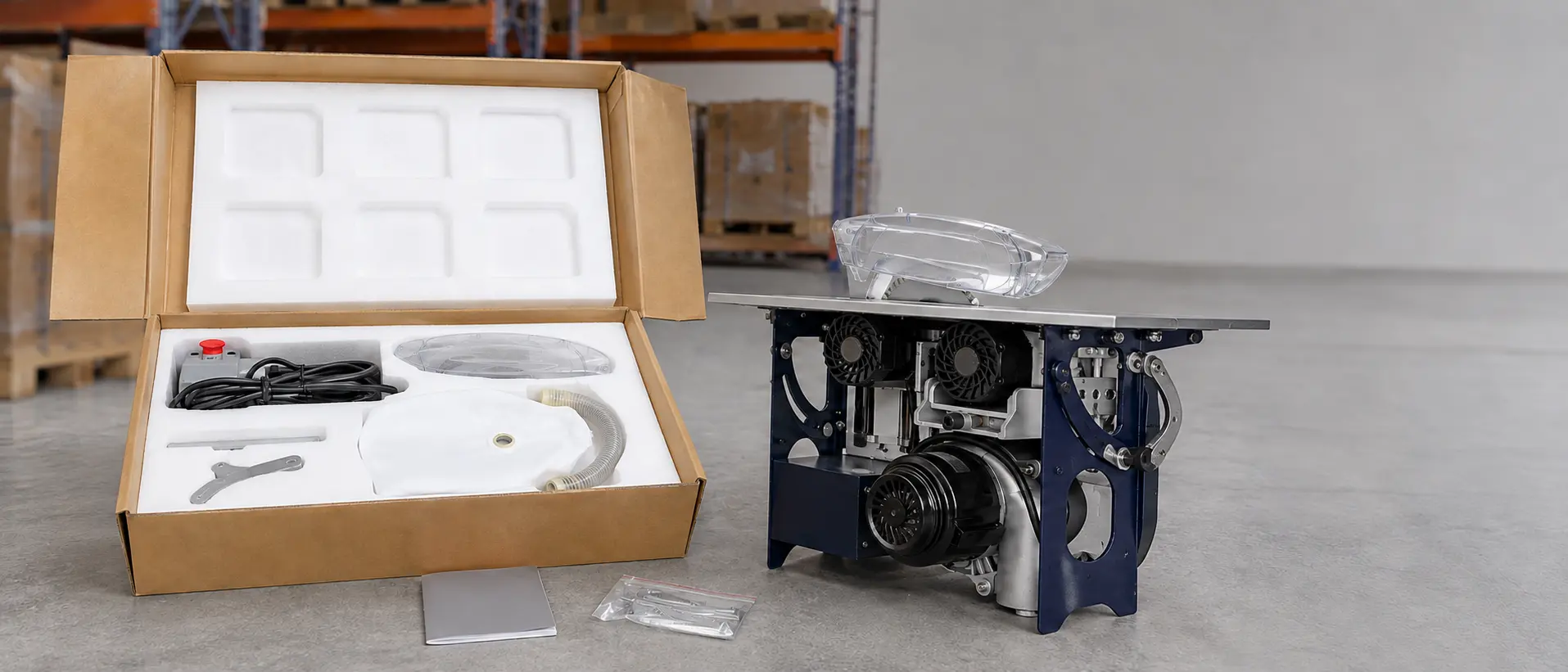
Compare Portability, Storage and Setup Time
Portability includes lifting, rolling, grip position, balance and route clearance. Inspect handles with the saw and accessories attached in the permitted transport state. A handle that works for an empty frame may place a loaded assembly at an awkward angle. If two-person handling or saw removal is required, include it in the work method. Vehicle restraint points and protection from impact also belong in transport planning, even though they may be supplied outside the stand package.
Folded size should be recorded as length, width and height for the configured system, including wheels, brackets and retained accessories. Check whether it can stand in storage as shown, whether locks prevent unintended opening and whether the saw remains within its approved orientation. Storage plans should protect electrical components and prevent loose mounting hardware from being lost. A smaller folded dimension is not automatically preferable if every deployment requires removing and realigning the saw.
Setup time is best observed as a sequence rather than advertised as one number. Begin with the normal stored state, move to the work area, unfold, engage locks, level where permitted, retrieve supports and verify mounting. Record difficult reaches, extra tools and missed lock indicators. Repeat the cycle after operators understand the instructions. The goal is not a fastest demonstration but a consistent ready-to-cut check that can be trained and audited.
Test a Stand and Saw as One Working System
A sample inspection starts with carton contents. Compare the packing list with the frame, mounting brackets, fasteners, wheels, handles, extensions, tools and instructions actually received. Identify small hardware before assembly and check for transport damage at joints or tubes. Do not substitute a local bolt during acceptance unless the responsible supplier approves it. Photograph labels and bracket orientation so the assembled sample can be traced to the quoted package.
Assemble in the documented order and record unclear steps. Verify the saw attachment, full engagement of each lock, foot contact and any leveling adjustment. Cycle folding and rolling only as permitted with the saw mounted or removed. Then conduct representative material handling with guards and normal work controls in place. The test should reveal rocking, wheel movement, support deflection, awkward feed or interference, but it should not exceed an unconfirmed capacity to discover a limit.
Finish by returning the system to storage. Check whether dust and chips interfere with hinges, whether the cable and accessories have secure locations, and whether mounting hardware loosens after the approved trial. A distributor can turn the observations into a receiving checklist for future cartons. If a new saw revision changes its base, repeat compatibility confirmation instead of assuming the previous bracket remains valid.
Prepare a Portable Table Saw Stand RFQ
The RFQ should name the exact saw and include a base drawing or mounting-hole dimensions when available. State the work environment, normal material, required stand format, working-height preference, floor condition, transport route, folded storage limit and any long-board support. Ask the supplier to identify the stand model, compatible bracket kit and permitted saw-mounted transport state. Keep requested load capacity as a response field rather than inserting an unsupported estimate.
Create separate lines for frame, mounting brackets, wheels, handle, extension supports, feet or leveling parts, fasteners, assembly tools and documents. Require an included-hardware list and carton contents so offers can be compared on equal scope. Packaging dimensions and mass may be requested for logistics, but figures must come from the exact packed version. If several saws are involved, attach a compatibility table and require a response for each combination.
Define acceptance activities appropriate to the order: identity and quantity check, damage inspection, assembly, mounting verification, lock operation, deployed stability, movement on the intended route, support adjustment and return to storage. State who supplies the saw and representative stock for the sample. Any numerical pass limit should come from approved documentation or an agreed test plan. This produces a stand-specific procurement record without turning general guidance into an invented product specification.
Review portable table saw stand requirements·View available products·Contact AXIMET
Frequently Asked Questions
Are portable table saw stands universal?
Some stands use adjustable rails or brackets and are sold for multiple saws, but universal does not mean every saw fits. Confirm the exact saw model, mounting-hole pattern, underside clearance, bracket range, fasteners and permitted orientation. Request a compatibility list or test the combination under controlled conditions. Do not drill the saw base or alter a bracket unless the responsible manufacturer has approved that method.
How can a buyer confirm the mounting-hole pattern?
Use a controlled drawing when available, or measure the actual saw base from defined datums in both directions. Record hole diameter, underside obstructions and access for washers and nuts. Compare those details with the bracket drawing rather than comparing only overall width. A sample fit should use the specified spacers and hardware and should not force the base out of shape.
What should be checked besides the stand load capacity?
Check whether the rating applies to the exact stand and under which conditions, then review leg geometry, locks, feet, saw attachment, floor surface and forces from stock handling. Long boards can create leverage that a static label does not describe. If the capacity evidence is missing, ask the supplier. Never test beyond a documented limit merely to establish where failure begins.
Should a buyer choose wheels or a folding frame?
Choose from the real route and storage method. Wheels help on suitable floors but add brake, axle and clearance considerations. Folding frames reduce volume but introduce hinges, locks and a deployment sequence. Gravity-rise arrangements combine movement and folding in another way. Trial the configured saw through vehicle, doors, ramps and storage instead of selecting from one feature in isolation.
How should a stand support long boards?
Use approved extensions or stable independent supports set to the saw-table height. Check adjustment locks, placement, lateral stability and the transfer of weight through the cut. A roller should not steer the board or obstruct an offcut. Identify every support in the quotation because sample-room equipment shown beside a stand may not be included in the delivered carton.
Are mounting brackets and fasteners normally included?
Inclusion varies by stand and package. The quotation and packing list should identify brackets, bolts, washers, nuts, spacers, wheel hardware, handles, tools and extensions separately. Ask whether one bracket kit fits the named saw and whether alternative hardware is needed. Receiving inspection should reconcile small parts before assembly, since replacing an unidentified fastener can change the mounting method.
How should a portable table saw stand sample be accepted?
Verify identity and carton contents, assemble from the supplied instructions, mount the exact saw, engage every lock and inspect foot contact. Trial approved folding, rolling and storage sequences, then handle representative stock with planned supports. Record rocking, unintended wheel movement, interference and loosening without exceeding stated limits. The acceptance report should include stand, saw, bracket and hardware revisions.
Conclusion
Stand selection succeeds when the frame disappears into a predictable working routine: the saw fits without alteration, locks are obvious, material remains supported, and the complete assembly can reach storage without unsafe handling. Folding size or a universal label cannot answer those questions. Verify the mechanical interface and carton contents first, then approve deployment, stability and transport with the exact saw. That evidence gives distributors a defensible compatibility package and operators a stand they can set up consistently.