
Use the comparison as a controlled buying record. It should identify the application, the exact tool variants, the evidence reviewed and every field still requiring supplier confirmation.
Decide Whether a Portable Table Saw Fits the Work
Portable saws are useful when work must happen near installation, when a small workshop needs reclaimable floor space, or when parts are prepared at several locations. Typical tasks may include ripping boards, trimming components and producing repeat parts within the confirmed machine envelope. List the operations that genuinely benefit from mobility. Large-panel breakdown, heavy continuous production or joinery outside the approved tooling scope may be safer and more efficient on other equipment.
Jobsite work adds uneven floors, changing power sources, limited extraction and frequent setup. Installation work may demand accurate fitting but only a modest number of cuts. A small shop may store the saw after use yet have better benches and dust equipment than a site crew. Treat these as separate operating profiles. The same saw can require a different stand, support arrangement and acceptance check in each environment.
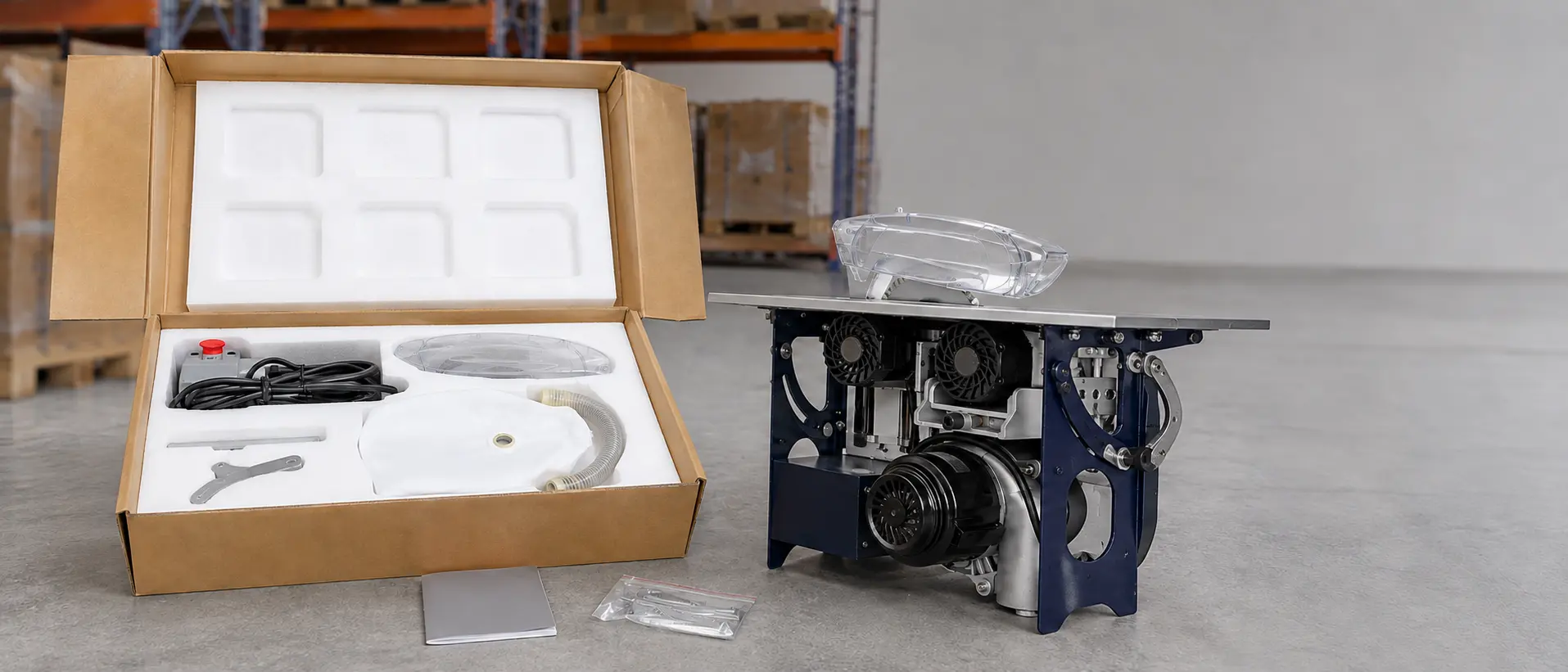
Portability includes every component needed for a safe cut. Measure the stored and transported kit with stand, fence, miter gauge, blade, guards, push devices, hose and support hardware. If critical accessories travel in a separate box, include that handling step. A saw that arrives without its riving knife or fence is not ready simply because the motor starts.
Match the Saw to Lumber, Plywood and Sheet Goods
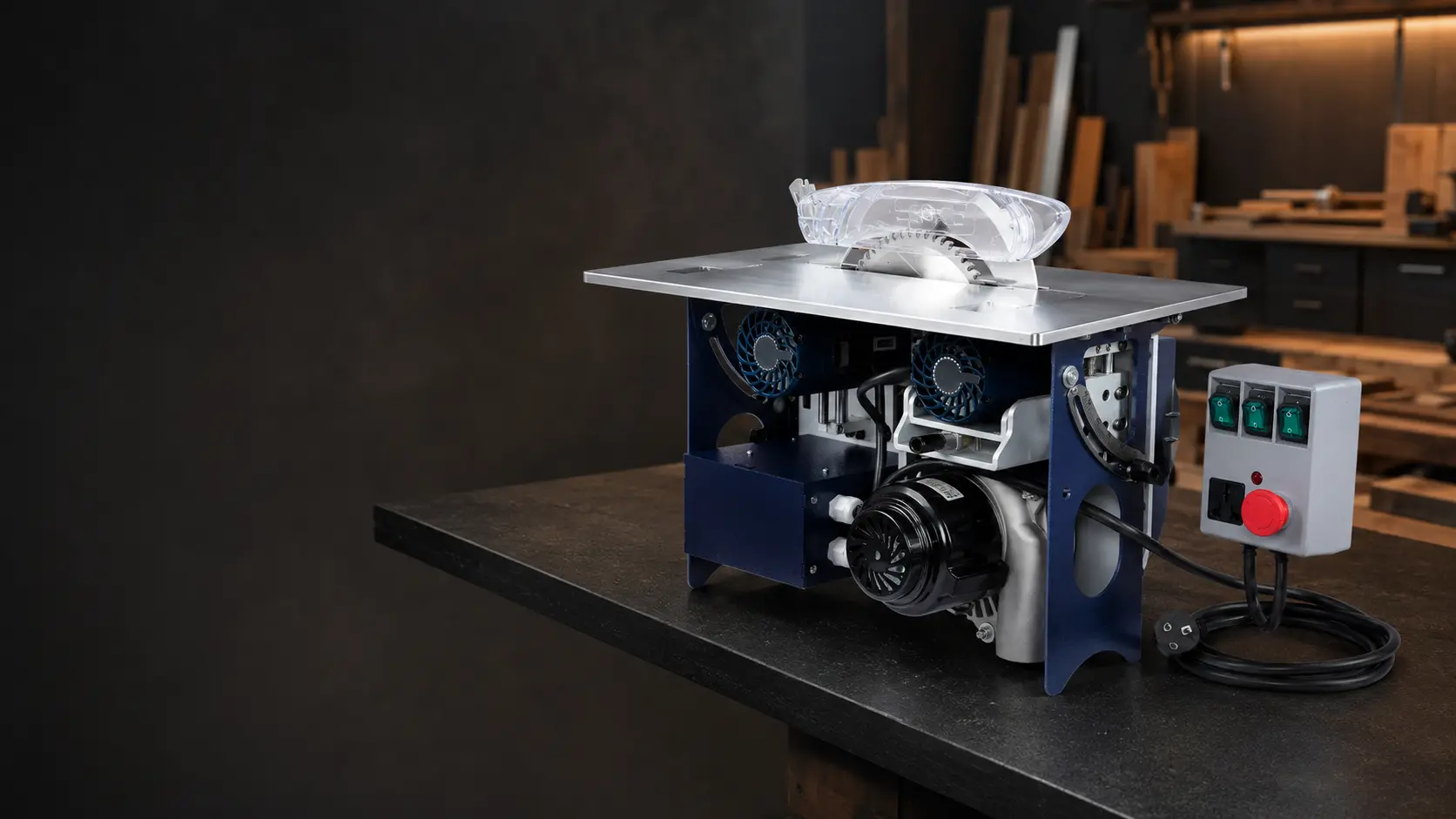
Lumber should be assessed for length, width, thickness, bow, twist and the availability of a straight reference edge. A portable table surface offers less room to correct unstable stock during feed. Rough material may need jointing or another preparation method before ripping. Compare confirmed cutting depth and rip capacity with normal boards, leaving a practical support and finish allowance rather than planning every cut at a published maximum.
Plywood, MDF and other sheet goods challenge balance before they challenge motor output. A full sheet may exceed what one operator can control on a compact table even when the cut line falls inside the nominal rip range. Break large panels down with an appropriate method or use a planned work table and assistance. Protect finished faces, consider edge-chipping requirements and use extraction suited to the material, especially for fine MDF dust.
Build a task map showing material, starting size, finished size, rip or crosscut direction, support and next process. This reveals where the portable saw adds value and where a track-guided saw, panel station or fixed shop machine may fit better. It also prevents buyers from treating blade size, cutting depth or fence travel as isolated proof that every sheet can be handled safely.
Choose the Blade, Fence and Cutting Accessories
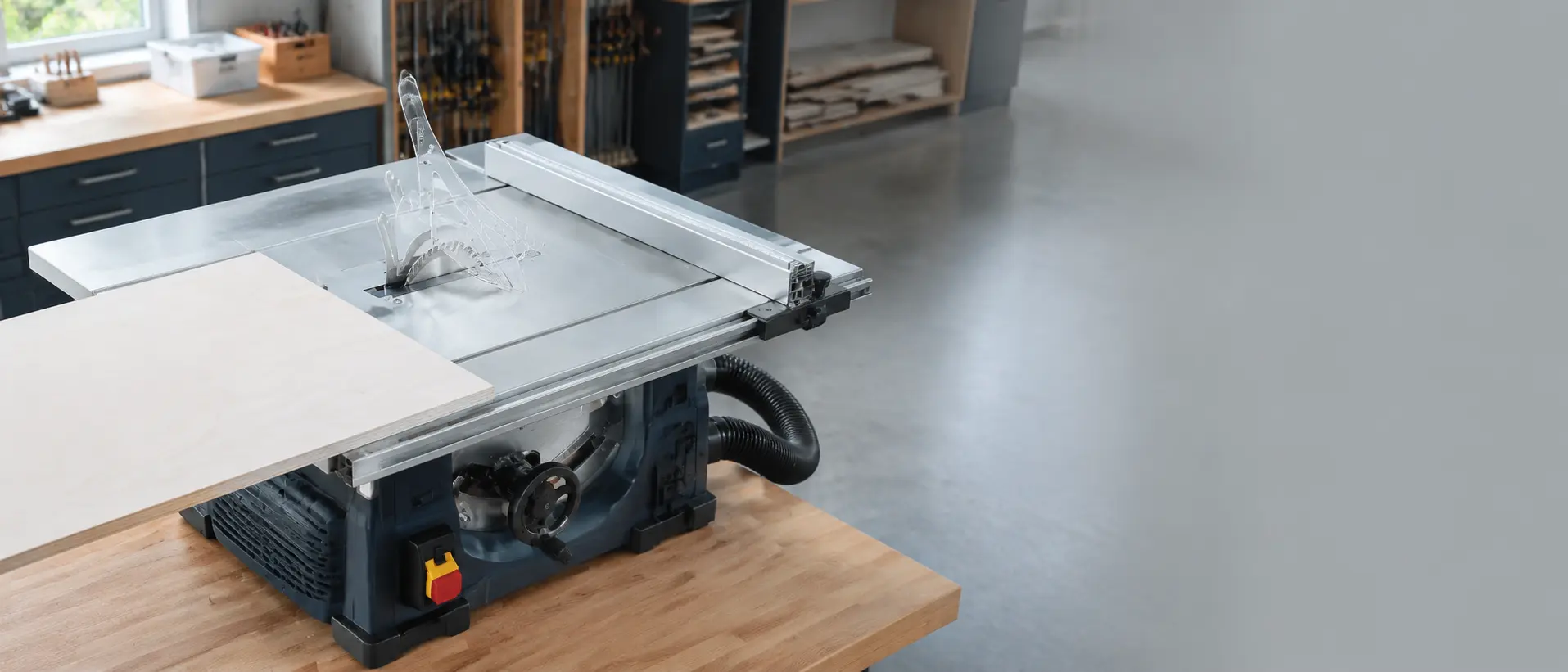
Confirm the saw's approved blade diameter, arbor and any tooling restrictions before choosing tooth geometry. A ripping blade for solid wood, a crosscut blade and a panel-oriented blade solve different chip-clearance and edge-quality problems. One general-purpose blade may reduce changes for mixed site work but still requires sample checks. Record blade identity and condition whenever cut quality or power behavior is compared.
The fence should lock consistently and remain usable across the required rip range after transport. Inspect rail joints or extensions, reference faces and scale zero. The miter gauge provides a separate path for crosscuts and angled work; check its slot fit and face rather than using the rip fence as a substitute. Approved inserts, riving knife, blade guard and push devices belong to the cutting configuration, not to an optional accessories list that can be left behind.
Portable work rewards simple, repeatable accessory storage. Decide where the fence, gauge, blade wrench, push stick, spare blade and dust adapter travel so edges and references are protected. Verify that onboard storage actually accepts the supplied items. A missing tool at a remote site often leads to improvised setup, so the packing checklist should be part of professional use.
Support Rip Cuts and Crosscuts in a Compact Setup
For ripping, the workpiece needs stable contact with the table and fence from entry to exit. Position infeed and outfeed support at the working table height without steering the stock. Long lumber creates leverage as its center of gravity crosses the saw, while narrow parts require approved push devices and clear hand positions. Walk the board through the unpowered route to find collisions with stands, walls or hoses.
Crosscuts should use the miter gauge, a compatible sled or another approved guide. Support long pieces so they do not rotate the gauge or lift from the table. A separate stop may assist repeat length only when arranged to avoid trapping the offcut or workpiece against the fence near the blade. Compact setup is not permission to combine incompatible references merely to save space.
A work table can serve as assembly bench, panel support or outfeed surface if its height and placement are controlled. Portable rollers may suit long boards but provide less lateral area than a table. Identify which equipment travels with the saw and which belongs to the site. The cutting plan should still work when a customer's bench or stack of material is unavailable.
| Requirement | Tool A | Tool B |
|---|---|---|
| Application | Confirm | Confirm |
| Machine/interface | Record | Record |
| Dimensions/depth | Approve | Approve |
| Sample/revision | Trace | Trace |
Improve Accuracy on a Portable Platform
Transport can disturb settings through vibration, impact or repeated folding. At each setup, inspect the stand locks, table condition, insert, blade, fence and miter references before relying on stored scale positions. Follow the manual for alignment checks and adjustments. Leveling the stand where permitted establishes stability, but it does not correct blade-to-slot or fence alignment inside the saw.
Test repeatability by moving the fence away and returning to a target, then cutting several representative pieces with the same blade and support. Record whether variation appears after locking, during feed or after the stock leaves the table. For installation work, compare the result with the fit requirement of the part. Avoid publishing a precision figure unless the exact test method, configuration and evidence support it.
Portable platforms have practical load and table-area limits. Excess pressure from poorly supported sheet goods can change feed direction and make an accurate setting irrelevant. Keep reference edges clean, avoid forcing warped lumber against the fence and use a preparation cut when needed. Accuracy improves when the task is reduced to a size the machine and operator can control.
Manage Dust, Power, Transport and Safety
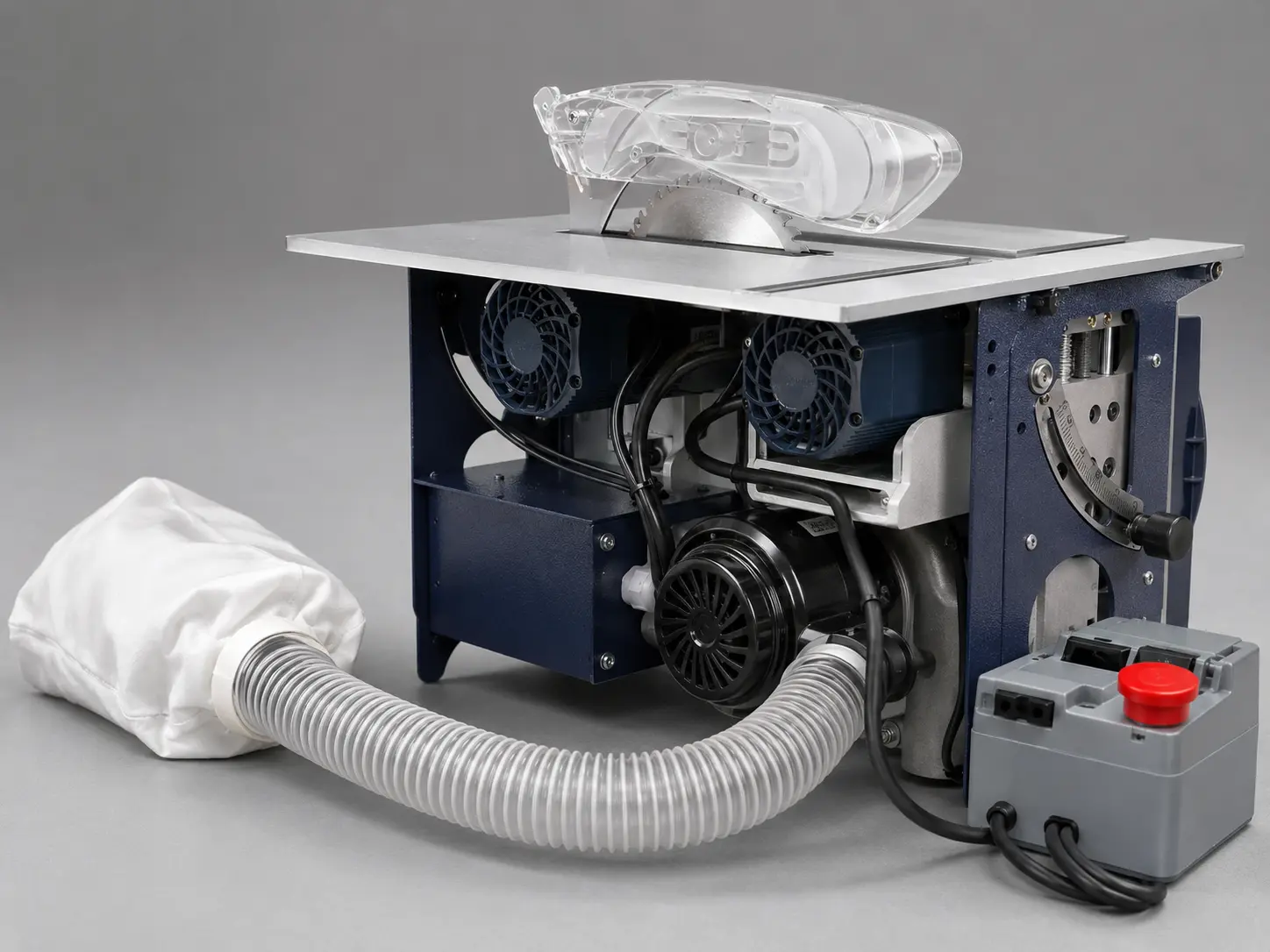
Connect the available dust outlet to a compatible extractor and inspect the path around the lower blade housing and guard pickup if provided. Jobsite collection may be constrained by hose length or shared equipment, while a small shop can use a permanent branch. Fine dust, especially from MDF, requires appropriate workplace controls and cleaning. Never use compressed air or internal access contrary to the machine instructions.
For corded equipment, confirm voltage, frequency, plug, protected circuit and cable routing at the destination. Prevent extension leads from creating voltage, trip or damage risks according to applicable electrical guidance. Cordless versions add battery-system, state-of-charge, transport and charging considerations; they should not be assumed equal in runtime or cutting behavior without model evidence. Specify the required power format and let suppliers respond with confirmed data.
Secure the saw, stand and loose accessories during vehicle transport. On site, deploy on a permitted surface, use the riving knife, blade guard and push devices, and maintain an offcut zone clear of other trades. Isolate power before adjustments or cleaning. A mobile schedule should include pack-down time so hot, dusty or loose components are not placed into storage immediately after the final cut.
Specify a Portable Saw for Professional Woodworking
Start the specification with three environments—jobsite, installation and small workshop—and identify which actually apply. List lumber, plywood, MDF and other approved sheet goods; normal dimensions; rip and crosscut tasks; finish needs; movement frequency; and storage limits. Request exact blade diameter, arbor, cutting depth, rip capacity, table size and destination power as supplier response fields, not assumed figures.
Describe the complete mobile system: saw, stand, fence, miter gauge, riving knife, blade guard, inserts, push devices, outfeed support, work table, dust adapters, cable or battery scope, transport handles and accessory storage. Ask which parts are included and which must be ordered separately. If corded and cordless candidates are compared, keep their supply, charging and logistics requirements visible rather than reducing the decision to one performance claim.
Acceptance should reproduce the route from packed storage to cutting and back. Verify component identity, deployment, alignment, representative cuts, support, extraction, cleaning and secured transport. Use a sample material relevant to the buyer and record blade and setup. This professional workflow tests the actual benefit of portability while respecting the machine's confirmed capacity and support limits.
Plan a professional portable woodworking setup·View available products·Contact AXIMET
Frequently Asked Questions
Is a portable table saw suitable for furniture making?
It can support furniture work when the parts, cuts and required finish fit the confirmed capacity and the shop provides stable support. It is often useful for ripping prepared boards and dimensioning smaller components. Large panels, demanding joinery or continuous heavy work may suit other equipment. Evaluate representative parts, fence return, blade choice and downstream sanding or fitting before defining its role.
Can a portable table saw cut plywood and MDF sheets?
It may cut approved plywood and MDF, but full sheets can be difficult to balance on a compact table. Confirm blade, cutting depth and rip range, then plan panel breakdown, infeed, outfeed and lateral support. MDF dust requires effective extraction and workplace controls. Do not interpret a nominal rip capacity as proof that one person can safely manage the largest sheet.
What accuracy limitations should buyers expect from a portable platform?
Transport, folding stands, compact tables and limited stock support introduce more setup variables than a permanent cell. That does not justify a generic accuracy limit. Inspect alignment after movement, test fence return and use controlled support with representative material. Evaluate the result against the next woodworking process and keep unsupported precision claims out of the specification.
How should a blade be selected for mobile woodworking?
First confirm approved diameter, arbor and tooling limits. Then match tooth form and count to ripping, crosscutting or panel work and consider whether fewer blade changes or a specialized finish matters more on site. Keep the blade protected during transport and record its condition during samples. The same blade description does not guarantee equal results on solid wood, plywood and MDF.
How can large workpieces be supported around a compact saw?
Use planned infeed, outfeed and lateral supports at the table height, with enough area to control the workpiece's center of gravity. A work table can provide more surface than a roller, while rollers can travel easily for long boards. Supports must not steer stock, block offcuts or rely on customer furniture that may be absent. Break down oversized panels by another suitable method.
What should be checked in portable-saw dust collection?
Review the lower enclosure, guard pickup if present, outlets, adapters, hose route and compatible extractor. Test with the intended material and inspect escape and settled dust after safe isolation. A small port or visible hose does not establish collection performance. Include cleaning access and transport storage so dust is not released into the vehicle or carried into a finished installation area.
Which safety checks belong in a jobsite setup?
Confirm stable stand deployment, blade and insert condition, fence or miter reference, riving knife, guard, push devices, stock supports, power protection and a clear feed and offcut zone. Keep cables and hoses away from walking routes. Coordinate with other trades, isolate before adjustment and pack accessories securely. The exact manual and site rules govern the operation.
Conclusion
Portable table saws are most valuable when mobility shortens the work route without asking a compact station to control unsuitable stock. Define what travels, what is cut on site and what remains a shop operation. Then support the material, verify alignment after movement and manage blade, power, dust and accessories through pack-down. That discipline preserves the practical advantage of portability while making its capacity, table area and repeatability limits visible to the buyer.