
Use the comparison as a controlled buying record. It should identify the application, the exact tool variants, the evidence reviewed and every field still requiring supplier confirmation.
Define the Panel Size and Production Requirement
List normal and maximum panel length, width, thickness and material, then describe the finished parts cut from them. A workshop processing cabinet sides and shelves has a different flow from one trimming solid-wood panels or occasional plastics approved by the manufacturer. Include batch size, changeover frequency, edge-quality requirement and the next process. Maximum panel size should represent stock the team can load and control, not merely the largest sheet available in the market.
Draw the cut sequence for representative nests or part families. Mark the first squaring cut, rotations, rip strips, crosscuts and transfer to edge banding, machining or assembly. This exposes whether carriage travel, outrigger support, rip fence range or crosscut stops govern throughput. It also reveals offcut routes and whether one operator can handle the material. A nominal capacity figure cannot describe these movements.
Separate peak demand from routine production. A very large occasional panel may be processed by another station rather than forcing every specification upward. Conversely, frequent small parts can make stop setup and scale readability more important than headline travel. Provide the expected operating schedule for electrical and duty review, while leaving actual motor suitability to verified product data and sample evidence.
Select the Sliding Table Length and Cutting Capacity
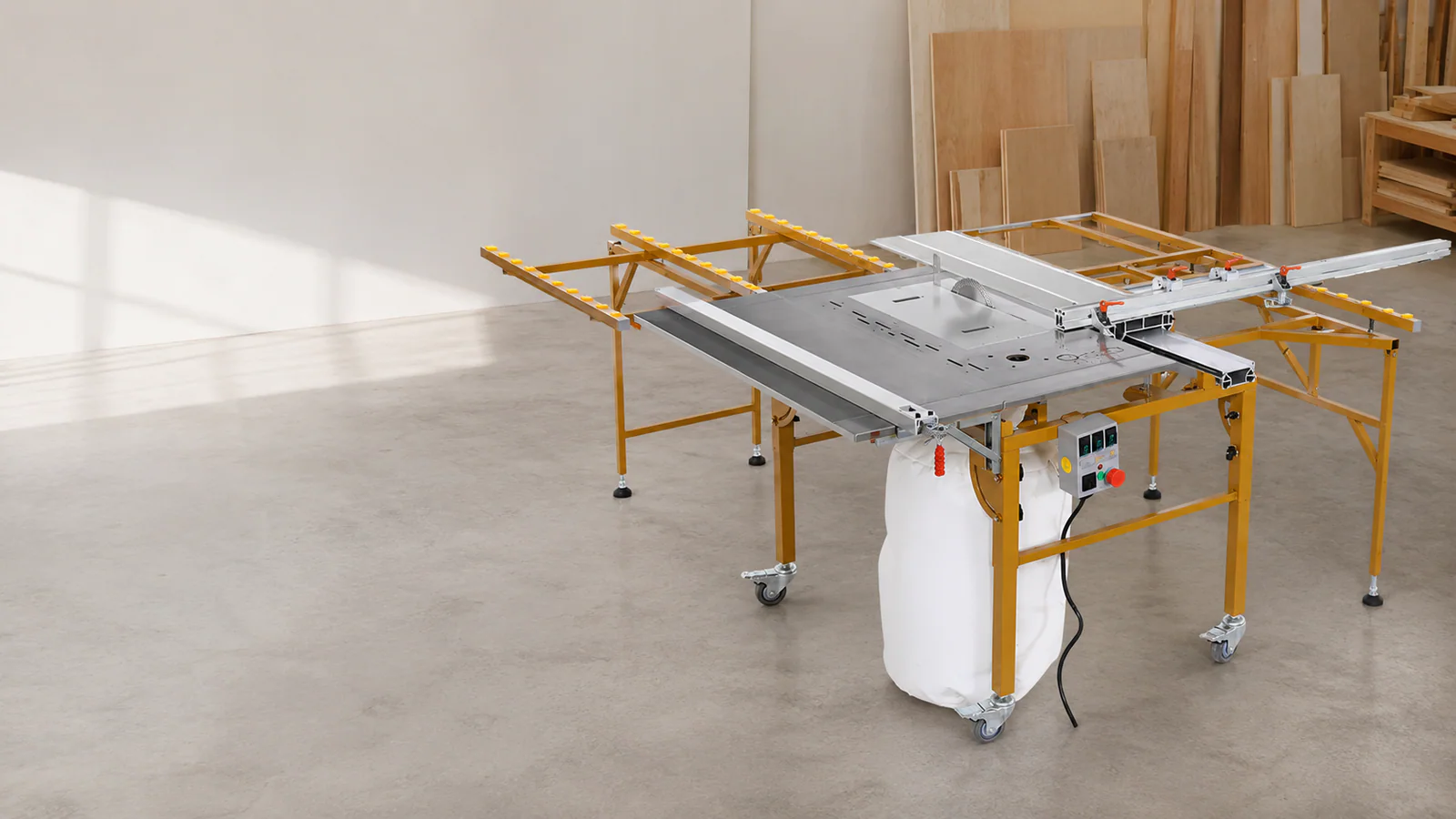
Sliding table length and usable carriage travel are related but should not be treated as interchangeable. Request both from a controlled drawing, along with the starting position relative to the blade. The required travel follows panel length, crosscut sequence and support arrangement. A long carriage needs clear floor space at both ends, so place its full movement on the layout rather than checking only the machine base footprint.
Crosscut capacity depends on carriage travel, crosscut fence and outrigger or support configuration. Rip capacity depends on the fixed table, rip fence rails and available area to the other side of the blade. Record capacities at stated conditions and identify any extensions needed. The maximum panel may still be impractical if it cannot rotate between cuts or if the operator must enter a restricted zone to reach a stop.
Cutting height should be requested at relevant blade positions and angles for the exact permitted main blade diameter. Blade tilt can reduce vertical capacity and change guarding, fence clearance and offcut behavior. Do not calculate cutting height from blade diameter alone. Confirm arbor interface, approved blade range and any table insert or guard changes. A sample should use material thicknesses that represent production rather than a thin demonstration board.
Compare Main Blade and Scoring Blade Systems
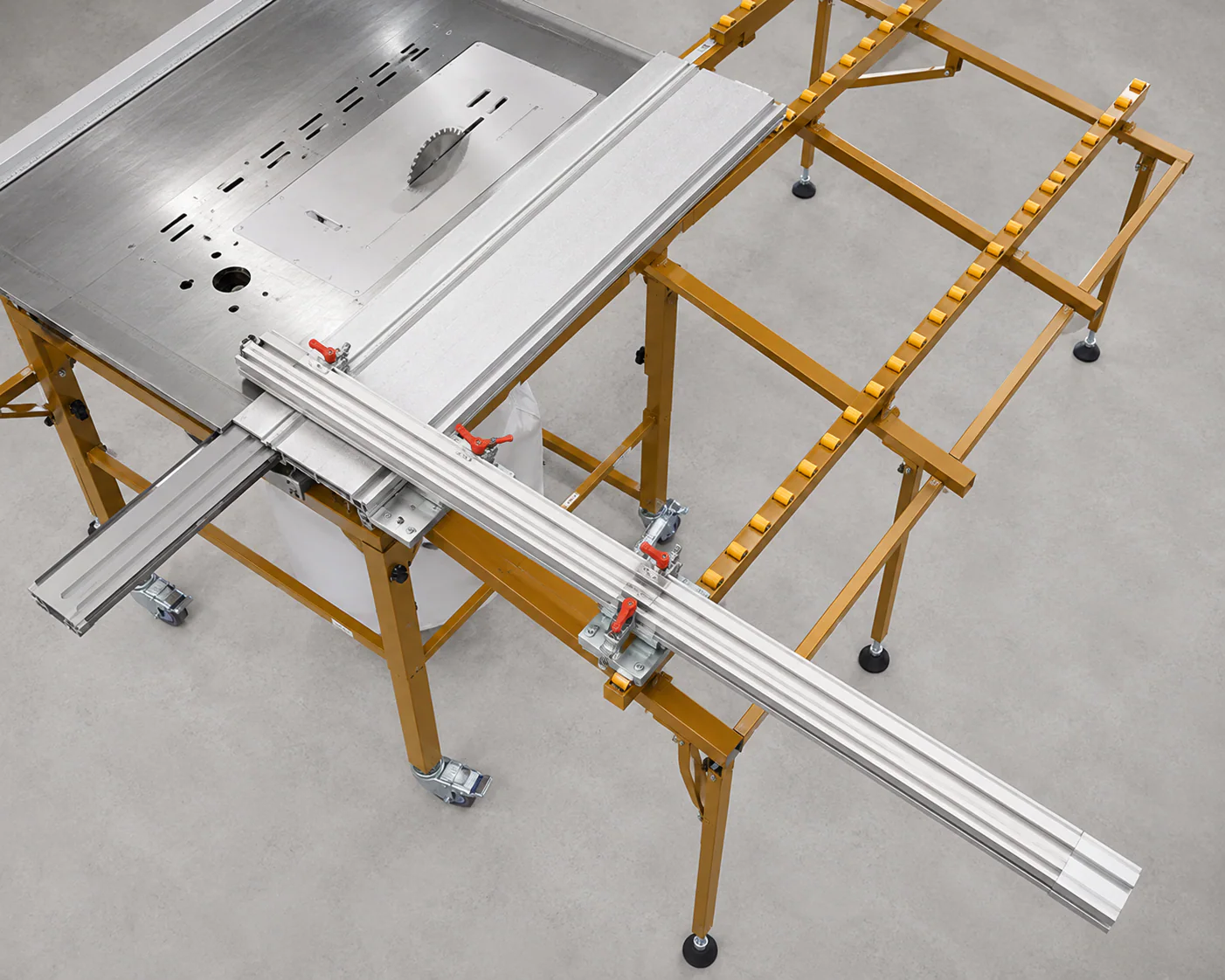
The main blade performs the through cut and must match material, finish and feed conditions within the machine's approved diameter and arbor range. Request the supplied blade status separately from machine compatibility because a demonstration blade may be optional or locally sourced. For panel work, tooth geometry, tooth count and blade condition influence chipping and feed quality. Record those details whenever suppliers submit cut samples.
A scoring blade pre-cuts the lower surface of coated or veneered panels to reduce breakout from the main blade. It is not automatically included on every sliding table saw. Confirm whether the exact model supports scoring, whether the scoring unit has a separate drive or another documented arrangement, its permitted blade and arbor, and how lateral and height adjustment are made. Never copy a scoring specification from another machine in the same visual family.
Evaluate main and scoring alignment with representative panels and a defined inspection method. Check both faces, edge consistency and the effect of changes in material or blade condition. Operators need an adjustment procedure that distinguishes scoring width, lateral position and height. Maintenance planning should include safe blade access, cleaning and replacement references; a favorable factory sample alone does not ensure the workshop can reproduce the setup.
Evaluate Fence, Crosscut Stops and Positioning Accuracy
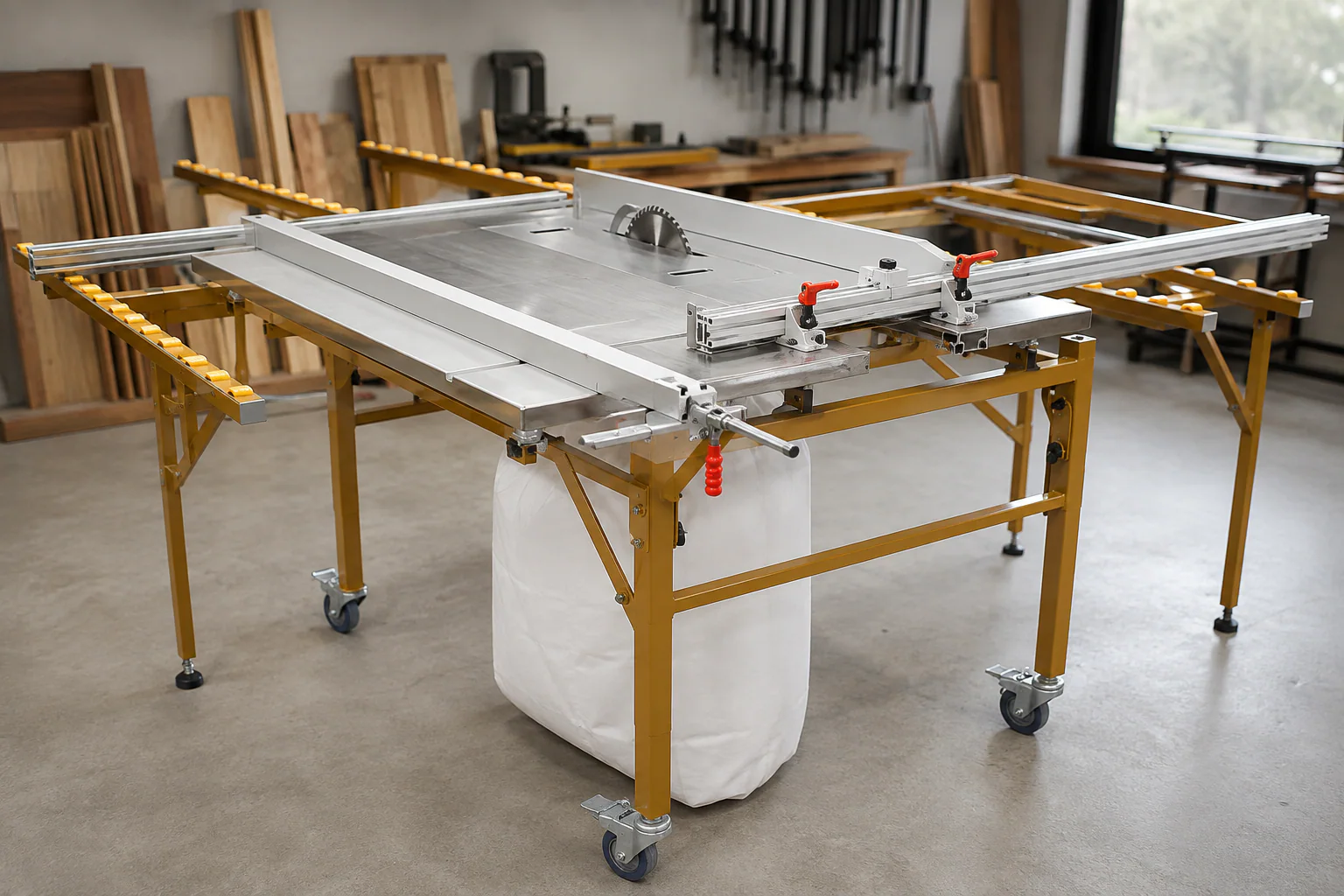
The rip fence guides material on the fixed-table side. Review rail support, locking, fine adjustment if provided, scale visibility and clearance when the blade tilts. Test settings across the production range rather than only near the blade. The crosscut fence works on the carriage or outrigger and should be evaluated for squareness, support, extension and how operators reach its stops while controlling a panel.
Flip stops assist repeated lengths by moving in and out of the work path. Confirm their number, travel, locking and reference face, and check whether scale readings remain visible at common dimensions. Analog scales require a clear pointer and viewing position. Digital positioning, when offered on the exact configuration, requires a defined zeroing, calibration, power and protection method. A digital display does not independently prove cut accuracy.
Use a repeatability trial based on real parts. Move each stop away, return to target, cut several samples and measure with the agreed instrument and temperature or material considerations where relevant. Record carriage play, fence movement, operator pressure and panel support. Keep indicated position, measured part and any trim allowance as separate values. Numerical tolerances should come from approved specifications or the buyer's agreed acceptance plan, not from generic marketing language.
| Requirement | Tool A | Tool B |
|---|---|---|
| Application | Confirm | Confirm |
| Machine/interface | Record | Record |
| Dimensions/depth | Approve | Approve |
| Sample/revision | Trace | Trace |
Confirm Motor, Voltage, Dust Extraction and Workshop Space
Request main and scoring motor information as separate fields where both systems exist. Confirm the manufacturer's rating definition, voltage, frequency, phase, connection method and protective-device requirements for the destination. Three-phase supply may be relevant to some industrial configurations, but it must never be assumed. The buyer should coordinate machine, electrician and site responsibilities before shipment, including cable entry and isolation location.
Map dust from the main blade enclosure, overhead guard and scoring area where applicable to the stated dust ports. Request outlet sizes and airflow or pressure requirements only from controlled documentation. The workshop must then match ducting and extraction capacity, allowing for carriage movement and operator access. A trial can reveal visible escape and accumulation, but it should not be converted into an efficiency claim without an applicable test.
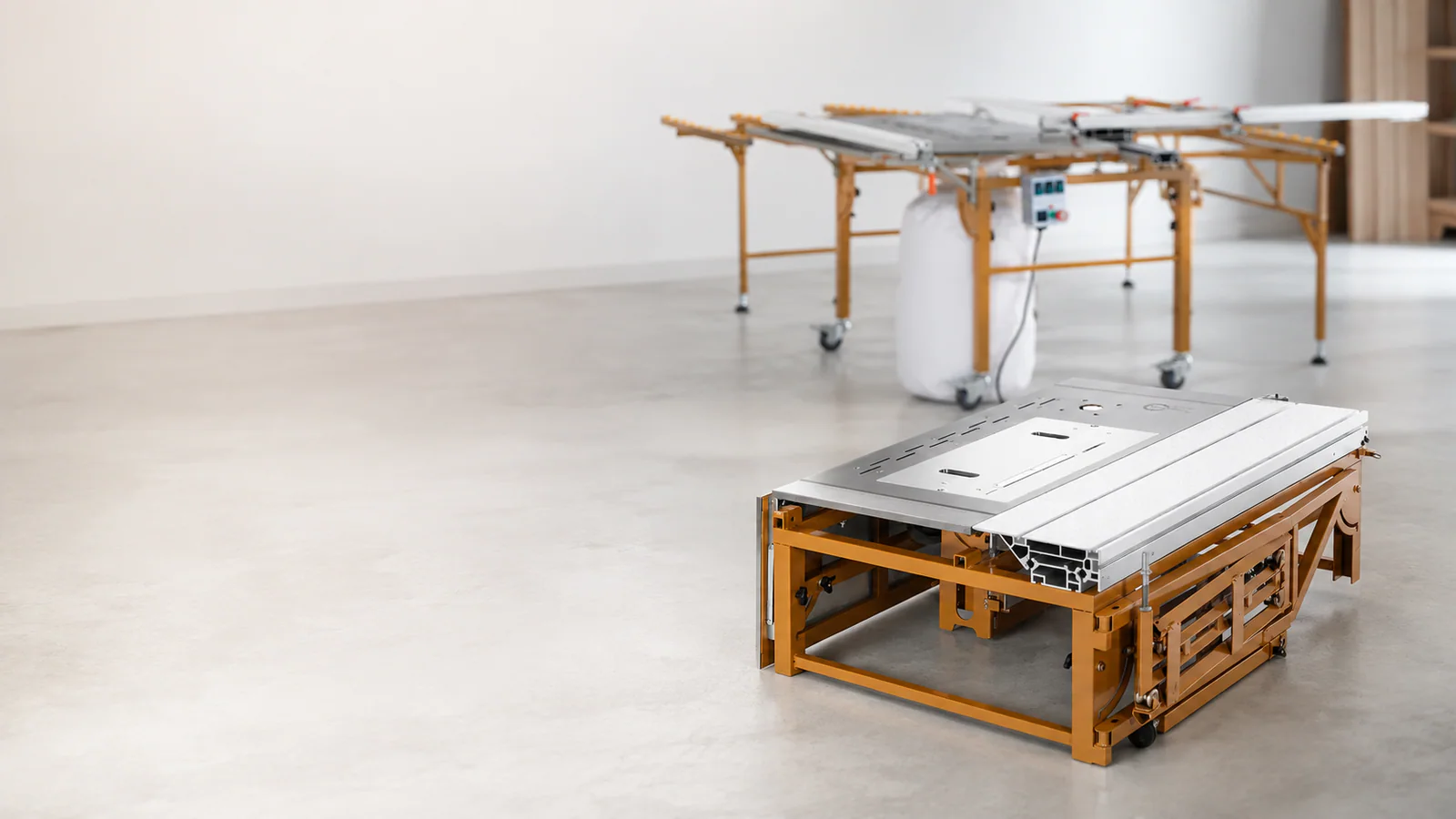
The floor plan must include full sliding travel, maximum rip-fence position, panel rotation, operator zones, loading, offcuts, ducting and service clearance. Add receiving access for the packaged machine and lifting method approved for installation. A saw can fit within a room yet fail operationally because panels cannot turn or a carriage blocks an aisle. Review ceiling or overhead conflicts if extraction and guards extend above the table.
Review Installation, Training, Service and Spare Parts
Installation scope should define unloading, internal movement, assembly, leveling, electrical connection, extraction connection, blade installation, fence setup and initial sample cutting. Assign each activity to supplier, dealer, buyer or local contractor. Request foundation or floor requirements and approved lifting information for the exact model. Packaging dimensions and masses must be confirmed before logistics are booked, particularly where crates pass through limited access.
Operator training should cover panel loading, carriage use, rip and crosscut fences, flip stops, main and scoring adjustment, blade tilt where provided, guarding, dust connection, cleaning and isolation. Maintenance training should identify lubrication or inspection points only as instructed, plus safe access and calibration checks. Record training language, materials, duration and responsible provider in the commercial scope rather than assuming commissioning includes every topic.
Ask for parts documentation and availability information for wear and service items such as blades, belts where applicable, inserts, guards, switches, stops, scales, bearings or carriage components, without promising a delivery time. Clarify remote support, dealer support and on-site service as actually offered. A distributor should preserve the machine serial or revision and electrical configuration so later parts inquiries are matched to the installed unit.
Prepare a Sliding Table Saw Procurement Specification
The specification begins with panels, finished parts, cut sequence, normal and maximum dimensions, materials, production mix and destination. Add requested sliding table length and travel, crosscut and rip capacities, blade tilt, cutting height, main blade diameter and arbor, plus scoring-blade capability and adjustment. Mark every number as buyer requirement or supplier-confirmed response so an internal target is not mistaken for an AXIMET claim.
Create equipment lines for carriage, outrigger, rip fence, crosscut fence, extension, flip stops, scales or digital positioning, main and scoring blades, guards, dust ports, tools and documents. Add main and scoring motors, voltage, frequency, phase and connection. The offer should identify included, optional and locally supplied elements. Request a layout drawing showing footprint, carriage travel and working clearances for site approval.
Commercial and acceptance scope should cover packaging, shipping marks, unloading responsibilities, installation, leveling, connection, training, manuals, spare-parts list and service channel. A factory acceptance test or another pre-shipment inspection can verify identity, configuration, movement, controls and agreed sample cuts when formally included. Define materials, measurements and pass criteria in advance; FAT is not a substitute for site commissioning or evidence for claims that were never tested.
Define a sliding table saw procurement specification·View available products·Contact AXIMET
Frequently Asked Questions
How should sliding table length be selected?
Choose from the normal panel length, cut sequence and support method, then verify usable carriage travel rather than relying on overall table length. Plot the full forward and rear movement in the workshop. Very long occasional stock may not justify a larger machine if another process can handle it. Request a drawing for the exact configuration and test a representative panel route.
When is a scoring blade needed?
Scoring is commonly considered for coated or veneered panels where the underside edge must resist chipping. Confirm that the exact machine supports a scoring system, whether it is included, its blade and arbor interface, drive arrangement and adjustment method. Material, main blade condition and scoring alignment all affect the result, so approve with the buyer's panel rather than assuming scoring guarantees a finish.
Does a sliding table saw require three-phase power?
Some industrial configurations may use three-phase power, while others can differ. The category does not determine the supply. Obtain voltage, frequency, phase, connection and protection requirements for the exact main and scoring motors. Have the responsible electrical professional verify the destination before shipment. Never order from a photograph or convert a motor rating into an assumed local electrical version.
How is maximum panel size related to saw capacity?
Panel size affects carriage travel, crosscut support, rip range, rotation space and operator handling. A published cutting capacity describes only stated machine geometry; it does not prove the full panel can be loaded, turned and removed in the available room. Draw the sequence for the largest and most frequent panels, then confirm support and clearances using the proposed layout.
How should positioning accuracy be inspected?
Check carriage condition, fence and stop locking, scale zero and representative samples. Move settings away and return several times, then measure parts with an agreed method. Distinguish display resolution or scale graduation from measured cutting performance. Use documented tolerances only when approved for the exact machine or acceptance plan, and record blade, material and operator setup with the results.
What installation and training details belong in an order?
Assign unloading, internal movement, assembly, leveling, electrical and extraction connection, blade and fence setup, commissioning samples and site acceptance. Define who provides tools, lifting equipment and materials. Training scope should name operators, maintenance personnel, topics, language and documents. Do not assume a quoted installation line includes travel, utilities, production training or every optional accessory.
Which parameters are needed for a sliding table saw quotation?
Send panel materials and sizes, finished-part mix, crosscut and rip needs, sliding travel, blade tilt and cutting-height requirements, main and scoring blade fields, fences, stops and positioning preferences. Add destination power, dust connections, layout constraints, packaging, installation, training, spare-parts documentation and acceptance scope. Ask the supplier to identify the exact model and status of every optional item.
Conclusion
A sliding table saw should be selected from the panel route outward. Carriage travel, blades, fences and stops matter because they determine how a real sheet becomes repeatable finished parts; utilities and floor space determine whether that process can operate at all. A procurement specification that includes commissioning, training, spares and acceptance turns those production needs into a quote that can be installed and supported. Headline capacity is only one field in that larger decision.