
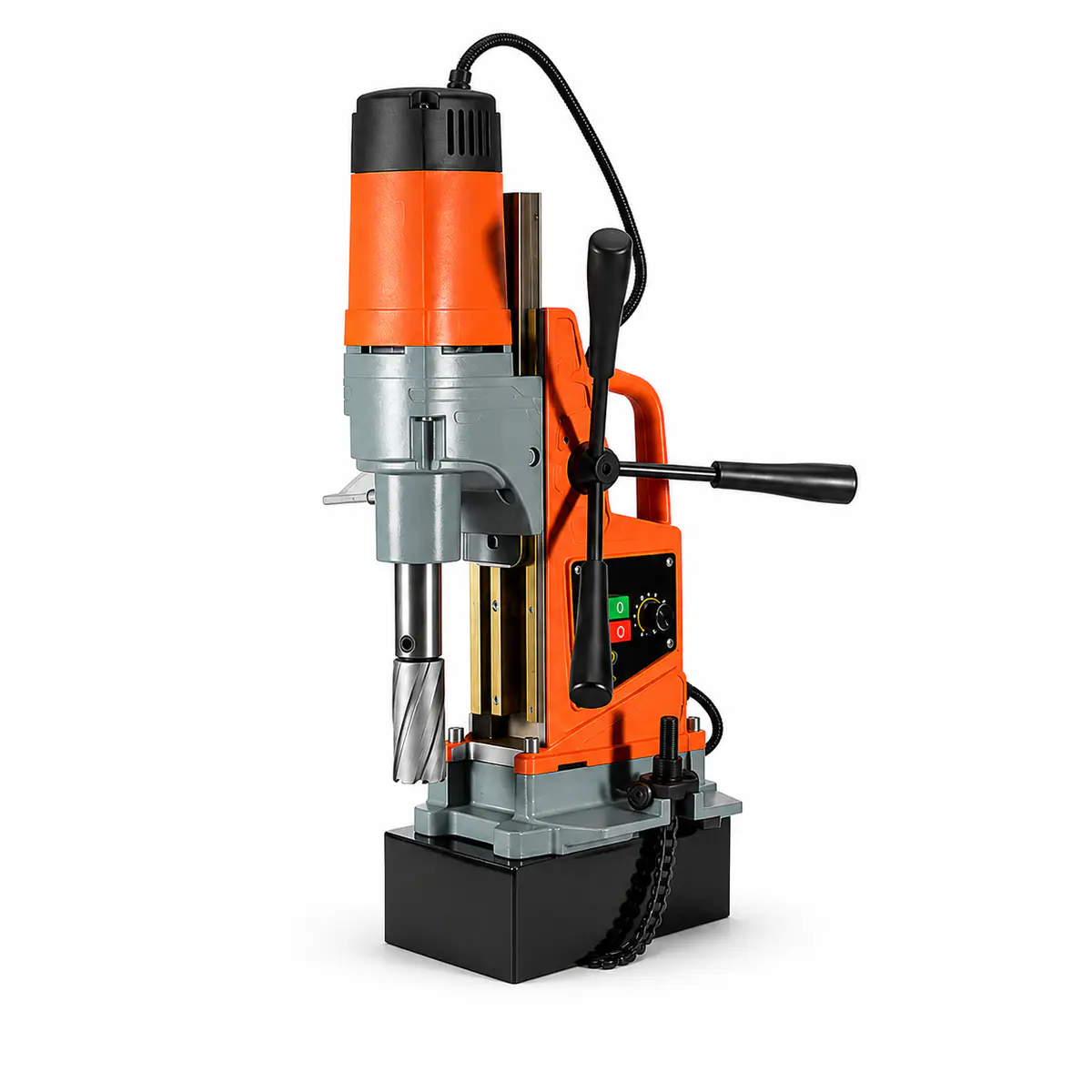
A magnetic drilling machine is a portable drilling system that uses an electromagnet to hold the machine on a suitable ferrous workpiece while the cutter is fed into the steel.
Use the comparison as a controlled buying record. It should identify the application, the exact tool variants, the evidence reviewed and every field still requiring supplier confirmation.
Start with the hole and assembly requirement
The starting requirement is a hole in a steel component that may be too large, heavy or awkward to move to a fixed drill press. Hole diameter, depth and access define whether a portable magnetic setup is appropriate.
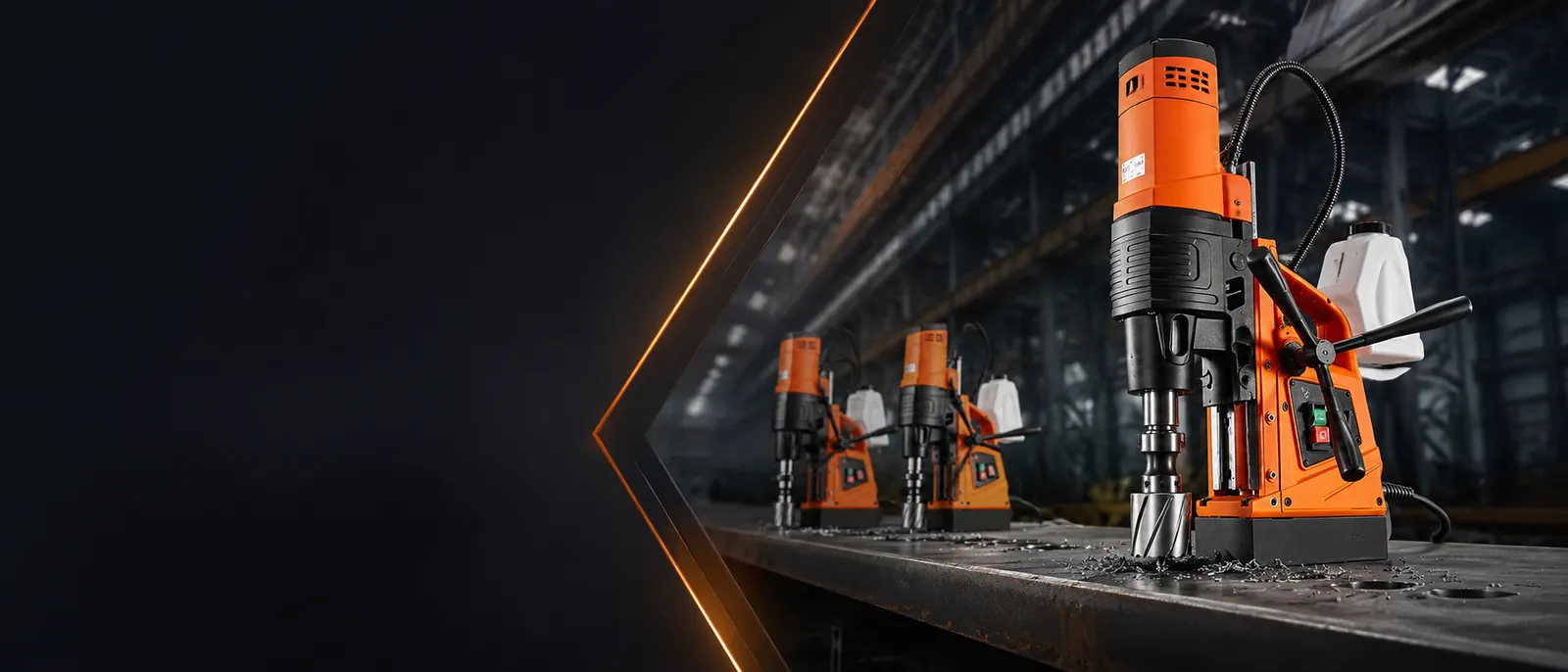
Compare cutting structure and operating behavior
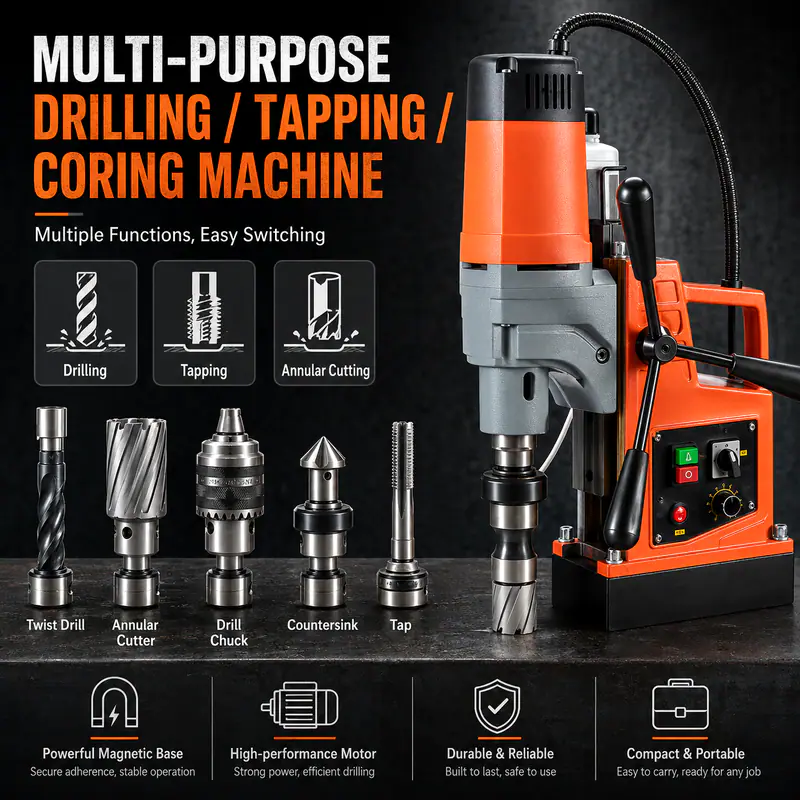
An annular cutter removes a ring of material and leaves a core, while the machine's feed mechanism guides the cutter through the work. Twist drills and other tooling may require a different holder or operating setup.
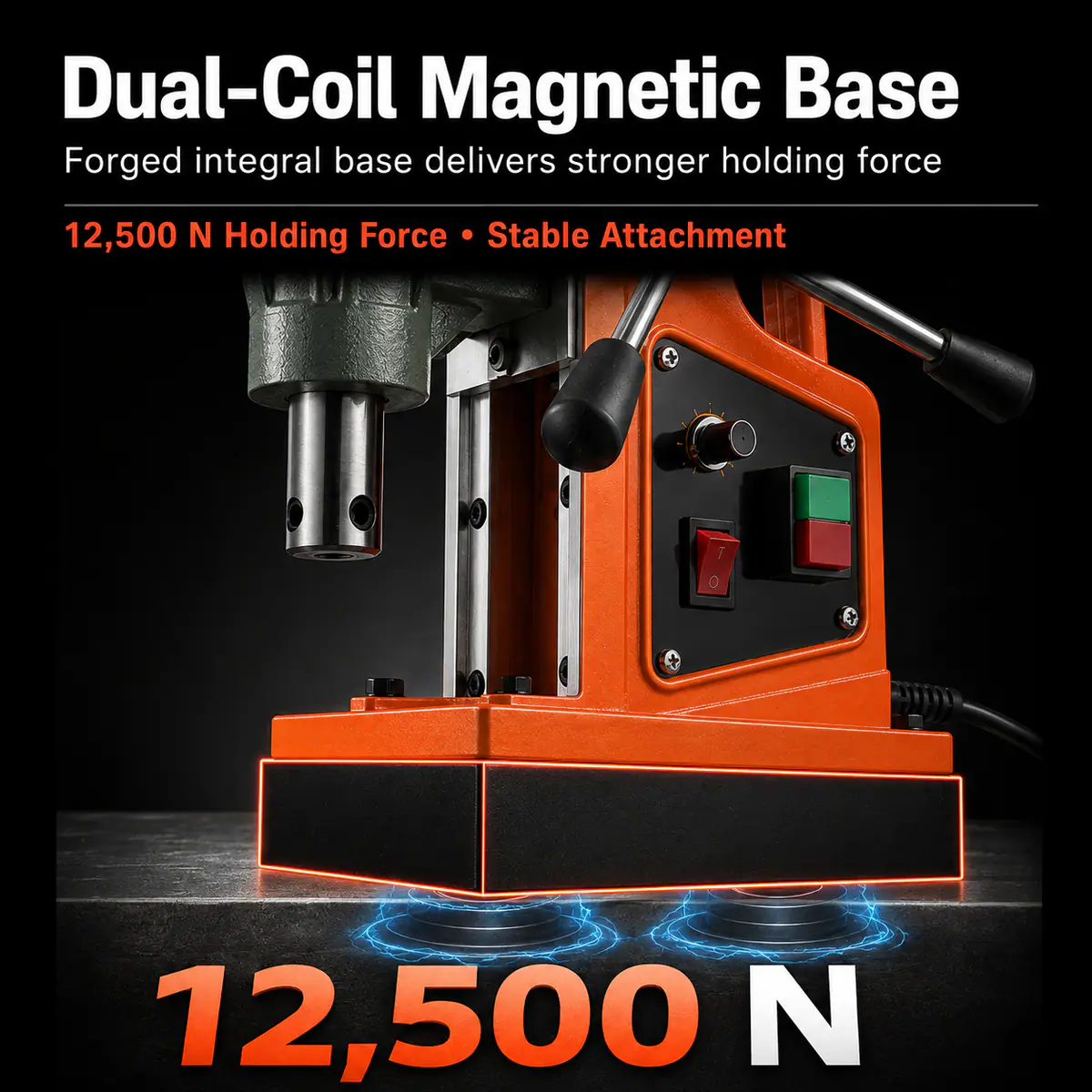
Confirm machine, interface and workholding
The magnetic base needs a suitable ferrous contact surface. Thickness, curvature, coatings, rust, scale and gaps can reduce contact, so the mounting condition must be assessed on the real workpiece.
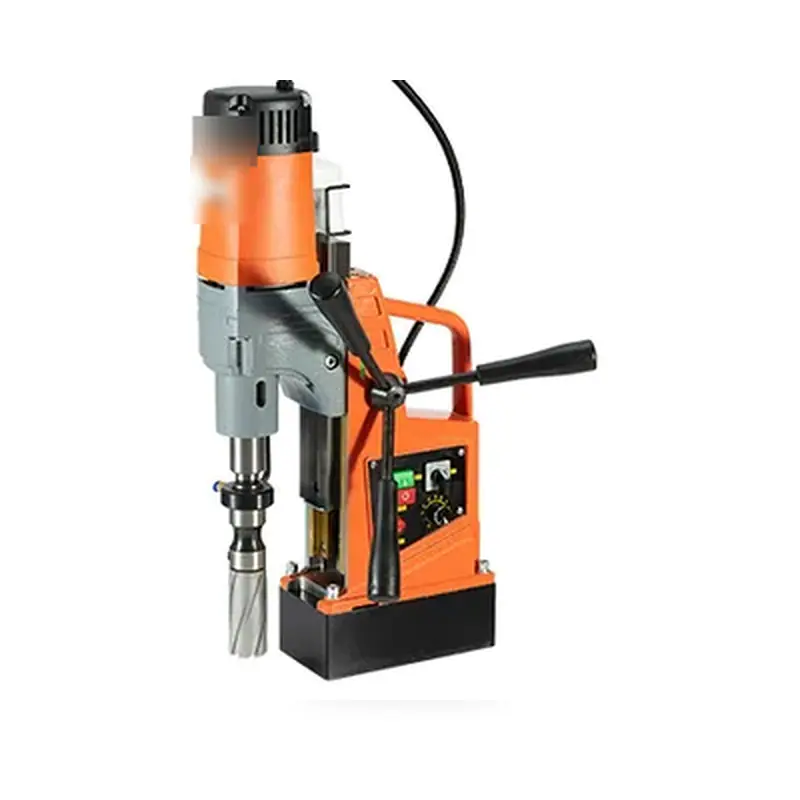
Specify dimensions and controlled product fields
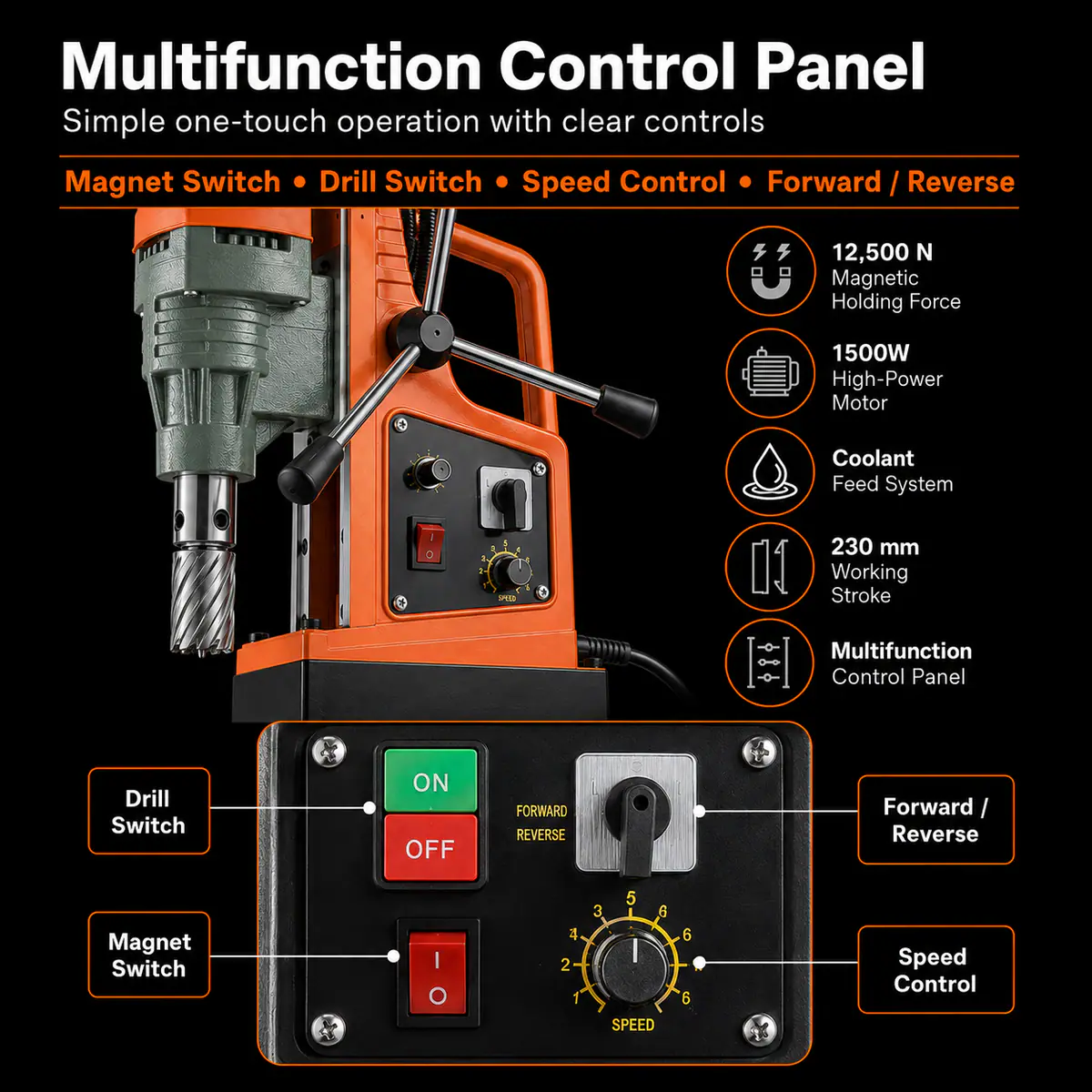
Capacity is more than a maximum diameter. Buyers should confirm cutter depth, stroke, arbor or shank connection, overall clearance, voltage and the functions actually supplied with the chosen model.
| Requirement | Tool A | Tool B |
|---|---|---|
| Application | Confirm | Confirm |
| Machine/interface | Record | Record |
| Dimensions/depth | Approve | Approve |
| Sample/revision | Trace | Trace |
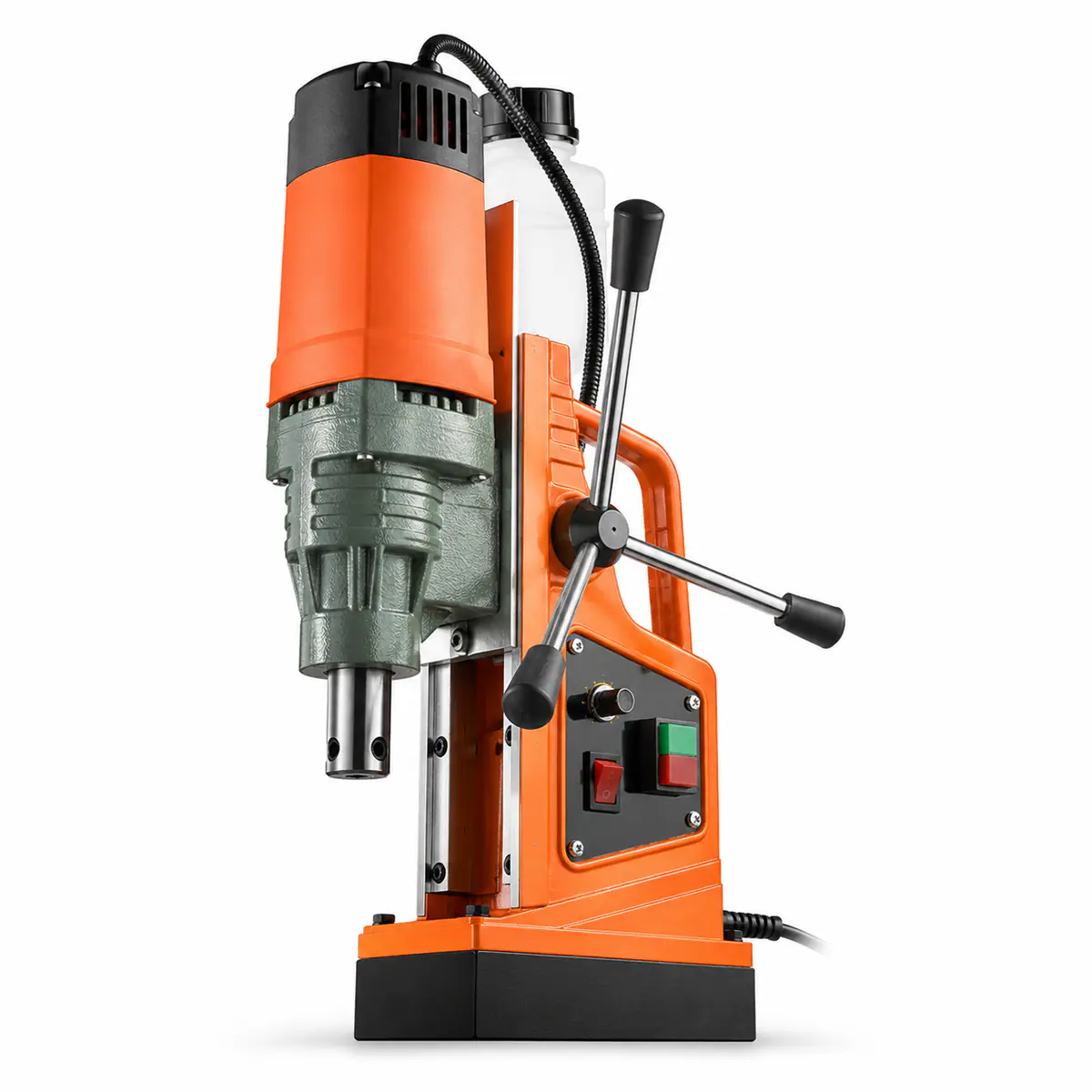
Evaluate samples with a stated method
A sample check should use the intended steel, hole size, cutter and working position. Record setup stability, feed behavior, core ejection and the resulting hole before approving the combination.
Build a clear distributor assortment
A distributor range can separate compact access models, general fabrication machines and specialized variable-speed, reversible or tapping configurations according to local demand.
Release quotations and repeat orders
A quotation should identify the machine model, electrical version, plug, cutter connection, included accessories and packaging. Repeat orders should reference the approved configuration rather than a similar-looking housing.
Magnetic Drills·Annular Cutters·Applications·Contact AXIMET
Frequently Asked Questions
What holds a magnetic drill to steel?
An energized magnetic base holds the machine against a suitable ferrous surface; actual contact depends on the workpiece condition and setup.
Does a magnetic drill work on every metal?
No. The base requires an appropriate ferrous mounting surface unless a separately verified mounting solution is used.
Why are annular cutters often used with magnetic drills?
They remove a ring rather than the full hole area, making them well suited to many larger holes in steel when the machine and interface are compatible.
Can a magnetic drill replace a drill press?
It can bring controlled drilling to large or installed steelwork, but it does not replace every drill-press operation or workholding method.
What should be confirmed before buying?
Confirm hole range, depth, workpiece geometry, mounting surface, position, cutter interface, voltage, functions and included accessories.
Conclusion
A magnetic drilling machine is best understood as a complete portable hole-making system: magnetic mounting, guided feed, compatible cutter and a suitable steel workpiece. Selection begins with the real hole and mounting conditions, not motor power alone.