
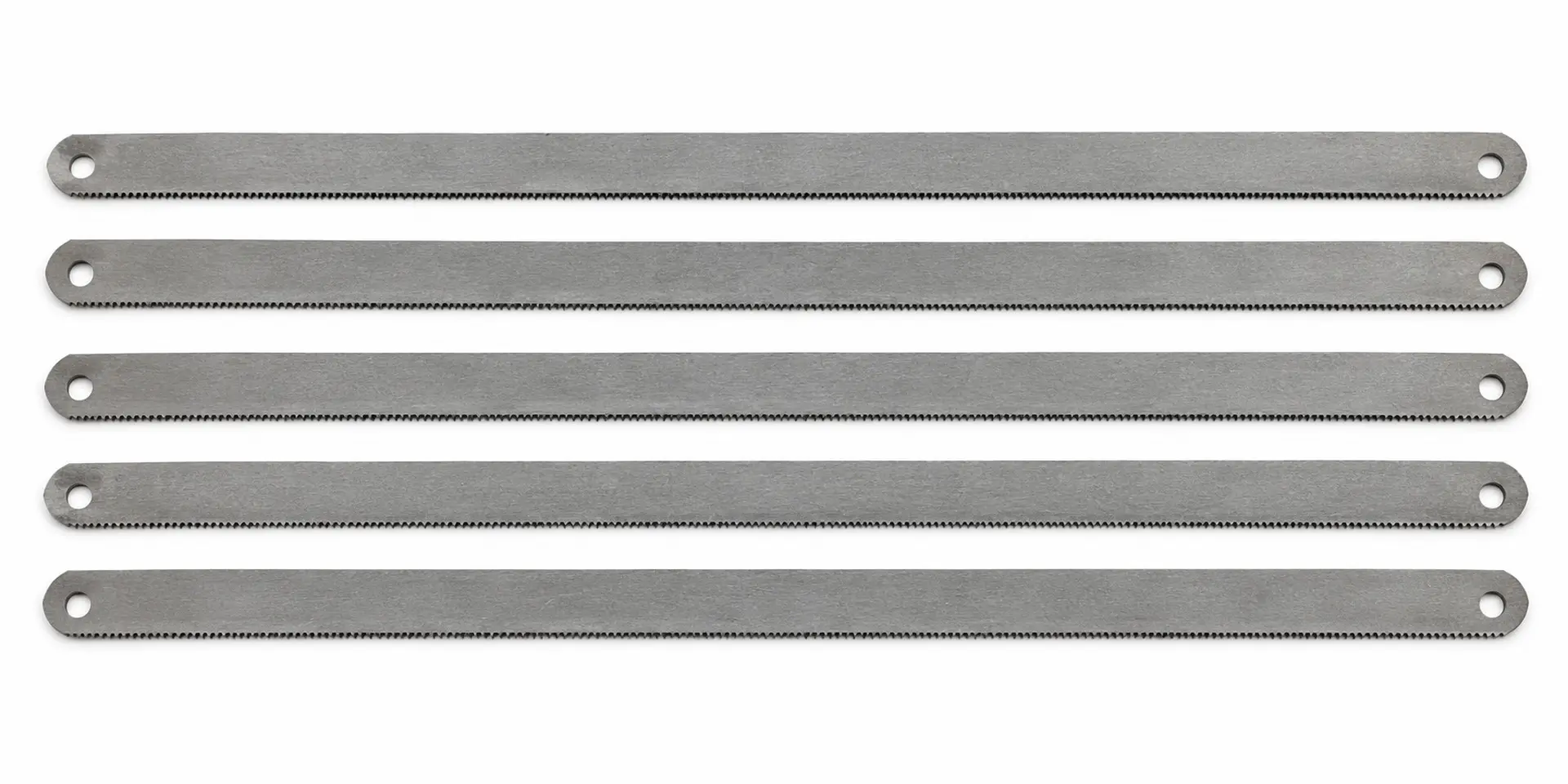
Illustrative group of hand hacksaw blades showing their full length and end mounting holes
AXIMET · PROFESSIONAL B2B TOOL SUPPLY

Hacksaw Blade Manufacturer for Industrial and Hardware Distribution

Specify hand hacksaw blades by the frame connection and the section being cut. Keep tooth pitch and blade dimensions on each purchasing line so replacements can be identified accurately.

  • Hand-frame blade identification
  • Tooth-pitch selection
  • Dimensions and mounting checks
  • Replacement identification
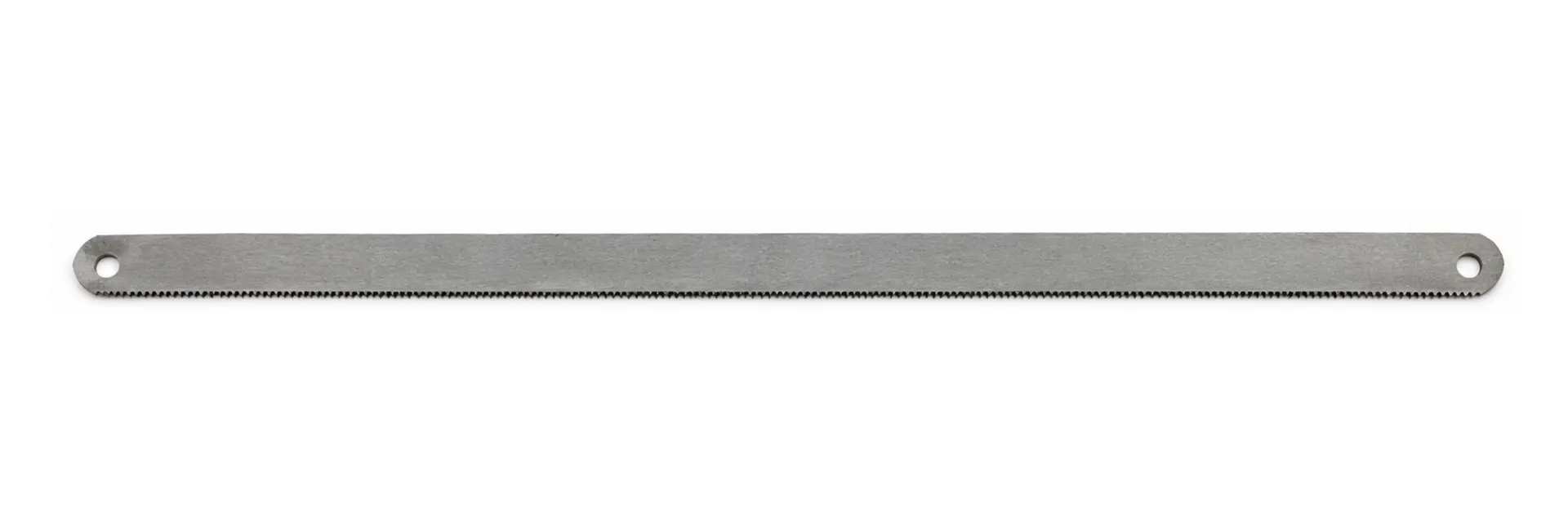
Illustration of a complete hand hacksaw blade with mounting holes at both ends
CATEGORY DEFINITION · PRODUCT DETAIL

Hacksaw Blades for B2B Purchasing

A hand hacksaw blade is a straight toothed strip tensioned in a saw frame. The mounting-hole position and blade dimensions must suit that frame.

  • Frame fitCheck mounting-hole arrangement and the frame’s tensioning specification.
  • Blade dimensionsRecord length, width and thickness with units.
  • Section thicknessDescribe tube wall or solid section for tooth selection.
  • Pitch identityUse the item marking or measured specification.

Hardware wholesalers and maintenance procurement teams buying frame-specific replacement blades.

Review the Selection Guide →
PRODUCT RANGE

Hacksaw Blades Product Range

Group hand blades by verified frame fit and customer workpiece requirements. Keep power-machine blades outside this hand-frame selection.

Illustration of a complete hand hacksaw blade with mounting holes at both ends
01 · RANGE OPTION

Hand Hacksaw Blade Form

Identify the blade outline and mounting ends, then specify the item by dimensions and tooth pitch.

  • Difference: Complete hand-blade outline with mounting ends.
  • Buyer: Hand-tool distributors
  • Confirm: Provide frame model or mounting dimensions.
Request specifications · Hand Hacksaw Blade Form →
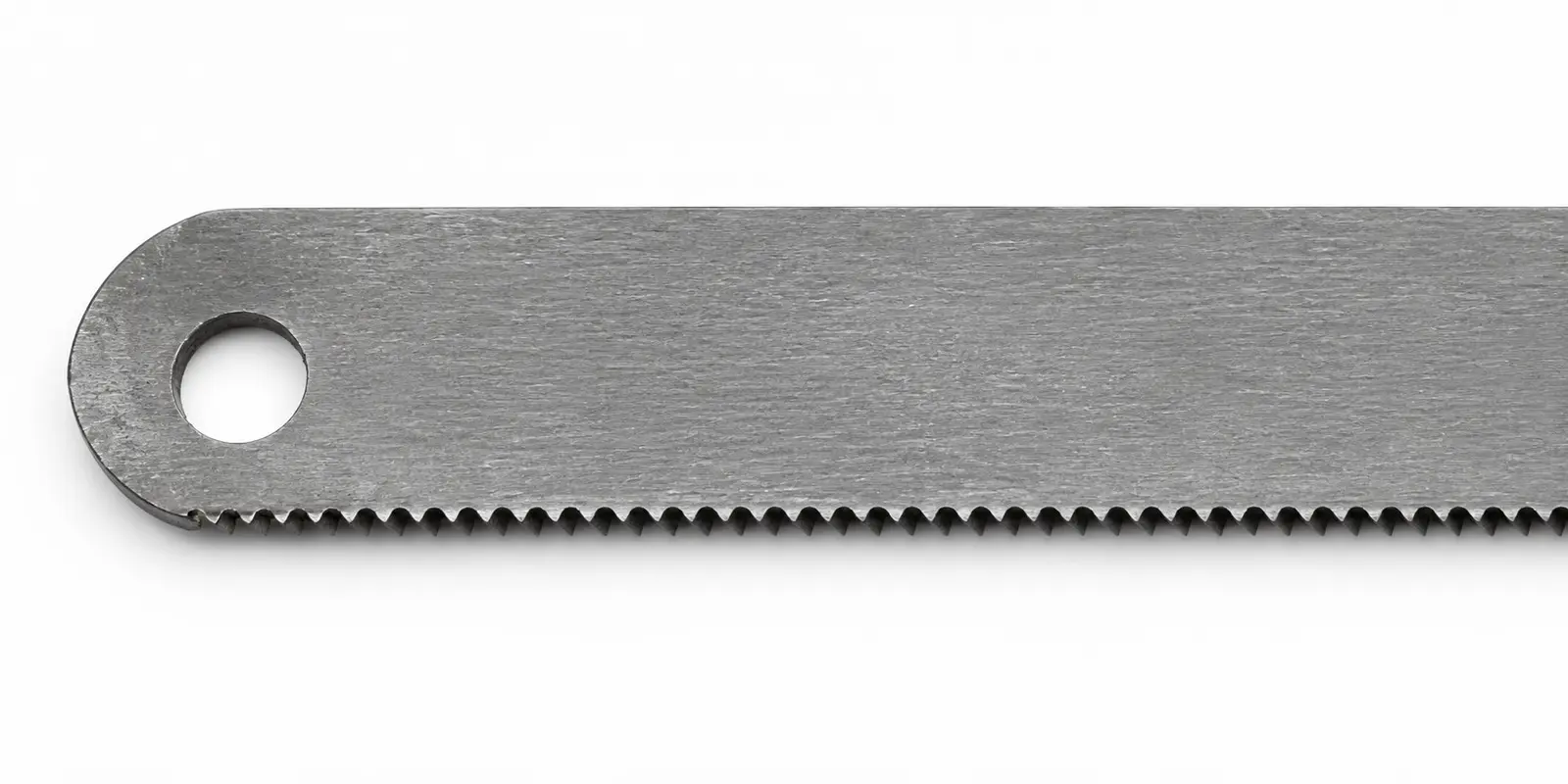
Illustration showing the mounting hole and toothed edge at the end of a hand hacksaw blade
02 · PRODUCT VIEW

Mounting-End Detail

The connection must fit the intended frame. Record hole spacing and retention details from the actual item.

  • Difference: Close view of the frame connection.
  • Buyer: Hardware replacement stockists
  • Confirm: Record length, width, thickness and hole spacing.
Request specifications · Mounting-End Detail →
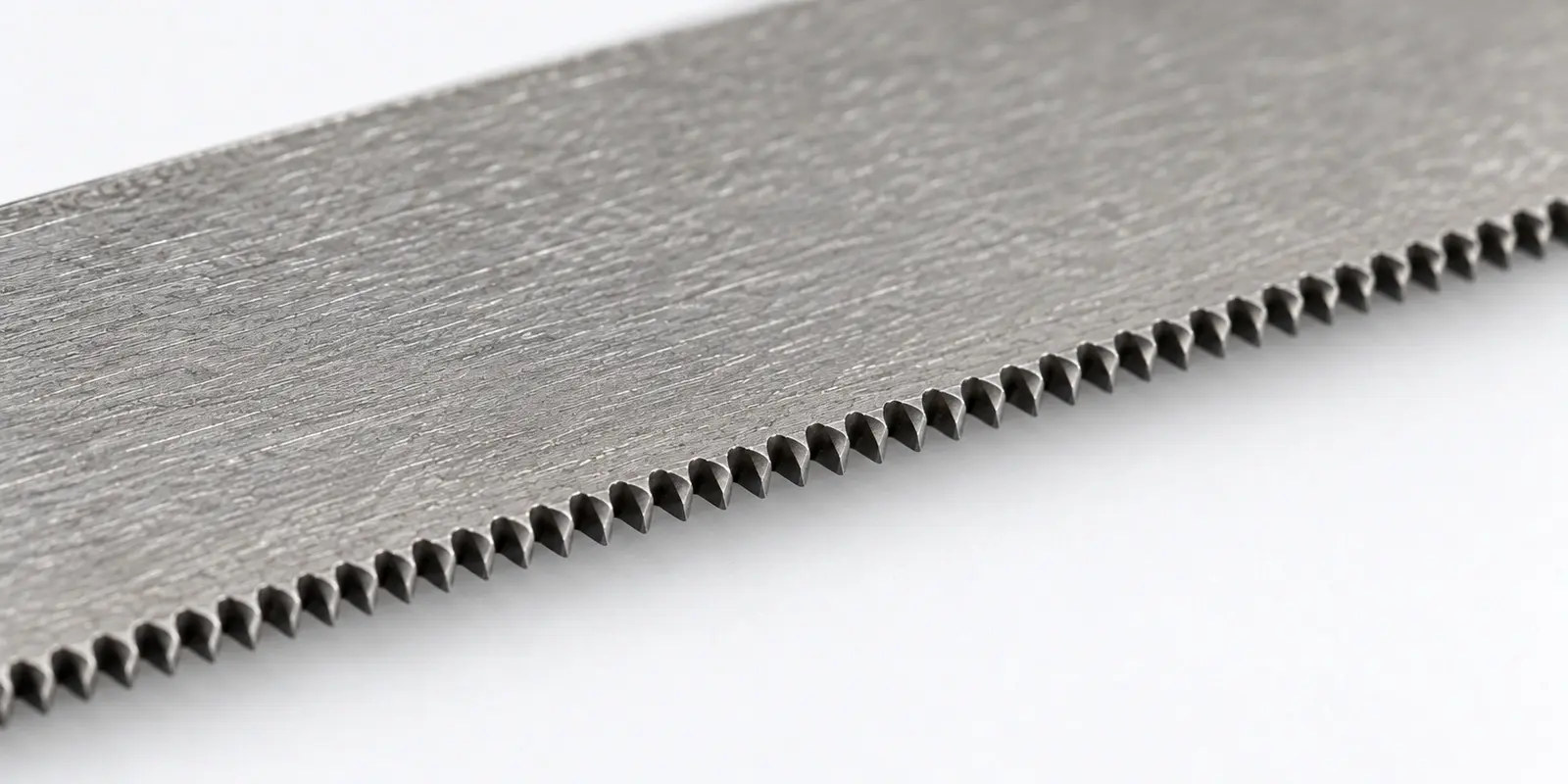
Illustrative close-up of a hand hacksaw blade tooth edge; not a measured TPI comparison
03 · PRODUCT VIEW

Tooth-Edge Detail

Use the selected blade record to state pitch; a close-up without a scale is not a TPI measurement.

  • Difference: Close view of the cutting edge.
  • Buyer: Workshop maintenance buyers
  • Confirm: State material, shape and section thickness.
Request specifications · Tooth-Edge Detail →
B2B SELECTION GUIDE

How to Select Hacksaw Blades

A useful tooth pattern cannot compensate for incorrect mounting holes or blade dimensions. Identify the frame before ordering a replacement.

01

Identify the frame

Provide frame model or mounting dimensions.
02

Measure the blade

Record length, width, thickness and hole spacing.

03

Describe the stock

State material, shape and section thickness.

04

Choose the pitch

Check the selected item’s cutting guidance.

Hacksaw Blades · selection table
Selection stepWhat to check
Identify the frameProvide frame model or mounting dimensions.
Measure the bladeRecord length, width, thickness and hole spacing.
Describe the stockState material, shape and section thickness.
Choose the pitchCheck the selected item’s cutting guidance.

Provide frame reference, blade dimensions, mounting-hole arrangement, workpiece, pitch and quantities.

Send Selection Requirements →
PRODUCT DETAIL

Range Planning for Hacksaw Blades

Length, width and thickness. Record this information separately for each purchasing line.

Hand Hacksaw Blade Form

Range role: workshop hand cutting purchasing

Keep the hand-frame blade family separate from powered-machine replacements. Frame fit is part of the item identity.

Mounting-End Detail

Range role: hardware replacement ranges purchasing

Record hole spacing and retention features for the required frame. Blade length alone does not define the mounting.

Tooth-Edge Detail

Range role: maintenance stores purchasing

Retain tooth pitch as an item field. A close-up without a scale cannot supply a measured TPI value.

INDUSTRIAL APPLICATIONS

Hacksaw Blades Applications

For tubing, report wall thickness and section shape; for a bar, provide the solid section. These inputs help define tooth engagement.

Illustrative group of hand hacksaw blades showing their full length and end mounting holes
01

Workshop hand cutting

Record the material and section being cut.

Illustration of a complete hand hacksaw blade with mounting holes at both ends
02

Hardware replacement ranges

Identify the frame connection and item dimensions.

Illustration showing the mounting hole and toothed edge at the end of a hand hacksaw blade
03

Maintenance stores

Keep pitch and construction distinguishable in the replacement list.

PRODUCT COMPARISON

Hacksaw Blades Product Comparisons

A generic “hacksaw blade” order can conceal a frame mismatch or different tooth pitch. Require these fields before comparing quotations.

Hacksaw Blades · procurement comparison
Product distinctionBuying implication
Fine and coarse pitchChoose from the selected blade’s guidance for the actual section.
Hand and power useDifferent systems require their own blade specification.
Length and hole spacingBoth matter for fitting a blade into a frame.

Do not substitute a blade between a hand frame and a powered machine on the basis of a similar outline. Use the specified blade for each system.

Send the proposed hacksaw blades shortlist with its intended applications.

Compare for My Program →
MANUFACTURING CAPABILITY

Construction and Product Details to Review

Retain the item’s dimensions, mounting drawing and pitch/material description with the approved sample.

Illustration of a complete hand hacksaw blade with mounting holes at both ends
Hand Hacksaw Blade FormIdentify the blade outline and mounting ends, then specify the item by dimensions and tooth pitch.
Illustration showing the mounting hole and toothed edge at the end of a hand hacksaw blade
Mounting-End DetailThe connection must fit the intended frame. Record hole spacing and retention details from the actual item.
Illustrative close-up of a hand hacksaw blade tooth edge; not a measured TPI comparison
Tooth-Edge DetailUse the selected blade record to state pitch; a close-up without a scale is not a TPI measurement.

Request the construction record for the selected hacksaw blades item.

Request Factory Information →
QUALITY CONTROL

Hacksaw Blades: Incoming Inspection Checklist

Inspect blade dimensions, mounting ends and tooth continuity against the purchase specification. Product images alone cannot establish construction or TPI.

Illustration of a complete hand hacksaw blade with mounting holes at both ends
Visible features for reviewIllustration of a complete hand hacksaw blade with mounting holes at both ends
Illustration showing the mounting hole and toothed edge at the end of a hand hacksaw blade
Visible features for reviewIllustration showing the mounting hole and toothed edge at the end of a hand hacksaw blade
01

Mounting ends

Inspect both mounting holes and their spacing against the hand-frame requirement.

02

Blade straightness

Review the complete blade for bending or visible handling damage before fitting and tensioning it.

03

Tooth edge

Check for damaged teeth and compare the pitch with the ordered blade specification, using a physical record rather than an unscaled picture.

04

Frame assignment

Keep the accepted blade tied to its frame reference so hand-hacksaw stock is not mixed with powered-saw replacements.

Include the inspection requirements for your hacksaw blades order.

Request Quality Information →
OEM & PRIVATE LABEL

OEM and Private-Label Enquiry Requirements

For an OEM/ODM enquiry, provide a blade and mounting drawing with the intended hand frame. Describe any identification request separately from the cutting specification.

List quantities per blade reference and pitch. State the identification needed to keep replacement items distinguishable in distribution.

    Discuss OEM Requirements →
    BUYING CHECKLIST

    Information to prepare before requesting a quotation

    01Length, width and thickness
    02Position, spacing and frame reference
    03TPI/pitch from the item record
    04Material stated for the selected blade
    05Provide frame reference, blade dimensions, mounting-hole arrangement, workpiece, pitch and quantities.
    BULK ORDER VERIFICATION

    Bulk Order Verification Checklist

    Compare blade dimensions with the purchasing requirement: Length, width and thickness.

    01 · ORDER RECORD

    Blade dimensions

    Length, width and thickness

    02 · ORDER RECORD

    Mounting holes

    Position, spacing and frame reference

    03 · ORDER RECORD

    Tooth pitch

    TPI/pitch from the item record

    B2B FAQ

    Hacksaw Blades: questions from professional buyers

    01What identifies a hand hacksaw replacement blade?

    Frame fit, blade dimensions, mounting-hole arrangement, pitch and construction.

    02Can material be identified from blade colour?

    No. Use the selected item’s material specification.

    03Can the same blade be ordered for hand and power hacksaws?

    Treat them as separate systems; use the blade specified for the intended frame or machine.

    04How should tubing be described?

    Provide tube shape, wall thickness and material alongside the blade specification.

    05What should be included in a distributor order?

    Separate blade references with dimensions, mounting, pitch, construction and quantities.

    REQUEST A QUOTE

    Request a Hacksaw Blades Quote

    Send your hand hacksaw frame and blade specification for a purchasing enquiry.

    We use these details only to prepare and follow up your quotation.

    Chat on WhatsApp