
A replacement list should distinguish the saw system, tooth pitch and blade construction. Combining these under a broad “metal hacksaw blade” description makes substitutions difficult to control.
Separate Hand and Power Hacksaw Blades
Identify the frame or machine before comparing blade types.
A similar-looking strip does not establish the same mounting, tensioning or operating requirement.
Record frame fit, mounting-hole arrangement and blade dimensions.
Use the machine’s specified blade and mounting requirements.
A hand frame tensions a blade between its mounting ends. A powered hacksaw uses a machine-specific blade and operating arrangement.
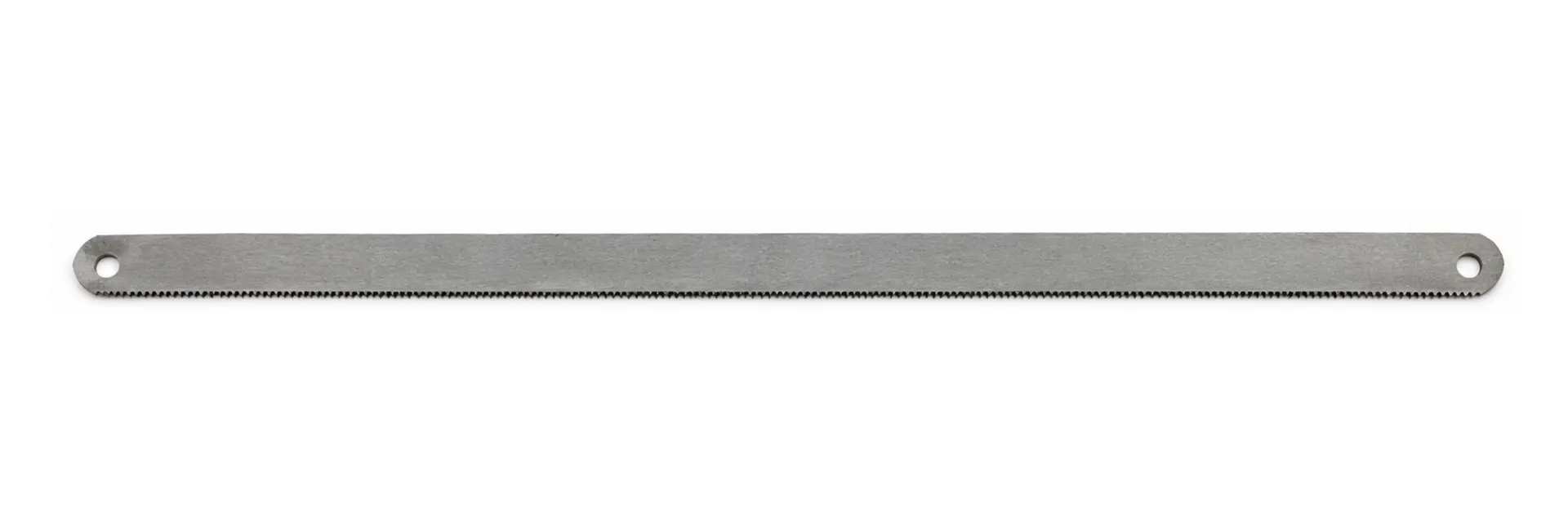
Read TPI as Tooth Spacing
TPI is a tooth-count designation per inch.
It does not identify HSS or bi-metal construction. Use the actual item record for both fields.
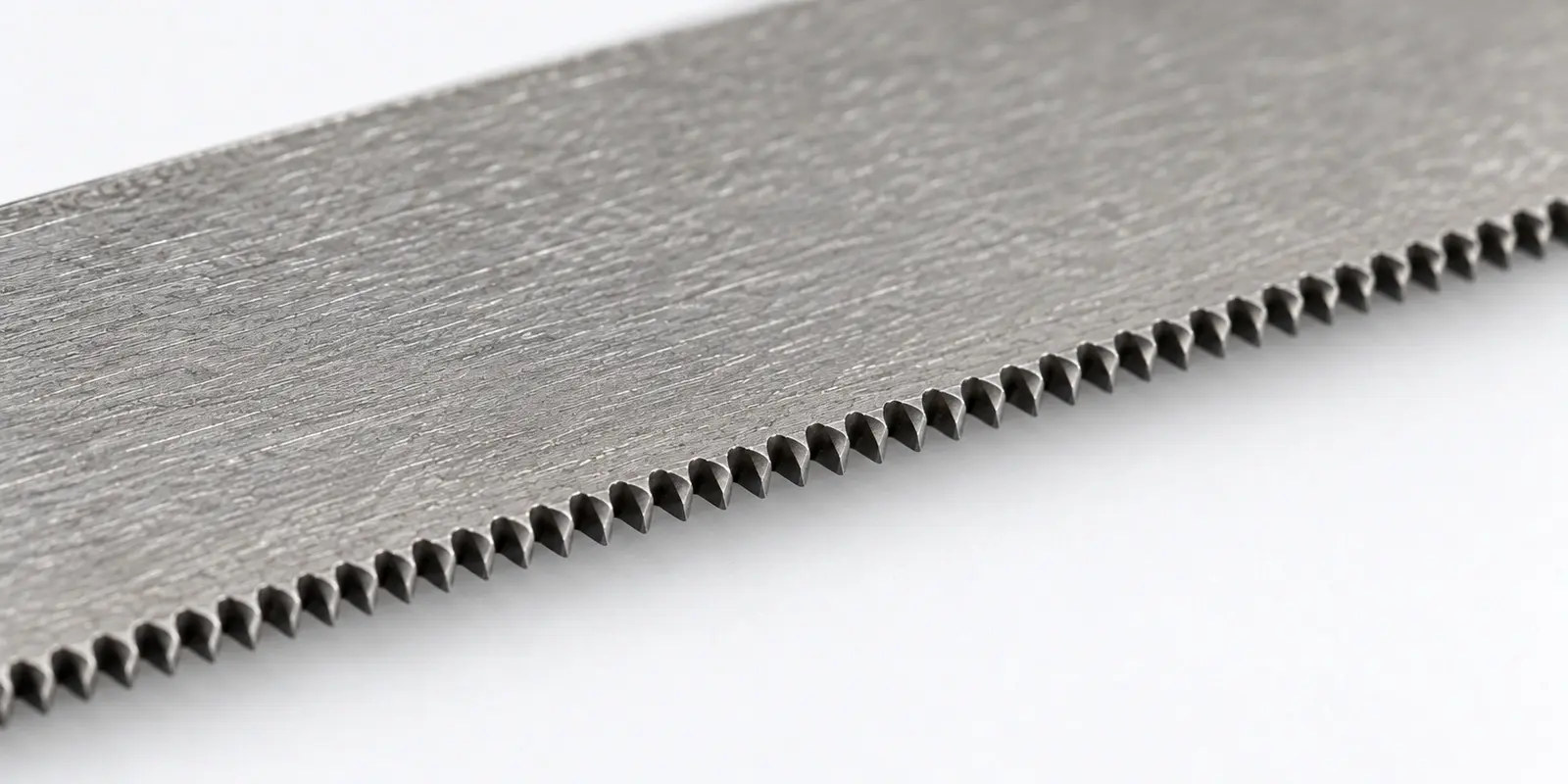
TPI counts teeth along a defined length. A tooth-edge picture without a measurement reference cannot establish that count.
| Field | What it describes | Evidence to use |
|---|---|---|
| TPI/pitch | Tooth spacing | Item marking or measured specification |
| Construction | Blade material/structure | Selected item description |
| Dimensions | Blade body size | Drawing or dimensional record |
| Mounting | Frame or machine connection | Hole arrangement and system reference |
Match Pitch to the Workpiece Section
Report tube wall thickness or solid-section dimensions.
Tooth engagement changes with the section and cut orientation, so a universal TPI recommendation is not a replacement for the blade supplier’s guidance.
Include section shape and wall thickness.
State material and the section encountered through the cut.
For hollow stock, wall thickness is the relevant thin section entering the teeth. Overall tube diameter does not describe the same engagement condition.
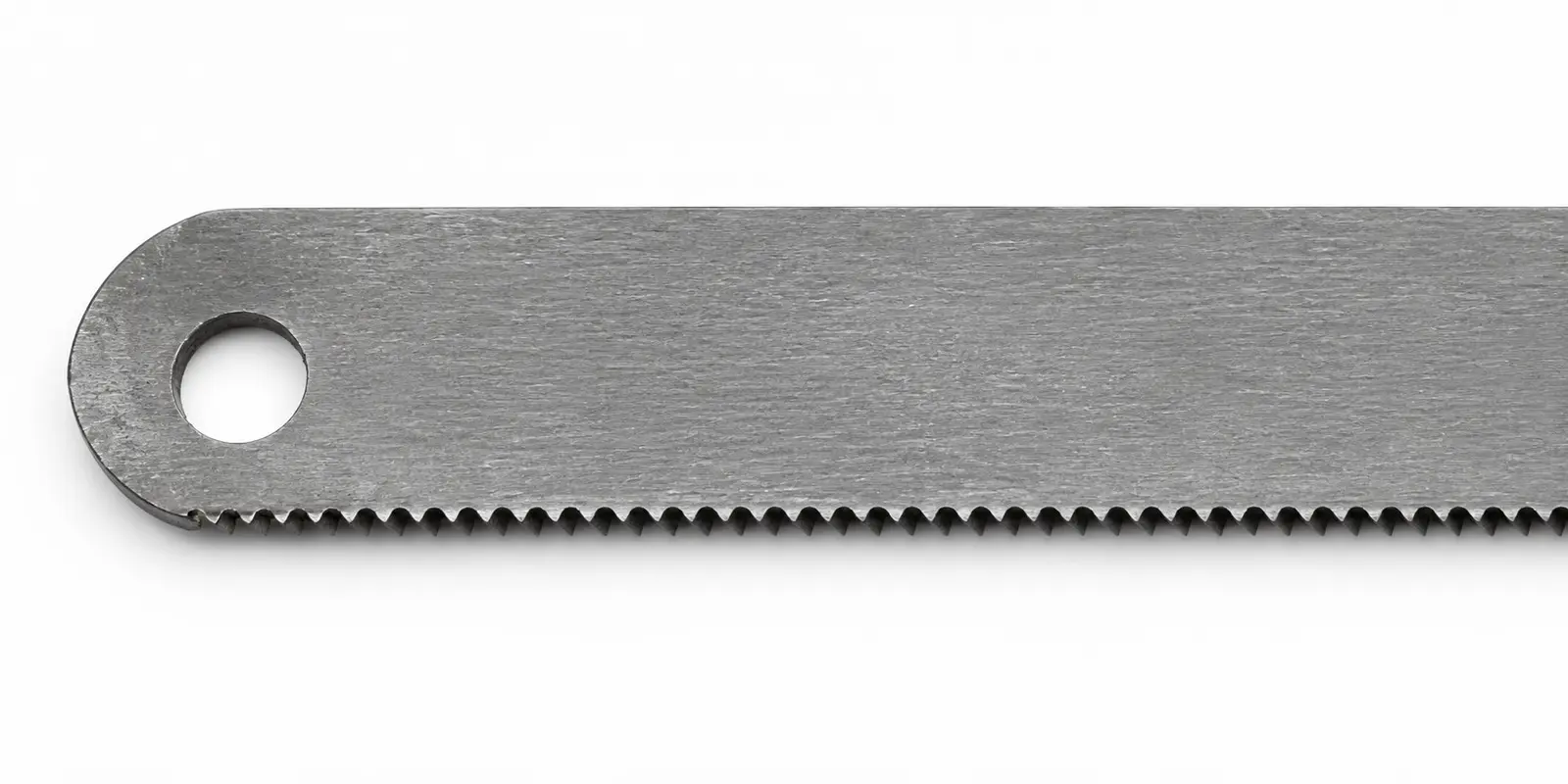
Check the mounting and cutting-edge views in the Hacksaw Blades collection when preparing a hand-frame replacement enquiry.
Confirm Blade Dimensions and Frame Fit
Length, width, thickness and hole arrangement identify the replacement.
Check how the frame retains and tensions the blade before sample use.
Mounting-hole arrangement and blade dimensions must match the frame. Tooth pitch cannot compensate for an incorrect connection.
| Replacement check | Buyer record |
|---|---|
| Length and hole spacing | Frame-compatible dimensions |
| Width and thickness | Required blade body dimensions |
| Pitch | Selected tooth specification |
| Construction | Selected item material description |
Correct Common Ordering Errors
Do not order hand and power blades under one reference, identify material by colour or state a TPI value from an image without measurement.
Compare mounting and dimensions before changing the tooth pitch.
Add material and section details to the request.
Keep blade construction and tooth pitch as separate item fields. A general product-family name does not establish either property.
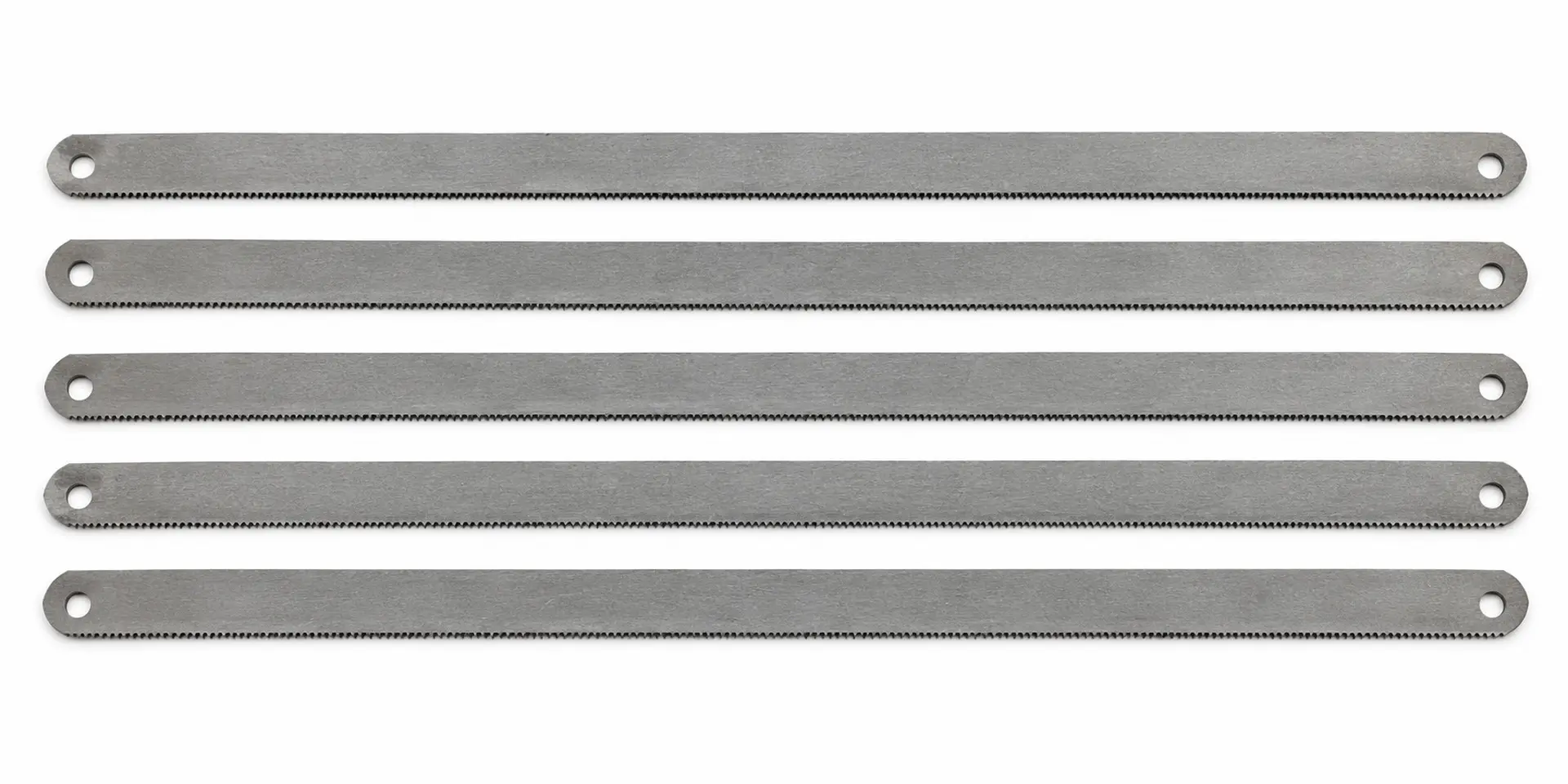
Use the hand hacksaw blade collection when the request is for a compatible hand frame.
Frequently Asked Questions
Does TPI identify blade material?
No. It describes tooth spacing; material and construction are separate fields.
Can hand and power blades share one specification?
Treat them as separate systems and follow the relevant frame or machine requirements.
Can tooth pitch be established from a close-up alone?
An unscaled photograph is insufficient. Use the item record or a proper measurement.
Which dimension matters for tubing?
Include wall thickness and section shape, not just outside size.
What belongs in a replacement order?
Saw reference, blade dimensions, mounting arrangement, pitch, construction and quantities.
Conclusion
Keep saw system, mounting, dimensions, pitch and construction separate in the order record. This makes a replacement identifiable without claiming unsupported TPI or material options.