
A drill may hold a burr shank, but physical fit does not prove a productive or safe setup. Burr performance depends on speed, runout and spindle control. This Burr Bit for Drill guide defines the operating limits. Use it to qualify products, samples and customer instructions.
Can You Use a Carbide Burr in a Drill?
Sometimes, but only after the drive and application have been checked. A Drill Burr Bit request should trigger a compatibility review, not an automatic yes. The drill must be approved for the accessory and operating method, the chuck must hold the exact shank, and the available speed must fall within the burr supplier's range.
Most industrial carbide burr work uses side contact. That differs from feeding a twist drill axially into a hole. If the drill instructions do not permit the accessory or the operator cannot control lateral contact, specify a die grinder instead. Physical chuck capacity is only one condition in the decision.
Default B2B Recommendation: When the drive documentation, speed or chuck condition is unclear, do not market the setup as drill-compatible. Quote a suitable pneumatic or electric die grinder and the matching collet.
| Compatibility Check | Proceed to a Sample Only If | Reject the Drill Setup If |
|---|---|---|
| Machine Instructions | The drill maker permits the accessory and operating method | The intended-use or accessory guidance excludes the work |
| Speed | The usable speed matches the exact burr chart | The drill cannot reach or hold the required range |
| Shank Holding | The chuck clamps the full, clean shank concentrically | The shank is undersized, slips or shows visible runout |
| Application | The work is light, accessible and easy to control | The job needs sustained stock removal or restricted side contact |
| Test Control | The operator can stop at the first sign of vibration or loosening | Chatter, heat, movement or unstable grip appears |
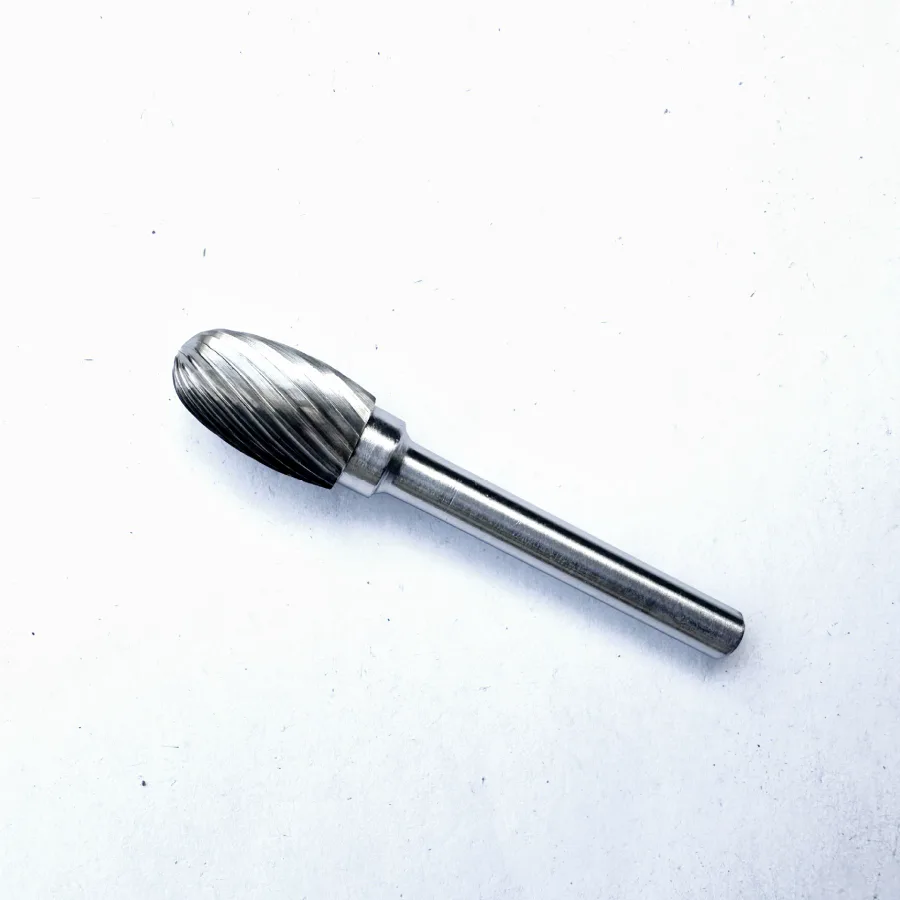
Drill vs Die Grinder for Carbide Burrs
Catalog searches for Grinder Bits for Drill combine two different drive systems. A handheld drill is designed primarily for drilling and fastening. A die grinder is designed around high-speed rotary accessories, a defined collet and controlled side contact. Exact capabilities still depend on the machine model.
The speed gap is usually decisive. Many general drills operate below the efficient range shown for small carbide burrs. Low speed encourages pressure, rubbing and poor chip formation. A speed-adjustable die grinder gives the buyer more room to match burr diameter, cut and workpiece.
| System Factor | Handheld Drill | Die Grinder |
|---|---|---|
| Primary Work | Axial drilling and fastening | Rotary deburring, shaping and grinding |
| Typical Speed Class | Often limited to the low thousands of RPM | Commonly designed for tens of thousands of RPM |
| Tool Holding | Three-jaw chuck or model-specific holder | Size-specific collet for a round shank |
| Body and Access | Bulkier nose and pistol-grip approach | Slim straight or angle body for contour control |
| Side-Contact Duty | Must be confirmed in the drill instructions | Core use when the accessory is approved |
| Range Recommendation | Conditional option for controlled light work | Preferred starting drive for industrial burr ranges |
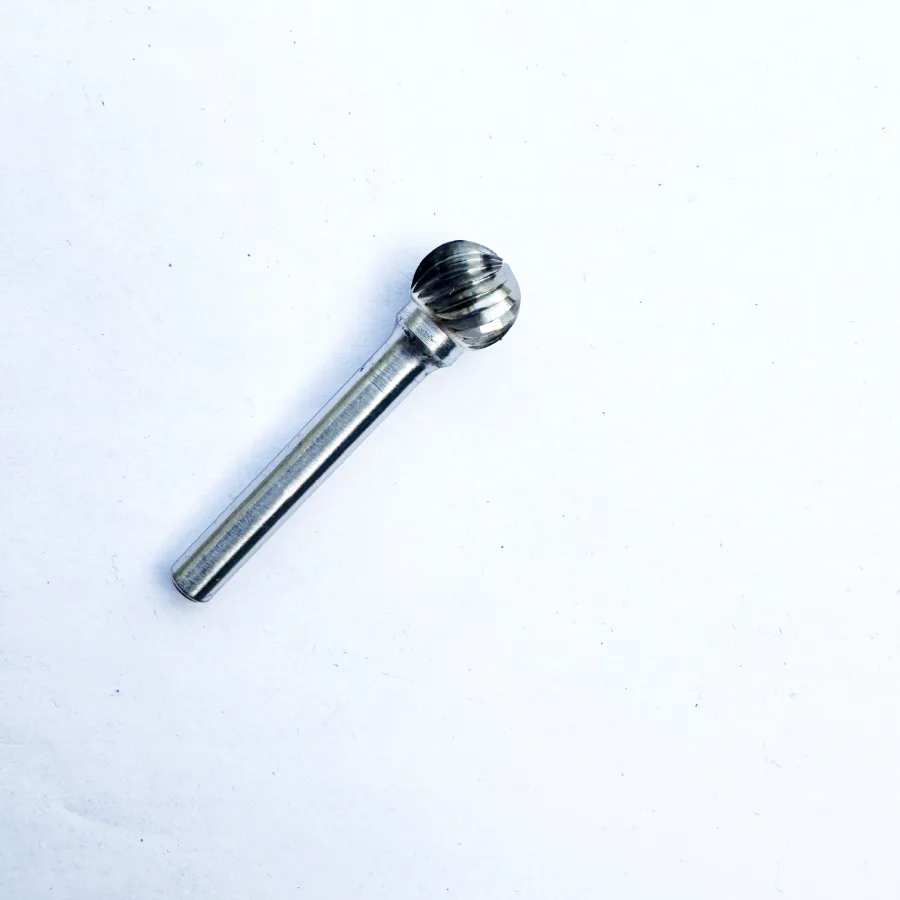
Speed, Chuck and Shank Compatibility
The phrase Drill Bit Burr can hide four separate specifications: head diameter, cut pattern, shank diameter and drive speed. Record all four before recommending a machine. A burr that fits the chuck but runs far below its intended range may cut slowly, chatter or push the operator to use excessive pressure.
Do not publish a universal drill RPM. Start with the burr manufacturer's chart, then confirm that the exact drill, chuck and battery or power condition can maintain the required range. The lowest maximum-speed rating within the approved system must never be exceeded.
| Field | What the Buyer Must Confirm | Why It Matters |
|---|---|---|
| Burr Speed | Supplier range for the exact diameter, cut and material | Small and large heads do not share one RPM |
| Drill Speed | No-load range and usable speed under contact | A trigger setting is not proof the speed stays stable |
| Chuck Capacity | The stated minimum and maximum clamping diameter | A chuck's maximum size does not prove it grips a small shank correctly |
| Shank | Exact 3 mm, 6 mm, 1/8-inch or 1/4-inch diameter | Nearby metric and inch sizes are not interchangeable |
| Runout | No visible wobble at the head under a safe no-load check | Runout creates uneven tooth loading and chatter |
| Overhang | Minimum practical unsupported shank within supplier limits | Extra projection reduces rigidity |
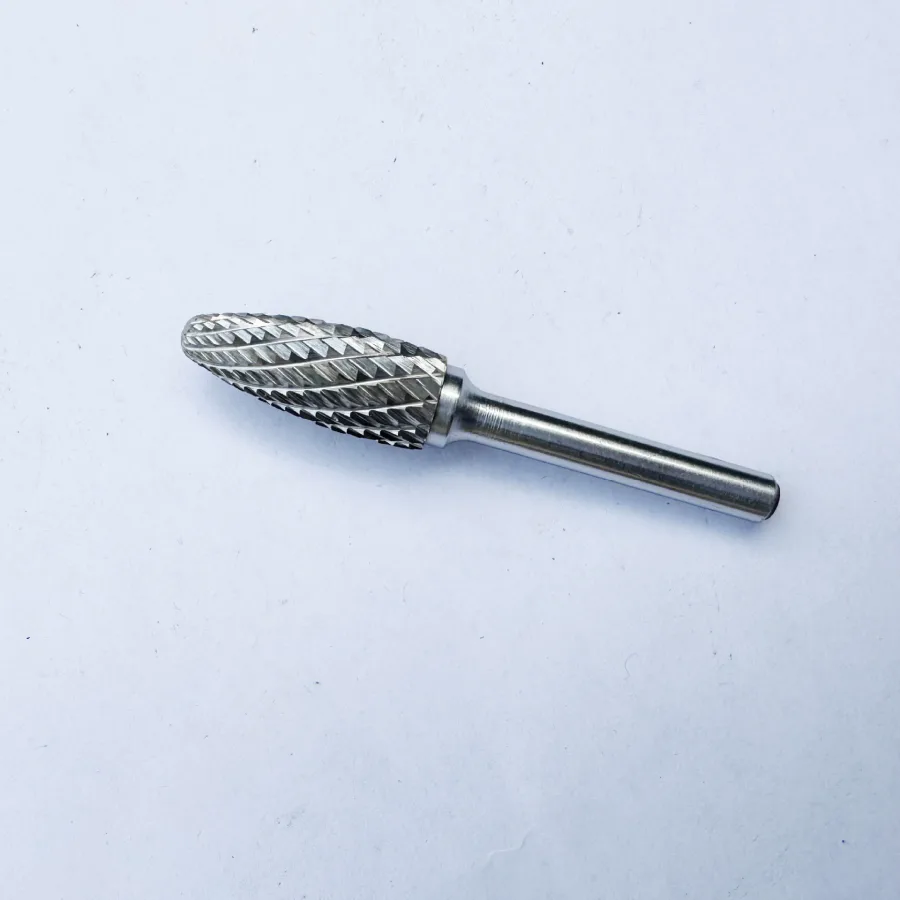
Which Burrs Can Be Sampled with a Drill?
Metal Grinder Drill Bit is marketing language, not a technical standard. A Carbide Burr Drill Bit should still be identified by shape, head diameter, cutting length, cut, shank and material. Only then can you decide whether a drill-based sample is reasonable.
The strongest candidate is a short, small-head burr used for brief edge cleanup on an accessible part, provided the drill and burr instructions permit the setup. A short trial on aluminum or mild steel may show whether speed, chip formation and control are adequate. This does not qualify the same drive for a larger head, harder grade or production cycle.
- Use an open-flute aluminum cut when soft non-ferrous metal tends to load the teeth.
- Use a suitable general-purpose cut for controlled steel deburring after the speed check.
- Keep the first trial on an open edge where the head and shank remain visible.
- Avoid using a burr to produce a tolerance-controlled hole; choose a drilling or machining tool.
- Benchmark the same burr in a proper die grinder before approving drill-based customer guidance.
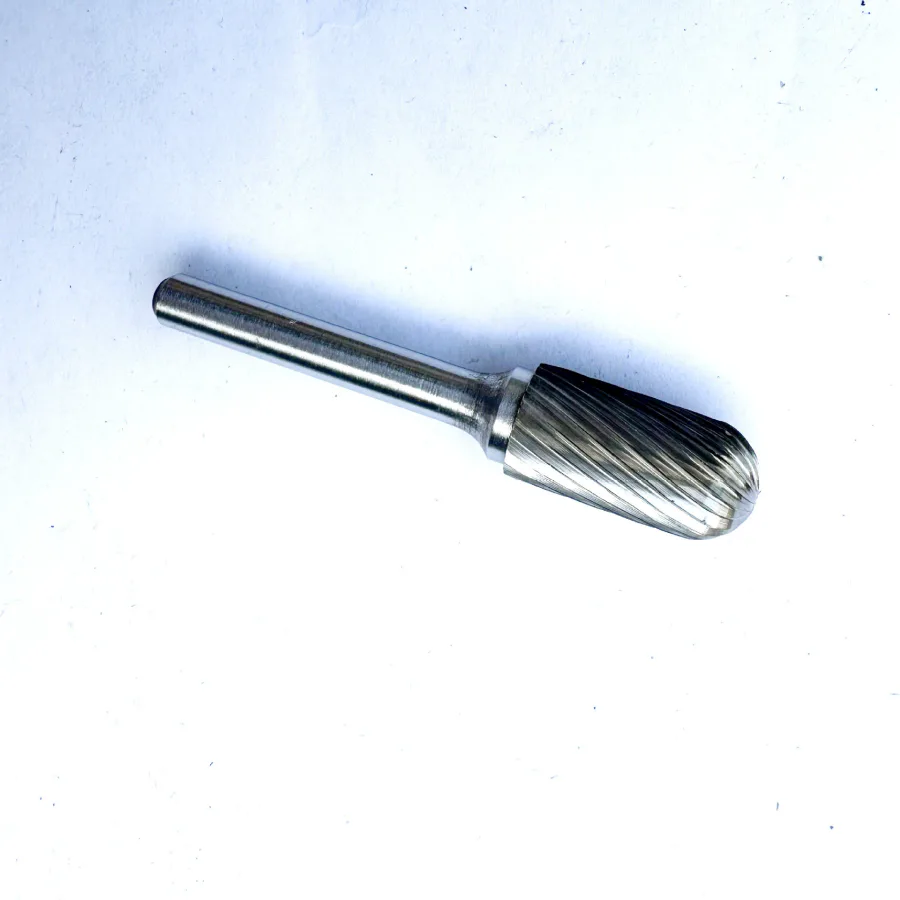
Applications That Need a Die Grinder
A drill should not become the default drive just because customers already own one. Move the application to a die grinder when removal rate, access, duty cycle or control exceeds a light qualification test.
Stop Condition: Stop the test if the burr slips, the head wobbles, the chuck loosens, the drill stalls, vibration increases or the workpiece begins to discolor. Correct the system before restarting.
- Sustained weld removal, casting cleanup or heavy stock removal.
- Small burrs that require a speed far above the drill's operating range.
- Large heads, long shanks or extra overhang that increase leverage and vibration.
- Stainless, hardened steel or interrupted surfaces where rubbing and chatter can damage the result.
- Deep slots, internal contours or restricted access that prevents a stable two-hand grip.
- Repetitive production where cycle time, tool life and operator consistency must be measured.
Carbide Burr vs Drill Bit
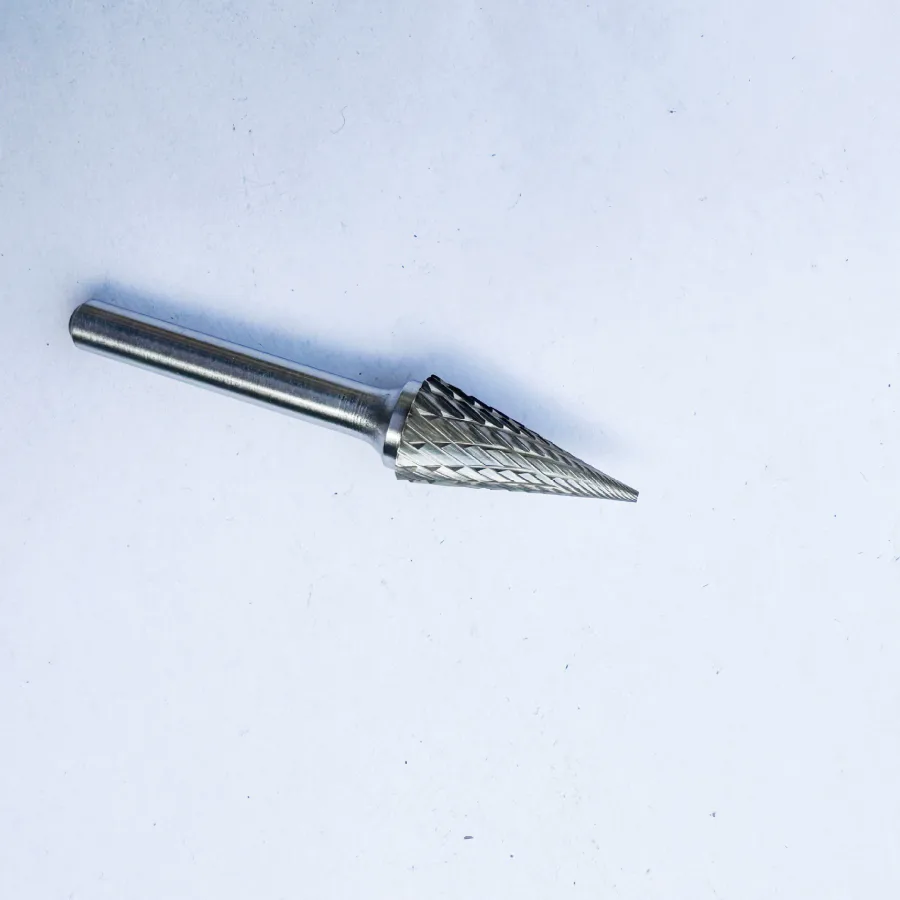
These tools solve different jobs. A twist drill is designed to create a hole through axial feed. A carbide burr shapes, blends or removes local material through controlled rotary contact on its flutes. Neither the similar shank nor the word 'bit' makes them interchangeable.
If the customer wants to open a hole roughly, a burr may remove local material after drilling. If the customer wants diameter, roundness, position or finish control, recommend the correct drill, reamer, countersink or milling process instead of treating a burr as a precision hole-making tool.
| Selection Point | Carbide Burr | Drill Bit |
|---|---|---|
| Primary Result | Deburr, shape, enlarge locally or blend | Create a round hole to a selected diameter |
| Cutting Direction | Side and model-specific end contact | Mainly axial feed through the point and lips |
| Process Control | Operator path, contact angle and speed | Feed, alignment, point geometry and cutting data |
| Preferred Drive | Die grinder or another explicitly approved rotary system | Drill, drilling machine or approved machine tool |
| Buyer Specification | Shape, cut, head size, shank and RPM | Diameter, length, point, flute, shank and material |
How to Reduce Chatter, Loading and Burr Damage
Chatter is a system problem before it is a tooth-pattern problem. Inspect the drive, chuck or collet, shank, head concentricity and unsupported length. Test a second known-good machine before rejecting a burr batch for vibration.
A drill that cannot maintain speed may tempt the operator to press harder. That usually worsens control. Treat falling RPM as a reason to change the drive or burr specification, not as a request for more force.
- Clean the shank and chuck jaws or collet before clamping.
- Insert the shank to the specified depth without allowing the workpiece to touch the shank.
- Use the recommended speed and avoid pressure that pulls the drive speed down.
- Keep the head moving across the surface; do not dwell in one point.
- Use the material-specific cut when soft metal loads or stainless generates excessive heat.
- Remove a dull, chipped, bent or visibly loose burr from service.
How Distributors Should Describe Drill Compatibility
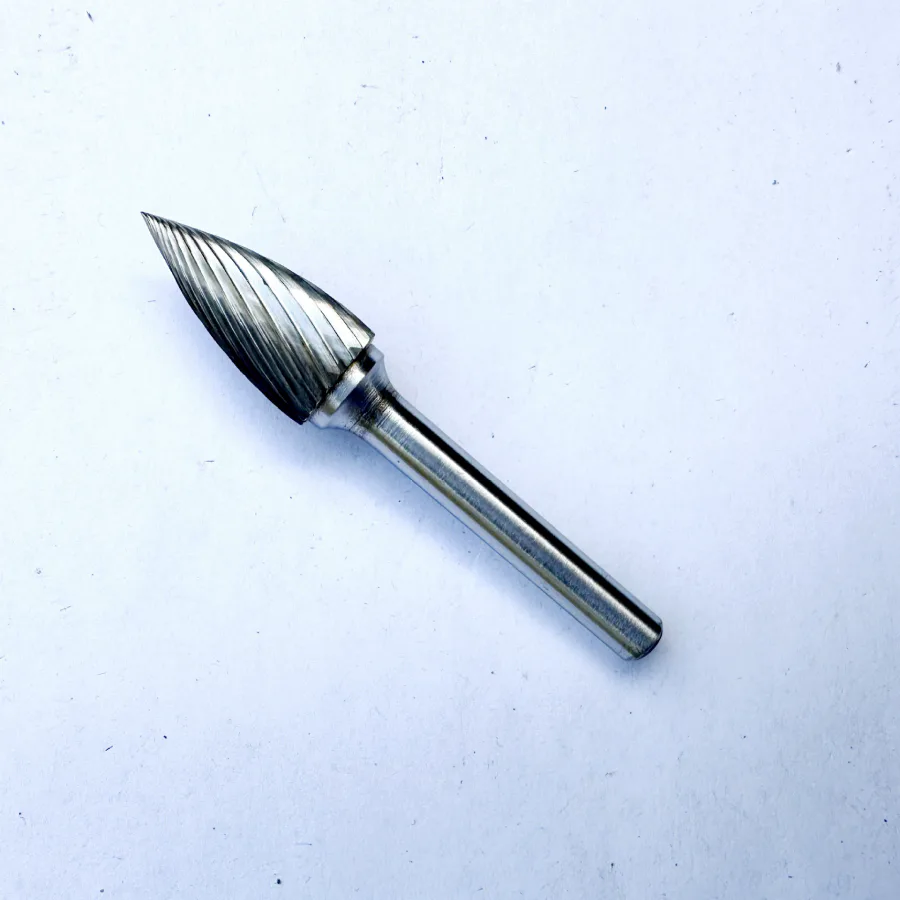
Do not print 'fits any drill' or 'for all drills' on a product page or package. Those claims ignore chuck range, speed, intended use and side-contact control. State the preferred drive first, then describe any alternative drive as conditional on the exact machine and application.
For private-label work, review every compatibility statement before artwork approval. A keyword can attract traffic, but it should not create a promise that the supplier's technical data does not support.
- List the recommended drive type and exact collet or chuck condition.
- Publish head diameter, cut, shank and the controlling speed data for each SKU.
- Separate 3 mm and 6 mm shank ranges instead of implying one holder fits both.
- Link material guidance to single, double, aluminum or specialist cuts.
- Add a compatibility note for light drill use without hiding the die-grinder preference.
- Keep the same product code on the sample, drawing, label, carton and reorder file.
How to Qualify Samples Before Bulk Ordering
Run the drill setup and the recommended die-grinder setup on matched workpieces. Use the same burr model, material, feature and removal target. The comparison shows whether a drill is merely able to rotate the burr or can deliver an acceptable industrial result.
For an OEM quotation, send the application photo or drawing, workpiece, burr shape and cut, head and shank sizes, drill or grinder model, required pack, annual quantity and destination market. This lets the supplier propose a realistic sample plan instead of approving a generic drill claim.
| Test Record | What to Capture | Approval Question |
|---|---|---|
| Drive | Model, rated speed, actual setting, power or air condition | Can it maintain speed under controlled contact? |
| Holding | Chuck or collet, shank engagement, overhang and runout | Does the burr remain concentric and secure? |
| Workpiece | Material grade, condition, feature and access | Does the test represent the customer application? |
| Output | Cycle time, removal, finish, heat, loading and chatter | Does the setup meet the commercial target? |
| Wear | Tooth condition, shank movement and joint integrity | Is performance repeatable across samples? |
Frequently Asked Questions
Should packaging say suitable for any drill?
No. The statement is too broad because drills differ in intended use, chuck range, speed, power and control. State the preferred die grinder and collet and list exact conditions for any limited drill use.
Which details belong in a compatibility inquiry?
Collect the drill model, chuck type and range, working speed, burr shape, cut, head and shank sizes, workpiece, access, removal target and duty cycle, plus a photo or drawing.
Should distributors create a separate drill-burr SKU range?
Usually not. Organize by shape, cut, head size and shank, then add verified drive guidance. Create a separate set only for a clearly tested light-duty application.
Can carbide burr bits be used in a drill?
Yes, in limited cases when the machine permits the method, the chuck holds the exact shank concentrically and the drive reaches the specified speed. A die grinder is normally better for repeatable side cutting.
Why is a die grinder usually better than a drill for carbide burrs?
It is designed for high-speed rotary accessories, uses a size-specific collet and provides better access for controlled side contact.
Which speed and chuck conditions must be checked?
Compare usable drive speed with the supplier's range and confirm secure concentric holding, allowed overhang and the lowest maximum-speed rating in the system.
Can a 3 mm or 6 mm burr be held safely in a drill chuck?
Only when the stated clamping range includes the exact shank and the machine permits the work. Metric and nearby inch sizes are not interchangeable.
Which applications should not be attempted with a low-speed drill?
Avoid sustained or heavy removal, large heads, long shanks, deep contours, hard interrupted surfaces and production cycles that require stable removal rates.
Final Thoughts
Treat drill use as a documented exception, not a universal selling point. Match the speed, chuck, shank and application before testing. For repeatable industrial removal, specify a suitable die grinder and exact collet with the carbide burr range.
Request a Compatibility Review | Get an OEM Quotation
Related Product and Buyer Guides
- Tungsten Carbide Burrs
- 6mm Shank Carbide Burr
- Carbide Burr Size Chart
- Best Die Grinder Bits for Metal
- Carbide Burr Shape Chart