A carbide burr is a practical starting point for localized metal deburring and shaping. For abrasive grinding or surface blending, consider a suitable mounted point or flap wheel. Choose from the workpiece, contact surface, and required finish, then check the die grinder's accessory and mounting limits.
Steel fabrication, stainless weld dressing, and aluminum casting cleanup can need different teeth even when the head shapes look similar. The following choices connect material, cutting geometry, access, and finish so you can specify a tool and evaluate the result.
Which Die Grinder Bit Should You Choose?
Start with the result the part needs. Removing a casting fin, opening a rounded passage, and blending scratches are different jobs, even when all three happen on the same component. In metalworking catalogs, carbide burrs are also called rotary burrs or rotary files. The broader phrase “die grinder bits” can include abrasive accessories, so specify the working structure as well as the name.
| Your immediate task | Starting point to evaluate | What decides the final choice |
|---|---|---|
| Remove a localized steel burr or weld projection | Carbide burr with a steel-appropriate cut | Contact area, accessibility, stock allowance, and tooth geometry |
| Shape an internal radius or curved passage | Ball, oval, or rounded tree carbide burr | Required contour, approach angle, and clearance |
| Remove material from aluminum | Aluminum-oriented, open-flute carbide burr | Alloy, chip loading, and the manufacturer's application guidance |
| Grind a small surface using an abrasive process | Material-appropriate mounted point | Abrasive, bond, shape, and permitted operating conditions |
| Blend machining marks or refine a surface | Suitable mounted flap wheel or finishing accessory | Required finish, grain, grit, and edge preservation |
A bit earns its place by producing an acceptable part under the actual production conditions. Define that outcome before comparing products: a clean edge, a corrected contour, and a blended surface need different acceptance criteria.
Choose the Carbide Burr for the Workpiece Material
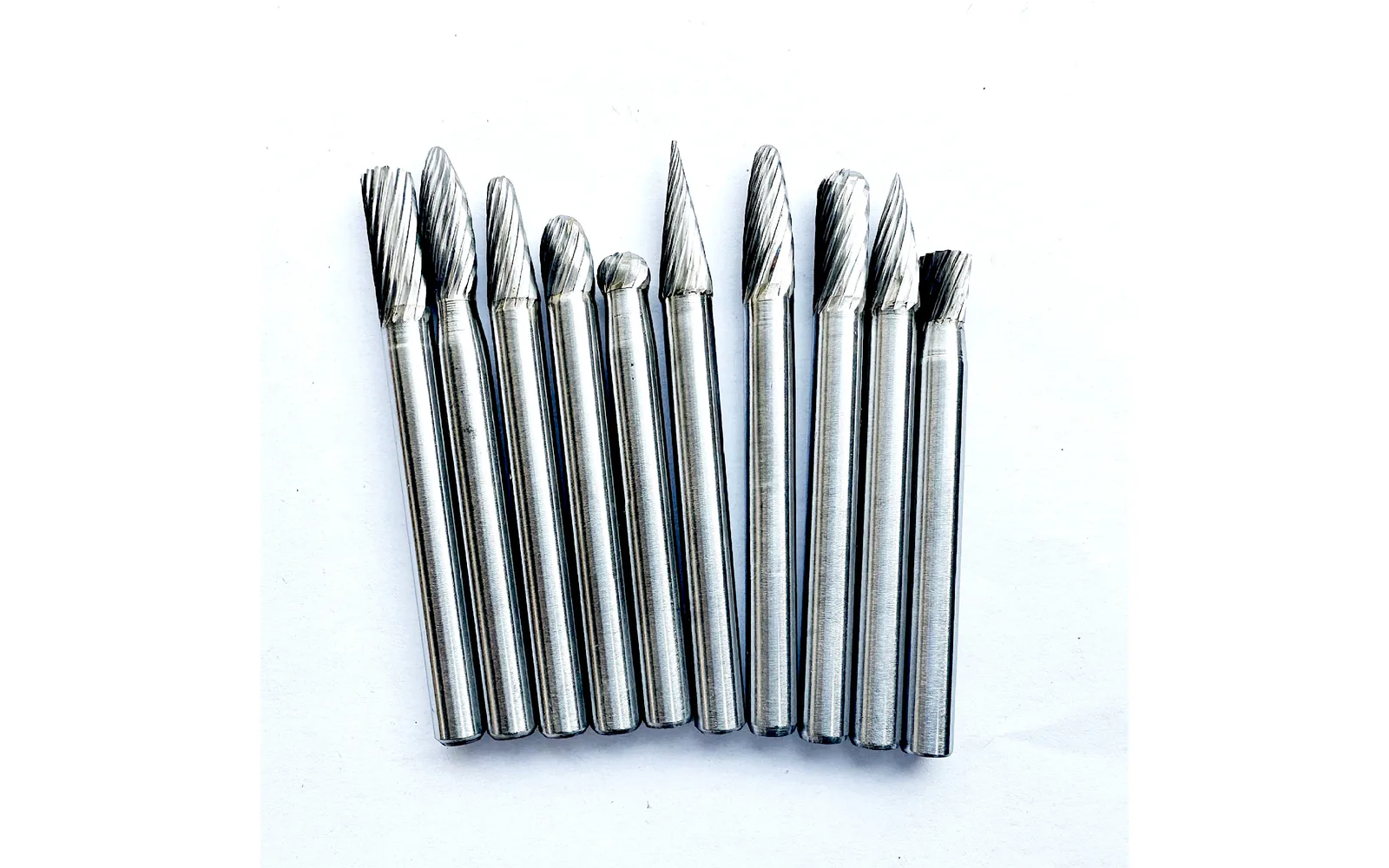
“For metal” is too broad a specification. Tell the supplier the alloy or material grade, its condition, and the operation. A stainless weld, an aluminum casting, and a hardened repair component should not automatically receive the same recommendation.
| Workpiece | Starting Choice to Evaluate | Detail That Changes the Selection |
|---|---|---|
| Mild steel | A steel-appropriate carbide burr; double cut is one candidate | Edge burr, weld projection or contour work; contact area and required result |
| Stainless steel | A design recommended for the exact stainless grade and operation | Material condition, surface requirements and any contamination-control specification |
| Aluminum | An aluminum-oriented, open-flute design where loading is a concern | Alloy, chip clearance and the exact manufacturer's recommendation |
| Cast iron or hardened steel | A cut recommended for the stated grade and condition | Casting grade or actual hardness; feature and stock allowance |
Select the exact burr from the manufacturer’s recommendation for the workpiece grade, condition and operation.
Mild Steel and General Fabrication
For deburring and localized shaping in mild steel, a steel-appropriate double-cut burr is a practical candidate to evaluate. Cross-cut teeth divide the cutting pattern and can help manage chips during hand-guided work. A single-cut alternative may suit the same material, depending on the particular tooth design and operation.
Match the removal target to the part drawing. If the aim is simply to remove an edge burr, define the permitted edge break. If a weld projection must be reduced, identify the surrounding surface that must remain untouched. These details make a sample trial more useful than asking which burr removes the most metal.
Stainless Steel
Select a burr specifically recommended for the stainless grade and application. General-purpose and stainless-focused designs both exist, but their suitability depends on the individual product. PFERD's separate material-specific burr families illustrate why a broad material label does not replace a product recommendation.
For procurement, describe whether the work is weld dressing, edge deburring, or contour correction. State whether the surface will remain exposed, receive a coating, or pass to another finishing operation. Include the customer's contamination-control requirements where applicable. For a visible surface, define whether heat discoloration or unintended scratches would make the sample unacceptable. Agree these finish requirements before the sample trial so the supplier and operator assess the same result.
Aluminum and Other Nonferrous Metals
For aluminum, consider an aluminum-oriented burr with generous chip space. Open-flute designs address the tendency of material to collect between cutting teeth. Norton's carbide burr selection literature describes wide tooth spacing for aluminum chip clearance.
That does not mean every single-cut or double-cut burr is universally unsuitable for aluminum. Manufacturers use different geometries and names, including designs intended for several materials. Follow the recommendation for the exact burr and alloy. Copper, brass, and bronze also need their own application check; “nonferrous” is a material category, not a complete cutting specification.
Cast Iron and Hardened Steel
Cast iron work can involve casting flash, rough intersections, or local surface corrections. Choose the shape around the actual feature and select a cut that the burr manufacturer recommends for that grade and operation.
For hardened steel, give the supplier the material condition and hardness before selecting a tool. The existence of carbide burrs intended for hardened materials does not establish that every carbide burr is suitable. Where the hardness is unknown, identify it before treating an unsuccessful trial as proof of poor tool quality.
Single Cut, Double Cut, or Aluminum Cut?
The cut describes the tooth arrangement. It does not describe the head shape, shank size, or guaranteed finish. You can therefore need the same head profile in different cuts for different jobs.
Single-Cut Carbide Burrs
A single-cut burr has a primary flute pattern without the intersecting cross-cut pattern associated with double cut. Suitable single-cut designs can be used for several industrial metals. Their behavior depends on tooth spacing, cutting geometry, contact, and the workpiece.
Do not specify single cut solely because a purchasing list calls it “the finishing version.” A supplier may recommend it for a particular cutting action, but the final surface still depends on how that tool meets the part. Explore the single-cut carbide burr family when that geometry matches the application.
Double-Cut Carbide Burrs
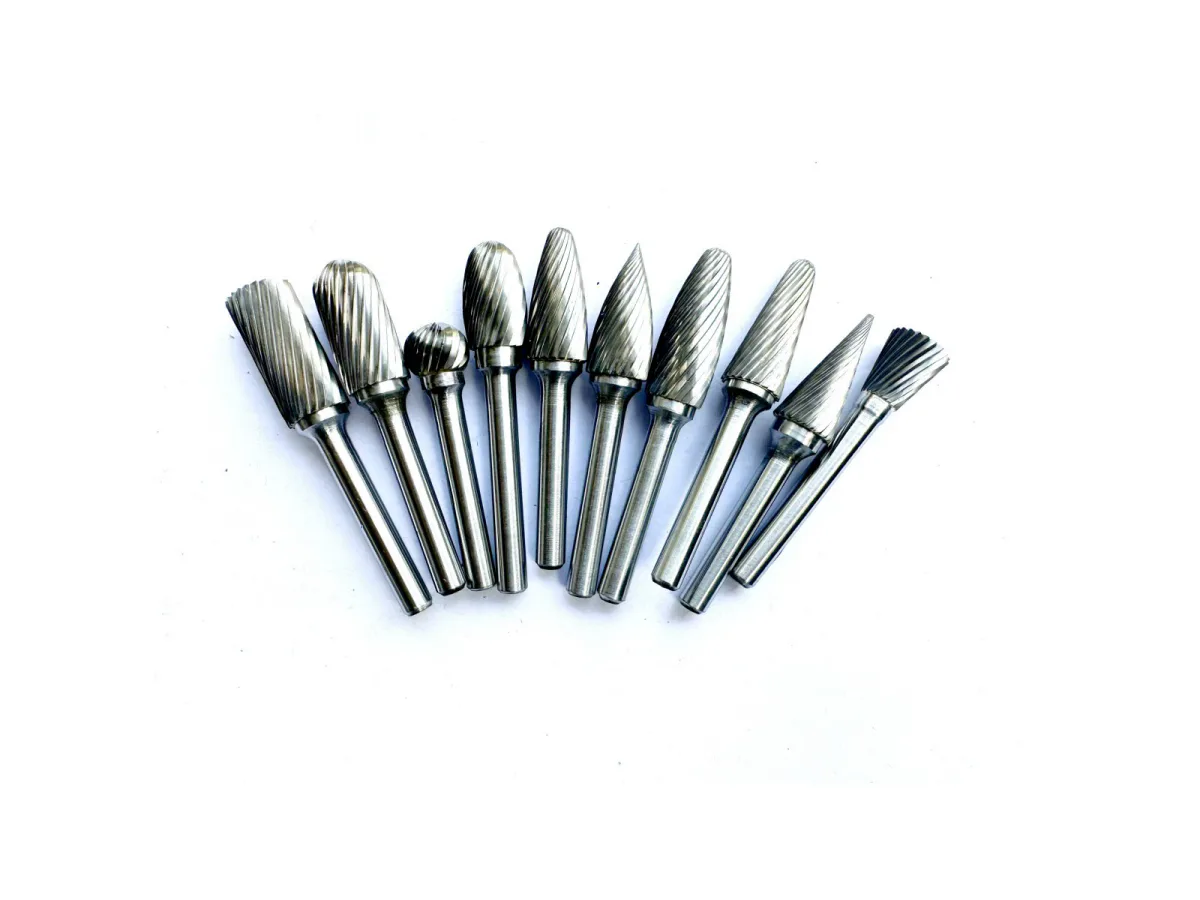
Double-cut burrs have intersecting tooth patterns. Chip breaking and controllable hand-guided cutting are important reasons to evaluate them for steel work. Master Abrasives discusses these functions in its rotary burr cut-selection guide.
Cross-cutting does not automatically produce either a finer or a rougher surface than every single-cut alternative. Comparing two labels is insufficient: compare the exact designs on the same material and feature. The double-cut carbide burr family is a useful place to begin that selection.
Aluminum-Cut and Open-Flute Burrs
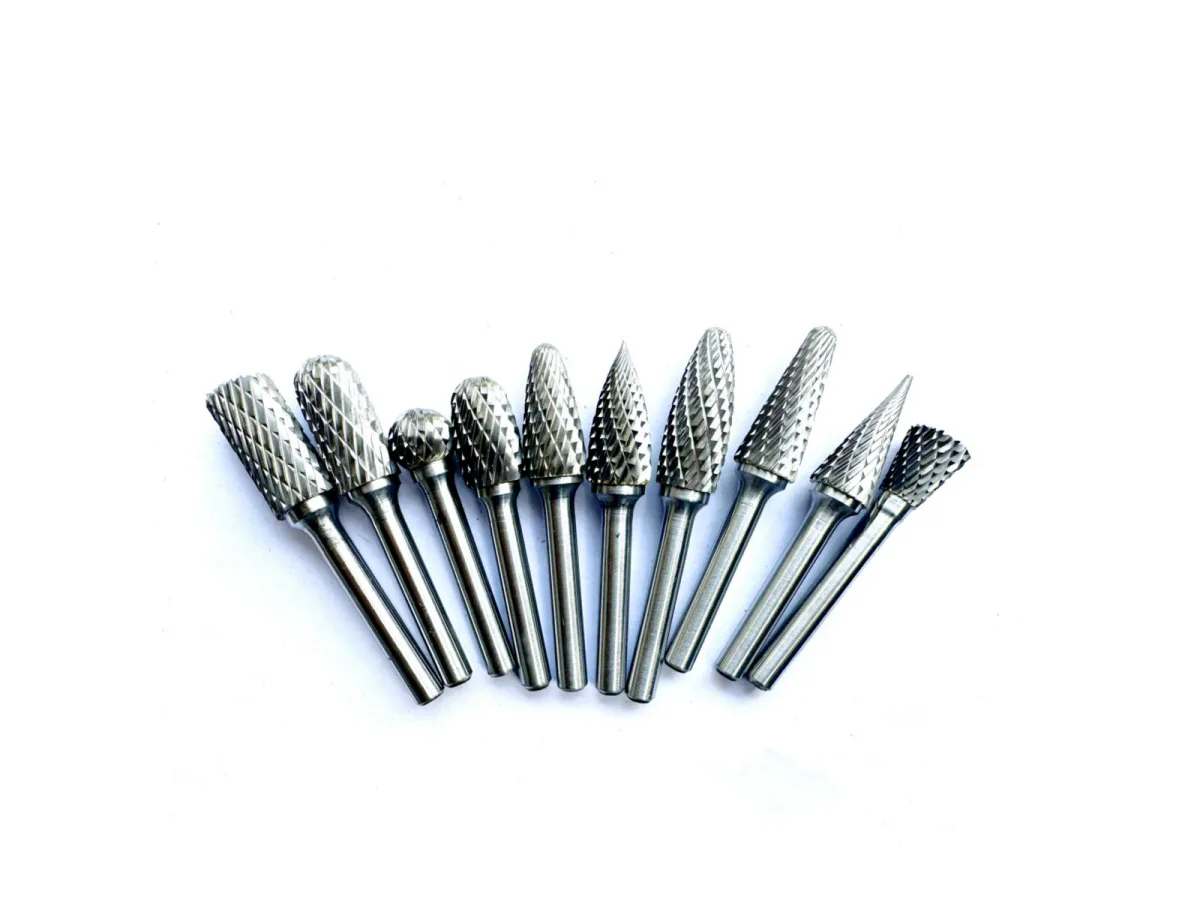
Aluminum-cut designs generally prioritize room for chips and cutting action suited to the intended material. Evaluate an open-flute aluminum-cut burr when loading is disrupting an aluminum operation.
Look at both the workpiece and the teeth after a trial. A tool that initially cuts but then accumulates material presents a different problem from a tool that remains clear but damages the intended contour. Report those observations separately. Do not substitute heavier pressure for an unresolved geometry or application mismatch.
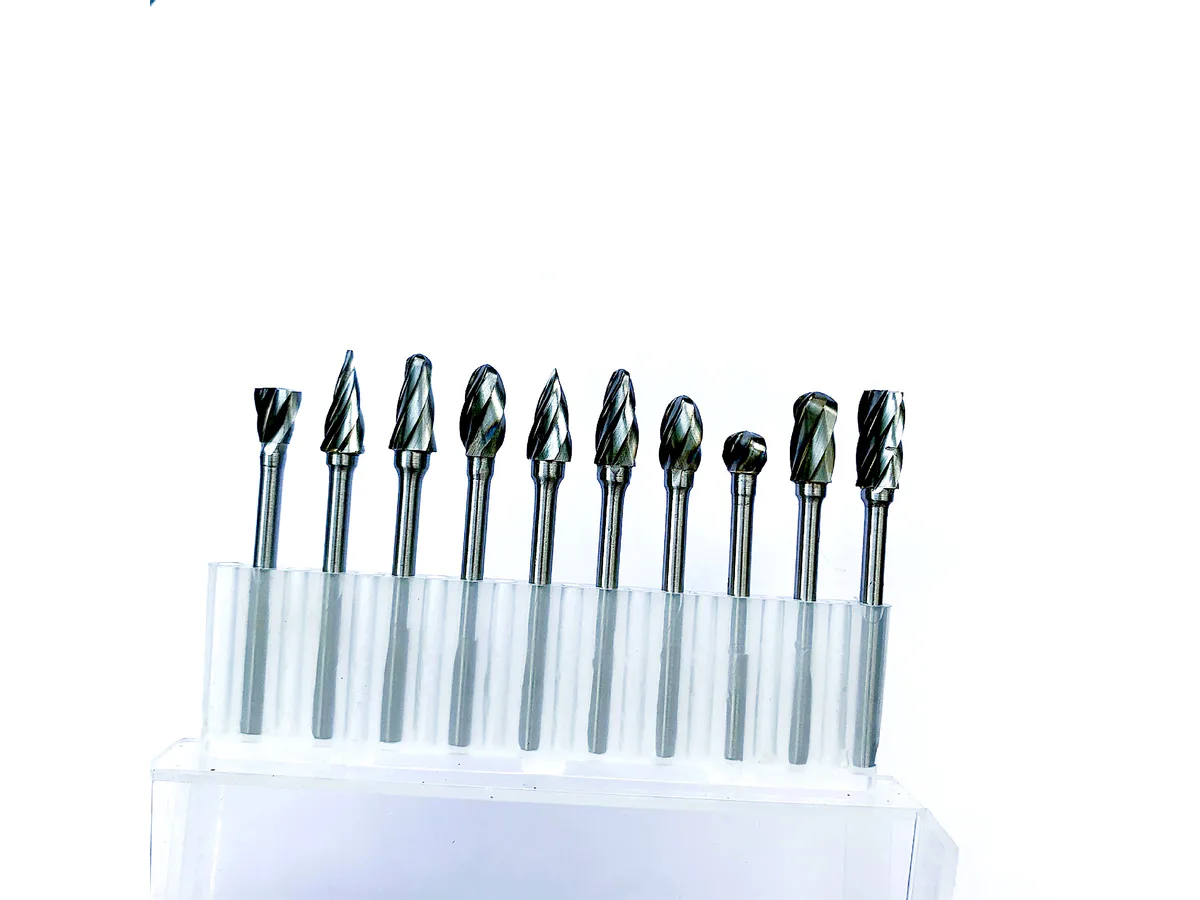
Match the Head Shape to the Contact Surface
Choose the head around the geometry that needs machining, then check whether the tool and operator can reach it without contacting adjacent surfaces.
| Workpiece feature | Shape to evaluate | Selection detail |
|---|---|---|
| Accessible straight sidewall | Cylinder | Distinguish plain-end from end-cut versions |
| Wall flowing into a rounded bottom | Radius-end cylinder | Match the transition without assuming a particular radius |
| Rounded recess or intersecting contour | Ball or oval | Check where the head will contact surrounding surfaces |
| Tapered internal passage | Rounded tree or radius-end taper | Consider approach angle as well as head diameter |
| Narrow angled region | Pointed tree or cone | Confirm access and avoid unintended tip contact |
An end-cut cylinder and a plain-end cylinder are not interchangeable when the operation requires cutting at the front face. Likewise, a pointed profile is not automatically the better choice for every confined feature.
For the complete head-family comparison, use the carbide burr shape chart. For head diameter, cutting length, shank diameter, and overall length, use the separate carbide burr size guide. Shape and size answer different questions.
Carbide Burrs vs Grinding Stones and Flap Wheels
Carbide burrs remove material with defined cutting teeth. A mounted grinding point uses abrasive grains held in a bond. A flap wheel presents abrasive material on flexible flaps. These are different working structures, not progressively better versions of the same bit.
When a Mounted Point Makes More Sense
Evaluate a mounted point when an abrasive grinding operation fits the job better than cutting with a toothed burr. The abrasive, bond, shape, and workpiece combination matters. Norton offers vitrified and resin-bonded mounted points for grinding applications; the accessory should be chosen for its own specification.
Abrasive wear also matters where the profile controls access or the finished geometry. For repeat work, decide how the accessory's condition will be checked rather than judging it only when first fitted. Do not assume that a stone fitting the collet has the correct abrasive, bond, or speed rating.
When a Flap Wheel Is the Next Step
A suitable mounted flap wheel can be considered for blending and surface refinement after the required shape has been established. Norton lists blending and finishing among the applications for its spindle flap wheels.
The purchasing question is whether the tool can achieve the specified surface while preserving the feature. A flexible accessory should not be expected to create a tightly defined geometry merely because it leaves an attractive surface. Separate profile acceptance from appearance acceptance.
Diamond-coated bits are another distinct abrasive category. A diamond-coated head is not a tungsten carbide burr, and its appearance does not establish suitability for a particular metal.
Check Machine Compatibility Before Ordering
A shank that appears to fit is not enough. Check the machine instructions, exact collet size, permitted accessory type, accessory dimensions, and operating limits as a complete system.
A 6 mm shank and a 1/4-inch shank are different sizes. Use the correct approved collet rather than relying on tightening force. Head diameter and exposed shank length also matter; longer reach must not be obtained by reducing engagement beyond the manufacturer's requirements.
Follow the tool and accessory manufacturers' speed and mounting instructions. Makita's GD0601 manual, for example, requires compatible accessories and adequate speed ratings, and excludes several operations for that model. Those are model-specific instructions, not permission to use every attachment on every die grinder.
A cutting wheel needs an approved machine, mounting arrangement, and any required guarding. Do not improvise a cutting system by fitting an arbitrary wheel and mandrel into a collet.
The burr bit for drill guide covers the separate question of drill versus die-grinder suitability. Choose the drive correctly before comparing accessories. Secure the work and follow the manufacturer's protection, inspection, and operating requirements.
Three Job Examples That Clarify the Choice
Consider how the selection changes across three illustrative jobs.
A Steel Weld Projection Beside a Finished Face
The first requirement is to remove the projection without cutting the finished face. Choose a steel-appropriate burr whose useful cutting surface can reach the projection. Consider the approach and nearby features before selecting a larger head simply for removal capacity.
Evaluate profile accuracy first. If the drawing also calls for a blended appearance, assess that as a separate finishing step. Combining removal and cosmetic finishing in one vague trial can hide why the part was rejected.
Flash Inside an Aluminum Casting
Identify the aluminum alloy, opening, and required internal contour. An aluminum-oriented, open-flute burr is a sensible candidate where chip loading is a concern. A radius-ended profile may suit the contour, provided the head can enter and work without unwanted contact.
Ask the trial operator to record loading, access, and any contour damage separately. Replacing one burr with another identical-looking head will not resolve a problem caused by an unreachable approach or insufficient clearance.
A Stainless Part Needing a Consistent Visible Finish
Separate the edge burr from the wider finish requirement. Select a stainless-appropriate carbide burr for the localized removal, then evaluate a suitable finishing accessory if the surface needs blending.
Acceptance should cover the edge, surrounding geometry, and appearance under agreed viewing conditions. A photograph can help explain an unacceptable mark, but the written requirement should identify what must change. Avoid approving a sample solely because it looks shinier.
How Wholesale Buyers Can Approve a Useful Sample
A useful sample trial answers a purchasing decision: which defined product should be reordered for this operation? It should not end with “the operator liked it” and no record of what was tested.
Send an Application Brief
Give the supplier the workpiece material and condition, a drawing or clear photograph, the removal target, the available approach, and the required finish. Include the machine model, collet size, and any relevant access restrictions.
For replacement purchases, provide the current tool's dimensions and tooth photographs. Identify what is acceptable about it and what needs improvement. An equivalent head shape alone does not establish an equivalent cutting geometry.
Agree on Acceptance Before Comparing Samples
Use a trial record that distinguishes tool identification from results:
| Record | Useful detail |
|---|---|
| Sample identity | Supplier reference, head profile, dimensions, cut, and shank |
| Workpiece | Material grade, condition, and feature being worked |
| Setup | Machine, collet, approved operating conditions, and workholding |
| Finished-part result | Burr removal, geometry, surface condition, and rework |
| Cutting behavior | Loading, vibration, accessibility, and operator control |
| Trial output | Time to finish the same feature, acceptable-part count, and rework needed |
| Repeatability | Whether subsequent comparable parts remain acceptable |
Keep the comparison conditions as consistent as practical. If the machine, material, or finishing requirement changes, record that change. Otherwise a difference attributed to the burr may have another cause.
Use the drawing or finish requirement to agree what counts as an acceptable part. Compare processing time, acceptable parts and rework on that basis. Cost per acceptable part is more informative than unit price alone, but it requires actual records, including any necessary finishing; it cannot be inferred from an assumed service-life multiplier. A successful sample also needs a clear reorder specification so purchasing can identify the same product later.
Build a Distributor Range Around Repeat Applications
For an initial stock range, group customer demand by job: accessible steel deburring, curved contour work, and aluminum cleanup, for example. Then identify the necessary head profiles, cuts, and compatible shanks within each group. A larger assortment is useful only if its additional tools serve identifiable applications.
Keep product descriptions specific enough for repeat purchasing. Record the approved head dimensions and tooth design beside the supplier reference, and keep packaging identity consistent with the contents. When evaluating a substitute, compare it against the original application and acceptance criteria. A familiar-looking profile should begin that comparison, not end it.
Frequently Asked Questions
What Are the Best Die Grinder Bits for Steel?
For localized steel deburring and shaping, start by evaluating a carbide burr recommended for the steel grade and operation. A suitable double-cut design is a common candidate. Choose its profile around the feature, and judge the result against the required geometry and finish.
Is Single Cut or Double Cut Better for Metal?
Neither label establishes a universal winner. Double-cut geometry can help break chips and support controlled cutting; single-cut designs also have valid metalworking applications. The exact tooth design, material, contact area, and finished-part requirement determine which is more suitable.
Which Die Grinder Burr Should I Use for Aluminum?
Consider an aluminum-oriented burr with open flutes and sufficient chip space, then follow the recommendation for the exact alloy and tool. Other specialized geometries may also be suitable. Do not treat color, coating appearance, or the words “for metal” as proof of aluminum compatibility.
Can a Carbide Burr Replace a Grinding Stone?
Sometimes a burr can perform the required localized removal, but it does not duplicate every abrasive grinding operation. Compare the required profile, access, and surface result. Where abrasive grinding is needed, select a mounted point with the correct material and operating specification.
Do All Die Grinder Bits Fit Every Die Grinder?
No. Check exact shank and collet dimensions, permitted accessory type, head dimensions, mounting requirements, and speed limits. A matching shank does not override the machine manual. Cutting attachments require their own approved arrangement.
What Should I Specify When Buying Carbide Burrs in Bulk?
Specify the workpiece and operation, head profile and dimensions, shank size, cut, machine compatibility, and acceptance criteria. Identify the approved sample and supplier reference. State packaging or labeling requirements separately so they do not replace the technical product specification.
Conclusion
The best die grinder bit for metal is the one that matches the removal task, workpiece, accessible geometry, and required finish. Begin with the appropriate carbide burr for localized cutting, then assess abrasive grinding or finishing as a separate need. Check compatibility and approve the finished part before scaling the order.
Explore the AXIMET carbide burr range by shape and cut, then send AXIMET an application brief. Include the material grade, feature drawing or job photo, machine and collet size, required burr dimensions, and quantities. For a replacement inquiry, add clear photographs of the current tool and explain what you want to retain or improve.

Melody
Trade Expert20-year foreign trade veteran and proud mother who believes in the power of continuous growth and a helping hand. By integrating the practical wisdom of AXIMET Tools into my daily workflow, I strive to make global trade more accessible and efficient for everyone I work with.
Discuss Your Requirements
Share the material, feature, tool setup, required result and quantities you are sourcing.