
Industrial purchasing should separate surface-processing tools from cutting-through tools. This comparison explains the operation boundary; it does not establish that every diamond tool suits every concrete or stone job.
Start with Grinding or Cutting
Name the required result before selecting the tool form.
Levelling or surface removal differs from making a through-cut or slot.
Specify the area, material to remove and finish target.
Specify the kerf, cut depth and workpiece.
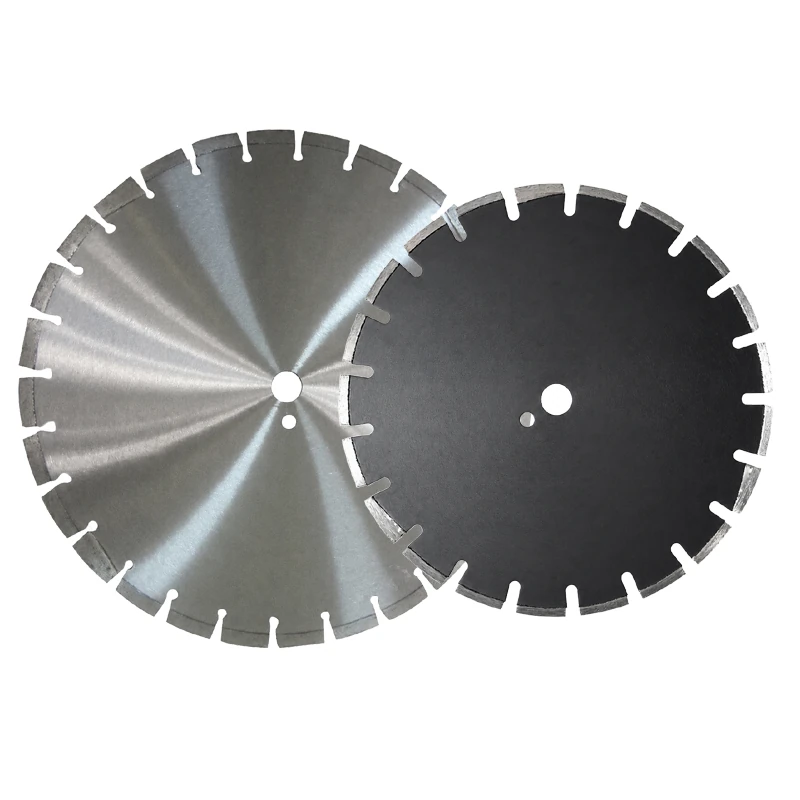
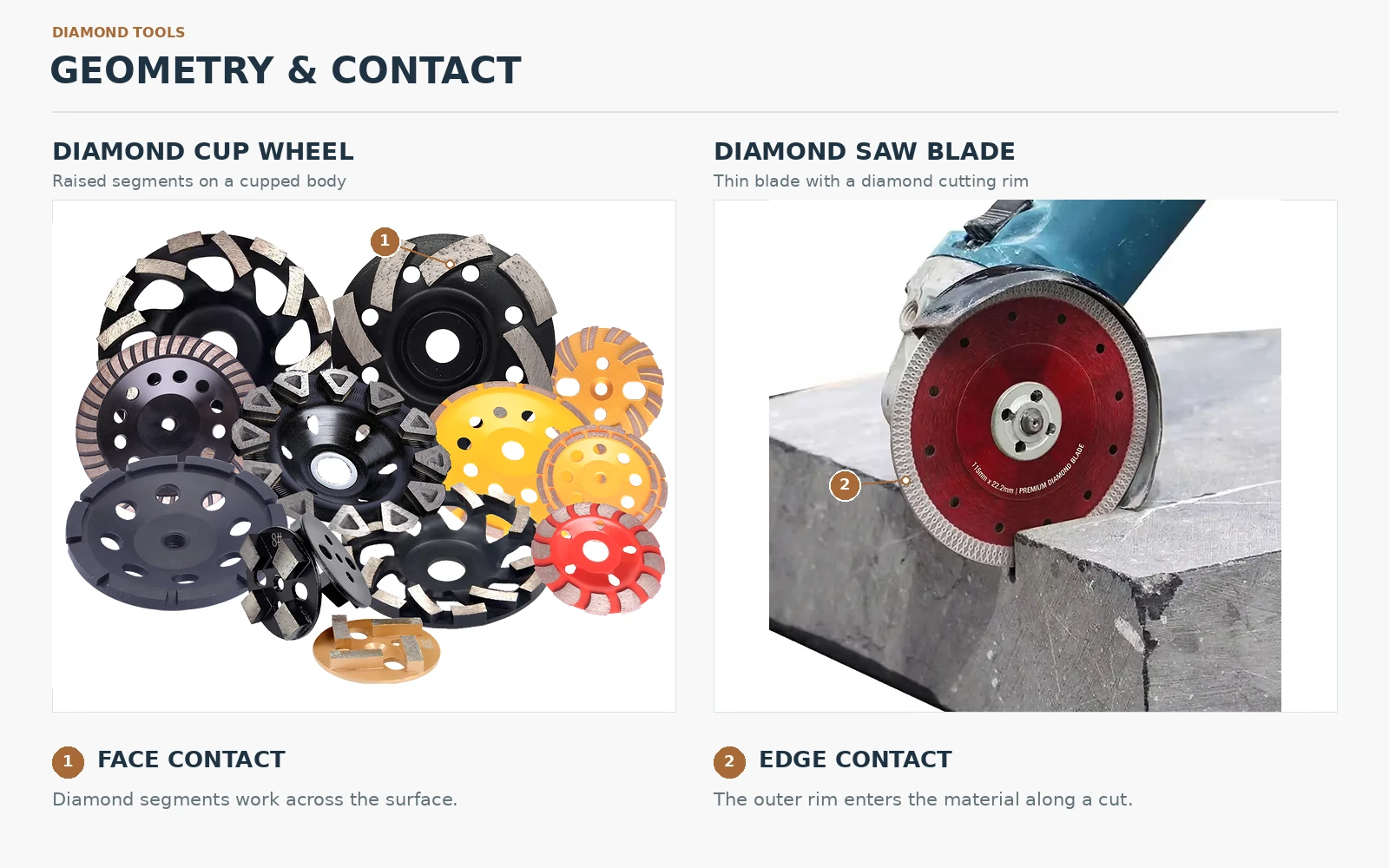
Grinding works across a surface; sawing creates a cut along a path. The tool form and permitted working contact must suit that operation.
Compare Geometry and Working Contact
The grinding face of a cup wheel differs from the cutting rim of a saw blade.
Select a tool whose permitted contact matches the job.
A cup-wheel face and a saw-blade rim distribute contact differently. A shared outside diameter does not make the tools interchangeable.
| Selection field | Grinding wheel/cup wheel | Diamond saw blade |
|---|---|---|
| Operation | Surface material removal | Kerf or cutting-through |
| Working area | Permitted grinding face | Cutting rim |
| Job specification | Removal and finish | Cut depth and kerf |
| Machine check | Mounting, guard and grinding use | Mounting, guard and cutting use |
Identify the Actual Substrate
Concrete, stone and surface layers require a specific application record.
The word “diamond” does not establish suitability for every substrate.
Describe coatings or other surface material separately.
Check its application and operating instructions against the job.
The material name must be specific enough to select an item. A generic stone description can hide differences relevant to the tool instructions.
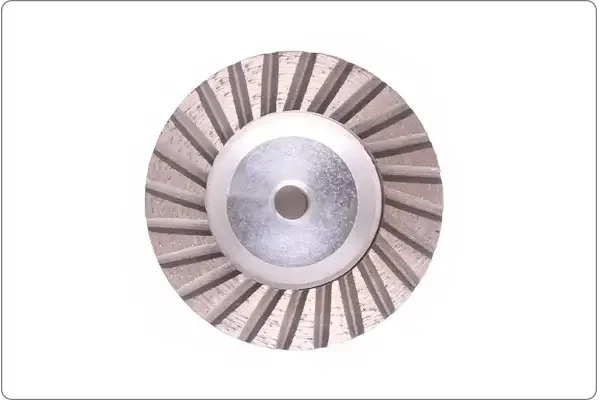
The Diamond Grinding Wheels collection covers cup forms for surface work, distinct from rim-cutting blades.
Check the Machine’s Permitted Tool and Operation
Confirm diameter, mounting, guard and operating limits together.
Do not side-load a cutting blade as a grinding wheel or select a cup wheel to make a cutting kerf.
Use only the contact permitted by both tool and machine instructions. Do not apply side pressure to a cutting blade as a substitute for grinding.
| Check | Source |
|---|---|
| Tool operation | Selected tool instructions |
| Mounting and size | Tool specification and machine manual |
| Speed and guard | Tool marking and machine requirements |
| Dry or wet operation | Instructions for the complete setup |
Keep Cutting and Grinding Items Separate
Use distinct item descriptions for each operation.
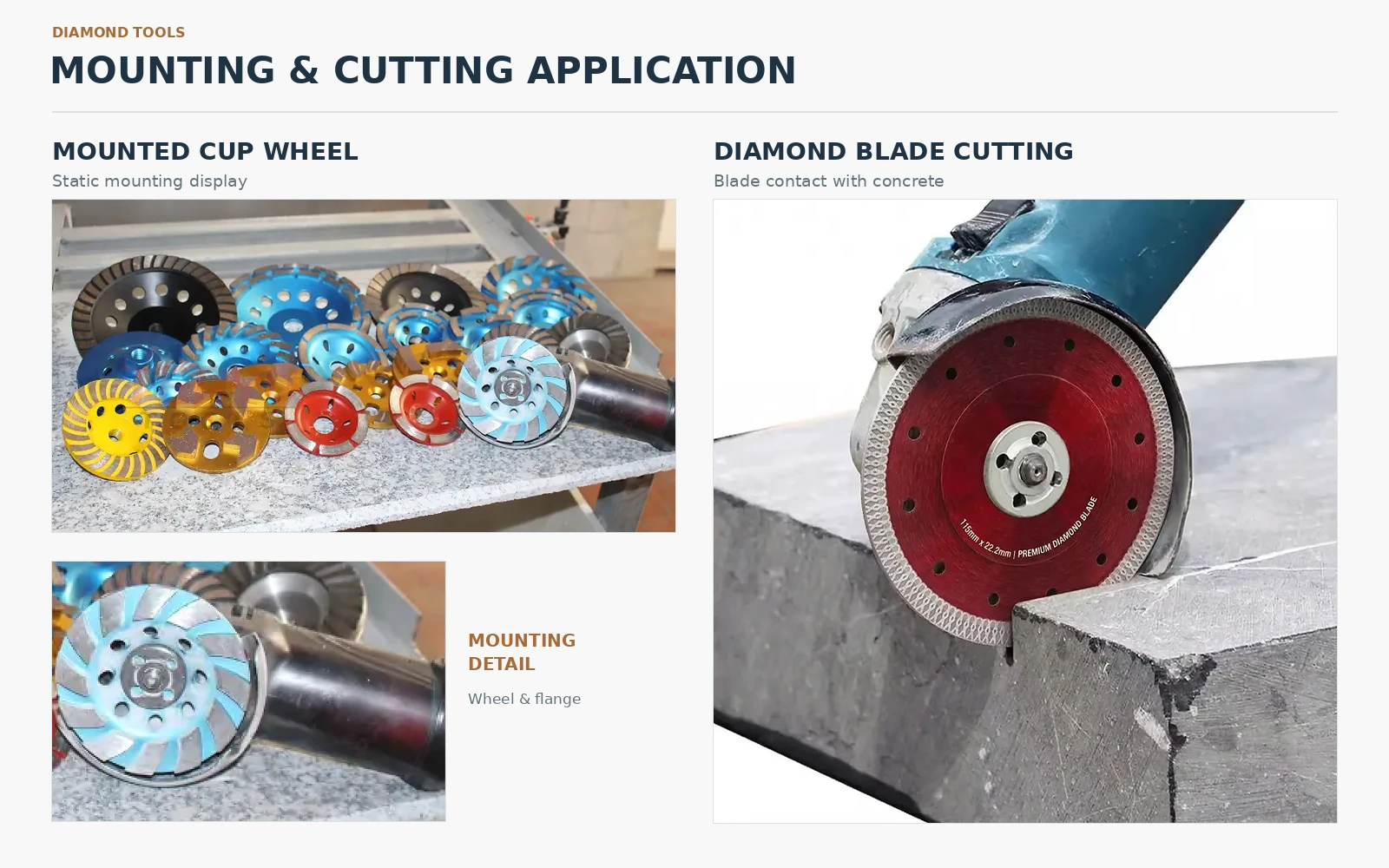
A common mounting is not a reason to merge the products in a distributor range.
Keep the operation in the item description. This makes an order for a cutting rim distinguishable from an order for a surface-grinding tool.
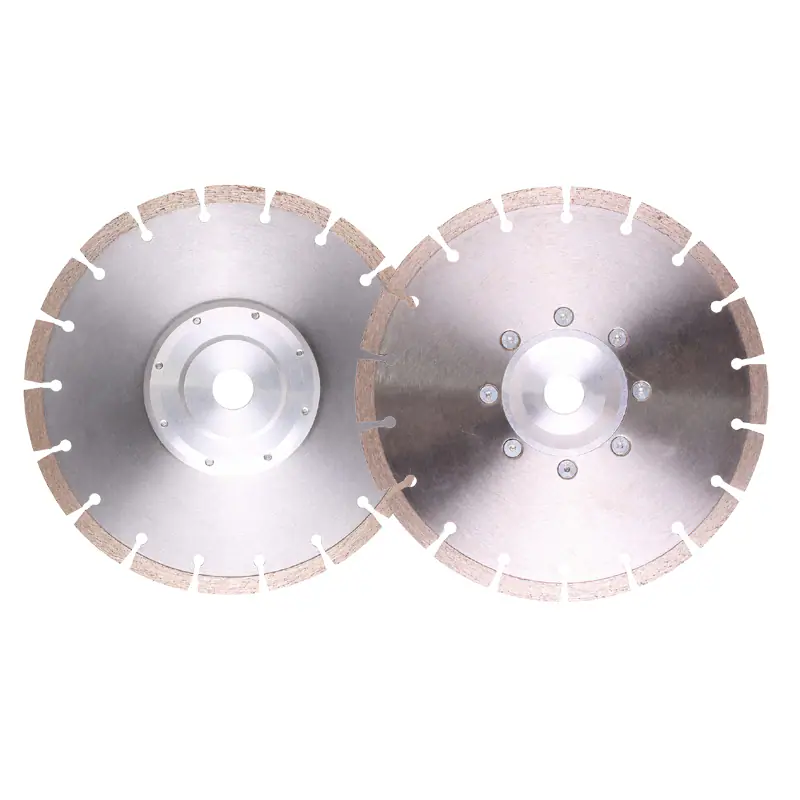
For surface-processing requirements, compare the diamond grinding wheel collection with substrate and machine information recorded.
Frequently Asked Questions
Can a diamond saw blade replace a cup wheel for surface grinding?
Do not use it as a substitute. Follow the selected tool and machine instructions for permitted contact.
Does diamond abrasive make the tools interchangeable?
No. Geometry, operation and operating requirements differ.
Is equal bore diameter enough for machine fit?
No. Also check diameter, guard, speed and permitted operation.
What distinguishes the purchase specifications?
Grinding needs a removal/finish requirement; cutting needs cut depth and kerf requirements.
Can wet operation be assumed for every diamond tool?
No. Use the instructions for the selected tool and machine setup.
Conclusion
Choose the operation first and the tool form second. Keep cutting blades and surface-grinding wheels separate in ordering, sample approval and replacement records.