AXIMET · PROFESSIONAL B2B TOOL SUPPLY

Diamond Saw Blades

Application-matched diamond blade ranges for tile, stone, brick and concrete cutting.

  • Material and series selection
  • Size and interface planning
  • Application review
  • Order-specific packaging review
Entity boundaryDiamond blade naming must remain tied to target material, rim construction and operating method; appearance alone does not prove suitability.
Buyer scopeconstruction, tile and stone-tool distributors
Quotation basistarget material, blade diameter, bore, segment or rim form
Diamond Saw Blades
Diamond Saw Blades range definition
CATEGORY DEFINITION · PRODUCT DETAIL

Why Partner with Aximet Tools for Your Diamond Saw Blade Supply?

We help your product line match blade type, segment formula, and packaging to your local cutting markets, reducing selection mistakes and buyer complaints.

  • Application-based segment selectionFor diamond saw blades, name the exact target material and operation first. This determines which construction should remain on the shortlist.
  • Tile, stone, concrete, and asphalt rangesBuild the diamond saw blades blade diameter list by SKU instead of giving only a minimum and maximum. The mix separates core sizes, project additions and replacement stock.
  • Arbor, size, and label optionsFor diamond saw blades, identify both sides of the bore: machine or holder, then tool or accessory. Similar appearance does not establish interchangeability.
  • Factory cutting tests before shipmentSeparate the diamond saw blades range by segment or rim form. Keep each material or geometry claim on the exact SKU rather than extending it to every visible variant.
  • OEM packaging for your marketConfirm the planned diamond saw blades wet or dry method method and site restrictions. This affects product format, accessories and operating instructions.
  • Stable supply for distributorsExplain the required kerf in the context of the application. AXIMET will keep that decision attached to the quoted diamond saw blades variant.

Position as a diamond cutting blade collection page for construction, tile, stone, and hardware distributors. Related buyer terms: diamond saw blade supplier, diamond cutting blade manufacturer, concrete diamond blade, tile diamond blade, stone cutting blade, OEM diamond blades.

Review the Selection Guide →

PRODUCT RANGE

Choose the product family before choosing individual sizes

Each product option remains connected to its corresponding record so buyers can build a controlled assortment.

01 · RANGE 01

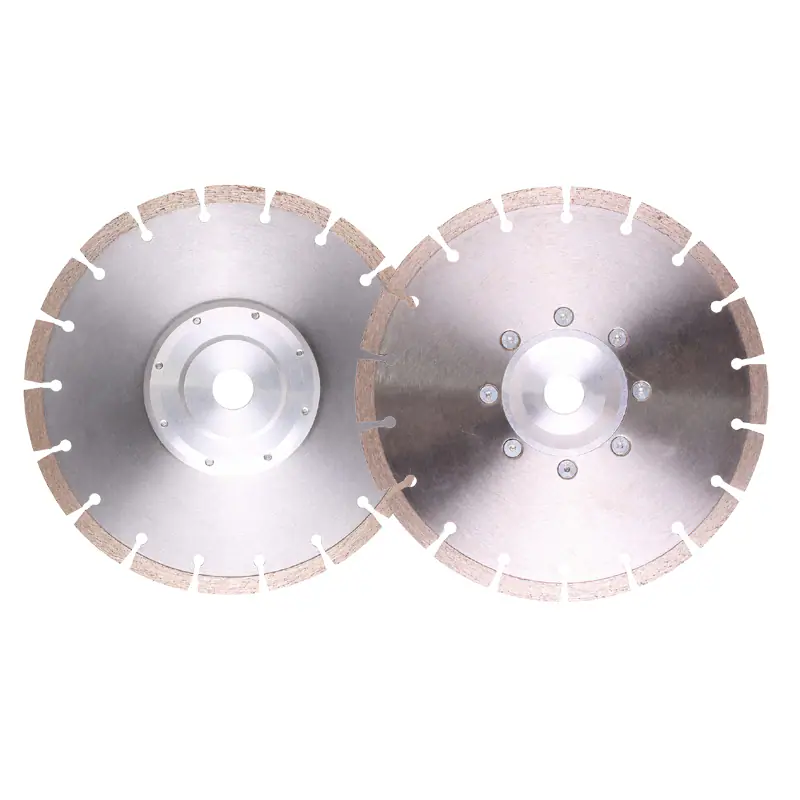
Segmented diamond blades

Debris-clearance range for concrete and masonry supply. Buyers should confirm dry or wet method before this option enters the assortment.

  • Position: Debris-clearance range
  • Buyer: concrete and masonry supply
  • Confirm: confirm dry or wet method
Request specifications · Segmented diamond blades →
Diamond Saw Blades Turbo diamond blades
02 · RANGE 02

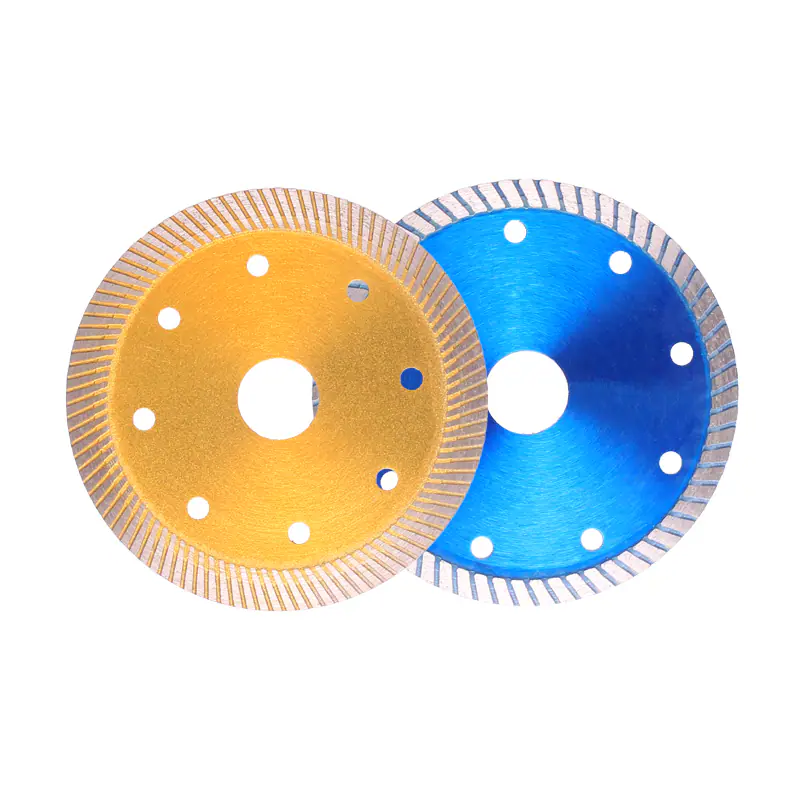
Turbo diamond blades

Speed-and-finish range for stone and construction channels. Buyers should confirm material and edge requirement before this option enters the assortment.

  • Position: Speed-and-finish range
  • Buyer: stone and construction channels
  • Confirm: confirm material and edge requirement
Request specifications · Turbo diamond blades →
Diamond Saw Blades Continuous-rim blades
03 · RANGE 03

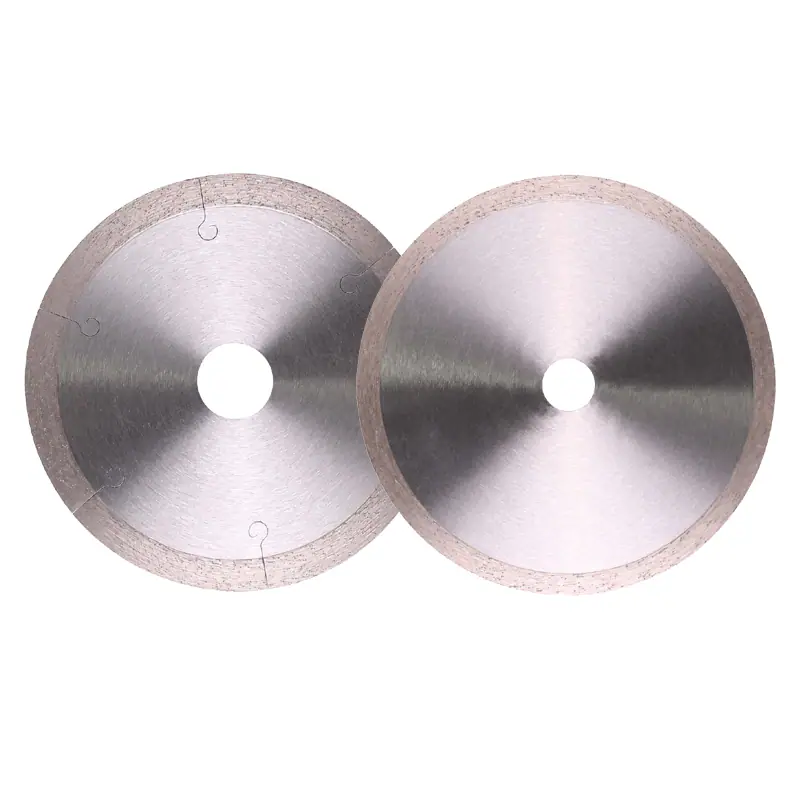
Continuous-rim blades

Finish-led range for tile and brittle materials. Buyers should confirm cooling and machine before this option enters the assortment.

  • Position: Finish-led range
  • Buyer: tile and brittle materials
  • Confirm: confirm cooling and machine
Request specifications · Continuous-rim blades →
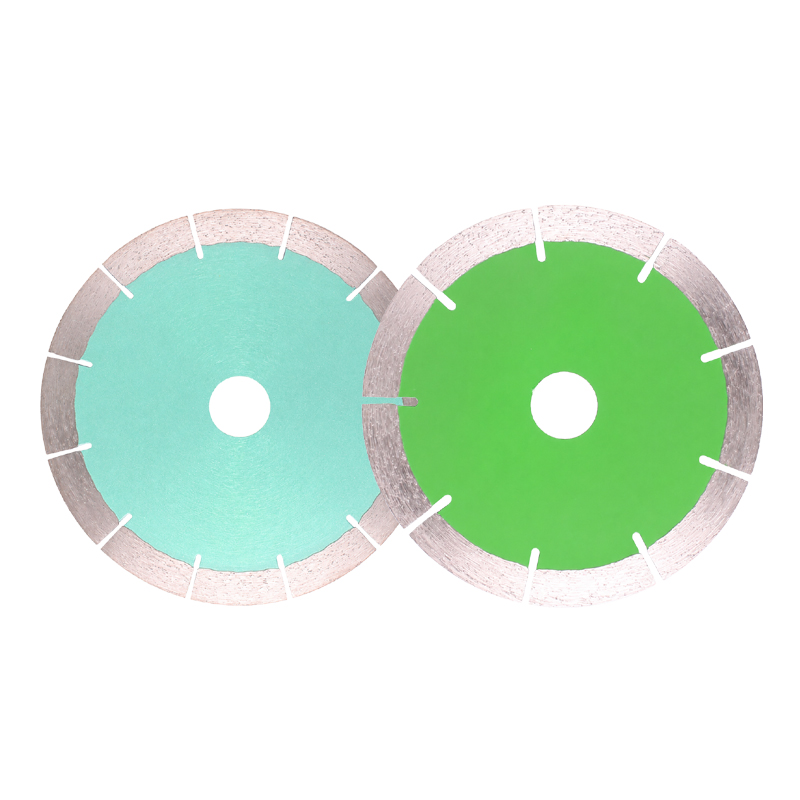
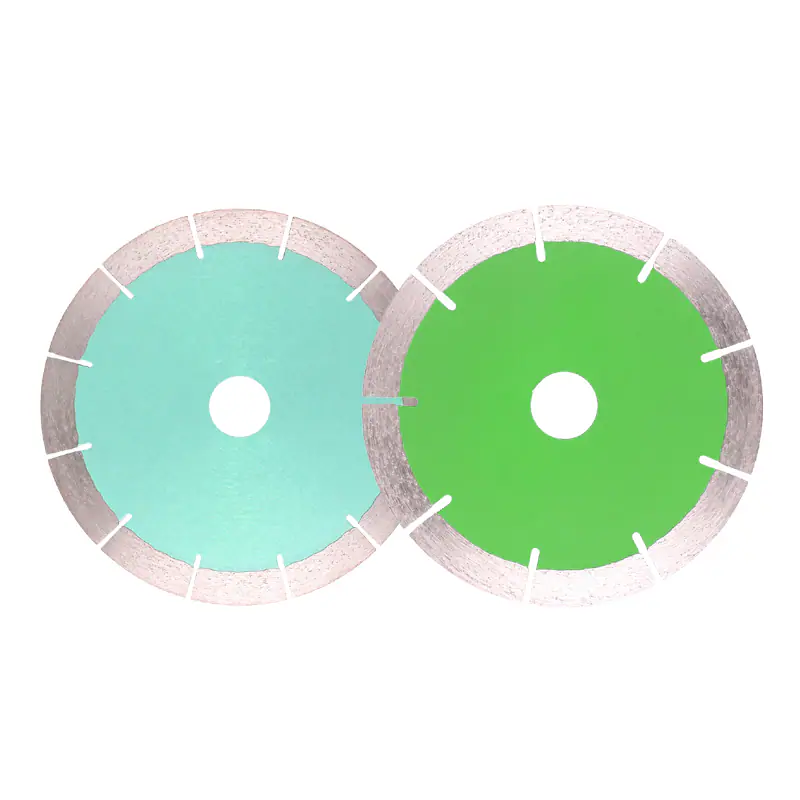
Green segmented diamond-blade references; markings determine application
04 · RANGE 04

Additional Segmented Blade Profiles

These references show another segmented rim configuration. Confirm the marked material and operating conditions; the photograph does not establish tuck-pointing width or approval.

  • Segment configuration
  • Marked material
  • Machine and mounting
Request specifications · Additional Segmented Blade Profiles →
SPECIFICATION & SELECTION

Diamond Saw Blades: selection details

Diamond saw blades should be selected by the material and cutting operation stated for the exact blade. Rim or segment appearance alone does not identify bond, permitted material, wet or dry method, or machine suitability. Keep tile and stone cutting separate from any independently approved metal-cutting construction.

Diamond Saw Blades — selection details
Selection detailWhy it matters
Continuous / turbo / segmented rimA visual rim category does not identify bond or approve a workpiece.
Wet / dry methodUse the method permitted by both blade and machine.
Tile / stone / metalSelect by the exact marked application; metal requires a specifically rated construction.

A familiar rim shape is not an application approval.

Send Blade Size & Cutting Material
B2B SELECTION GUIDE

How to choose diamond saw blades

Start with the workpiece and customer task, then define specifications, packaging and OEM scope.

01

Start with target material

For diamond saw blades, name the exact target material and operation first. This determines which construction should remain on the shortlist.

02

Define blade diameter

Build the diamond saw blades blade diameter list by SKU instead of giving only a minimum and maximum. The mix separates core sizes, project additions and replacement stock.

03

Define bore

For diamond saw blades, identify both sides of the bore: machine or holder, then tool or accessory. Similar appearance does not establish interchangeability.

04

Define segment or rim form

Separate the diamond saw blades range by segment or rim form. Keep each material or geometry claim on the exact SKU rather than extending it to every visible variant.

05

Define wet or dry method

Confirm the planned diamond saw blades wet or dry method method and site restrictions. This affects product format, accessories and operating instructions.

06

Define kerf

Explain the required kerf in the context of the application. AXIMET will keep that decision attached to the quoted diamond saw blades variant.

Diamond Saw Blades · selection table
Buyer decisionInformation to sendMismatch preventedQuotation output
target materialdiamond saw blades: exact target material, condition and operationsegment lossApplication-matched diamond saw blades construction
blade diameterdiamond saw blades blade diameter plus quantity by sizeglazingdiamond saw blades size-by-size quotation matrix
borediamond saw blades machine model plus bore dimensionswrong boreConfirmed diamond saw blades interface and accessory list
segment or rim formdiamond saw blades segment or rim form and evidence neededsegment lossConstruction-specific diamond saw blades group
wet or dry methoddiamond saw blades operating method and site restrictionssegment lossOperating-method matched diamond saw blades option

Send target material, blade diameter, bore, segment or rim form, wet or dry method for a product-matched shortlist.

Send Blade Size & Cutting Material →
PRODUCT DETAIL

Diamond Saw Blades details for range planning

Application-matched diamond blade ranges for tile, stone, brick and concrete cutting.

Segmented diamond blades

Decision: target material

Segmented diamond blades occupies a distinct position because debris-clearance range. For diamond saw blades, name the exact target material and operation first. This determines which construction should remain on the shortlist.

Turbo diamond blades

Decision: blade diameter

Turbo diamond blades occupies a distinct position because speed-and-finish range. Build the diamond saw blades blade diameter list by SKU instead of giving only a minimum and maximum. The mix separates core sizes, project additions and replacement stock.

Continuous-rim blades

Decision: bore

Continuous-rim blades occupies a distinct position because finish-led range. For diamond saw blades, identify both sides of the bore: machine or holder, then tool or accessory. Similar appearance does not establish interchangeability.

Tuck-point blades

Decision: segment or rim form

Tuck-point blades occupies a distinct position because joint-removal range. Separate the diamond saw blades range by segment or rim form. Keep each material or geometry claim on the exact SKU rather than extending it to every visible variant.

INDUSTRIAL APPLICATIONS

Match the product family to the workpiece and task

Application-matched diamond blade ranges for tile, stone, brick and concrete cutting.

01

Concrete Cutting

For concrete cutting, buyers use diamond saw blades on cured concrete and masonry for selecting segmented or turbo formats by machine and method. Their RFQ should state material, reinforcement condition and cooling.

02

Tile and Stone Supply

For tile and stone supply, buyers use diamond saw blades on ceramic, porcelain and natural stone for selecting rim form for finish and productivity. Their RFQ should provide material, machine and desired edge.

Diamond Saw Blades for Diamond Blade Programs
03

Diamond Blade Programs

For diamond blade programs, buyers use diamond saw blades on contractor and rental assortments for organizing diameters, bores and rim types. Their RFQ should confirm size matrix and packaging.

PRODUCT COMPARISON

Compare product families before building the assortment

Application-matched diamond blade ranges for tile, stone, brick and concrete cutting.

Diamond Saw Blades · procurement comparison
Procurement decisionCore positionAlternative positionEvidence
target materialSegmented diamond bladesTurbo diamond bladestarget material record and segment loss review for diamond saw blades
blade diameterTurbo diamond bladesContinuous-rim bladesblade diameter record and glazing review for diamond saw blades
boreContinuous-rim bladesTuck-point bladesbore record and wrong bore review for diamond saw blades
segment or rim formTuck-point bladesSegmented diamond bladessegment or rim form record and rim damage review for diamond saw blades

Diamond blade naming must remain tied to target material, rim construction and operating method; appearance alone does not prove suitability.

Compare range positions by target material, blade diameter, bore, segment or rim form.

Compare for My Program →
MANUFACTURING CAPABILITY

Production evidence diamond saw blades buyers should request

Review core and diamond-segment identification, segment joining and rim formation, bore, runout and batch marking review only against the selected product family and item record.

Diamond Saw Blades supplier evidence for core and diamond-segment identification
core and diamond-segment identificationReview the core and diamond-segment identification evidence for the selected diamond saw blades family. The buyer should be able to connect the visible geometry with the size and construction being quoted.
Diamond Saw Blades supplier evidence for segment joining and rim formation
segment joining and rim formationReview the segment joining and rim formation evidence for the selected diamond saw blades family. The buyer should be able to connect the visible geometry with the size and construction being quoted.
Diamond Saw Blades supplier evidence for bore, runout and batch marking review
bore, runout and batch marking reviewAgree what bore, runout and batch marking review means for the quoted diamond saw blades SKU, including the measurement record or visual evidence the buyer expects before release.

Request item-specific evidence for core and diamond-segment identification, segment joining and rim formation, bore, runout and batch marking review.

Request Factory Information →
QUALITY CONTROL

Verify diamond saw blades target material, blade diameter, bore before batch release

Build the inspection scope around segment loss, glazing, wrong bore, rim damage. The quotation should identify which records apply to the selected diamond saw blades SKU instead of assuming one acceptance plan for the whole range.

Review target materialUse the available inspection image as context, then request the item-linked target material record needed to control segment loss for the quoted diamond saw blades series.
Confirm glazingAgree how glazing will be checked for the selected diamond saw blades size and construction. Exact limits remain part of the approved item specification.
01

Control segment loss

Review cutting-edge condition and the applicable material or joining evidence for diamond saw blades; acceptance depends on the confirmed construction.

02

Control glazing

Inspect glazing at the relevant diamond saw blades production or final-review stage and agree the evidence required before shipment.

03

Control wrong bore

Fit-check the quoted tool, holder and accessory interfaces for diamond saw blades; do not approve compatibility from names or photographs alone.

04

Control rim damage

Inspect rim damage at the relevant diamond saw blades production or final-review stage and agree the evidence required before shipment.

Request an inspection scope covering segment loss, glazing, wrong bore, rim damage, thermal cracking.

Send Blade Size & Cutting Material →
OEM & PRIVATE LABEL

Build a controlled range for your market: Diamond Saw Blades

First freeze target material, blade diameter, bore, segment or rim form, wet or dry method for each diamond saw blades SKU.

Then coordinate diamond saw blades logo, product marking, labels, carton, case or set composition for the destination channel.

  • SKU-level logo and marking
  • Product and carton labels
  • Bulk, individual or set packaging
  • Barcode and language planning
  • Mixed-size assortment control
  • Repeat-order identification
Send Packaging Reference & Item List →
BUYING CHECKLIST

Information to prepare before requesting a quotation

01target material
02blade diameter
03bore
04segment or rim form
05wet or dry method
06kerf
07machine
08speed
09quantity by SKU
10destination market
11logo and marking
12pack format
13current reference
PRODUCT SELECTION QUESTIONS

Selection questions for Diamond Saw Blades

Can a tile diamond blade automatically cut metal?

No. Use only a blade explicitly documented for the material and machine. Diamond abrasive by itself does not establish permission to cut metal.

Does a segmented rim identify the cutting material?

No. Rim appearance alone does not establish bond, abrasive formulation or application approval. Use the exact blade specification.

A familiar rim shape is not an application approval.

Send Blade Size & Cutting Material →
B2B FAQ

Diamond Saw Blades: questions from professional buyers

01Which factors control diamond saw blades selection?

Confirm target material, blade diameter, bore, segment or rim form, wet or dry method, kerf, machine, speed.

02What makes this diamond saw blades page distinct?

Diamond blade naming must remain tied to target material, rim construction and operating method; appearance alone does not prove suitability.

03Which quality risks should buyers review?

Review segment loss, glazing, wrong bore, rim damage, thermal cracking, material mismatch against the approved item record.

04How should the range be divided?

Segmented diamond blades — Debris-clearance range; Turbo diamond blades — Speed-and-finish range; Continuous-rim blades — Finish-led range; Tuck-point blades — Joint-removal range.

05Which OEM inputs are needed?

Provide the diamond saw blades technical SKU list, quantities and destination market before logo, labels, packaging and barcode details.

06What should the RFQ include?

Send target material, blade diameter, bore, segment or rim form, wet or dry method, kerf, quantities, current references and packaging requirements.

REQUEST A QUOTE

Send your requirements

Send target material, blade diameter, bore, segment or rim form, wet or dry method, kerf, quantities and current references for a product-specific quotation.

We use these details only to prepare and follow up your quotation.

Chat on WhatsApp