
For a distributor, “metal and wood” is an application label, not a complete blade specification. Separate clean timber, thin-wall metal and mixed demolition requests so the supplied replacement has an identifiable purpose.
Start with the Workpiece
Name what the blade will encounter through the whole cut.
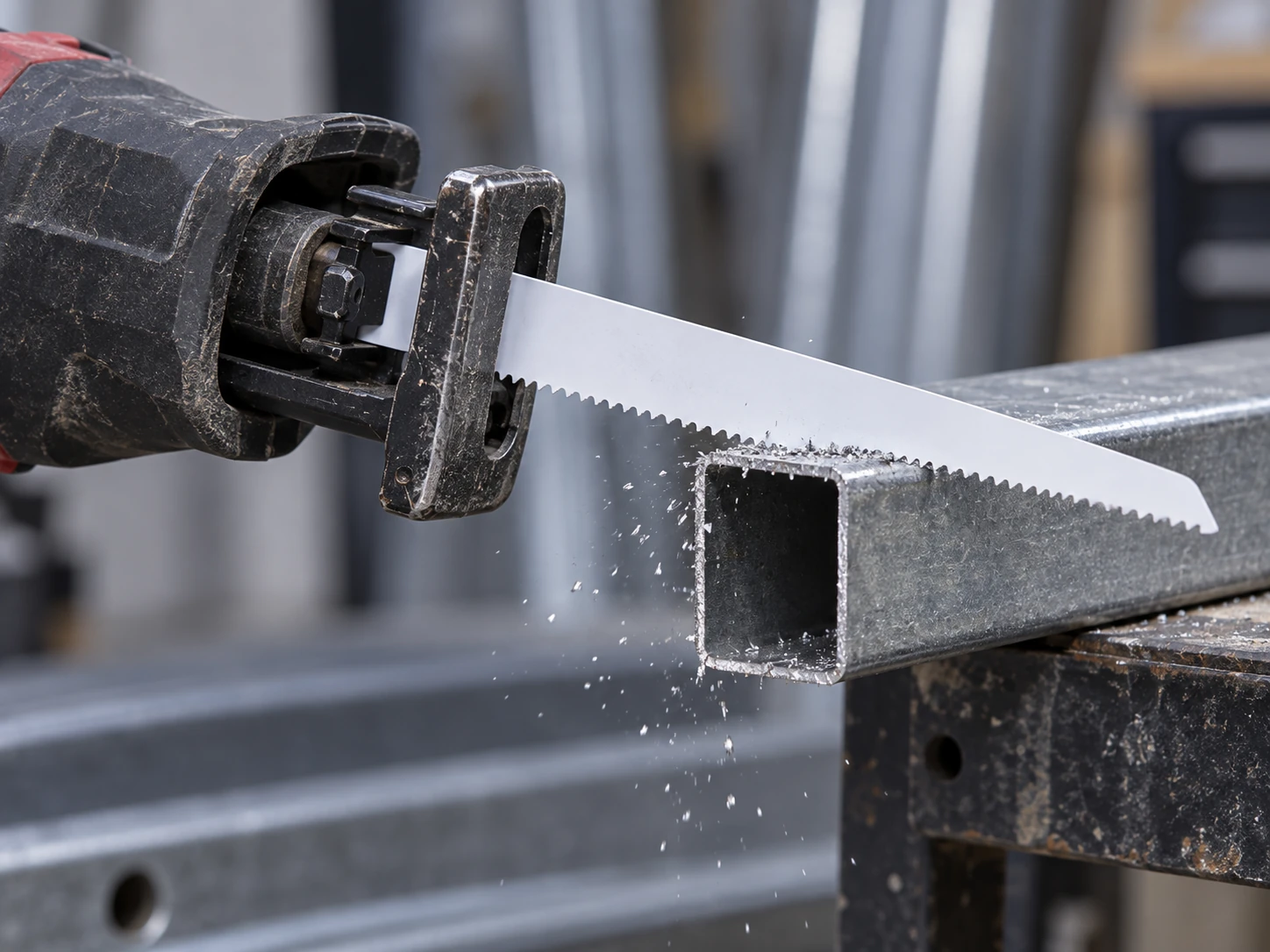
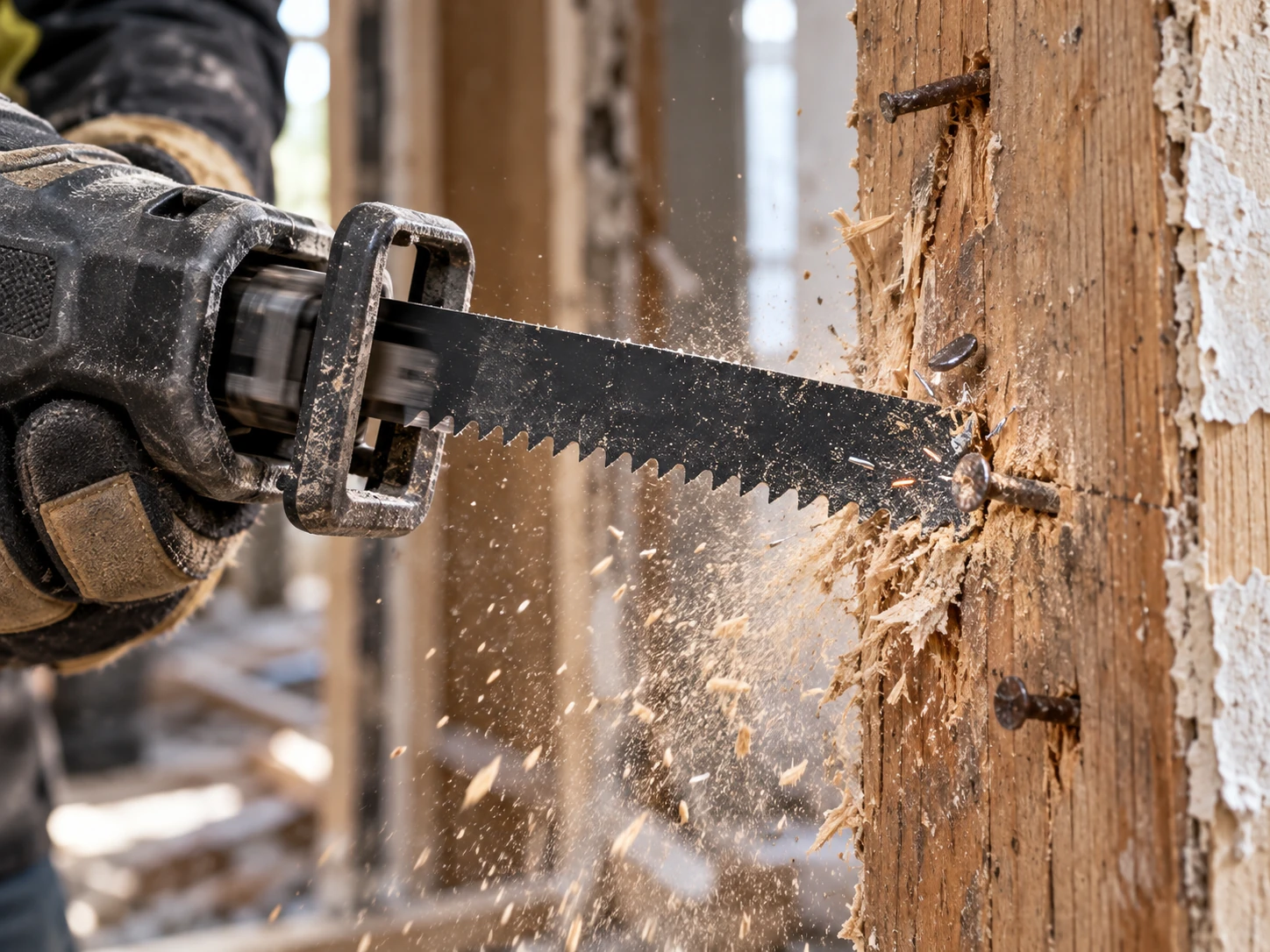
Clean timber, metal tubing and timber with fasteners create different cutting requirements.
Record the timber section and whether the cut is straight, flush or restricted.
Identify material and wall thickness or solid cross-section.
List embedded metal and other materials; do not classify the job as clean wood.
Compare Metal and Wood Blade Requirements
Compare application and tooth pattern before treating two blades as substitutes.
Pitch, body dimensions and reach should be compared together. The application name alone is too broad to identify a replacement blade.
A replacement list should retain the workpiece section and blade connection. Keep reach and tooth pitch visible instead of using the application name as the entire specification.
| Job | Information needed | Selection check |
|---|---|---|
| Clean timber | Section and access | Wood-cutting application and reach |
| Thin-wall metal | Wall thickness and section shape | Tooth engagement and metal application |
| Solid metal | Material and cross-section | Blade guidance for the stated section |
| Embedded fasteners | Timber plus metal content | Mixed-material application |
Read Tooth Pattern and Construction Separately
Tooth pitch describes spacing; blade construction describes the cutting tool.
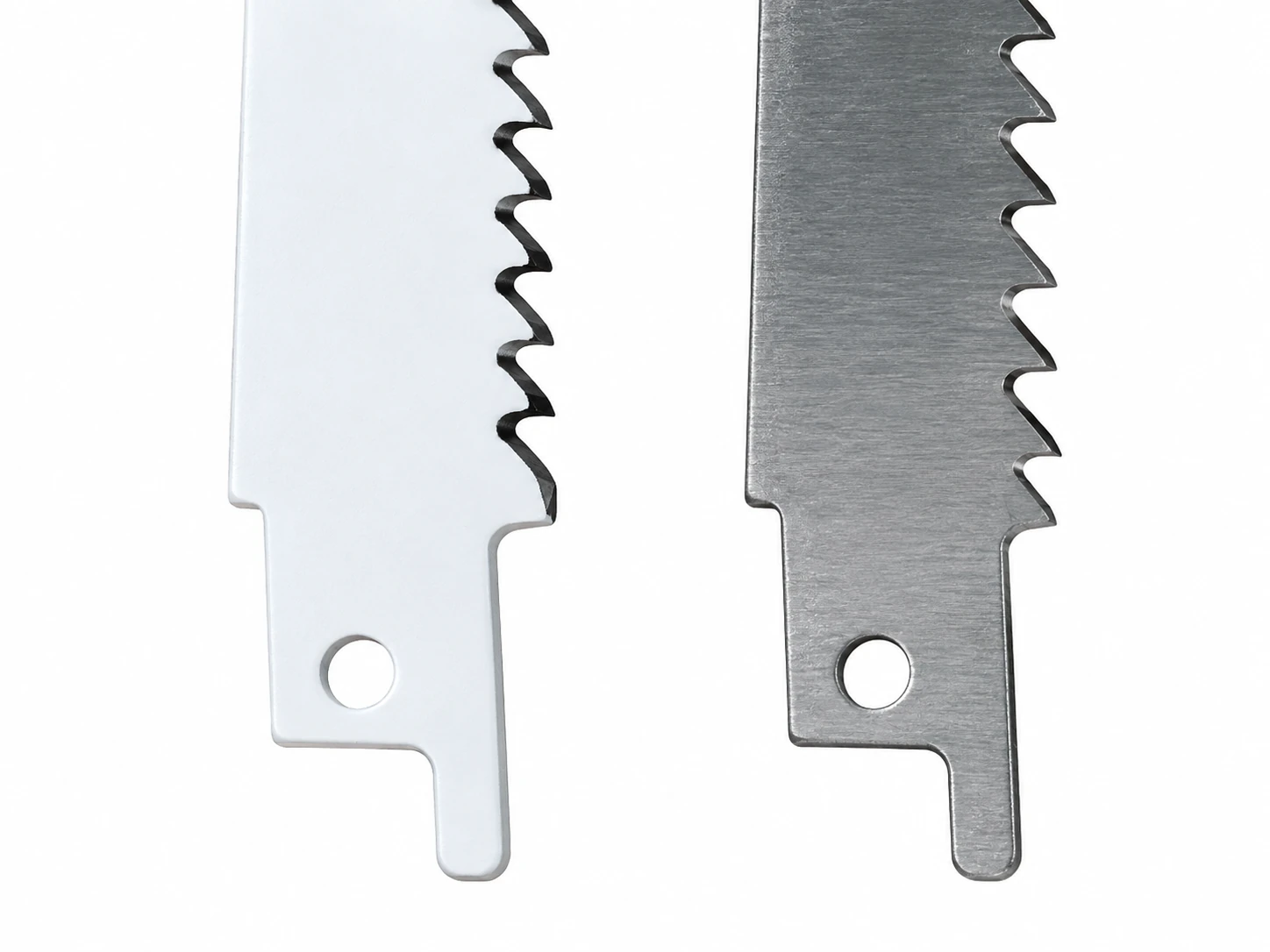
One does not identify the other. The supplied BIM example demonstrates a marking to record, not a grade to apply to every blade.
Read the blade marking and selected item specification.
Use an item record or a properly measured pitch reference.
Construction markings describe the identified item. They should not be applied to an unmarked blade merely because its outline is similar.
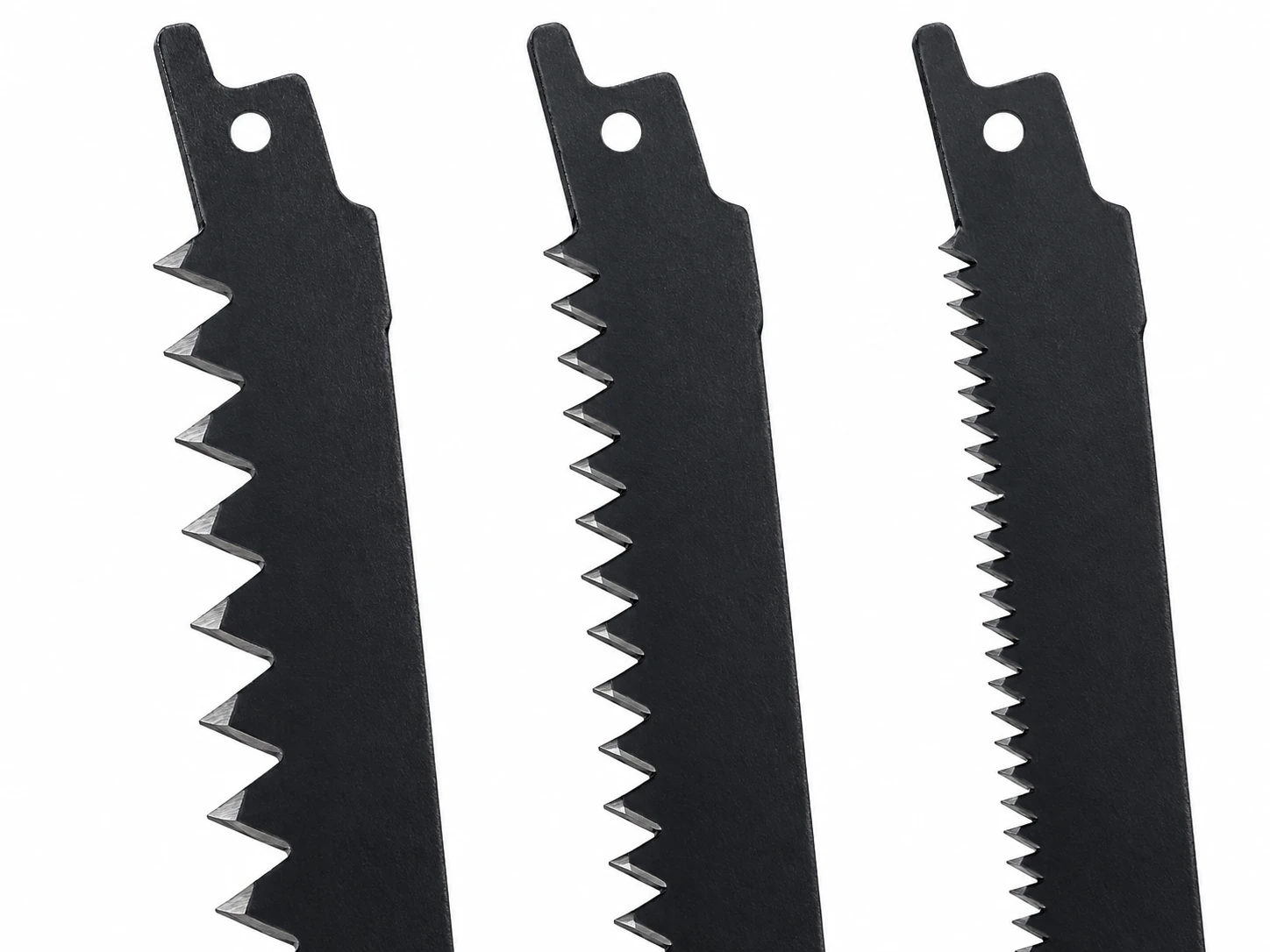
The Reciprocating Saw Blades collection provides fine- and coarse-tooth views alongside a marked bi-metal example.
Check Blade Reach and Saw Fit
The blade must remain appropriate for the workpiece throughout the reciprocating stroke.
Compare connection geometry with the saw clamp and follow the tool instructions on blade length and use.
Include the section, cut orientation and available access.
Identify the tang and retaining features with the saw model.
The clamp must retain the blade correctly throughout the stroke. Exposed length is a reach dimension, not evidence of connection compatibility.
Common Selection Errors
Wrong material classification, insufficient reach and mismatched connection are different faults; changing tooth pitch alone does not address all three.
Keep clean timber and mixed-material work separate in the application list. This avoids selecting a coarse clean-wood profile solely for apparent cutting speed.
Inspect the connection and exposed blade before operation, following the saw instructions. Stop using a damaged blade rather than treating more reach as a way to work around poor support.
| Problem | Check first |
|---|---|
| Wood blade catches on embedded metal | Whether the selected item is specified for mixed materials |
| Blade cannot reach across the section | Required reach throughout the saw stroke |
| Blade will not lock in the clamp | Tang and retention compatibility |
| Metal cutting is unstable | Section, support and selected blade instructions |
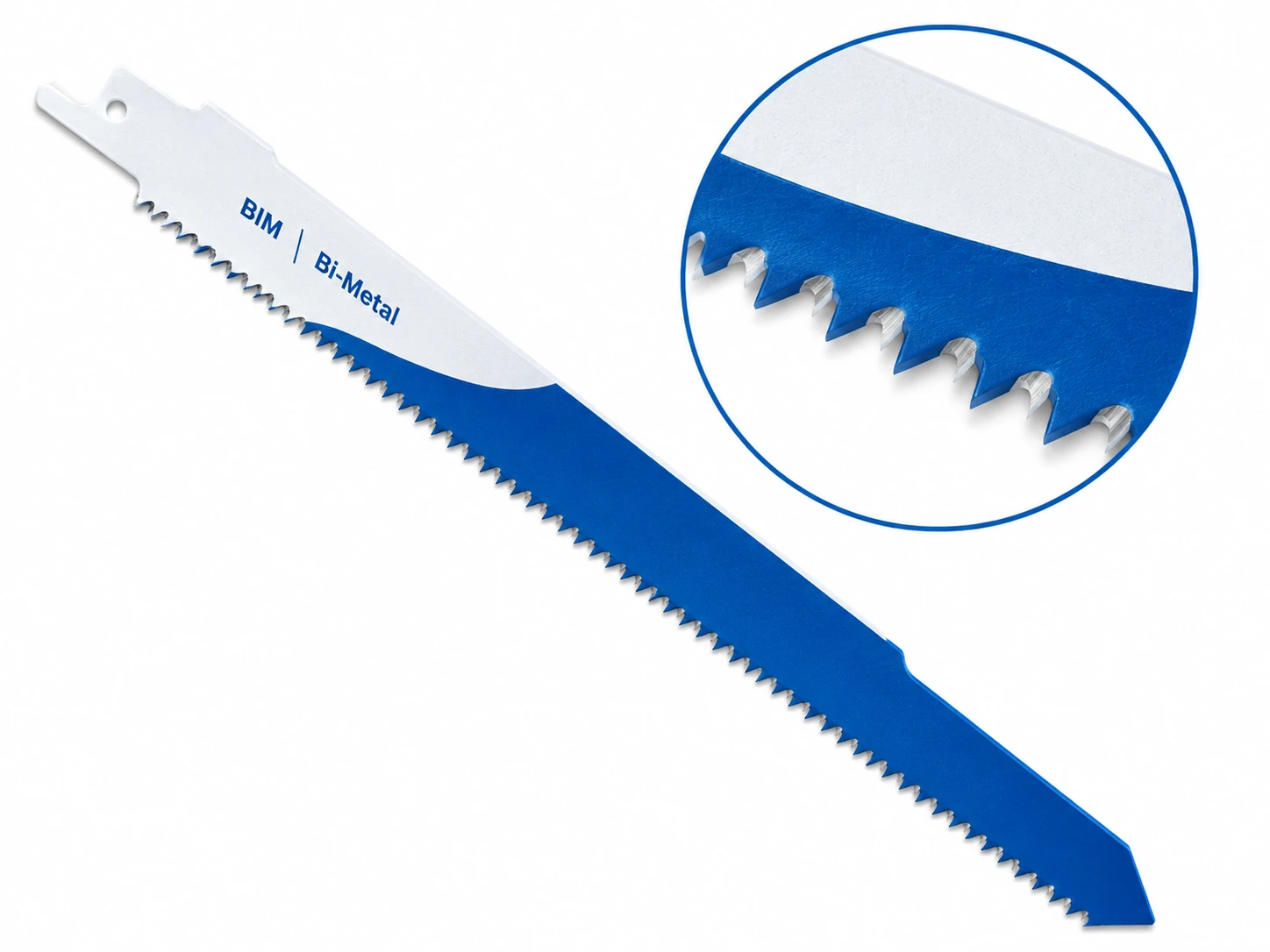
Compare the reciprocating saw blade range after documenting the workpiece, tooth pattern and connection.
Frequently Asked Questions
Is a wood blade suitable for hidden nails?
Do not assume it is. Identify embedded metal and use a blade specified for the mixed-material job.
Does bi-metal mean one blade suits every material?
No. Construction is one field; the item’s tooth pattern and intended application still matter.
Which metal dimension is most useful for tube selection?
Include wall thickness and tube shape, alongside material and blade requirements.
Can blade colour identify construction?
No. Record the selected item marking and specification.
Should the same connection be assumed across all saws?
No. Compare the blade tang and retention features with the intended saw.
How should mixed-material items be listed by a distributor?
Give them a distinct application description and item reference rather than merging them into clean-wood blades.
Conclusion
Use separate purchase descriptions for clean wood, metal and mixed-material cuts. A repeatable blade choice needs an application, pitch, dimensions and saw connection—not just a metal/wood label.