
Reverse is a control function; tapping is a complete thread-making application.
Use the comparison as a controlled buying record. It should identify the application, the exact tool variants, the evidence reviewed and every field still requiring supplier confirmation.
Start with the hole and assembly requirement
Define thread diameter, pitch, material and required depth.
Define thread diameter, pitch, material and required depth.

Compare cutting structure and operating behavior
Treat drilling the preparation hole and cutting the thread as separate operations.

Confirm machine, interface and workholding
Confirm the spindle, holder and control sequence for the selected tap.
Confirm the spindle, holder and control sequence for the selected tap.

Specify dimensions and controlled product fields
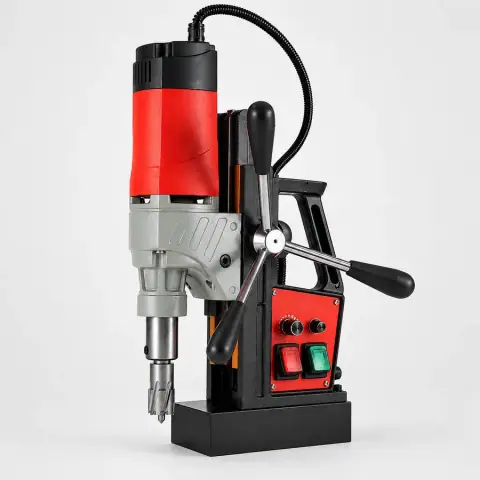
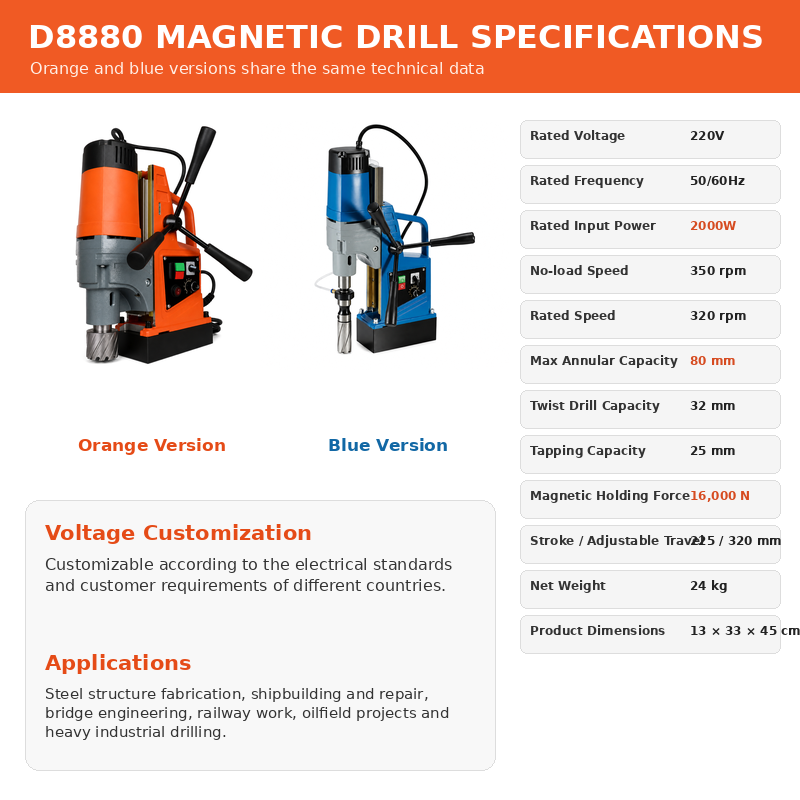
Check the exact model's tapping range rather than inferring it from a reverse switch.
| Requirement | Tool A | Tool B |
|---|---|---|
| Application | Confirm | Confirm |
| Machine/interface | Record | Record |
| Dimensions/depth | Approve | Approve |
| Sample/revision | Trace | Trace |
Evaluate samples with a stated method
Test entry, depth control, reversal and thread acceptance on representative material.

Build a clear distributor assortment
A distributor should distinguish reversible drilling models from explicitly tapping-capable configurations.

Release quotations and repeat orders
List tapping accessories and supported thread scope separately in the quotation.
Magnetic Drills·Taps and Dies·Applications·Confirm a Tapping Model
Frequently Asked Questions
Does reverse mean a drill can tap?
No. Tapping capability requires explicit model confirmation.
Why is reverse used in tapping?
It can withdraw the tap, but control and tooling must support the full process.
Can annular-cutting capacity prove tapping capacity?
No; they are separate application limits.
What thread data is needed?
Diameter, pitch, material, depth and prepared-hole condition.
Does every tapping model include a holder?
Do not assume so; verify supplied and optional items.
What should be sample-tested?
Entry, depth, reversal, thread quality and tool condition.
Conclusion
Buy tapping capability as a verified system, not as an assumption derived from the presence of reverse rotation.