
Choose drill bits for hardened steel by the steel grade, measured hardness, hole requirement and machine. A dedicated carbide drill or an application-rated cobalt HSS drill may be suitable. The material name alone does not establish which tool can produce your hole reliably.
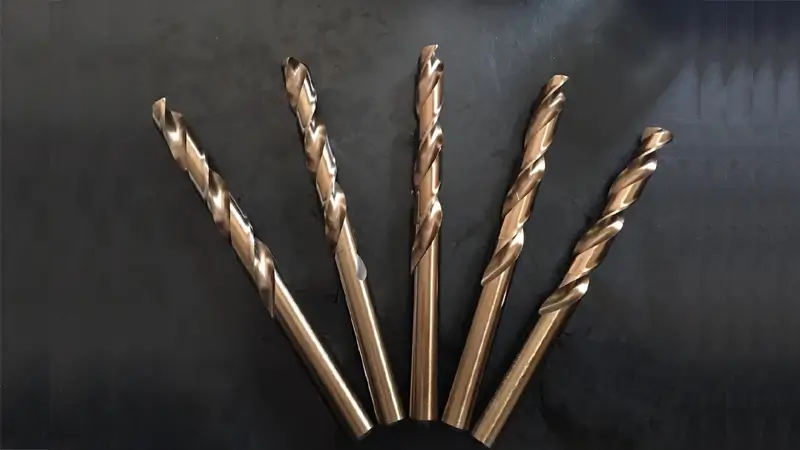
Which Drill Bit Should You Use for Hardened Steel?
Use a drill whose documented application range covers the actual steel condition and whose operating method suits your equipment. For a rigid production setup, compare appropriate carbide tooling. For less stable equipment, establish whether a suitable HSCo drill can cover the job. Unknown hardness needs investigation before a production purchase.
Those routes are starting points, not interchangeable approvals. A general-purpose carbide drill is not automatically a hardened-steel drill. Likewise, M42 identifies a cobalt-alloy HSS grade without giving every finished drill an unlimited workpiece hardness range.
| Starting Condition | Sensible Selection Route | Information That Decides the Choice |
|---|---|---|
| Known heat-treated steel and stable machine | Shortlist drills specifically rated for the material condition | Hardness, hole geometry, holder, coolant and tool-specific cutting data |
| Known wear-resistant plate | Use the steelmaker's and toolmaker's application guidance together | Plate grade, actual thickness, machine stability and required hole |
| Hand-operated or less stable equipment | Establish whether an application-rated HSCo drill is suitable | Material condition, workholding, feed control and the particular drill design |
| Unknown steel or modified surface | Identify the workpiece condition first | Grade, treatment, hardness and location of the proposed hole |
The correct purchase is a tool-and-process combination. Buying a more expensive drill without resolving the machine or material question can repeat the same failure at a higher cost.
Identify the Steel and Its Condition
“Hardened steel” is a condition rather than one uniform alloy. A heat-treated tool component, a wear-resistant plate and a part with a hardened surface can behave differently during drilling. The grade name helps identify the material, while its heat treatment and hardness establish the condition you must machine.
Start with the drawing, material certificate or reliable production record. Record the hardness scale as well as the value: HRC and HB are different scales, so the same number cannot be carried from one to the other. Avoid estimating hardness from colour, magnetic response or how a previous drill felt.
If the component has been repaired, welded, surface-treated or exposed to heat, describe where the proposed hole sits relative to that work. A reading or successful hole elsewhere on the component may not represent the exact area being drilled.
The procurement consequence is straightforward. A supplier can compare a known grade and condition with a tool's application range. An enquiry that says only “very hard steel” leaves open whether the difficulty comes from the alloy, treatment, surface, geometry or setup.
Define the Hole Before Selecting the Drill
A through hole and a blind hole require different depth planning. For a blind hole, the full-diameter cylindrical depth is not the same as the distance travelled by the drill tip. Use the actual point geometry and drawing requirement when assessing reach.
| Hole Detail | Why It Matters |
|---|---|
| Diameter and tolerance | Establishes the size and whether drilling alone can meet the requirement |
| Full-diameter depth | Determines the useful cutting reach rather than just overall tool length |
| Through or blind | Changes breakthrough, bottom clearance and chip-removal considerations |
| Entry and exit shape | Identifies angled, curved or otherwise uneven engagement |
| Existing bore or cross hole | Reveals interrupted engagement or a pre-existing feature |
| Location and surface finish | Helps determine whether a subsequent finishing operation is needed |
Separate the drilling requirement from any later reaming, boring or finishing requirement. Otherwise, a buyer may reject a workable rough-hole process for failing a tolerance it was never intended to produce alone.
Access also matters. State whether the hole is obstructed by a shoulder, deep recess or fixture. A longer tool may be necessary, but the required access should drive that choice. Extra reach is not a free advantage when the setup already struggles with stability.
Cobalt HSS or Solid Carbide?
Cobalt-alloy HSS and solid carbide are different tooling options. Neither label gives a universal answer for hardened steel. Selection depends on the finished drill, material condition and equipment supporting the cutting operation.
Where Cobalt HSS May Be Considered
HSCo drills are considered in some demanding steel applications where the specific tool's rating and available setup support their use. M35 and M42 are familiar cobalt-alloy grades, but choosing between them still requires the operation details. Raising cobalt content is not a substitute for checking the workpiece hardness or correcting an unstable process.
For an existing successful application, retain the complete drill reference rather than recording only “cobalt.” Diameter, point, length and any treatment help distinguish a genuine replacement from another tool carrying the same broad material description.
Where Dedicated Carbide Tooling May Be Considered
For a suitable rigid setup, a carbide drill designed for the actual hardened condition is an important route to evaluate. Its grade, geometry and application limits belong together. A generic carbide tool intended for another material should not be substituted on the assumption that carbide is always hard enough.
Specialist ranges illustrate the required level of detail. OSG's WH70 catalogue describes a dedicated hardened-steel drill family with its own geometry, hardness applications and product codes. Use comparable application detail when selecting a tool for a heat-treated part; that catalogue does not establish an AXIMET product rating.
What Wear-Plate Guidance Can and Cannot Tell You
SSAB's Hardox guidance distinguishes tooling choices according to machine stability, speed, power and coolant. SSAB explicitly limits that guidance to its steel products. It is a useful example of matching tool and setup, not a hardness rule for every cobalt drill or every hardened steel.
Similarly, Dormer Pramet identifies particular HSCo and carbide drills for selected Hardox grades. The named products and conditions matter. Do not turn one successful wear-plate application into a promise for a different heat-treated component.
Check Whether the Machine Can Support the Tool
Describe the machine as precisely as the drill. A handheld operation, drill press and rigid CNC setup offer different control. The question is whether the chosen tool can operate within its required conditions on the equipment actually available.
Inspect the holder, tool projection and workholding before assessing another drill material. An expensive tool cannot correct a loose workpiece or an unsuitable holding arrangement. Use the shortest reach that meets the hole and clearance requirements, and apply the toolmaker's holding instructions.
Small and large diameters can challenge different machine capabilities. Check whether the spindle can provide the required speed, and whether the operation has sufficient power and torque. Also establish how feed is controlled. A machine's maximum advertised speed does not show what it can maintain during the cut.
For a remote enquiry, a photograph of the actual setup is often useful. Show the machine, holder, proposed reach and workholding without relying on a close-up of the drill alone. This helps explain why a recommendation suitable for a production machine may not transfer to a maintenance operation.
Use Cutting Data for the Exact Tool and Material
There is no useful single RPM for all hardened steel. Spindle speed depends on drill diameter as well as the cutting speed recommended for the tool and workpiece. Feed is another separate setting; reducing every value indiscriminately is not a complete process plan.
Use the selected tool's guidance as the starting point, with the actual material condition and hole depth. Record the units. Cutting speed, spindle revolutions and feed per revolution describe different things, and confusing them can turn otherwise appropriate data into an unsuitable machine setting.
For a controlled trial, record the operating method rather than only the final speed. Include feed control, coolant delivery and any prescribed entry, depth or withdrawal sequence. If changes are needed, make them systematically with the tool's application guidance so the resulting improvement can be repeated.
Avoid borrowing an operating value from a visually similar drill. Different construction, coating, length or coolant arrangement can change the intended method. The successful recipe belongs to the actual tool-and-workpiece combination.
Coolant, Chip Removal and Hole Depth
Check the coolant requirement before ordering the tool. Internal coolant, external coolant and a permitted dry process are different operating conditions. A drill intended to rely on internal coolant should not be selected as though an occasional external application gives the same arrangement.
Depth adds another question: how will chips leave the hole through the full operation? A tool that begins well but struggles farther down may need a review of chip flow, delivery conditions, reach or the selected method. Changing alloy alone may leave the obstruction untouched.
Do not adopt a pecking cycle solely because the material is difficult. Some tools and applications require particular uninterrupted or withdrawal strategies. Follow the chosen tool's method rather than assuming repeated stopping and restarting is always beneficial.
For comparison tests, note whether coolant delivery remains consistent. A drill trial on a machine with a different coolant arrangement does not isolate tool performance from process conditions. That distinction matters when results are being used to approve a production purchase.
Pilot Holes and Difficult Entry Surfaces
A pilot hole changes how the cutting edges engage. It can form part of a specified drilling method, but it is not an automatic remedy for a difficult hardened-steel job. Follow the chosen tool's guidance on pilot diameter, point preparation and entry sequence where applicable.
Describe any existing hole before asking for a replacement drill. Enlarging a bore differs from drilling solid material, and a damaged or partly completed hole adds another condition. Record the previous tool and what happened rather than presenting the remaining feature as an untouched workpiece.
Angled entry, curved surfaces and intersecting holes also need attention because engagement changes during the cut. A photograph and drawing can reveal these features more clearly than the phrase “hard drilling.” Establish the method before committing a production quantity of tools to an unsupported entry condition.
The drill point angle guide explains why point angle and split-point preparation are separate specifications. Neither one alone removes the need to consider the surface where the drill begins cutting.
Diagnose the Failure Before Repeating It
When a drill stops cutting effectively, stop the trial and investigate. Repeatedly trying an ineffective cut on more parts does not identify the cause and can make the comparison less useful.
| What You Observe | Questions to Investigate |
|---|---|
| Rubbing with little useful chip formation | Is the edge serviceable, is the actual hardness within the tool's range, and are the cutting data appropriate? |
| Chipping or early breakage | Are holding, runout, entry conditions and workpiece stability suitable? |
| Trouble appearing deeper in the hole | Is chip evacuation adequate, and does the tool have the necessary reach and coolant arrangement? |
| Hole quality deteriorating | What changed in edge condition, alignment, chip flow or the operating method? |
| Results changing between parts | Are material condition, workholding and tool condition actually comparable? |
These are diagnostic questions, not a claim that one visible symptom has only one cause. Sandvik Coromant's drilling troubleshooting guidance separates wear, chipping, chip problems and setup issues rather than treating every failure as insufficient tool hardness.
Keep photographs of the cutting edge and the affected hole with the test record. State when the problem appeared and whether the drill was new or reground. That evidence makes a supplier discussion more productive than reporting only that a bit broke.
Approve the Process on a Representative Part
A useful sample has the same material condition, relevant geometry and hole requirement as the planned work. A demonstration in an easier sample may show that the drill cuts, but it cannot establish production suitability for the actual component.
Agree the acceptance criteria before the trial: hole size, location, usable depth, finish and any allowed subsequent work. Then record the machine, holder, drill reference, coolant and operating method. Keep the trial result tied to those conditions.
Evaluate more than whether the first hole goes through. Inspect cutting-edge condition and hole consistency at agreed intervals, and record why a tool is taken out of service. A gradual change in quality and a sudden breakage have different purchasing implications.
For a batch order, compare the cost of acceptable holes rather than tool price alone. Include relevant changeovers, rework and service costs without inventing a predicted tool life. An importer or distributor should also retain enough application detail to explain the product correctly to the next buyer.
Prepare an Enquiry That Can Be Answered
Send the steel grade, heat treatment, hardness value and scale, hole drawing and quantity. Describe the machine, holder, coolant arrangement and any access restriction. Include the existing tool reference if a replacement is required.
For M42 cobalt drill enquiries, state the full application instead of treating the grade as proof of hardened-steel capacity. If the current process failed, attach the edge photographs and explain when it stopped cutting.
Clear requirements also prevent unsuitable substitutions. A visually similar twist drill may have a different point, length or application range. Record the complete successful specification so that repeat orders preserve the features that mattered in the trial.
Frequently Asked Questions
Can an M42 Drill Cut Every Hardened Steel?
No. M42 identifies a cobalt-alloy HSS grade, not an unlimited workpiece hardness range. The finished drill needs an application rating covering the steel condition, hole and machine. Establish the actual hardness before selecting by grade. If a supplier recommends M42, ask which complete drill and operating method support that recommendation. A result in one wear plate or heat-treated alloy does not automatically establish performance in every other hardened component.
Is Stainless Steel the Same as Hardened Steel?
No. Stainless describes a family of steel compositions, while hardened describes a condition. A stainless component therefore needs its actual grade and treatment identified rather than being placed in a single generic hardness category. The same practical rule applies to carbon and alloy steels: a grade name without condition can leave an important selection question unanswered. Use the material record and relevant hardness information instead of treating “stainless” and “hardened” as interchangeable purchasing terms.
Is Solid Carbide Always the Best Choice?
No. A carbide drill specifically designed for the material may be a strong option on suitable equipment, but general-purpose carbide is not a complete specification. Tool geometry, application range, holder, machine stability and coolant must fit the operation. Dedicated hardened-steel drills publish those details for a reason. If the existing setup cannot support the required method, changing tool material alone may not solve the problem. Assess the available process before buying a production quantity.
Should I Drill a Pilot Hole First?
Only when the selected tool and application guidance call for one. A pilot changes cutting-edge engagement, and its size and point form can matter. Some methods require a specific pilot; others are intended to drill without that preliminary step. Describe an existing or partly completed hole when requesting advice, because it is a different starting condition from solid material. Do not add a pilot simply because another drill previously struggled in the same component.
What Speed Should I Use for Hardened Steel?
Start with the exact tool's cutting data for the actual material condition and diameter. Convert the recommended cutting speed to the appropriate spindle setting, keeping the units consistent. Feed, depth strategy and coolant also belong in the method. A single RPM copied from another drill size is not a useful recommendation. If the machine cannot provide the required operating conditions, revisit the tool or process choice rather than assuming an arbitrary slower setting will work.
Why Is the Drill Rubbing Instead of Producing Chips?
Check the cutting-edge condition, the tool's application range, actual material hardness, holding and cutting data. Establish whether the problem begins at entry or develops at depth, because that helps distinguish the questions worth investigating. Stop repeating an ineffective operation while the cause is unresolved. Keep edge and hole photographs with the setup details for a technical enquiry. Do not assume that greater pressure, another alloy label or a pilot hole will automatically restore cutting.
Conclusion
Successful hardened-steel drilling begins with a known workpiece and a tool-and-machine combination suited to it. Define the hole, use application-specific guidance and approve the process on representative material. Share those details with AXIMET when discussing the HSS and cobalt drill range so the enquiry concerns the actual job, rather than a material label alone.