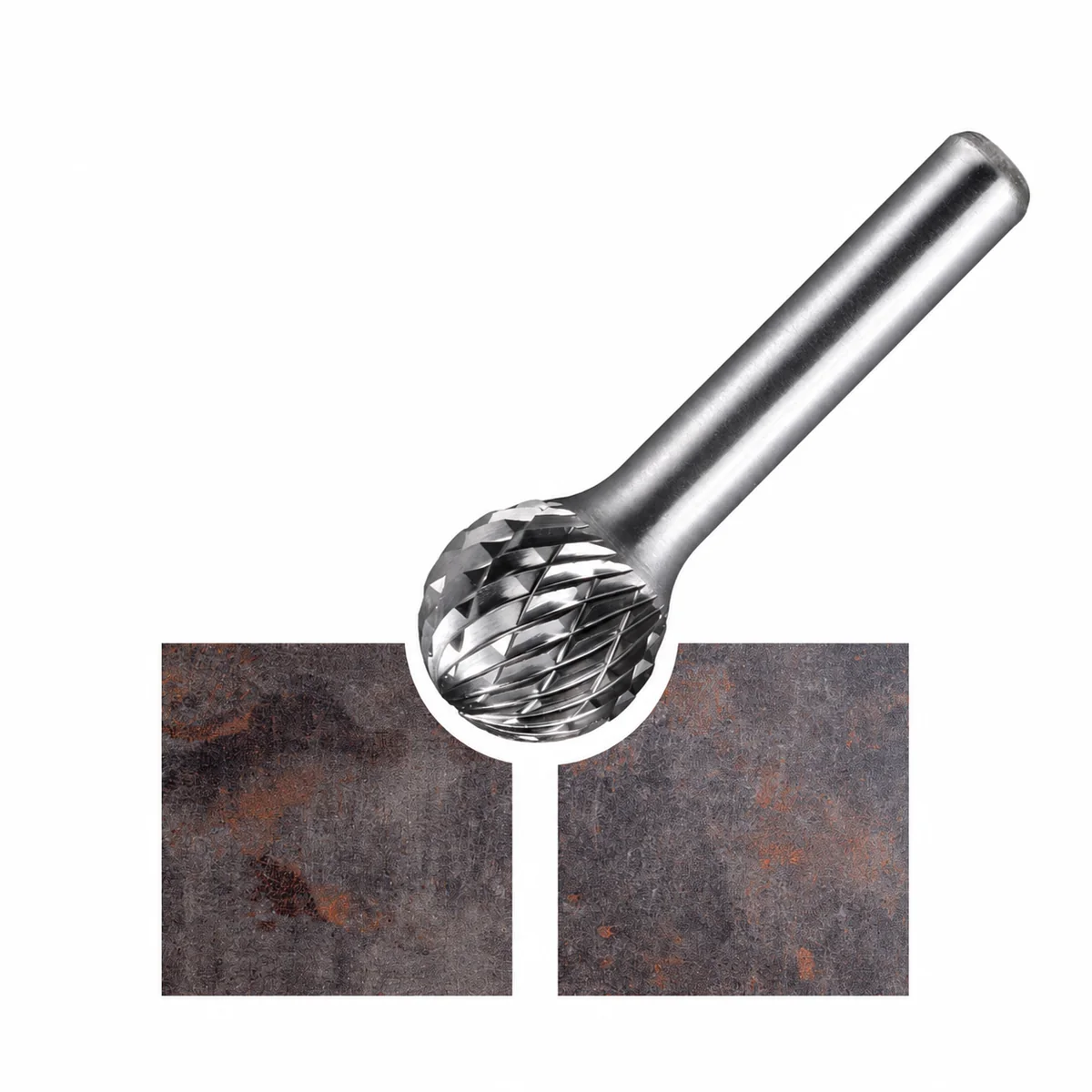
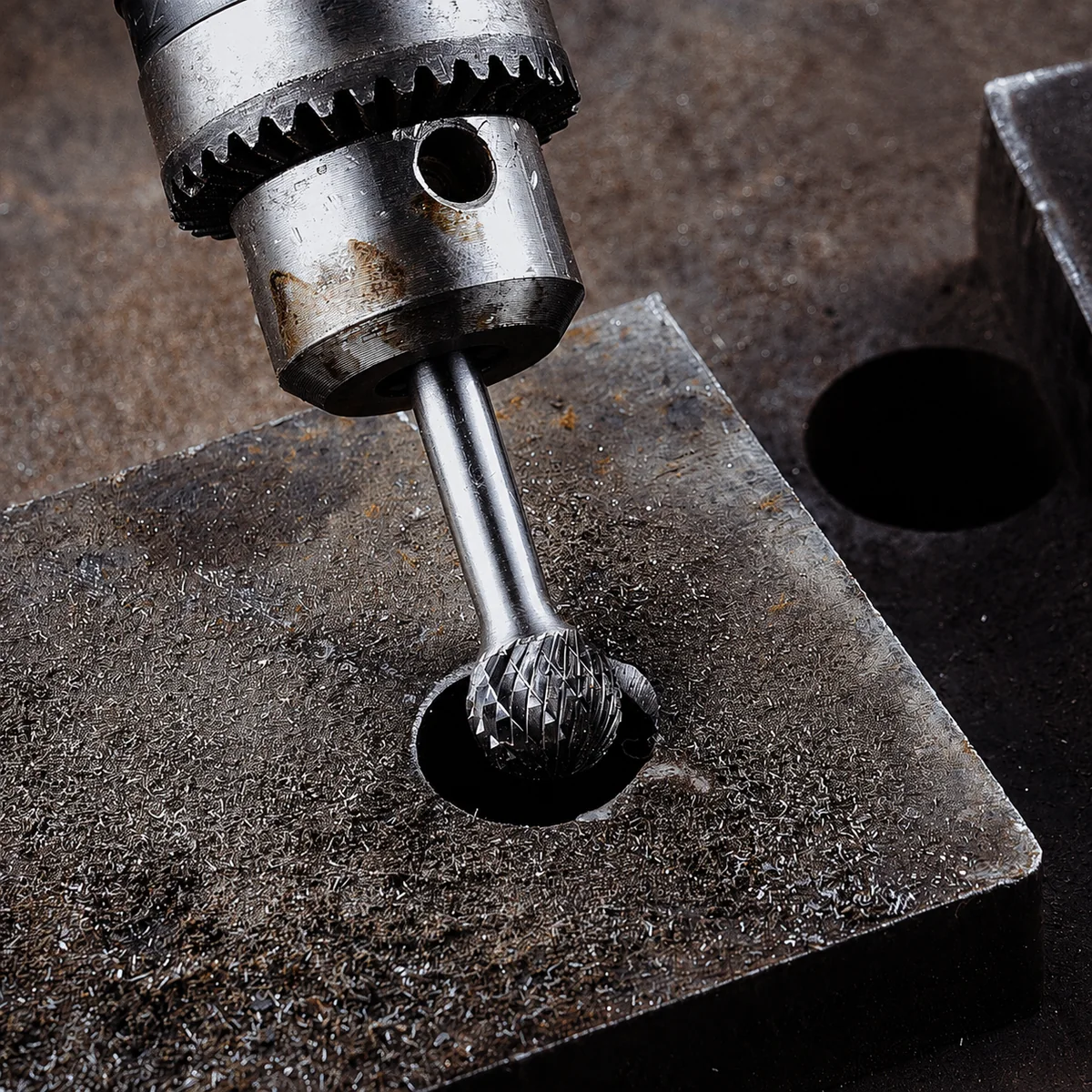
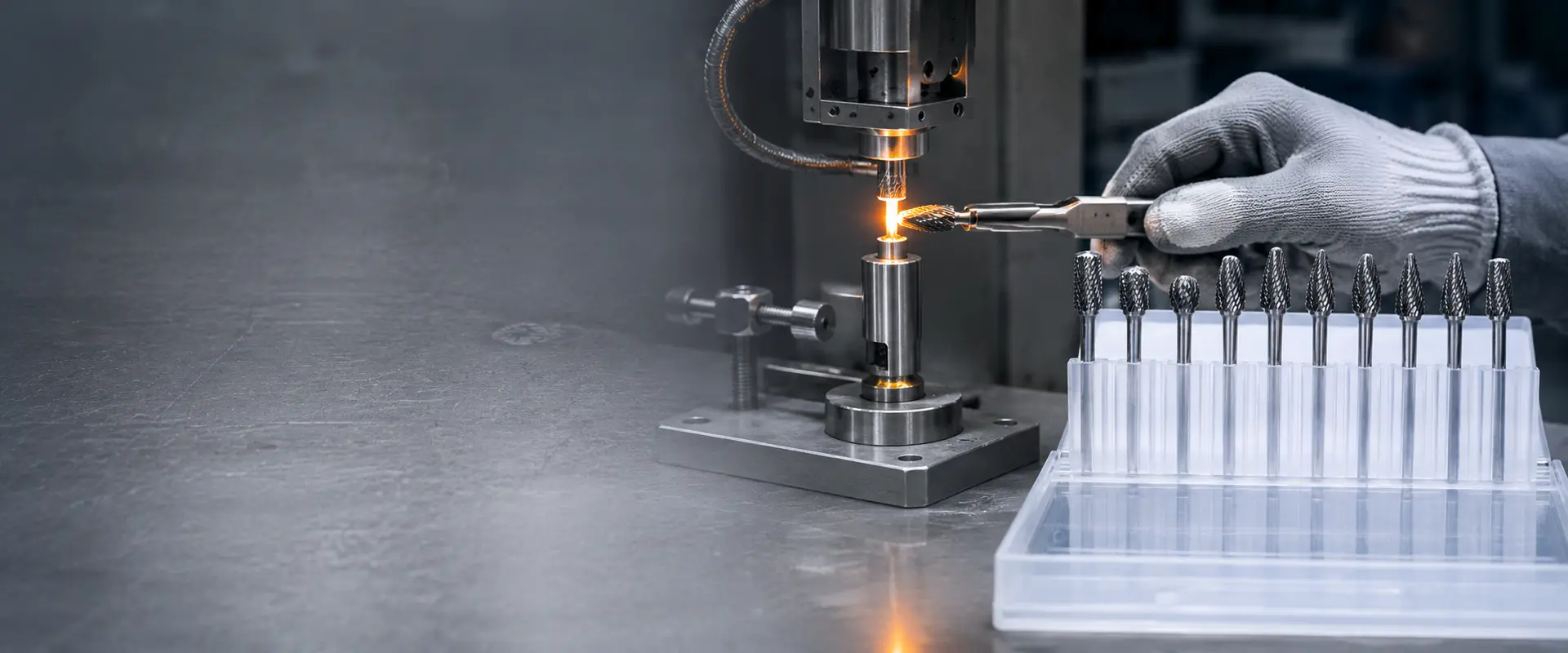
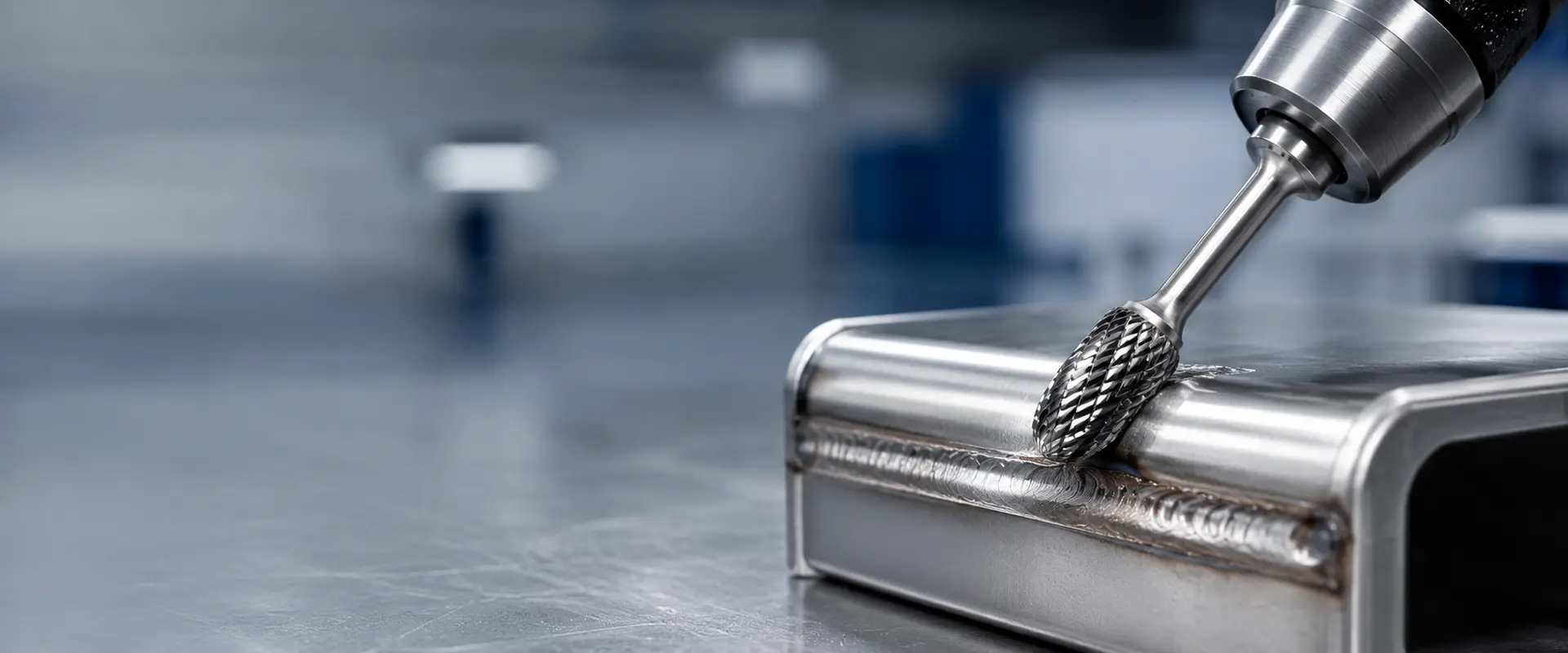
Carbide burr positioned at a fabricated metal weld in an industrial workshop
AXIMET · PROFESSIONAL B2B TOOL SUPPLY

Carbide Burrs for Stainless Steel Fabrication

Build a stainless-qualified burr range for weld cleanup, edge deburring and controlled stock removal - with cut options, diameter-based operating guidance and OEM identification for repeat industrial supply.

  • Cuts for Austenitic, Ferritic and Duplex Grades
  • Double-Cut Options for Controlled Chips
  • 3-16 mm Heads on 6 mm Shanks
  • OEM Sets, Marking and Packaging
Keep the Tooth CuttingStainless steel can work-harden when the burr rubs instead of cutting. A sharp edge, stable contact and continuous movement matter more than simply adding pressure.
Limit Local HeatLong dwell and repeated light passes concentrate heat at the same point. Diameter, RPM, contact area and operator method must be considered together.
Preserve the Fabrication SurfaceThe burr must remove the defect without deep gouging, excessive heat tint or unnecessary damage to adjacent finished surfaces.
Prevent Ferrous Cross-ContaminationTools approved for stainless work should be stored, tested and packed separately from burrs used on carbon steel when the fabrication standard requires contamination control.
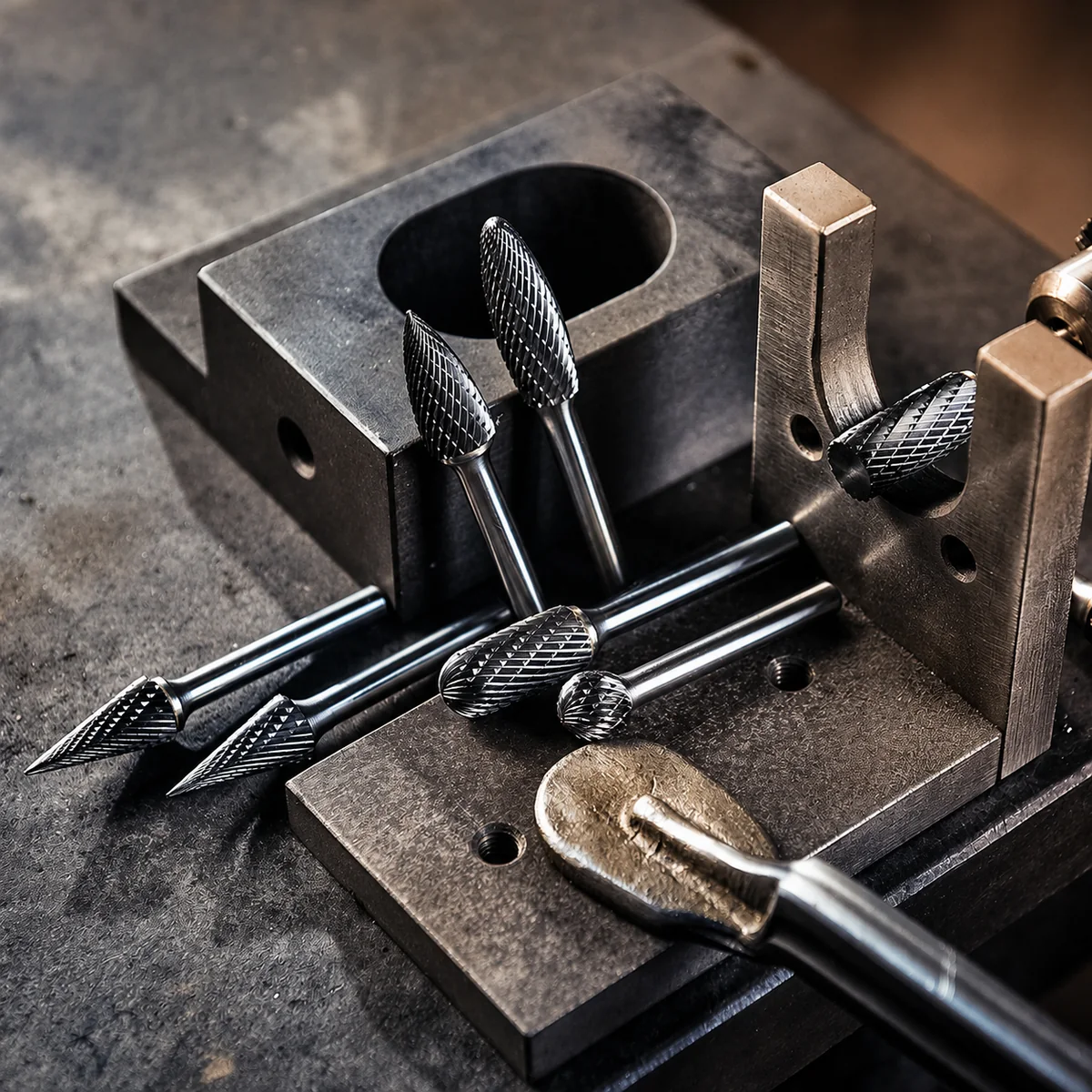
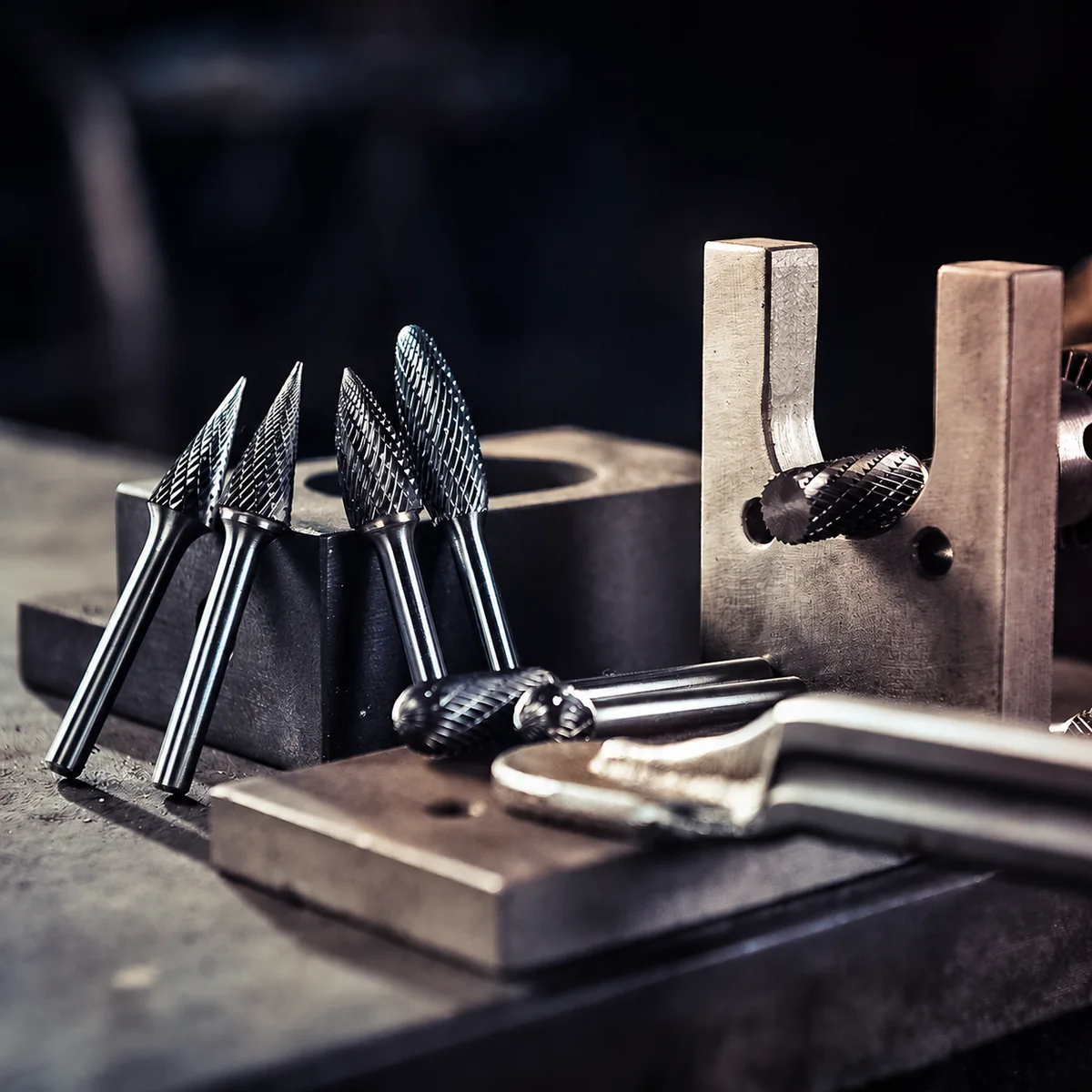
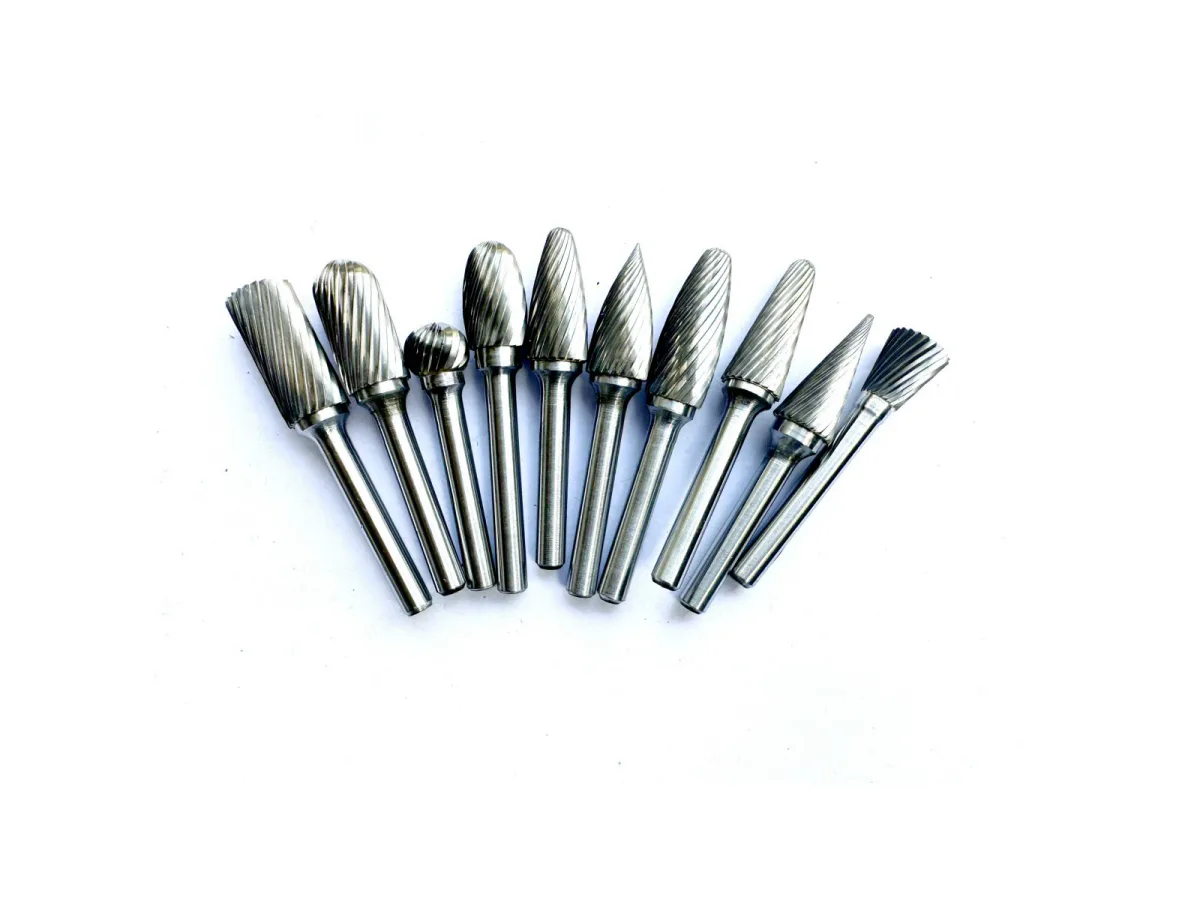
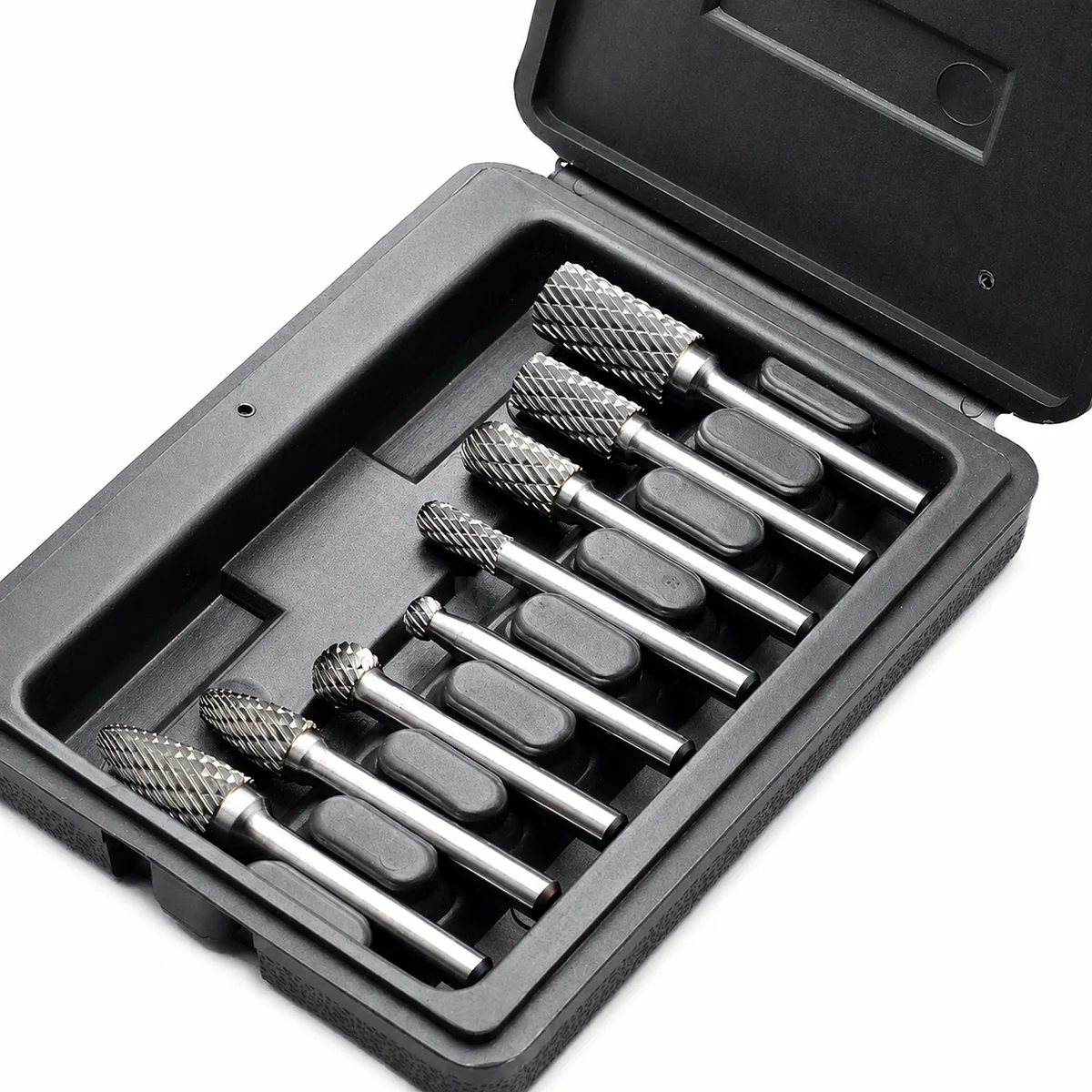
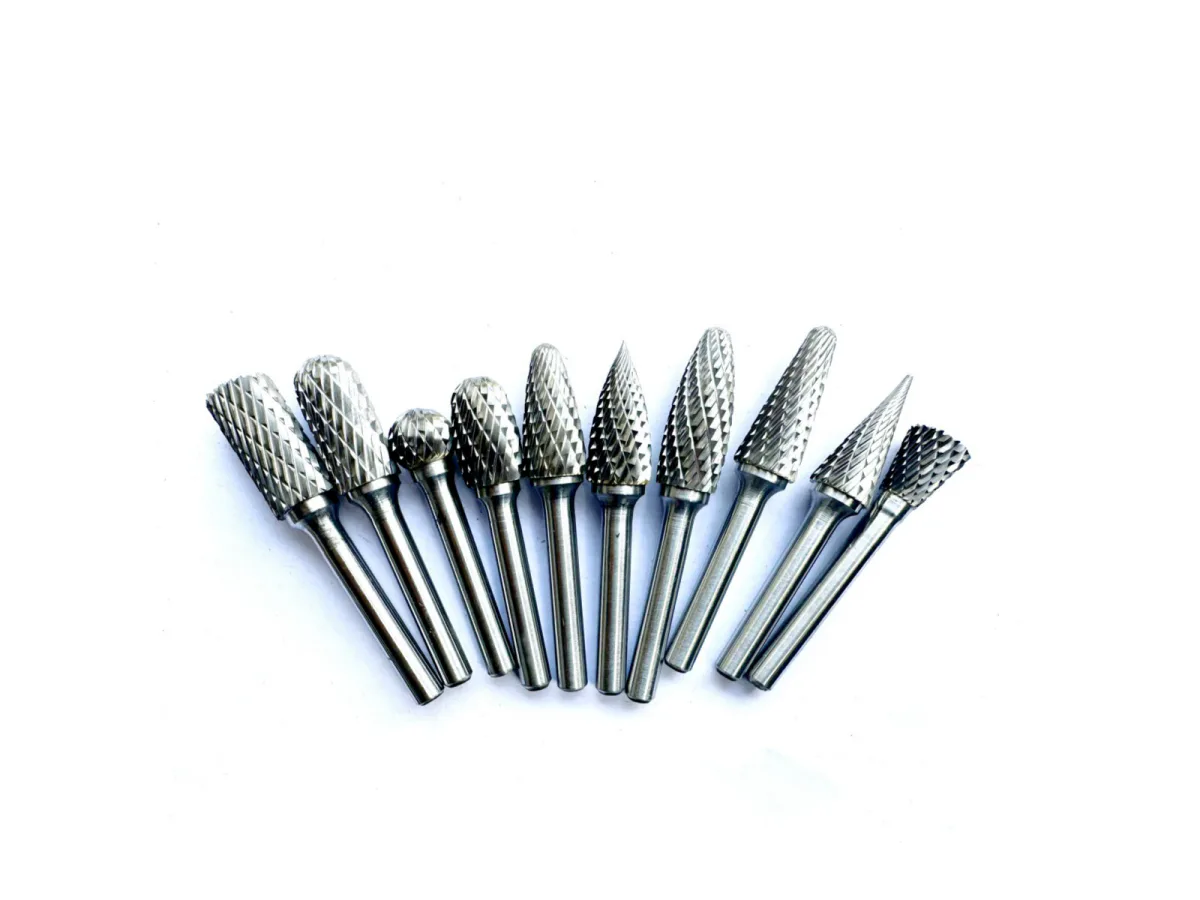
Assorted double-cut carbide burr shapes for controlled fabrication work
CATEGORY DEFINITION · PRODUCT DETAIL

Product Description

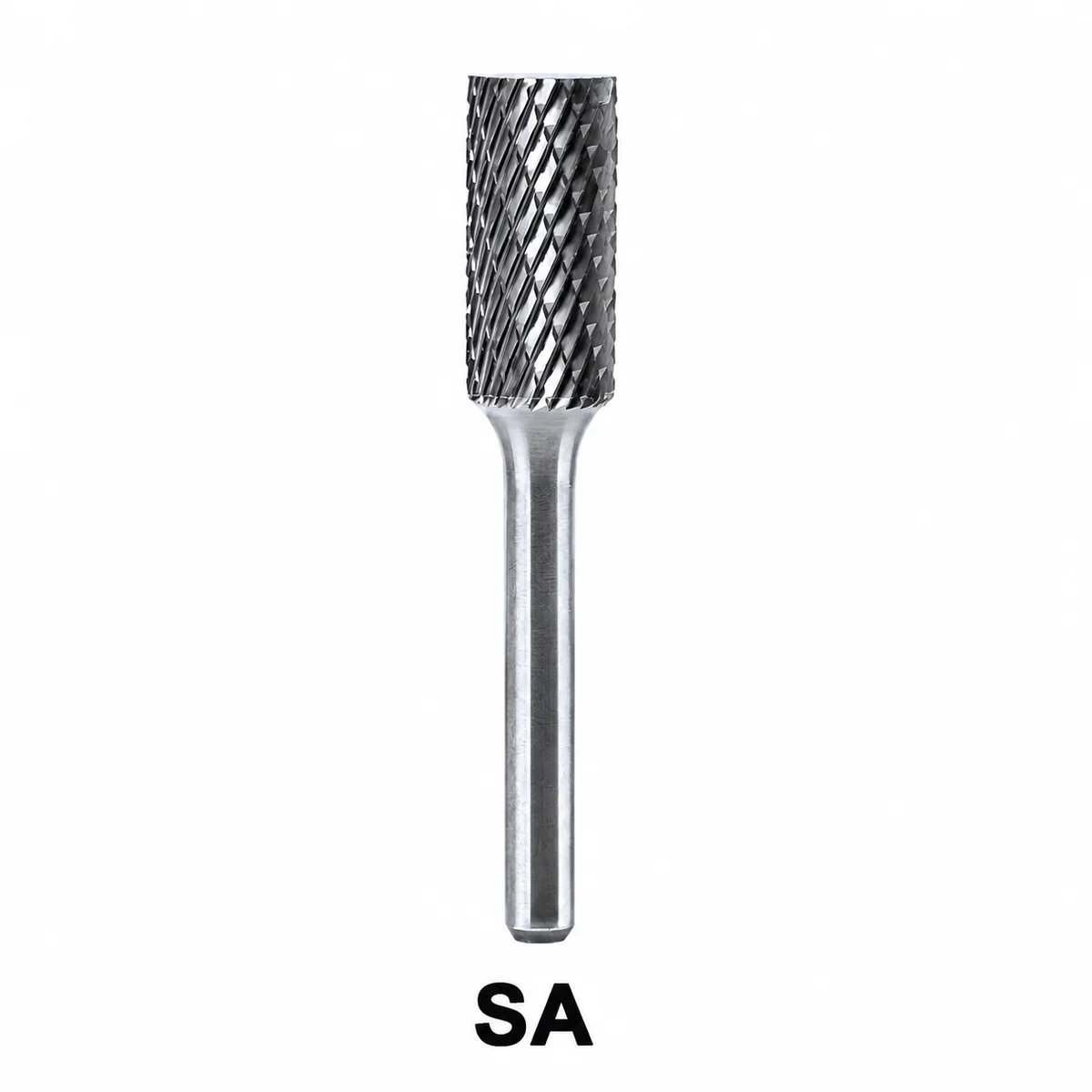
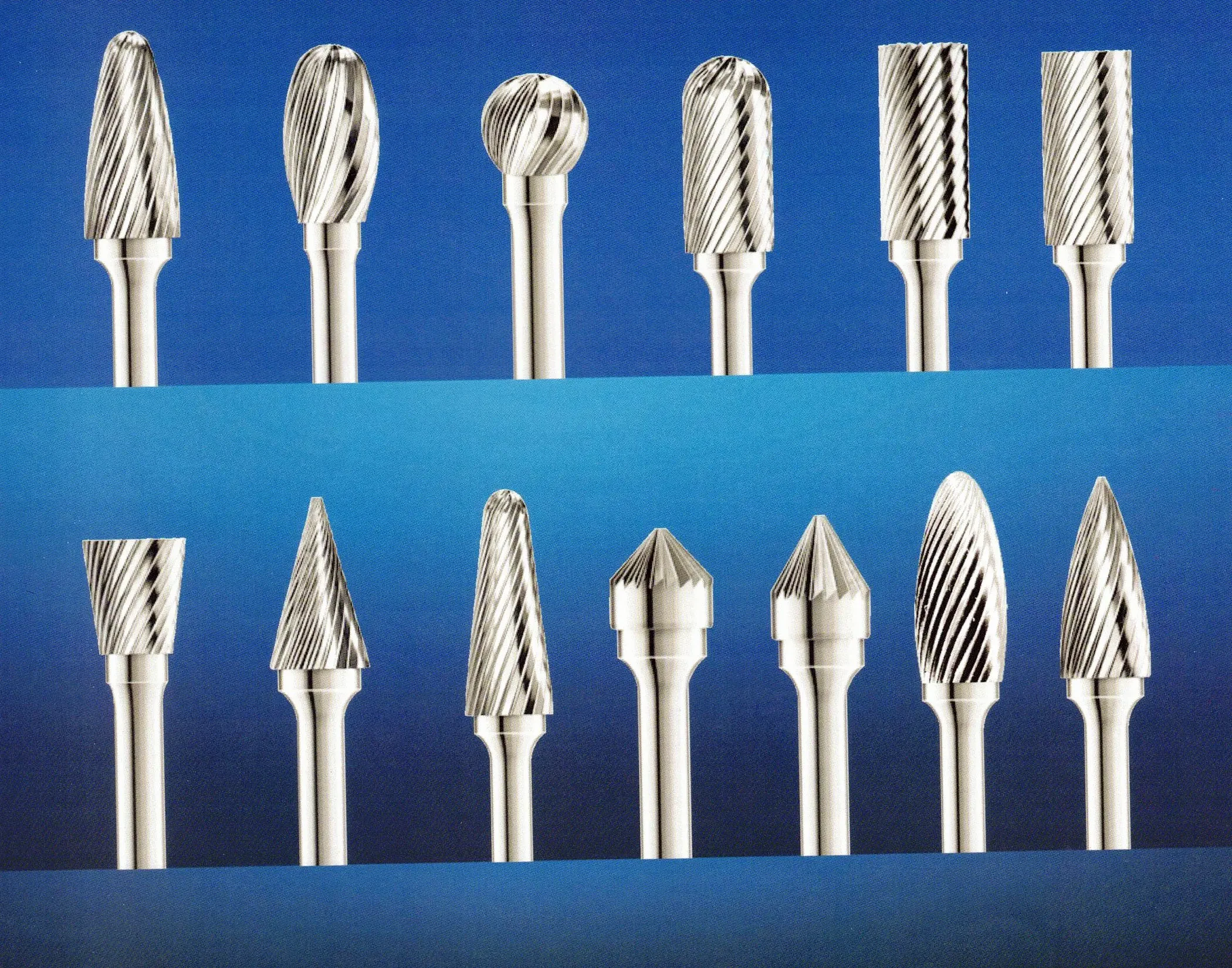
A Carbide Burr for Stainless Steel must combine sharp, consistent flute geometry with controlled runout and a shape that maintains stable contact on the intended feature. This range covers SA-SN profiles with 3-16 mm head diameters and 6 mm shanks for pneumatic or electric die grinders. YG8 or YS2T tungsten-carbide head options are silver-brazed to steel shanks, with cut selection based on stainless grade, weld condition, access, removal target and required remaining surface. Importers should approve each model against a defined stainless coupon or production component before using broad material claims in a catalogue.

  • Keep the Tooth CuttingStainless steel can work-harden when the burr rubs instead of cutting. A sharp edge, stable contact and continuous movement matter more than simply adding pressure.
  • Limit Local HeatLong dwell and repeated light passes concentrate heat at the same point. Diameter, RPM, contact area and operator method must be considered together.
  • Preserve the Fabrication SurfaceThe burr must remove the defect without deep gouging, excessive heat tint or unnecessary damage to adjacent finished surfaces.
  • Prevent Ferrous Cross-ContaminationTools approved for stainless work should be stored, tested and packed separately from burrs used on carbon steel when the fabrication standard requires contamination control.
Review the Selection Guide
PRODUCT RANGE

Select Shapes for Stainless Fabrication

Each product option remains connected to its corresponding record so buyers can build a controlled assortment.

Ball and Oval Profiles carbide burr profile
02 · PROFILE GROUP 02

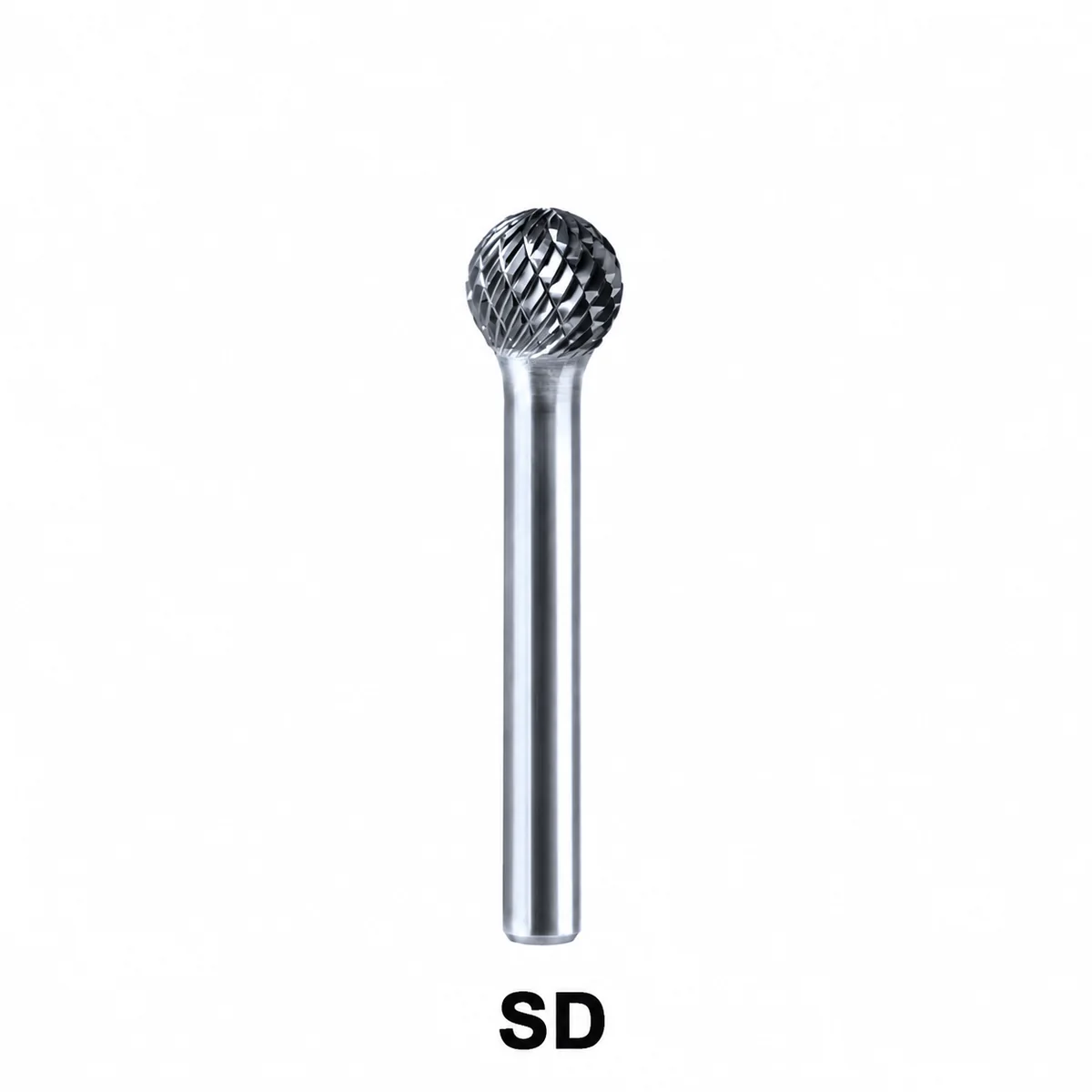
Ball and Oval Profiles

SD and SE shapes follow internal radii, curved fabrications and cavities while spreading contact over a changing surface. Head diameter must match access without rubbing nearby finished areas.

    Request specifications · Ball and Oval Profiles
    Tree and Flame Profiles carbide burr profile
    03 · PROFILE GROUP 03

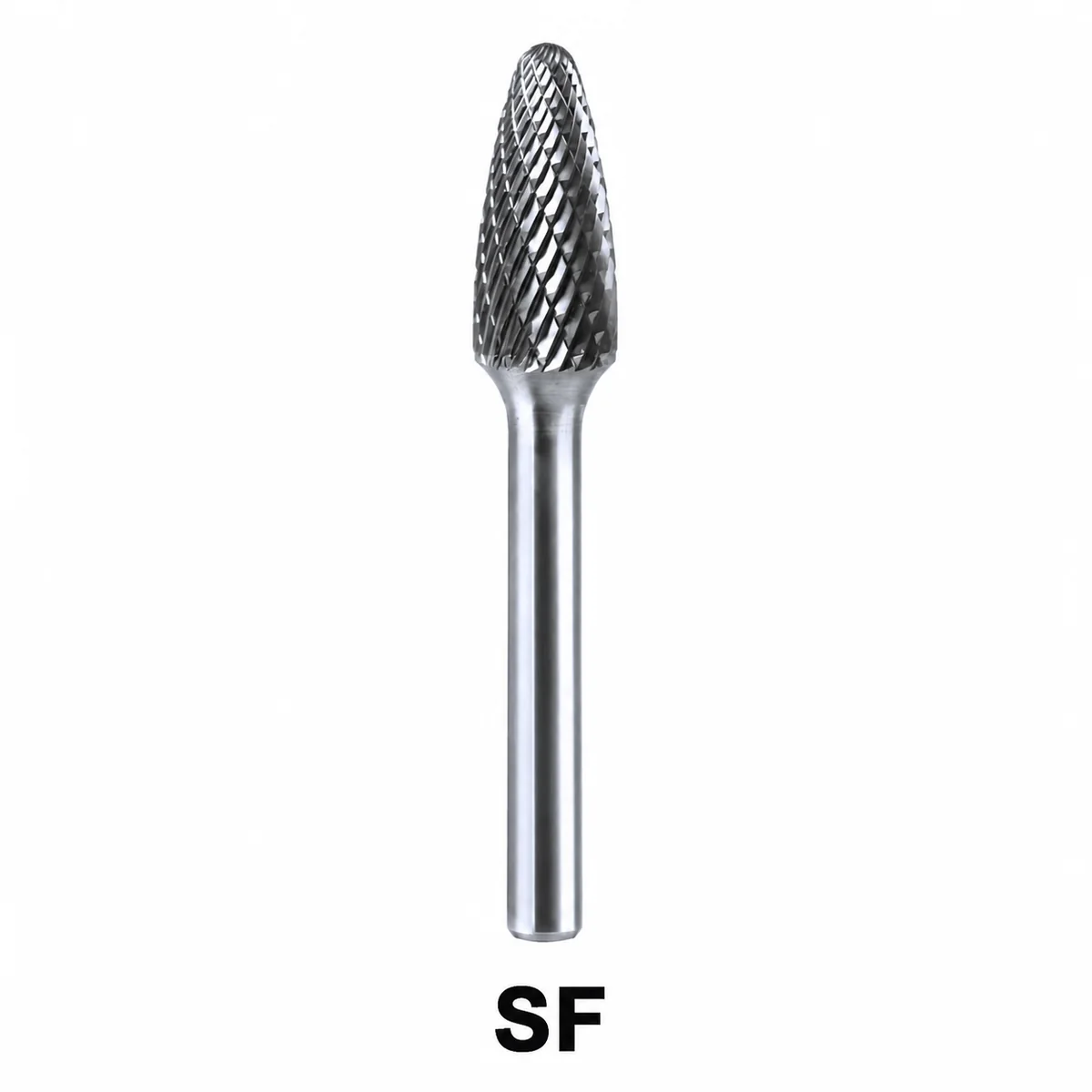
    Tree and Flame Profiles

    SF, SG and SH profiles reach weld toes, fillets, intersections and irregular contours. A pointed tip should not carry the full load because concentrated contact can increase heat and chatter.

      Request specifications · Tree and Flame Profiles
      Cone and Taper Profiles carbide burr profile
      04 · PROFILE GROUP 04

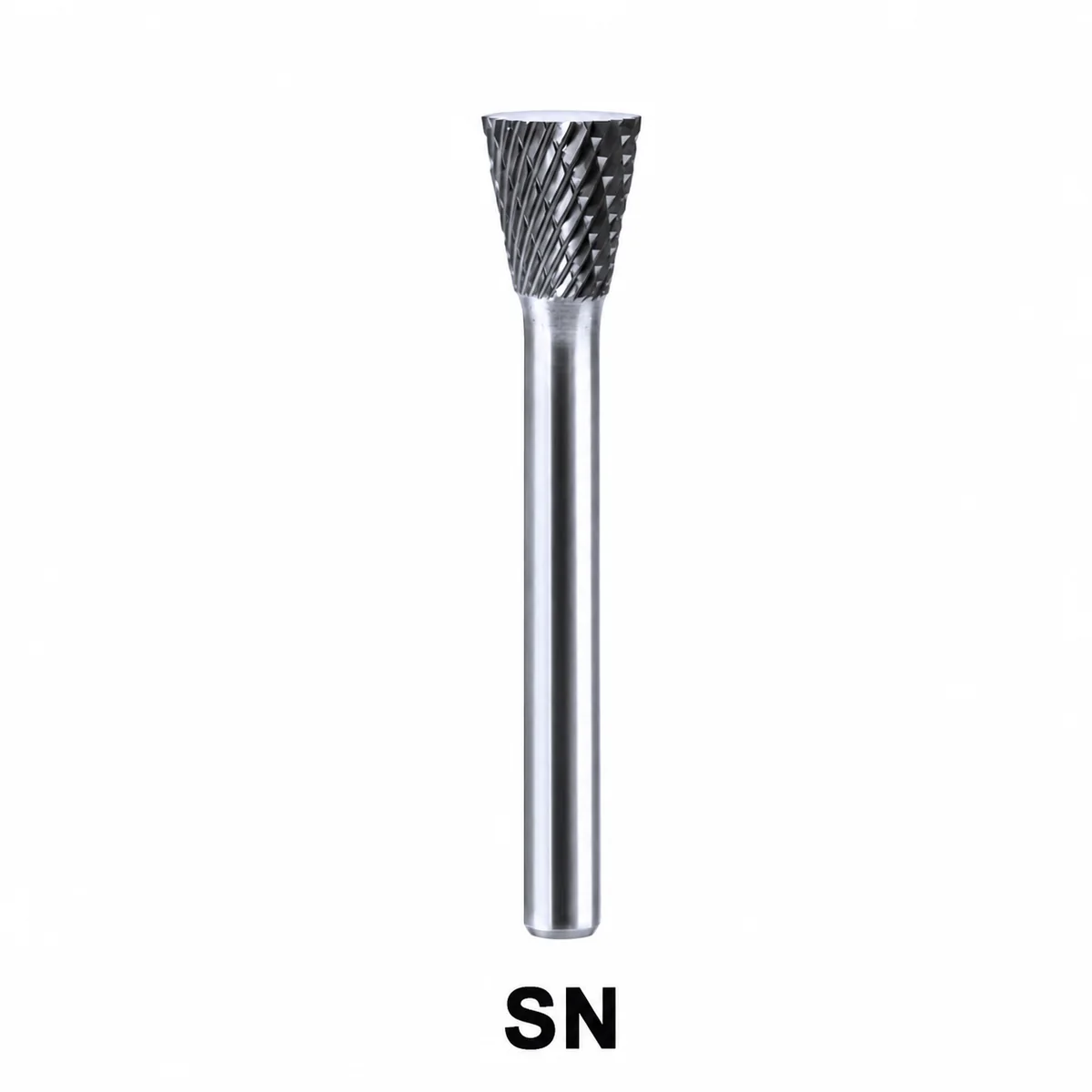
      Cone and Taper Profiles

      SJ-SN shapes support groove cleanup, back-edge deburring and controlled blending around angled features. Use a guided cutter instead when a drawing requires a repeatable machined angle or concentric seat.

        Request specifications · Cone and Taper Profiles
        B2B SELECTION GUIDE

        Choose the Cut by Process Objective

        There is no universal cut that is automatically correct for every stainless grade or weld. Double cut is usually the strongest general-purpose starting point because it divides chips and improves control, while single cut can suit open removal where a more aggressive cutting action is acceptable. The final model still requires a controlled application trial.

        01

        Keep the Tooth Cutting

        Stainless steel can work-harden when the burr rubs instead of cutting. A sharp edge, stable contact and continuous movement matter more than simply adding pressure.

        02

        Limit Local Heat

        Long dwell and repeated light passes concentrate heat at the same point. Diameter, RPM, contact area and operator method must be considered together.

        03

        Preserve the Fabrication Surface

        The burr must remove the defect without deep gouging, excessive heat tint or unnecessary damage to adjacent finished surfaces.

        04

        Prevent Ferrous Cross-Contamination

        Tools approved for stainless work should be stored, tested and packed separately from burrs used on carbon steel when the fabrication standard requires contamination control.

        Carbide Burrs for Stainless Steel · selection table
        Process ObjectivePractical Starting PointBuyer Validation
        General edge deburringControlled double-cut geometryBurr control, chip size and remaining edge condition
        Weld-bead reductionRobust double cut with suitable head contactRemoval rate, chatter, heat tint and access
        Open, heavier stock removalSingle cut or aggressive double cutOperator control, surface scoring and tooth loading
        Contour and fillet cleanupRounded, tree or flame profileContact width, tip loading and adjacent surface protection
        Closer surface preparationFiner controlled cut followed by abrasivesFinal finish specification and total process time

        Request the Stainless Burr Model Matrix

        Send Selection Requirements
        PRODUCT DETAIL

        Product Features for Industrial Distribution

        Build a stainless-qualified burr range for weld cleanup, edge deburring and controlled stock removal - with cut options, diameter-based operating guidance and OEM identification for repeat industrial supply.

        Stainless-Qualified Cut Options

        Cut patterns are selected by stainless grade, weld condition, removal rate and surface objective rather than one universal label.

        Controlled Head Concentricity

        Head-to-shank alignment and measured runout support more even tooth loading and lower chatter risk.

        SA-SN Shape Coverage

        Cylindrical, ball, oval, tree, flame, cone and taper profiles cover flats, radii, fillets, grooves and weld transitions.

        6 mm Industrial Shanks

        Standard shanks fit compatible pneumatic and electric die-grinder collets used in fabrication markets.

        Traceable Brazed Construction

        Carbide specification, head dimensions, flute geometry and braze joint remain linked to each model code.

        Clean OEM Identification

        Laser marking, barcodes, individual packs and set layouts help prevent model confusion at distributor and workshop level.

        INDUSTRIAL APPLICATIONS

        Stainless-Steel Fabrication Applications

        Build a stainless-qualified burr range for weld cleanup, edge deburring and controlled stock removal - with cut options, diameter-based operating guidance and OEM identification for repeat industrial supply.

        Weld Bead and Weld-Toe Cleanup application context
        01

        Weld Bead and Weld-Toe Cleanup

        Carbide burrs can reduce excess weld metal, clean starts and stops, and improve access around fillets before the abrasive finishing stage. The operator should remove only the required stock and avoid undercutting the parent material.

        Pipe, Tank and Vessel Fabrication application context
        02

        Pipe, Tank and Vessel Fabrication

        Rounded and tree profiles reach internal transitions, branch connections and restricted weld areas. Grade traceability, dedicated tool handling and the specified finish sequence are especially important where contamination control applies.

        Sheet-Metal Edge Deburring application context
        03

        Sheet-Metal Edge Deburring

        Smaller heads and controlled cuts remove sharp edges from holes, slots and cutouts without enlarging the feature unnecessarily. Thin sheet requires light, stable engagement to avoid vibration and edge distortion.

        Casting and Machined-Part Correction application context
        04

        Casting and Machined-Part Correction

        Burrs can remove local flash, blend mismatch and correct isolated defects on stainless castings or machined parts. Buyers should define the allowable stock removal and the surface condition that must remain.

        PRODUCT COMPARISON

        Match the Burr to Stainless Grade and Condition

        Build a stainless-qualified burr range for weld cleanup, edge deburring and controlled stock removal - with cut options, diameter-based operating guidance and OEM identification for repeat industrial supply.

        Carbide Burrs for Stainless Steel · procurement comparison
        Material or ConditionPrimary RiskSample-Test Priority
        304 / 316 austeniticRubbing, heat and work hardeningClean chip formation, low dwell and visible heat tint
        Ferritic stainlessVariable hardness and surface requirementRemoval rate, edge condition and finishing sequence
        Martensitic stainlessHigher hardness and edge loadTooth wear, chatter and conservative engagement
        Duplex / super duplexHeat, toughness and grade sensitivityActual-grade trial, controlled contact and tool life
        Weld and heat-affected zoneChanging hardness and irregular contactWeld profile, access, vibration and surface damage

        Build a stainless-qualified burr range for weld cleanup, edge deburring and controlled stock removal - with cut options, diameter-based operating guidance and OEM identification for repeat industrial supply.

        Request the Stainless Burr Model Matrix

        Compare for My Program
        TECHNICAL BUYING GUIDES

        Selection details from the approved product brief

        Each guide below preserves the page-specific purchasing information, limits and qualification notes supplied for this product collection.

        01

        Diameter-Based RPM Starting Guide

        The following conservative qualification windows are suitable as starting references for short, standard-shank burrs on harder stainless work. They are not model maximums. The approved limit from the burr manufacturer and grinder must always take priority, and extended shanks require lower limits.

        If a burr polishes, squeals or creates rapid heat without forming chips, raising pressure blindly is not the answer. Check edge condition, collet grip, runout, RPM, contact area and movement. Record the accepted window for every model that will be sold for repeat stainless work.

        Diameter-Based RPM Starting Guide
        Head DiameterStarting RPM WindowQualification Focus
        3 mm27,000-37,000 rpmRunout, edge impact and heat at small contact areas
        6 mm13,000-19,000 rpmChip formation, cutting sound and surface tint
        8 mm10,000-14,000 rpmContact stability and grinder power
        10 mm8,000-11,000 rpmPressure, dwell and remaining surface
        12 mm7,000-9,000 rpmLoad, vibration and head-to-shank stability
        16 mm5,000-7,000 rpmLow overhang, firm support and controlled engagement
        02

        Frequently Asked Questions

        What information should importers provide for a stainless-steel burr quotation?

        Provide the exact stainless grade, material condition, operation, weld profile or feature, access, removal target and required remaining surface. Add the preferred shape, head diameter, cutting length, shank, overall length and grinder type. For OEM orders, include annual demand, model marking, barcode, set layout and packaging requirements.

        How should distributors compare stainless-steel burr samples?

        Use the same stainless grade or production coupon, burr diameter, grinder, collet, overhang and operating method. Record removed volume, cycle time, chip formation, chatter, heat tint, surface result and visible tooth wear. A freehand trial without controlled inputs can hide runout or operator differences and is not a reliable basis for approving a bulk order.

        Should burrs used on stainless steel be kept separate from carbon-steel tools?

        Yes, when the fabrication standard requires contamination control. Mark and store stainless-use burrs separately, avoid qualifying them on carbon-steel coupons, and keep packaging clean. This reduces the risk of transferring ferrous particles to stainless surfaces and makes workshop tool control easier for the end user.

        Which carbide burr is best for stainless steel?

        There is no single best model for every stainless job. A sharp, concentric tungsten-carbide burr with a stainless-qualified cut and a shape matched to the contact area is the correct starting point. Double cut is often preferred for controlled deburring and weld cleanup, but grade, head diameter, access, removal target and finishing requirement must be confirmed by trial.

        Should buyers use single-cut or double-cut burrs on stainless steel?

        Double cut is usually the safer general-purpose choice because it divides chips and gives the operator more control on edges, welds and contours. Single cut can remove stock aggressively on open surfaces, but it may leave a coarser pattern and demands stable handling. Buyers should compare both only under the same material and operating conditions.

        How can heat discoloration and work hardening be reduced during deburring?

        Keep the burr cutting instead of rubbing: use a sharp tool, the approved diameter-based RPM, stable but not forced pressure, continuous movement and limited dwell. Reduce unnecessary contact width, clear chips and use an approved coolant or cutting lubricant where the fabrication specification permits. Stop and correct the setup if the tool polishes or squeals without producing chips.

        Which speed range is suitable for different burr diameters?

        For short standard-shank burrs on harder stainless work, conservative starting windows are about 27,000-37,000 rpm for 3 mm heads, 13,000-19,000 for 6 mm, 10,000-14,000 for 8 mm, 8,000-11,000 for 10 mm, 7,000-9,000 for 12 mm and 5,000-7,000 for 16 mm. The burr and grinder maximum ratings always override these starting references, and extended shanks require lower limits.

        Are these burrs suitable for weld removal on stainless-steel fabrications?

        Yes. Suitable shapes and cuts can reduce stainless weld beads, clean weld toes and correct local starts, stops or mismatch. The burr is normally a controlled stock-removal tool, not the final finishing step. Buyers should confirm the parent-material allowance, access, heat-tint limit and required abrasive or polishing sequence after burr work. Request the Stainless Burr Model Matrix | Get an OEM Quotation

        MANUFACTURING CAPABILITY

        Production Context for Supplier Review

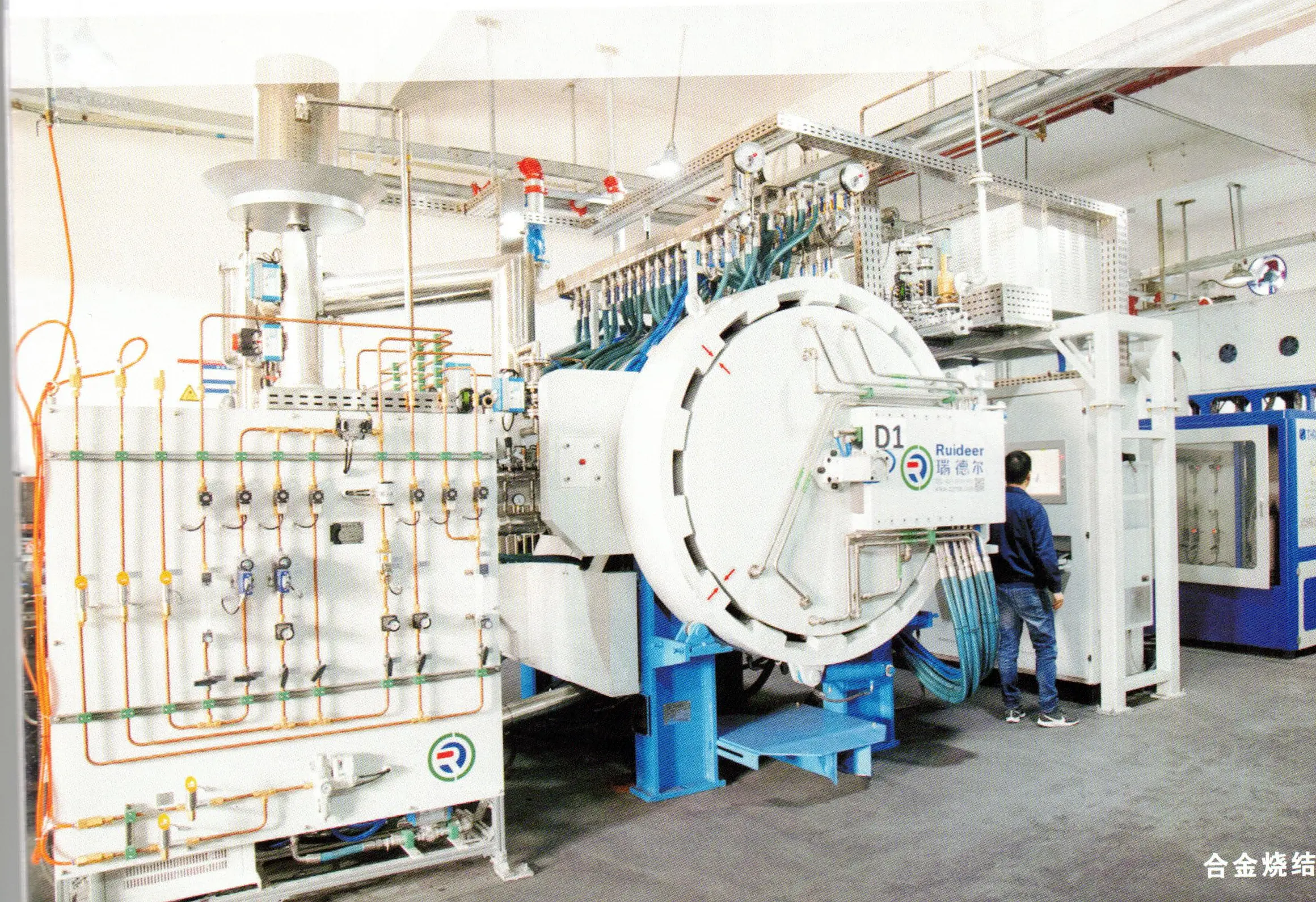
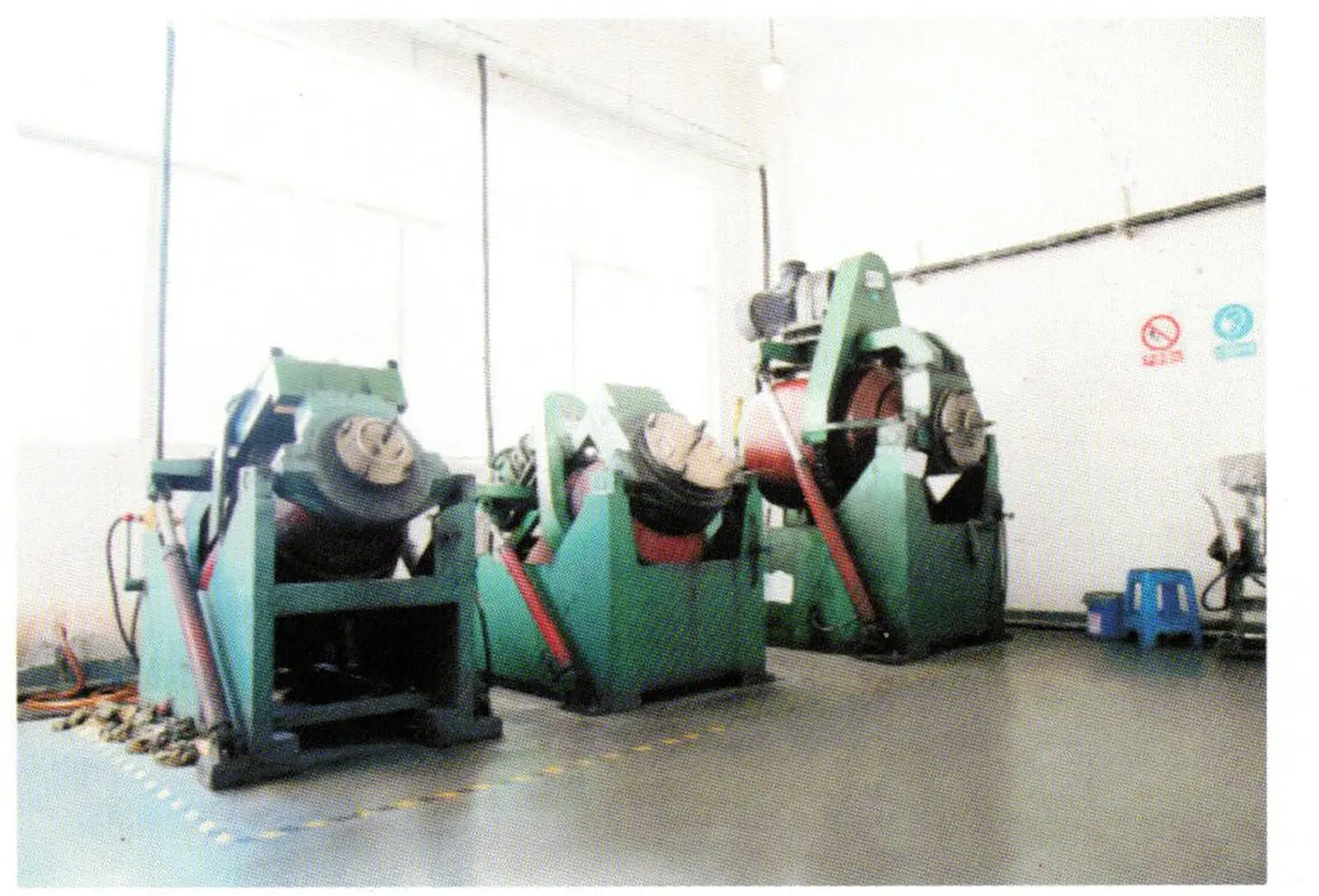
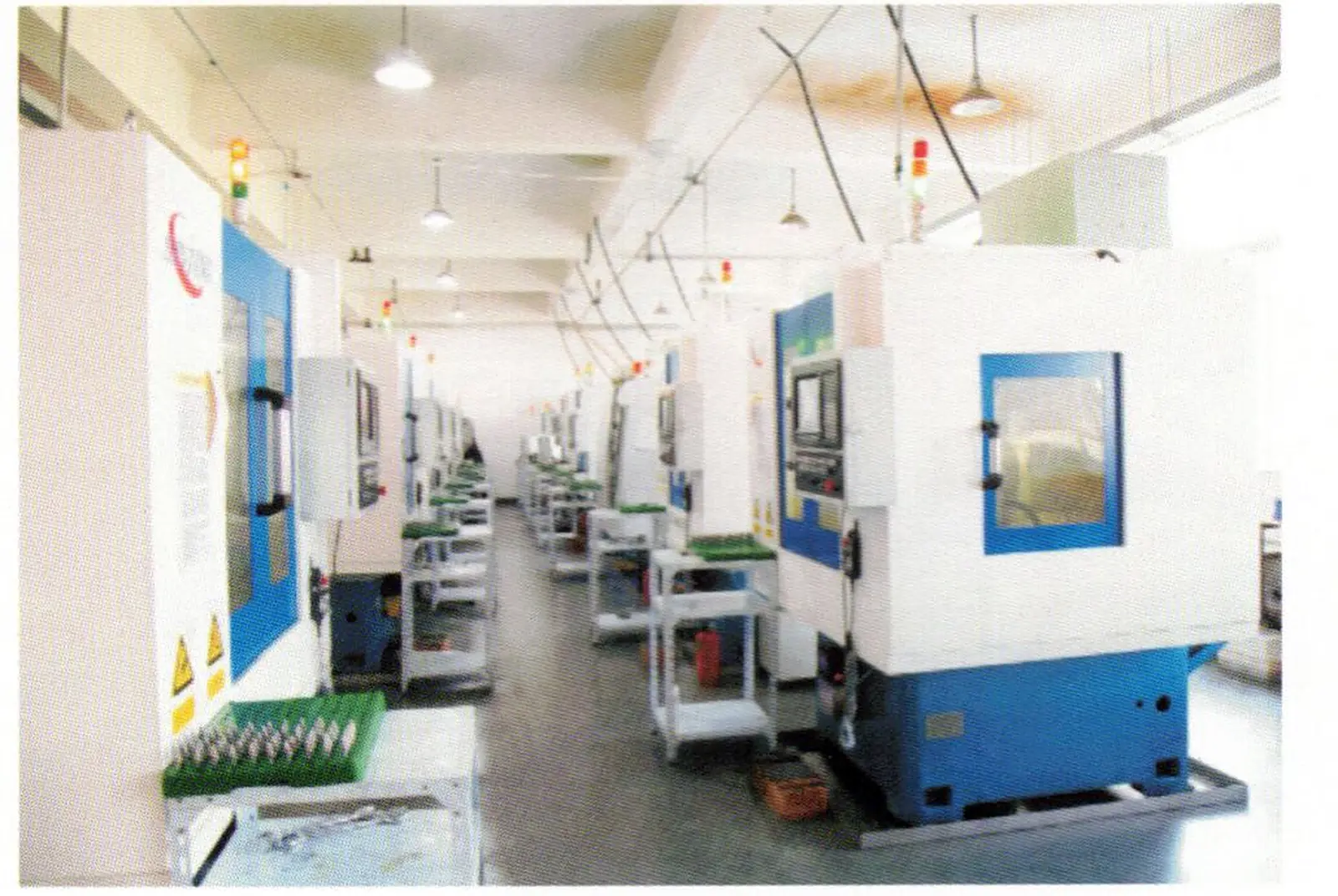
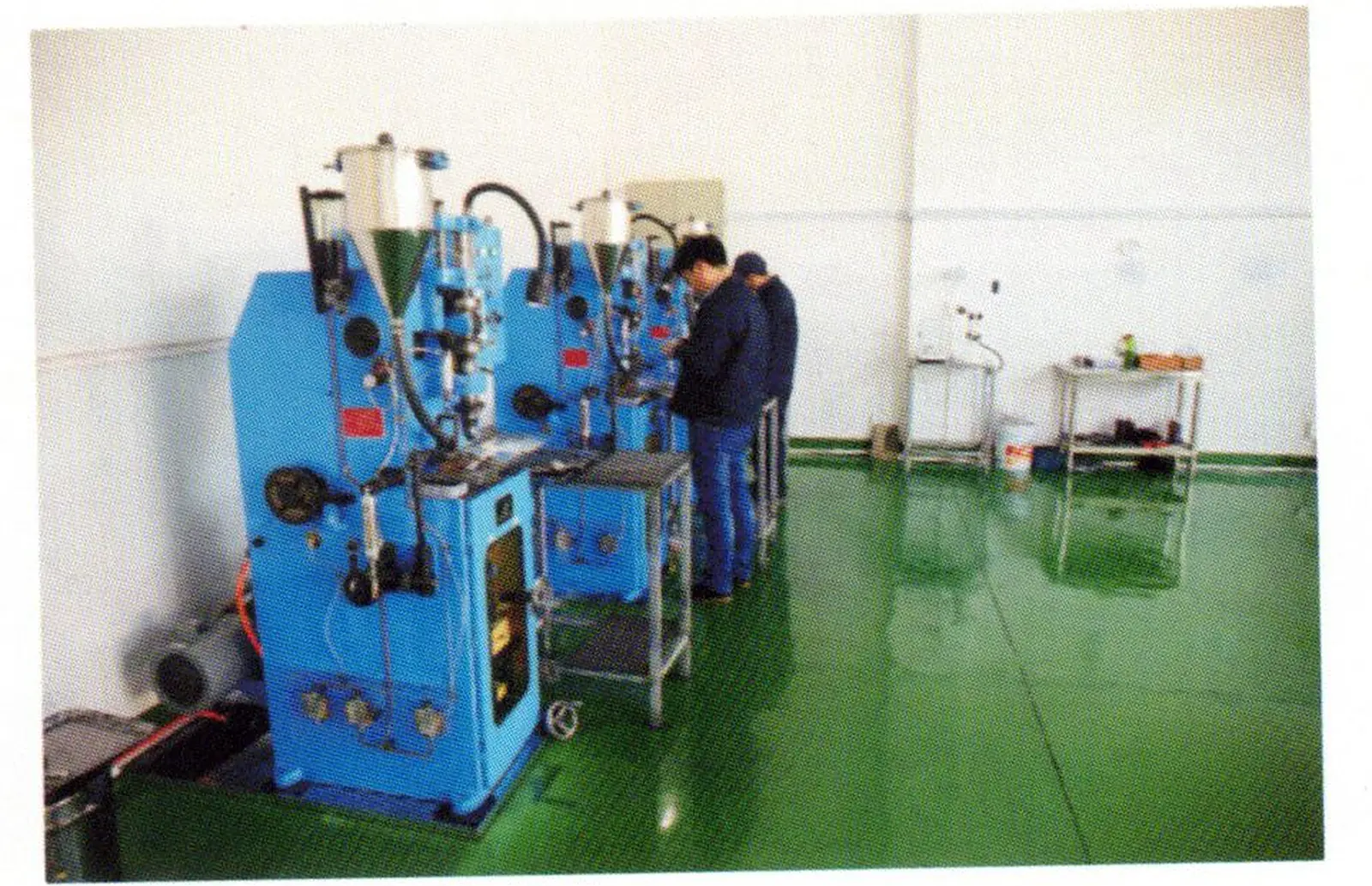
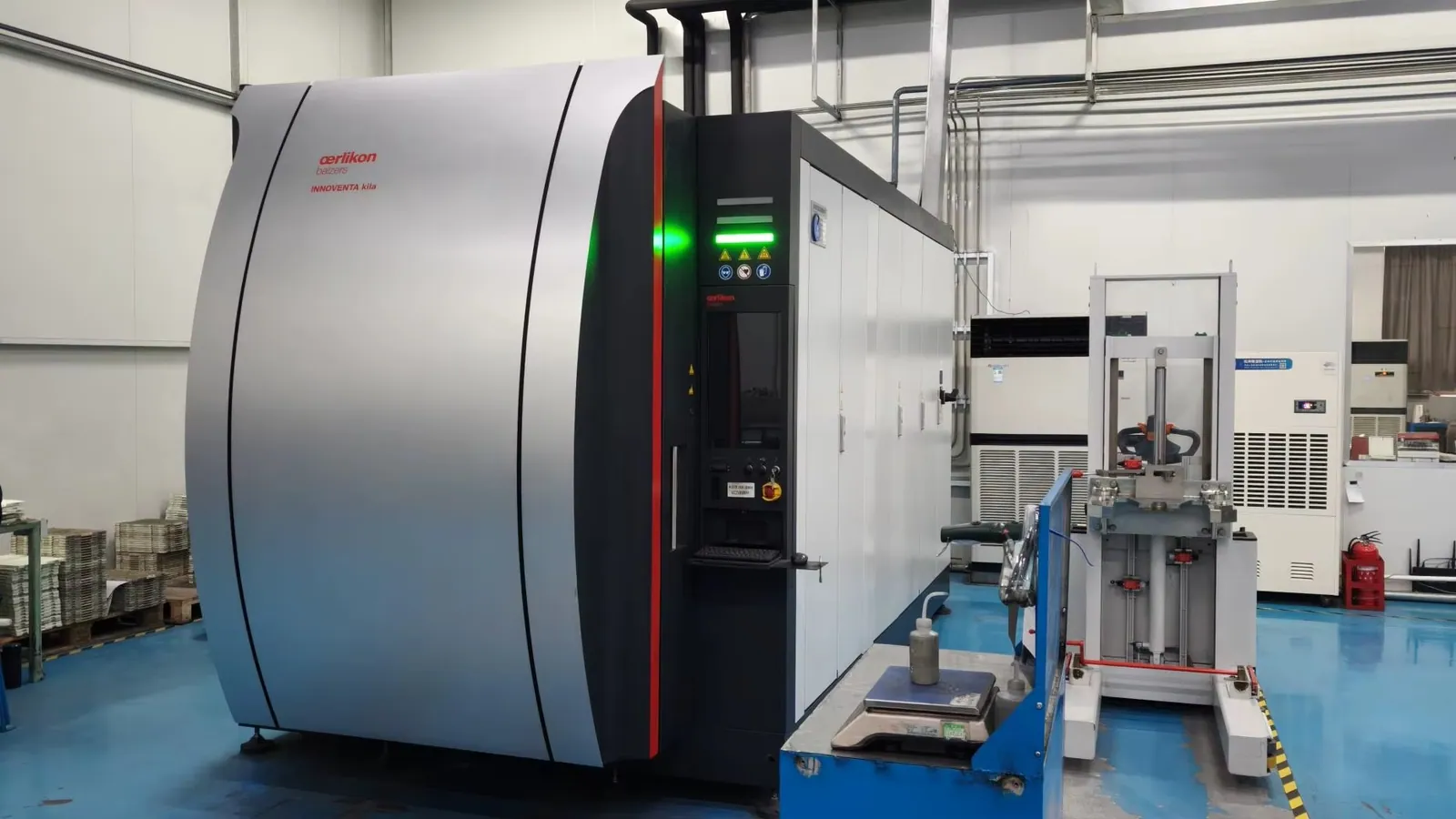
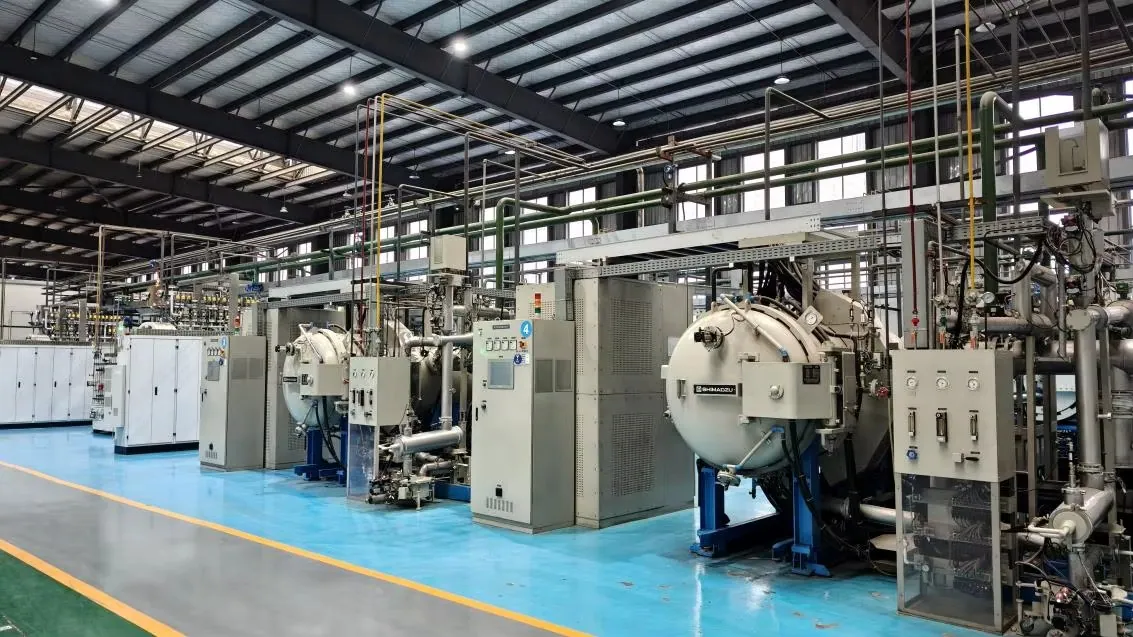
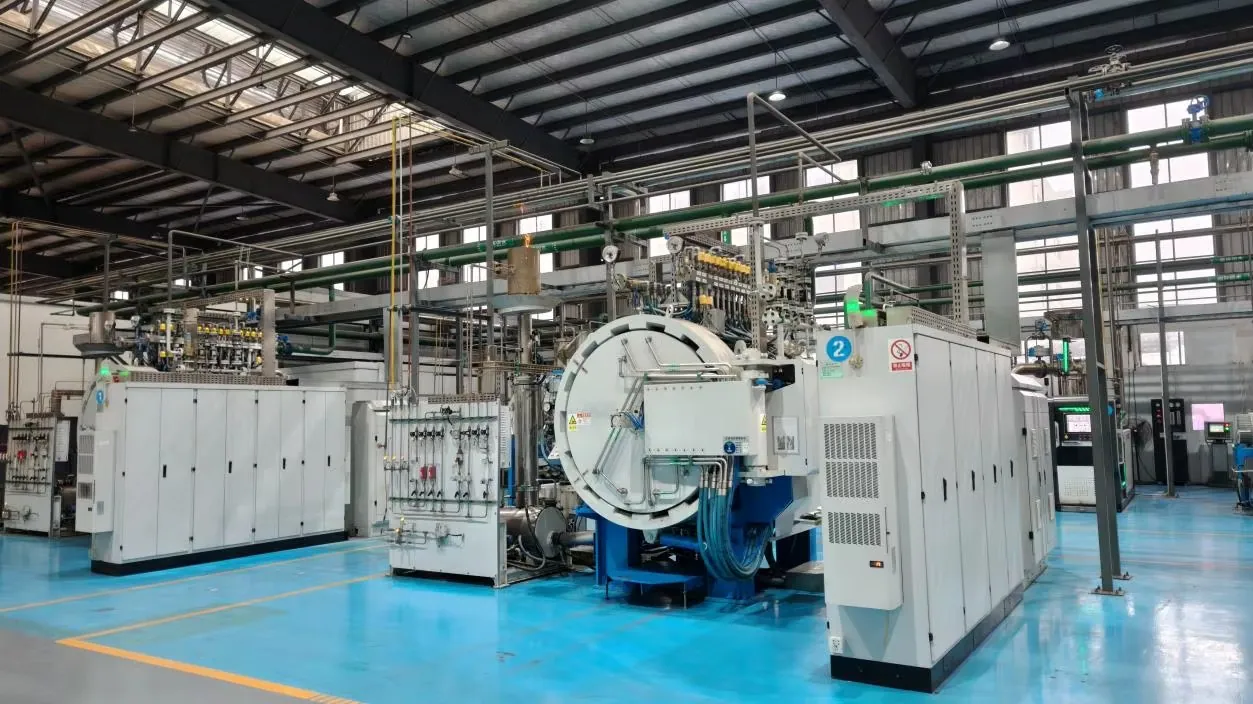
        The following factory images come from the supplied carbide-burr production library and are shown as capability context, not as unsupported model-specific proof.

        Vacuum sintering workshop from the supplied factory library
        Sintering WorkshopSupplier-provided equipment context for reviewing carbide production capability.
        Carbide grinding workshop from the supplied factory library
        Grinding WorkshopProduction context for reviewing controlled carbide-head processing.
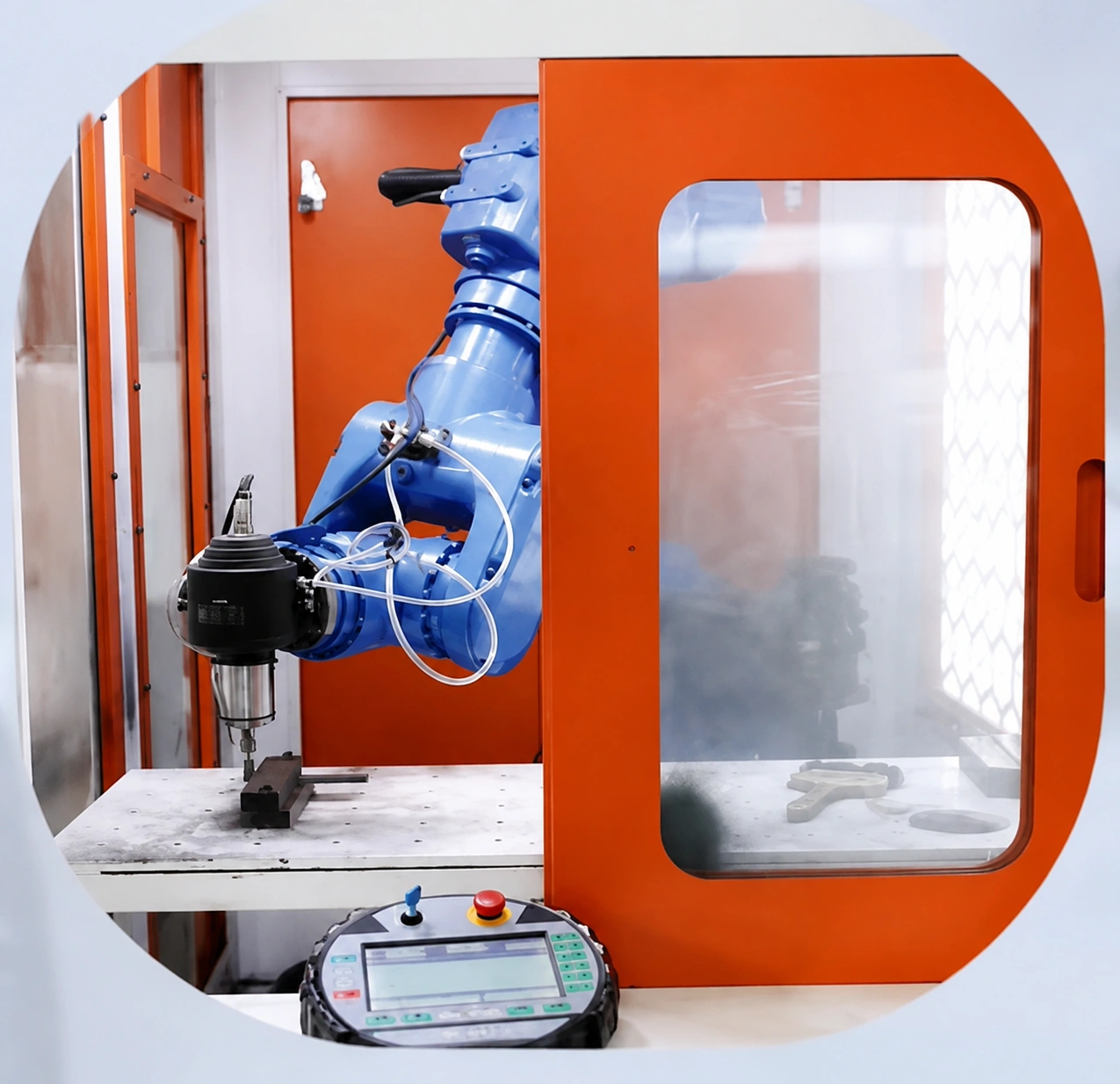
        CNC fluting equipment from the supplied factory library
        CNC Fluting EquipmentFactory image used as process context, without assigning unsupported model-specific tolerances.
        Production machine operator from the supplied factory library
        Production Machine OperationSupplier-provided workshop view for procurement and capability review.
        Industrial coating equipment in the supplied workshop library
        Optional Coating Equipment ContextEquipment context only. A coating is not implied unless the requested product record explicitly confirms it.
        Thermal processing equipment in the supplied carbide workshop library
        Thermal Processing WorkshopSupplier-provided furnace context without assigning unverified cycle data or material performance.
        Vacuum furnace equipment in the supplied carbide workshop library
        Vacuum Furnace WorkshopThermal-processing context for supplier review; exact material and cycle requirements remain product-controlled.
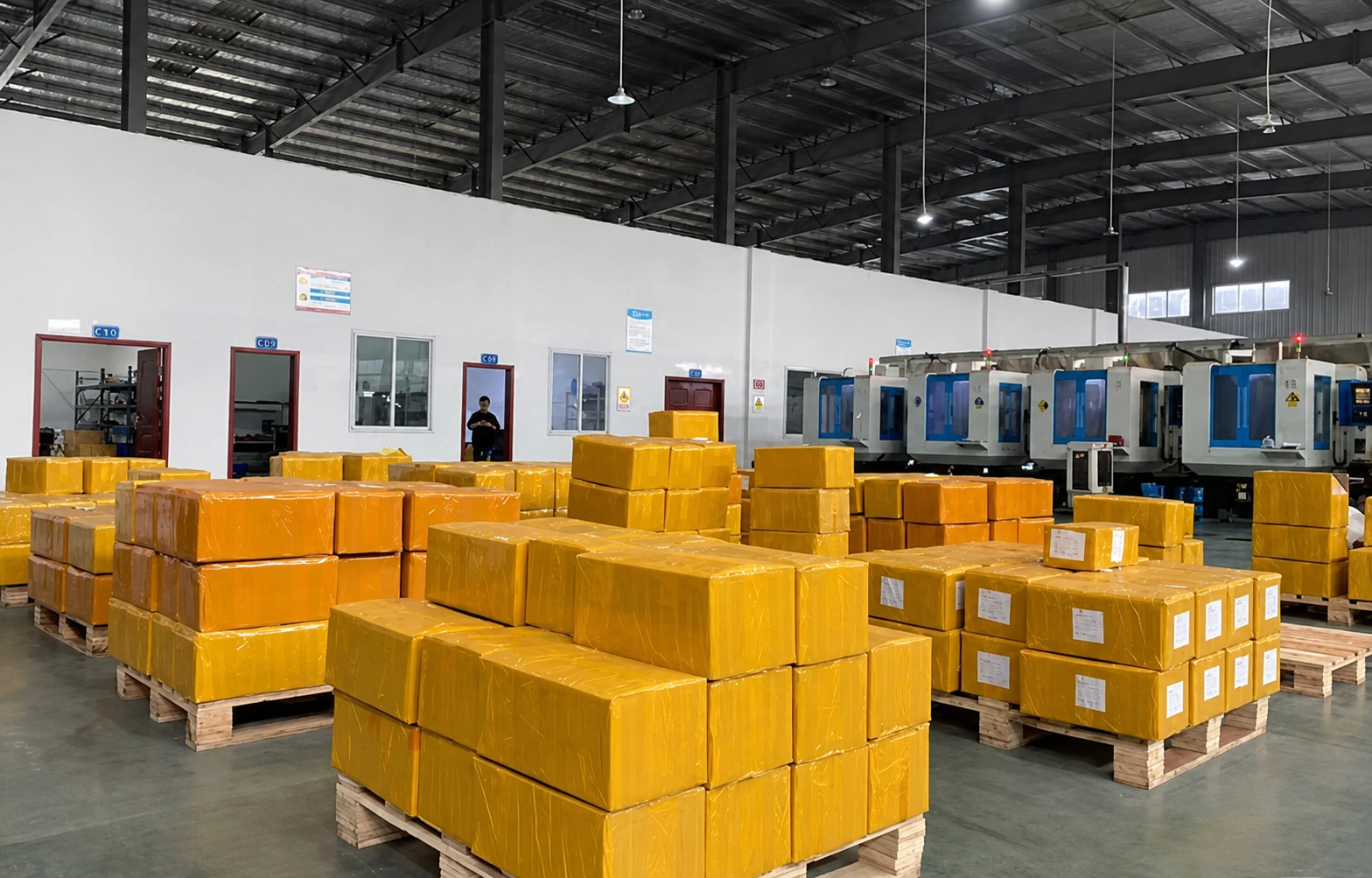
        Packed goods area in the supplied carbide machining workshop library
        Packed Goods WorkshopWorkshop context for reviewing packed-order staging and traceable shipment preparation.
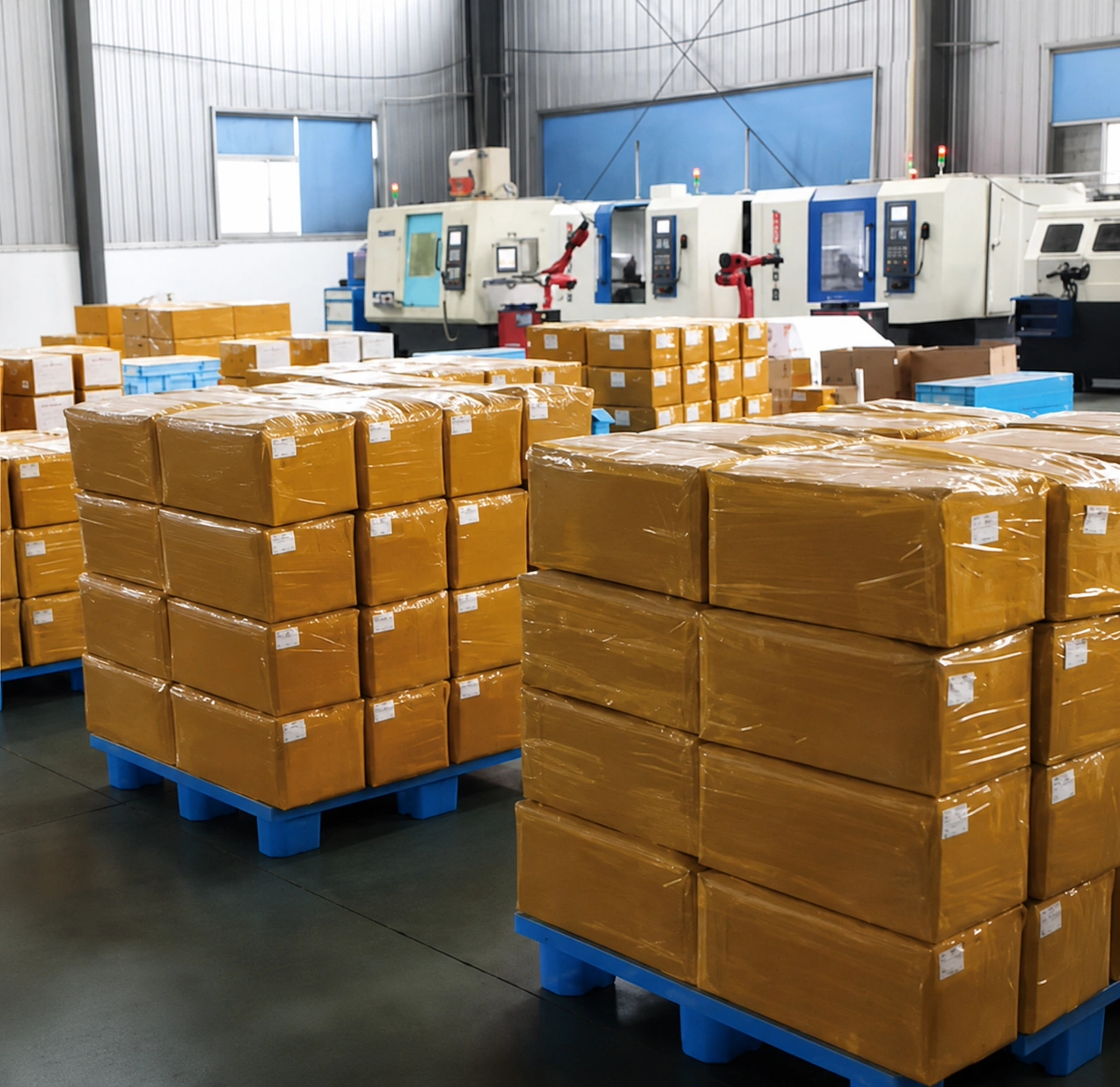
        Packed goods staged in the supplied carbide burr workshop library
        Packed Shipment StagingSupplier-provided packing context for reviewing order identification and shipment preparation.

        Request the production and inspection information relevant to the exact models in your quotation.

        Request Factory Information
        QUALITY CONTROL

        Quality Checks for Bulk Orders

        Inspect head diameter, cutting length, tooth condition, shank diameter, overall length and visible braze coverage. Measure shank straightness and runout on representative samples using a documented fixture and sound reference collet. Cutting trials should use defined stainless material and compare chip formation, chatter, removal rate, heat tint, remaining surface and tooth wear. Periodic joint-integrity checks help identify inadequate brazing or head-separation risk, while protected packaging prevents carbide heads from striking each other in transit.

        Carbide burr dimensional checking context
        Dimensional CheckDimensions are checked against the approved model drawing and purchasing record.
        Carbide burr runout checking context
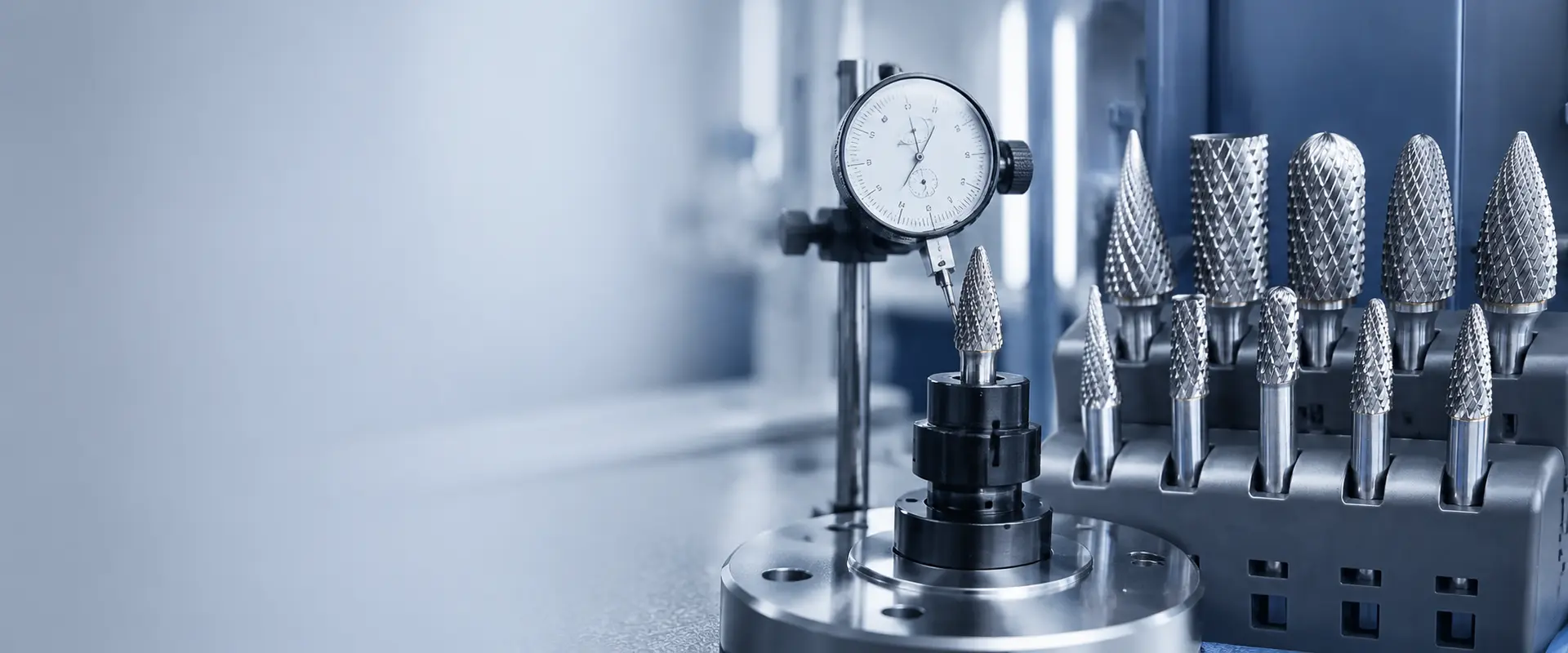
        Runout ReviewRepresentative runout checks use one documented setup and a suitable reference collet.
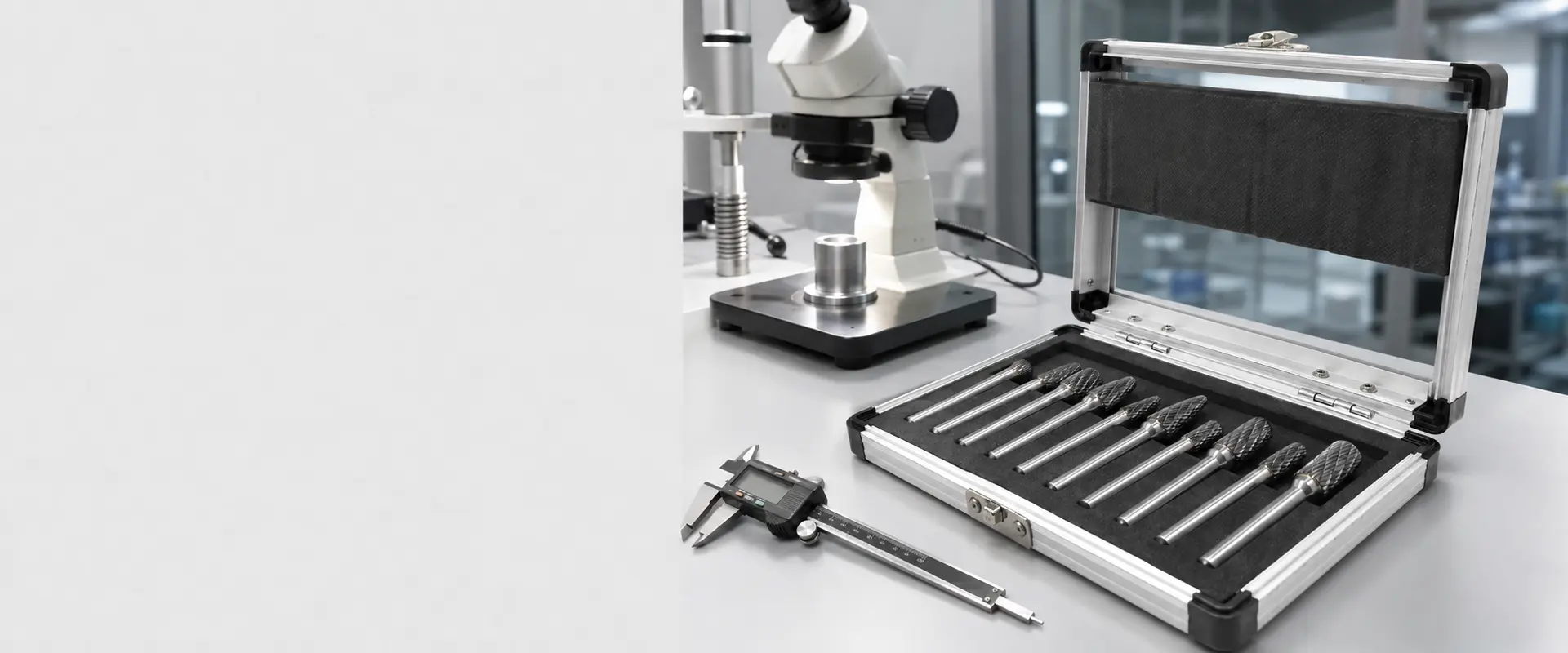
        Metrology tools used for carbide burr inspection context
        Inspection EquipmentInspection methods and acceptance criteria remain tied to the confirmed item specification.
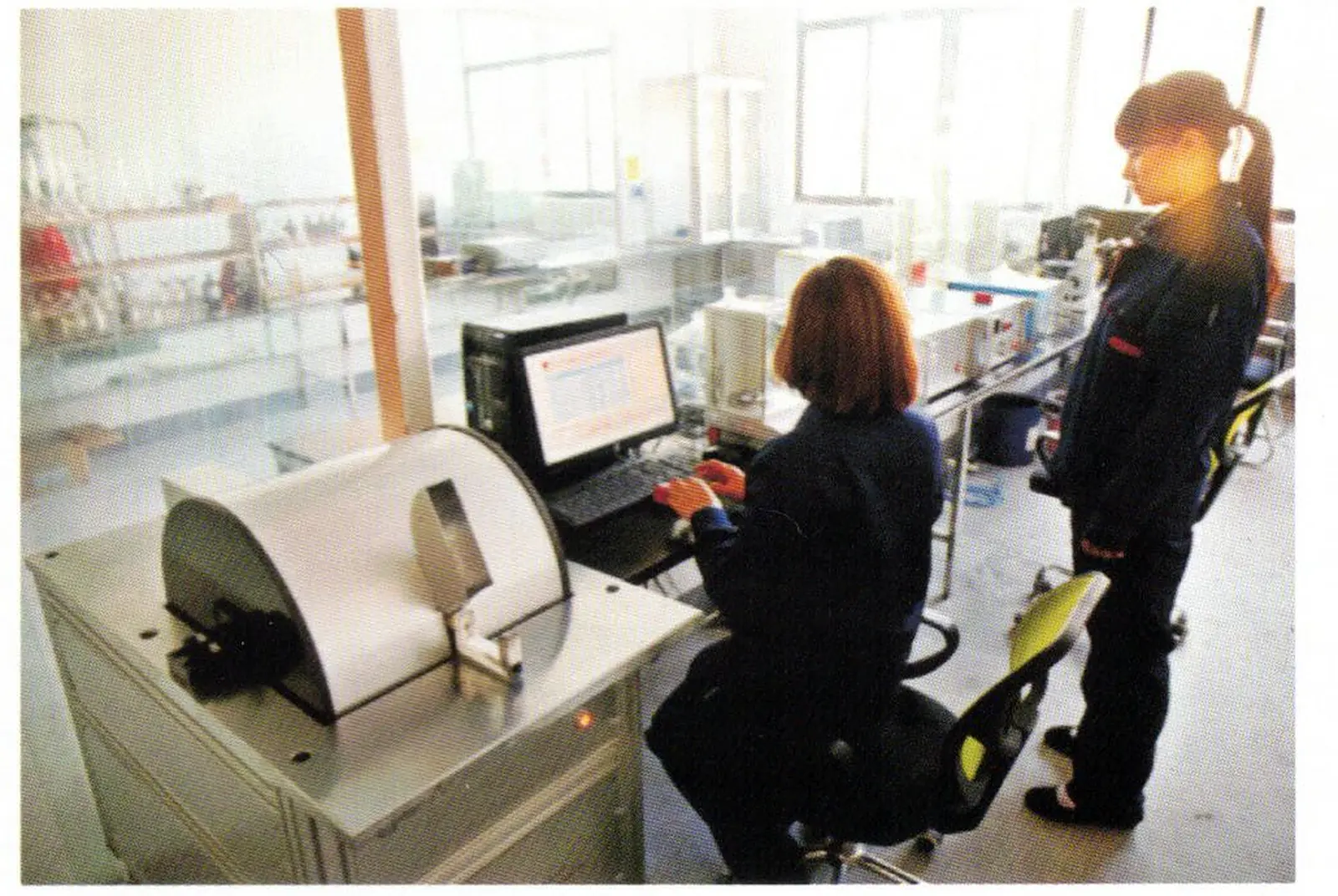
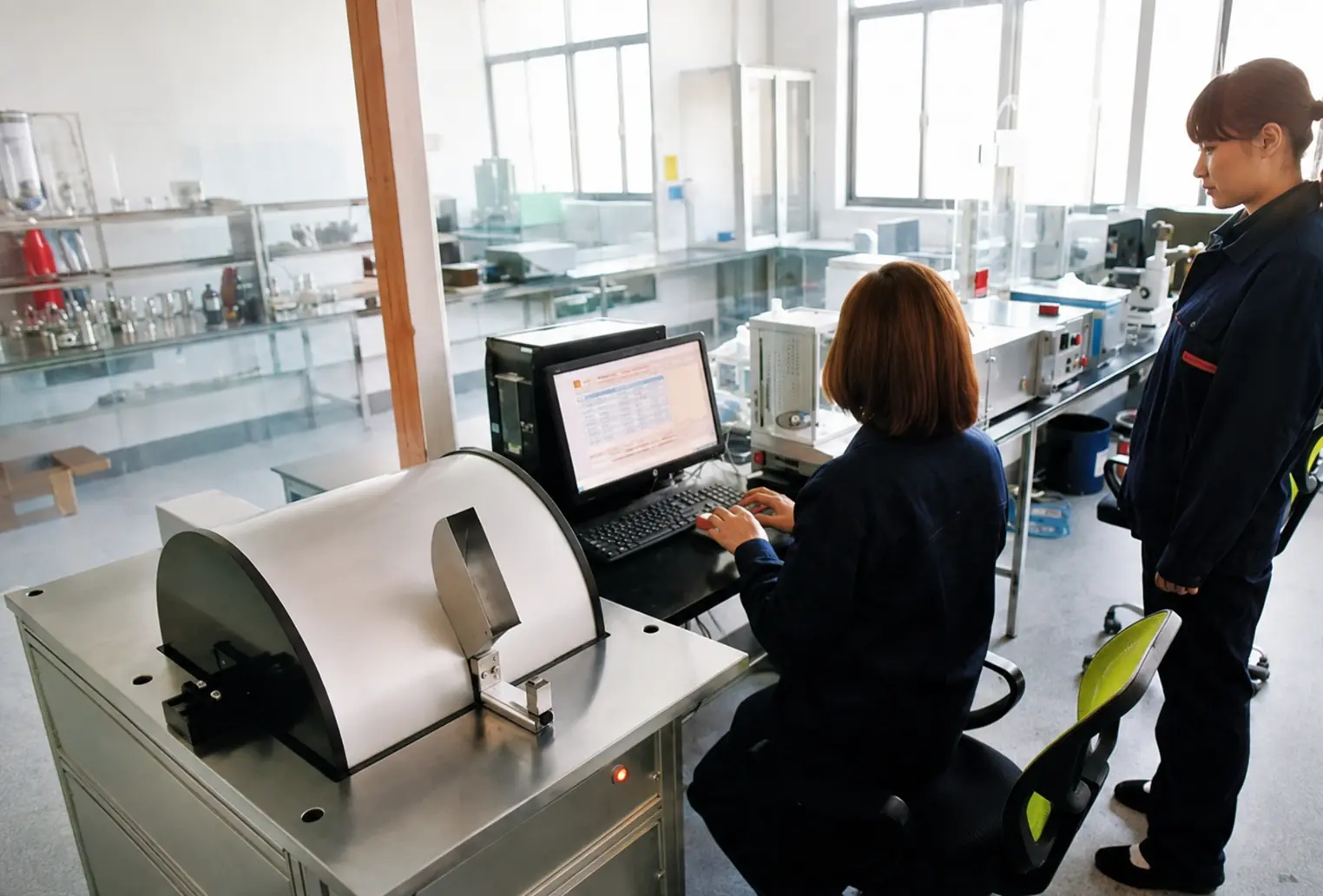
        Quality control laboratory from the supplied factory library
        Quality Control LaboratorySupplier-provided laboratory context for buyer review.
        Testing equipment from the supplied factory library
        Testing ContextTesting scope is confirmed for the requested material, model and order before production.
        Quality inspection room from the supplied factory library
        Inspection RoomFactory inspection context supplied for procurement review and repeat-order control.
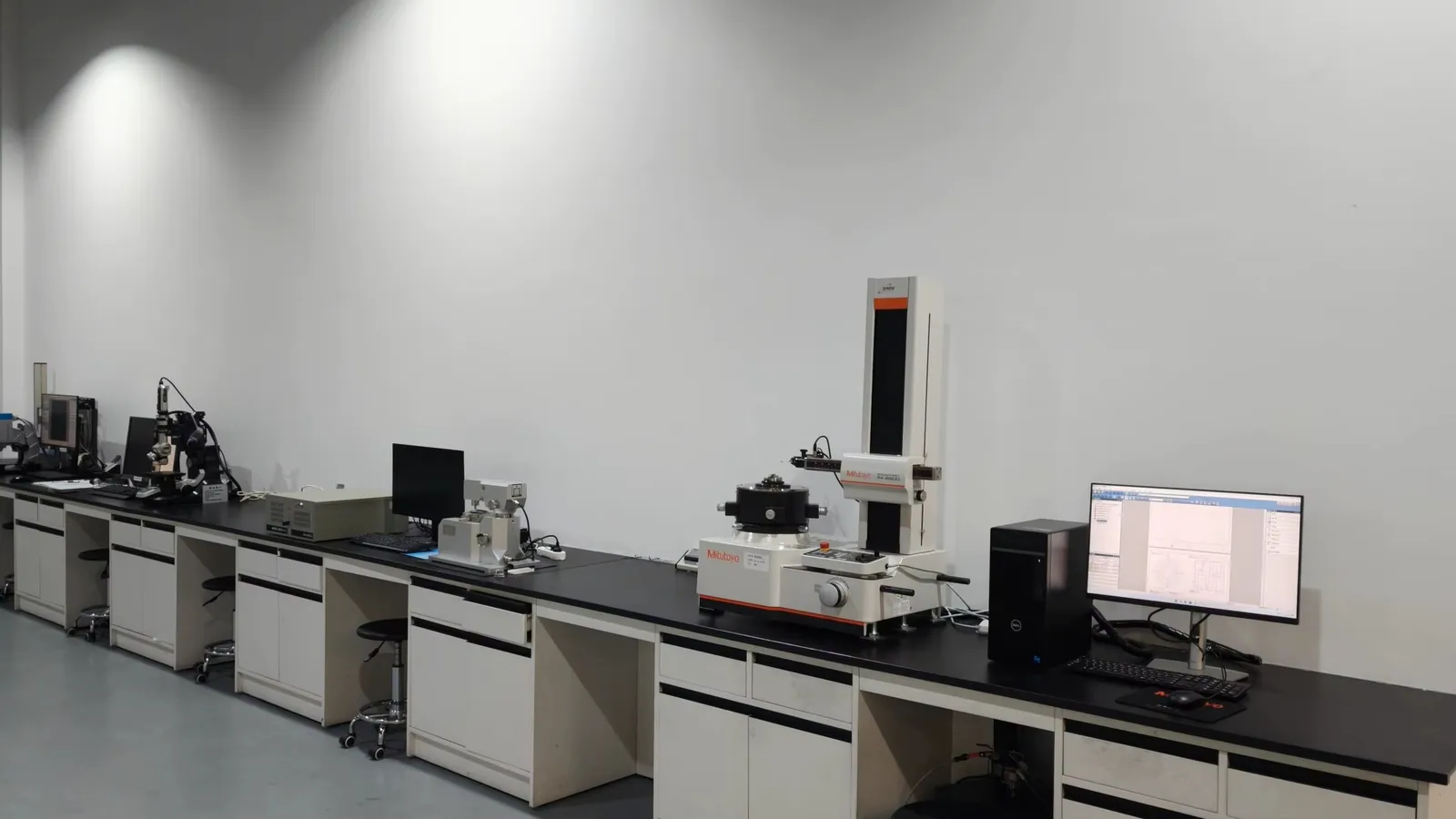
        Metrology laboratory equipment in the supplied inspection library
        Metrology LaboratoryLaboratory context with dimensional and optical measurement equipment, without inferring unsupported acceptance limits.
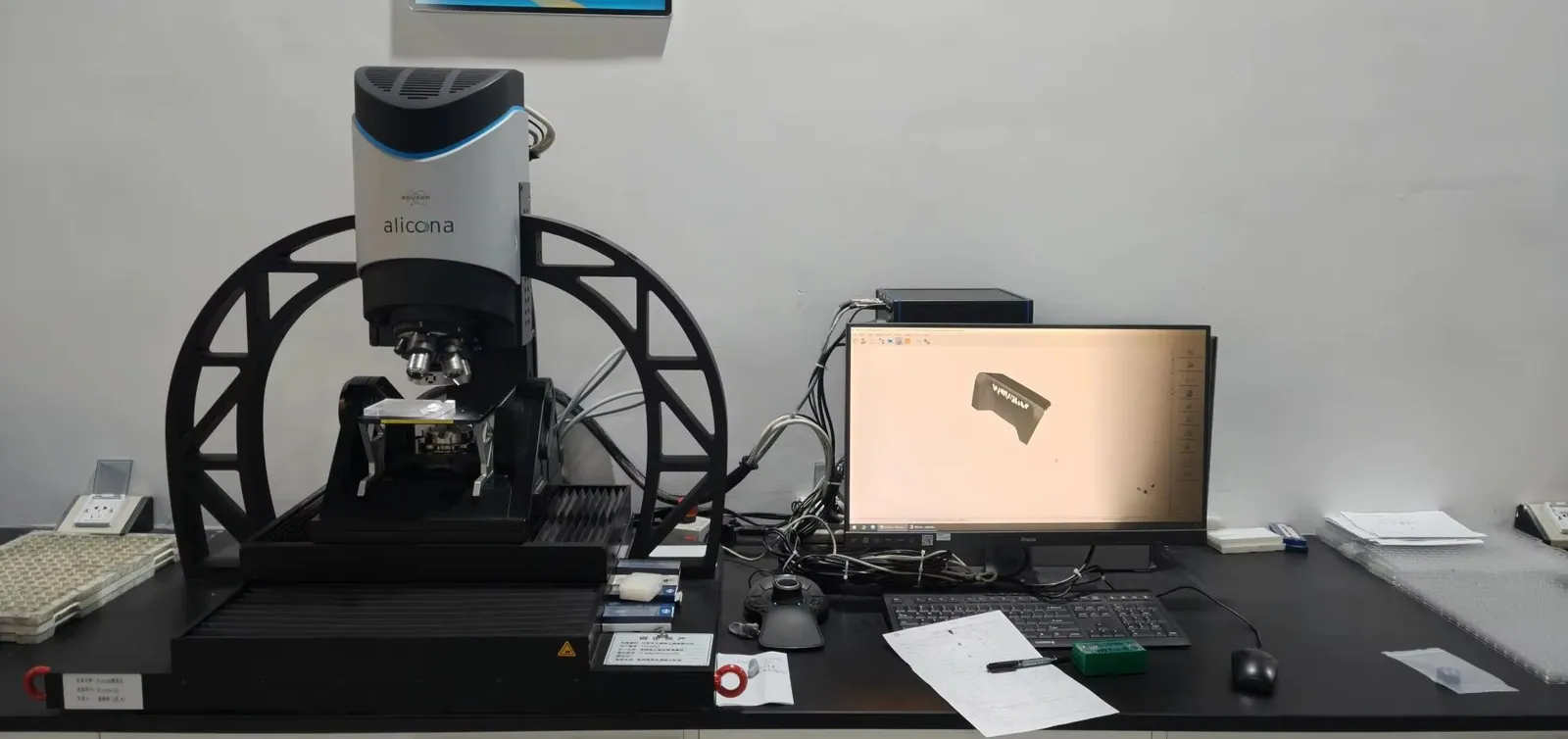
        Optical metrology equipment in the supplied inspection library
        Optical Metrology EquipmentSupplier-provided optical inspection context; no tolerance claim is inferred from the image.
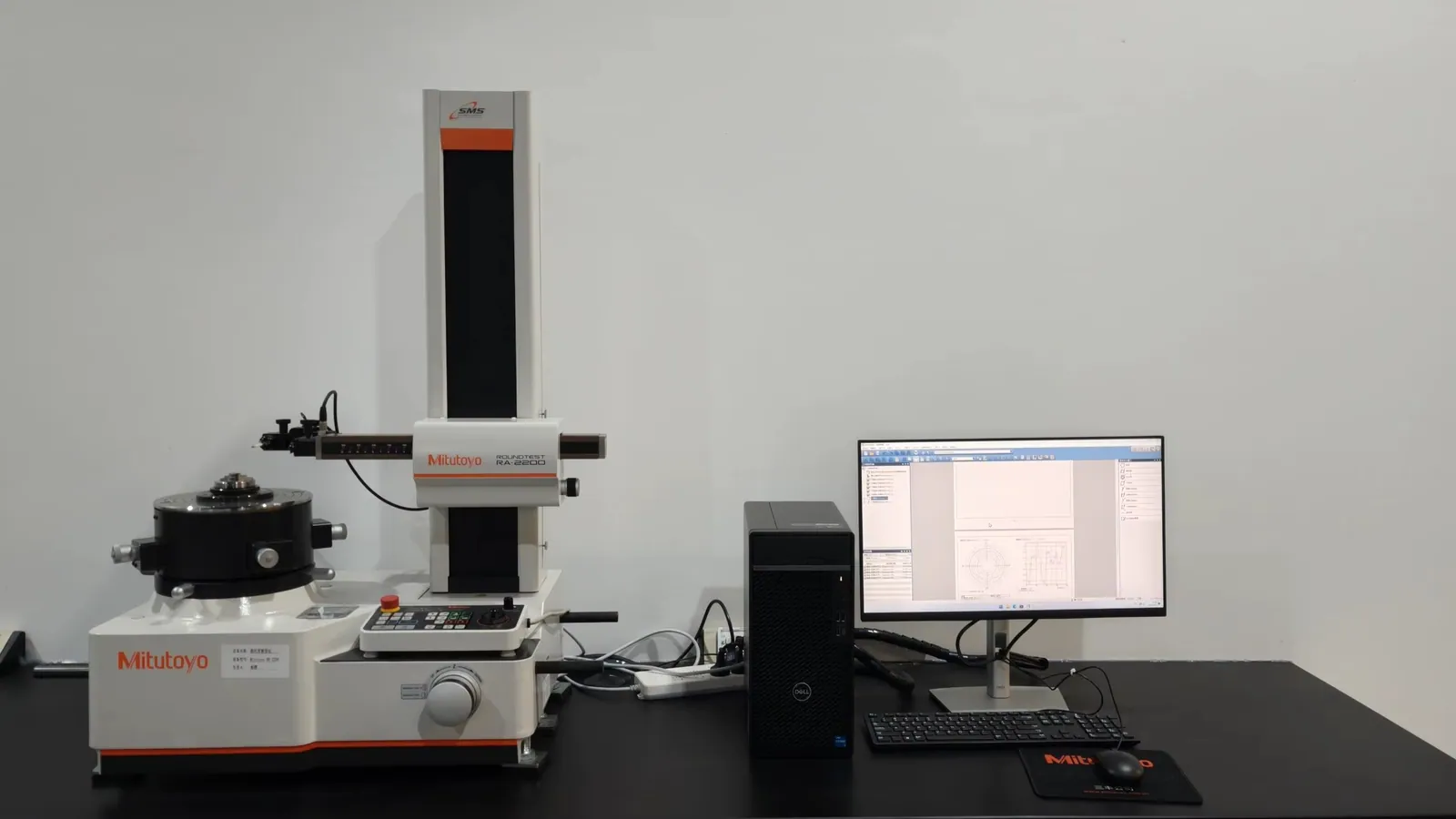
        Roundness measurement equipment in the supplied inspection library
        Roundness Measurement EquipmentMeasurement-system context; the applicable method and acceptance criteria are confirmed for the requested model.

        Confirm the inspection method, sampling plan and acceptance criteria for the requested models before production.

        Request Quality Information
        OEM & PRIVATE LABEL

        OEM and Private-Label Programs

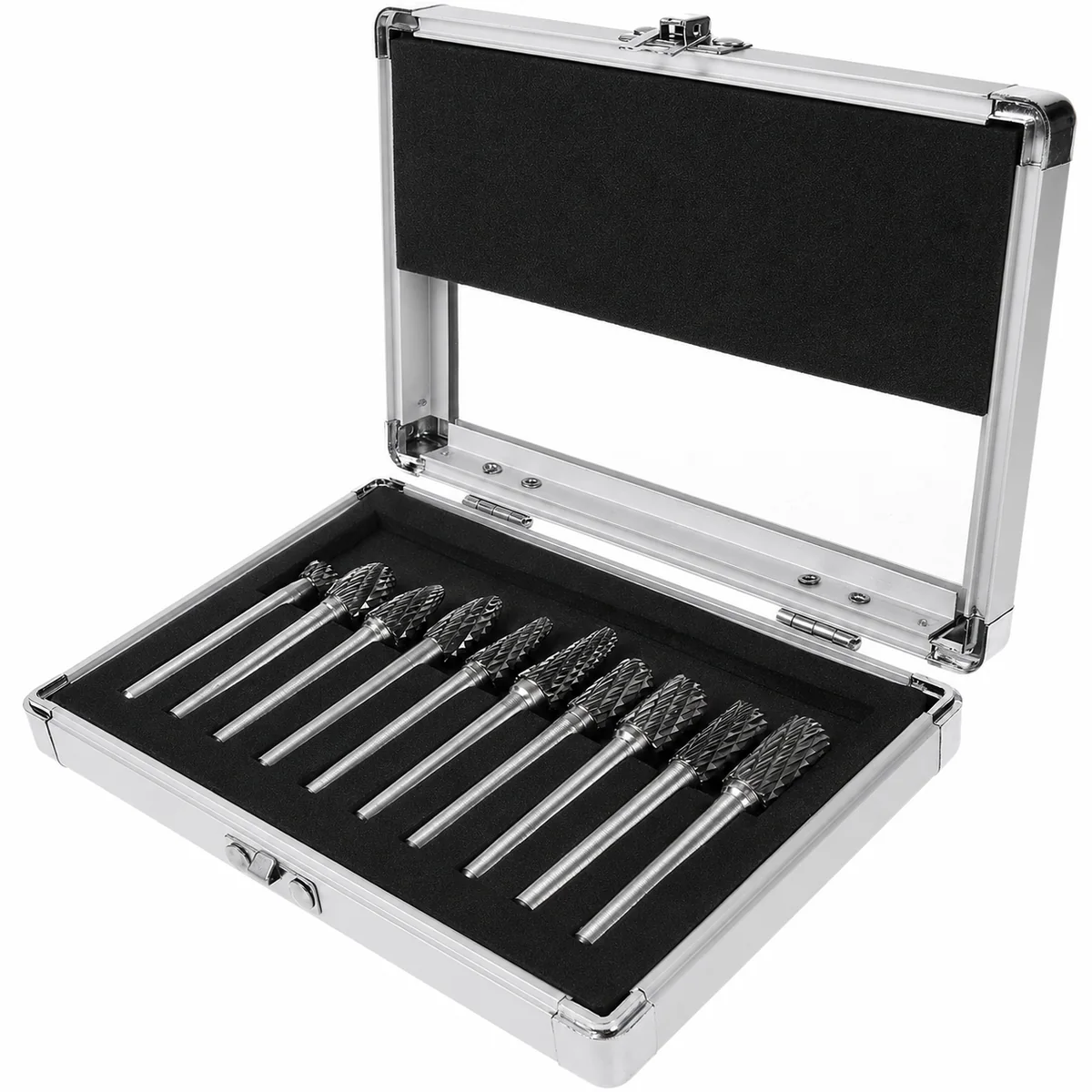
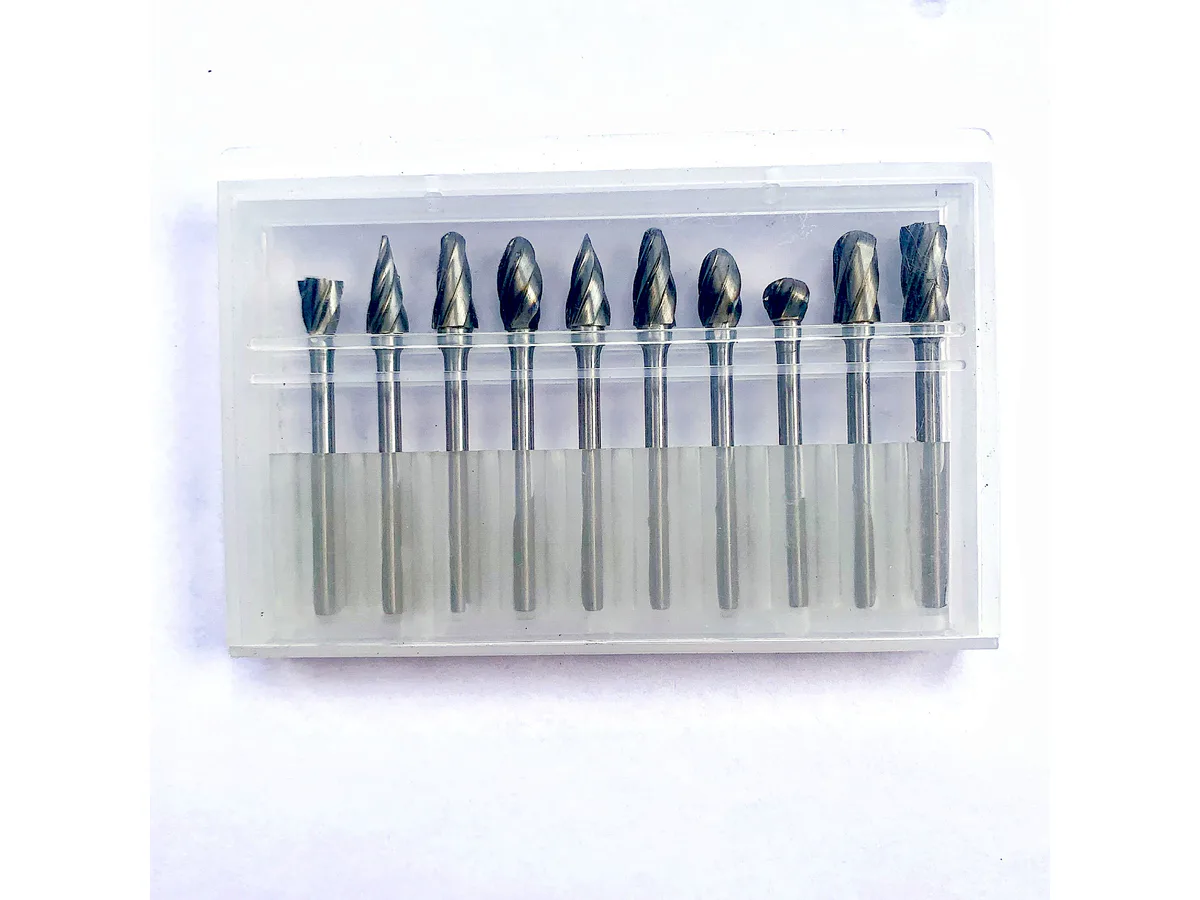
        Carbide burr assortment and packaging options for OEM supply

        OEM supply may include laser-marked model codes, customer logos, individual protective packs, barcodes, colour-coded labels and multi-piece assortments. Packaging claims should match the stainless grades and applications actually covered by the approved samples. If the range includes standard and extended-shank models, the label and instructions must distinguish their operating limits. Retain one approved sample and its specification record for repeat-order comparison.

        • 6 mm and 10-12 mm double-cut cylinders for…
        • Ball and oval profiles for internal radii and…
        • Tree and flame profiles for weld toes, fillets…
        • A smaller-diameter group for sheet-metal holes, slots and…
        • Individual replacement SKUs for every piece included in…
        • Separate stainless-use identification where contamination control is required
        Discuss OEM Requirements
        PACKAGING OPTIONS

        Protect the product identity and the carbide heads

        Confirm the case, insert, item code, barcode, artwork and replacement-model record for the exact assortment in the quotation.

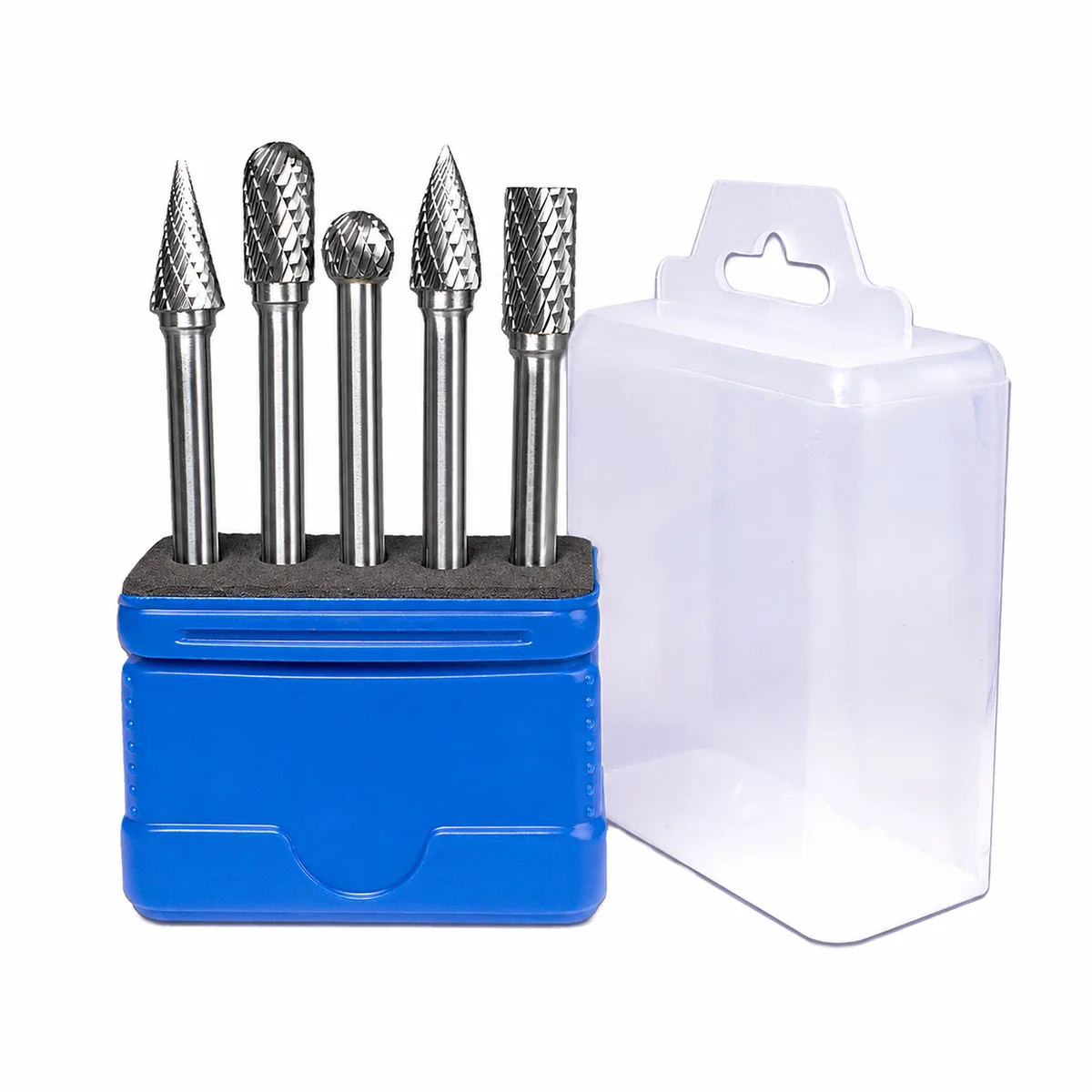
        Carbide burr assortment in blue holders
        01

        Individual Holder Identification

        Keep each burr position connected to the approved shape, cut and dimension reference.

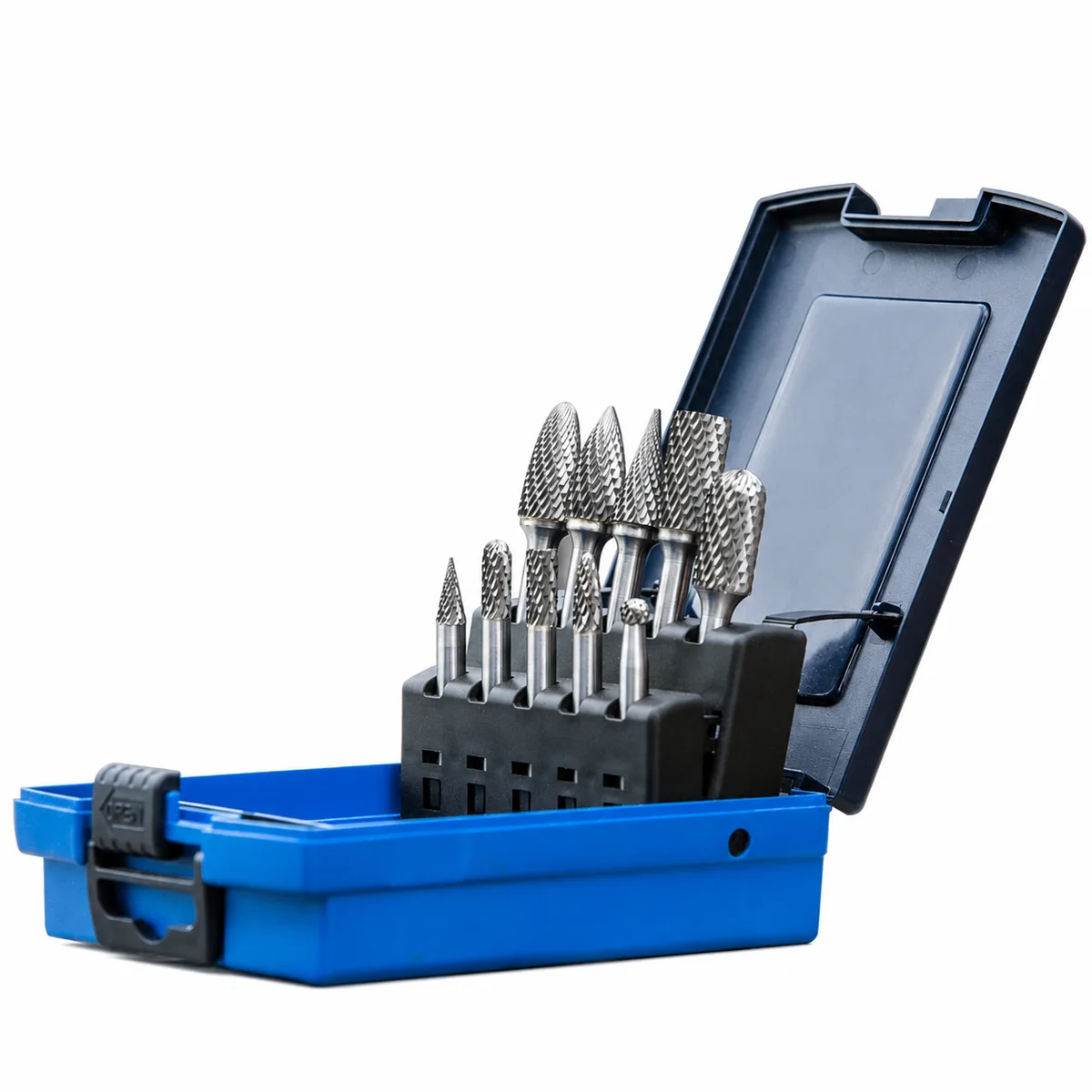
        Carbide burr assortment in a protective blue tool case
        02

        Protective Set Case

        Confirm the set layout, replacement model list and label information before production.

        Carbide burr assortment in a black protective case
        03

        Distributor Set Packaging

        Organize the assortment around real buyer applications instead of an arbitrary piece count.

        Carbide burr assortment in a protective presentation case
        04

        Private-Label Presentation

        Artwork, barcode, marking and carton requirements remain linked to the approved model matrix.

        BUYING CHECKLIST

        Information Required for an Accurate Quotation

        01Stainless grade and material condition, including weld or heat-affected area
        02Operation, stock-removal target and required remaining surface
        03Component drawing, weld photograph or access dimensions
        04Required SA-SN shapes, head diameters and cutting lengths
        05Cut preference or an approved comparison sample
        06Shank diameter, overall length and grinder type
        07Sample quantity, first order and estimated annual demand
        08Laser marking, barcode, set layout and packaging requirements
        B2B BUYER FEEDBACK

        What B2B buyers say about Carbide Burrs for Stainless Steel

        Authorized customer names, roles and portraits are matched to the relevant product-series review library.

        Carbide Cutting Tools · OEM / Private Label

        Private Label Support That Saves Time

        When I assess a new supplier as a private label buyer, I look for details that will still matter after the first order. We were not looking for a generic product only. Aximet Tools was practical when discussing laser marking, labels, packaging, sets, and distributor-brand presentation, and the customization process stayed organized even with B2B order details to manage. It is the kind of cooperation that helps a buyer build a category instead of constantly changing suppliers.

        David Johnson, Private Label Buyer
        David JohnsonPrivate Label Buyer
        Carbide Cutting Tools · Assortment / Range Planning

        A Practical Range for Wholesale Buyers

        For our business as a category manager, the supplier has to support both the product and the commercial process. Our goal was to build a useful assortment rather than stock every possible SKU. Aximet Tools helped us focus on core professional cutting tools selected around real industrial applications and repeat demand and left room to expand later, which is a practical approach for managing inventory. It is the kind of cooperation that helps a buyer build a category instead of constantly changing suppliers.

        Hanna Lindgren, Category Manager
        Hanna LindgrenCategory Manager
        Carbide Cutting Tools · Packaging / Logistics

        Export Packaging That Supports Distribution

        As an industrial supply buyer, we evaluate suppliers on the full buying experience, not just the quotation. For imported carbide cutting tools, packaging affects total cost and dealer experience. Aximet Tools paid attention to edge protection, clear identification, individual packs, and organized export cartons, making the goods easier for a warehouse and downstream distributor to handle. It is the kind of cooperation that helps a buyer build a category instead of constantly changing suppliers.

        Kevin Harrison, Industrial Supply Buyer
        Kevin HarrisonIndustrial Supply Buyer

        Want a range structured around professional customer demand?

        Discuss Your Product Range
        B2B FAQ

        Carbide Burrs for Stainless Steel: Frequently Asked Questions

        01What information should importers provide for a stainless-steel burr quotation?

        Provide the exact stainless grade, material condition, operation, weld profile or feature, access, removal target and required remaining surface. Add the preferred shape, head diameter, cutting length, shank, overall length and grinder type. For OEM orders, include annual demand, model marking, barcode, set layout and packaging requirements.

        02How should distributors compare stainless-steel burr samples?

        Use the same stainless grade or production coupon, burr diameter, grinder, collet, overhang and operating method. Record removed volume, cycle time, chip formation, chatter, heat tint, surface result and visible tooth wear. A freehand trial without controlled inputs can hide runout or operator differences and is not a reliable basis for approving a bulk order.

        03Should burrs used on stainless steel be kept separate from carbon-steel tools?

        Yes, when the fabrication standard requires contamination control. Mark and store stainless-use burrs separately, avoid qualifying them on carbon-steel coupons, and keep packaging clean. This reduces the risk of transferring ferrous particles to stainless surfaces and makes workshop tool control easier for the end user.

        04Which carbide burr is best for stainless steel?

        There is no single best model for every stainless job. A sharp, concentric tungsten-carbide burr with a stainless-qualified cut and a shape matched to the contact area is the correct starting point. Double cut is often preferred for controlled deburring and weld cleanup, but grade, head diameter, access, removal target and finishing requirement must be confirmed by trial.

        05Should buyers use single-cut or double-cut burrs on stainless steel?

        Double cut is usually the safer general-purpose choice because it divides chips and gives the operator more control on edges, welds and contours. Single cut can remove stock aggressively on open surfaces, but it may leave a coarser pattern and demands stable handling. Buyers should compare both only under the same material and operating conditions.

        06How can heat discoloration and work hardening be reduced during deburring?

        Keep the burr cutting instead of rubbing: use a sharp tool, the approved diameter-based RPM, stable but not forced pressure, continuous movement and limited dwell. Reduce unnecessary contact width, clear chips and use an approved coolant or cutting lubricant where the fabrication specification permits. Stop and correct the setup if the tool polishes or squeals without producing chips.

        07Which speed range is suitable for different burr diameters?

        For short standard-shank burrs on harder stainless work, conservative starting windows are about 27,000-37,000 rpm for 3 mm heads, 13,000-19,000 for 6 mm, 10,000-14,000 for 8 mm, 8,000-11,000 for 10 mm, 7,000-9,000 for 12 mm and 5,000-7,000 for 16 mm. The burr and grinder maximum ratings always override these starting references, and extended shanks require lower limits.

        08Are these burrs suitable for weld removal on stainless-steel fabrications?

        Yes. Suitable shapes and cuts can reduce stainless weld beads, clean weld toes and correct local starts, stops or mismatch. The burr is normally a controlled stock-removal tool, not the final finishing step. Buyers should confirm the parent-material allowance, access, heat-tint limit and required abrasive or polishing sequence after burr work. Request the Stainless Burr Model Matrix | Get an OEM Quotation
        REQUEST A QUOTE

        Request the Stainless Burr Model Matrix

        Build a stainless-qualified burr range for weld cleanup, edge deburring and controlled stock removal - with cut options, diameter-based operating guidance and OEM identification for repeat industrial supply.
        • Stainless grade and material condition, including weld or heat-affected area
        • Operation, stock-removal target and required remaining surface
        • Component drawing, weld photograph or access dimensions
        • Required SA-SN shapes, head diameters and cutting lengths

        Chat on WhatsApp