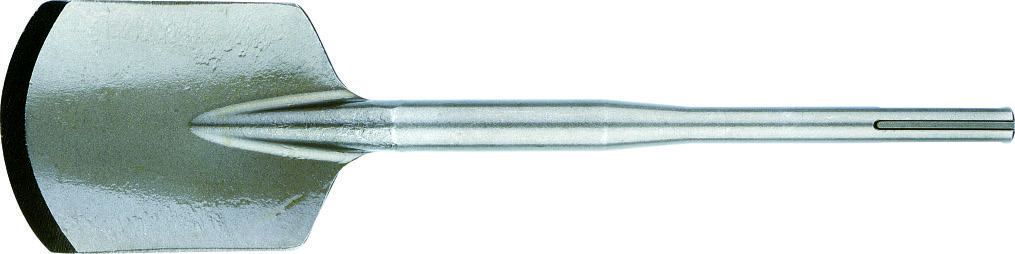
SDS Max Clay Spade
A broad digging head for clay and soil work, with one clearly defined SDS Max configuration.
The AXIMET SDS Max clay spade has a 450 mm overall length and a 110 mm working width. Its shovel-shaped head is intended for digging and loosening clay and soil with a suitable chiselling hammer. This is a defined size and connection, not a combination of all the spade shapes appearing in a wider accessory range. For importers and construction-tool suppliers, the main selection questions are the soil condition, access and hammer—not whether a broad tool can be described as a “spade”. A clay spade, a pointed breaking chisel and an asphalt cutter have different working forms.
- 450 mm listed overall length.
- 110 mm listed working width.
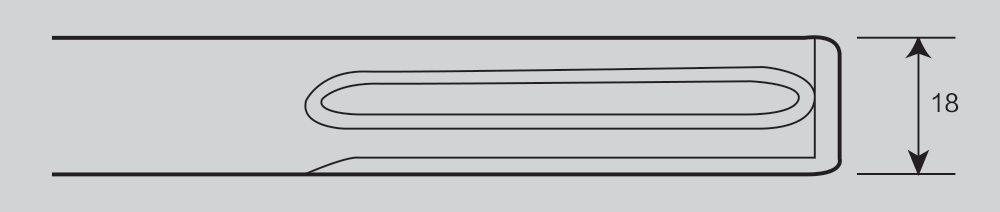
- SDS Max connection with an 18 mm shank diameter.
- Shovel-shaped head distinguished from point chisels, scaling blades and asphalt cutters.
Holder Compatibility
This configuration uses SDS Max. Select a hammer with the corresponding holder and the permitted non-rotating chiselling operation. An SDS Plus holder is a different connection.
Machine suitability also depends on its permitted accessory and task. Describe the actual digging setup in the enquiry instead of treating the 110 mm head width as proof of machine capacity.
Check the SDS Max connection against the machine holder and the permitted impact-only operation.
Specifications and Order Configurations
All listed lengths and widths are in millimetres. Each row is a separate configuration.
| Interface / body | Working form | Overall length (mm) | Blade / head width (mm) | Enquiry |
|---|---|---|---|---|
| SDS Max | Clay spade | 450 | 110 |
The steel chisel body and the working profile are distinct from the holder connection. The SDS Max shank diameter is 18 mm.
Spade Head Geometry and Working Reach
450 mm overall length from working end to shank end. 110 mm working width across the head.
The head presents a broad digging face rather than a narrow tip or straight scaling edge. The head-to-shaft transition and the clearance around the shovel-shaped end matter when the tool is used near a trench wall or another obstruction.
The steel tool’s 110 mm working width describes the head, while the 18 mm dimension describes the SDS Max shank. Keep those dimensions separate in the item description and pack label.
Treat the catalogue row as a complete configuration
| Buyer field | Listed item or decision |
|---|---|
| Holder connection | SDS Max |
| Overall length | 450 mm |
| Head width | 110 mm |
| Working form | Clay spade |
| Soil and access | Describe the actual layer, opening and machine position |
| Order quantity | State the quantity of this complete configuration |
The confirmed row describes one clay spade configuration. If a distributor needs another width, length or connection, state that as a separate requirement. A photograph of a spade-shaped tool with a similar outline cannot establish that it shares the shank or dimensions. Likewise, an SDS Max holder on another chisel is not proof that the spade's head or reach meets the task. Keep the holder, length, width and form together in the approved line description.
Check the machine's instructions for use of the accessory and the prescribed chiselling mode. Provide the exact model rather than only the connection family when asking about suitability. The connection describes how the tool mounts. The soil and contact conditions still determine whether a sample is appropriate for evaluation. Document any project-specific operating limits or restrictions from the machine and site instructions in the brief.
Application Selection
Use the 450 × 110 mm configuration as the starting point for the order. Describe whether the task involves compacted clay, ordinary soil or a mixed ground condition, and identify any hard inclusions or restricted access.
The broad head needs room to enter and move in the working area. Overall length is not a guaranteed excavation depth or usable reach after the shank engages with the holder. Consider the position of the hammer and the width of the available opening.
A shovel-shaped head does not automatically make the tool appropriate for rock, reinforced concrete or asphalt cutting. Keep those tasks separate when choosing the accessory. Other hex-interface spades are also separate configurations; they are not substitutes for this SDS Max item.
Describe the excavation before specifying the tool
A clay spade is selected around a broad spade-shaped head, the access available to that head and the soil condition. For a trench, state the target opening and how the crew can approach it. For an excavation beside a fixed boundary, give the clearance to that boundary and the space available for the hammer body. Describe whether the area is open, whether the work starts from an existing opening and what material should remain. These details help distinguish loosening compact clay at a local face from moving soil that has already been broken up.
The 450 mm listing is overall tool length. It includes the portion inserted into the holder, so use the actual hammer position to assess working reach. The 110 mm figure describes head width. Allow space for the head to enter and withdraw, including any restriction caused by the approach angle. A buyer who measures only the trench width may overlook the clearance needed at the mouth of the opening or around the hammer nose. A simple dimensioned sketch with the intended contact area is more useful than a request for “a long digging chisel.”
Give the supplier a usable soil description
State whether the main layer is clay, compacted soil or a mixed layer. If the work area includes stones, roots, rubble or another obstruction, describe those features separately from the surrounding soil. Name the depth or location of the layer and whether the work starts at an open edge. A close view of the material paired with a wider view of the excavation helps a supplier understand the contact surface and how the machine will be held. Keep conditions from different work areas on separate lines if they affect tool selection.
Describe the outcome expected from the accessory. Loosening soil in a defined area and clearing the loosened material are different operations. State which operation the hammer accessory is expected to perform. If the buyer needs a clean retained boundary, include the dimensions and the acceptable condition after work. Ask the site team to evaluate a sample in a controlled area rather than inferring a result from the catalogue dimensions alone.
For a purchasing trial, use the actual machine and a representative section of the soil. Record where the head must enter, how it clears the opening and whether the installed tool reaches the intended face. Review the material after the agreed trial and record whether the head shape and access suit the intended sequence. If the soil or approach changes in another location, record that as a separate condition. Comparing samples under comparable conditions makes the decision useful for a repeat order.
Clay Spade vs Wide Chisel
Compare a clay spade, wide chisel and point by the contact surface
A spade-shaped head presents a broader face for a soil task. A wide straight chisel is a different choice when the task is to engage a strip of material on an exposed surface. A point gives concentrated contact where the approved work calls for a localized starting break. Identify what the head must do at the material before selecting by width. “Wide chisel” alone does not tell a supplier whether the buyer expects a spade shape or a straight edge.
| Intended contact | Product family to evaluate | Check before approval |
|---|---|---|
| A broader face within an opening in soil or clay | Clay spade | Head outline, opening, reach and withdrawal clearance |
| A straight working strip across exposed material | Scaling or flat chisel according to contact width | Retained base, working edge and access |
| A small starting point in a suitable breaking application | Point chisel | Starting location, machine and intended boundary |
If a buyer has a clay spade in use and wants a matching replacement, provide the original order reference or photographs of the head, body and connection. Include the dimensions measured from the reference tool and identify whether wear has changed the working end. Compare the whole shape with the approved record before treating the replacement as equivalent. Ask for a sample or drawing when the head outline is critical to the excavation clearance.
Manufacturing Process
The manufacturing configuration is a steel clay-spade form with the listed 450 mm length, 110 mm head and SDS Max connection. Keep the head shape and connection together when carrying the product into a distributor or private-label range.
A pointed spade with a different head outline or a hexagonal hammer connection remains a separate item even if a listed length happens to be the same.
Tie manufacturing and inspection evidence to the sample
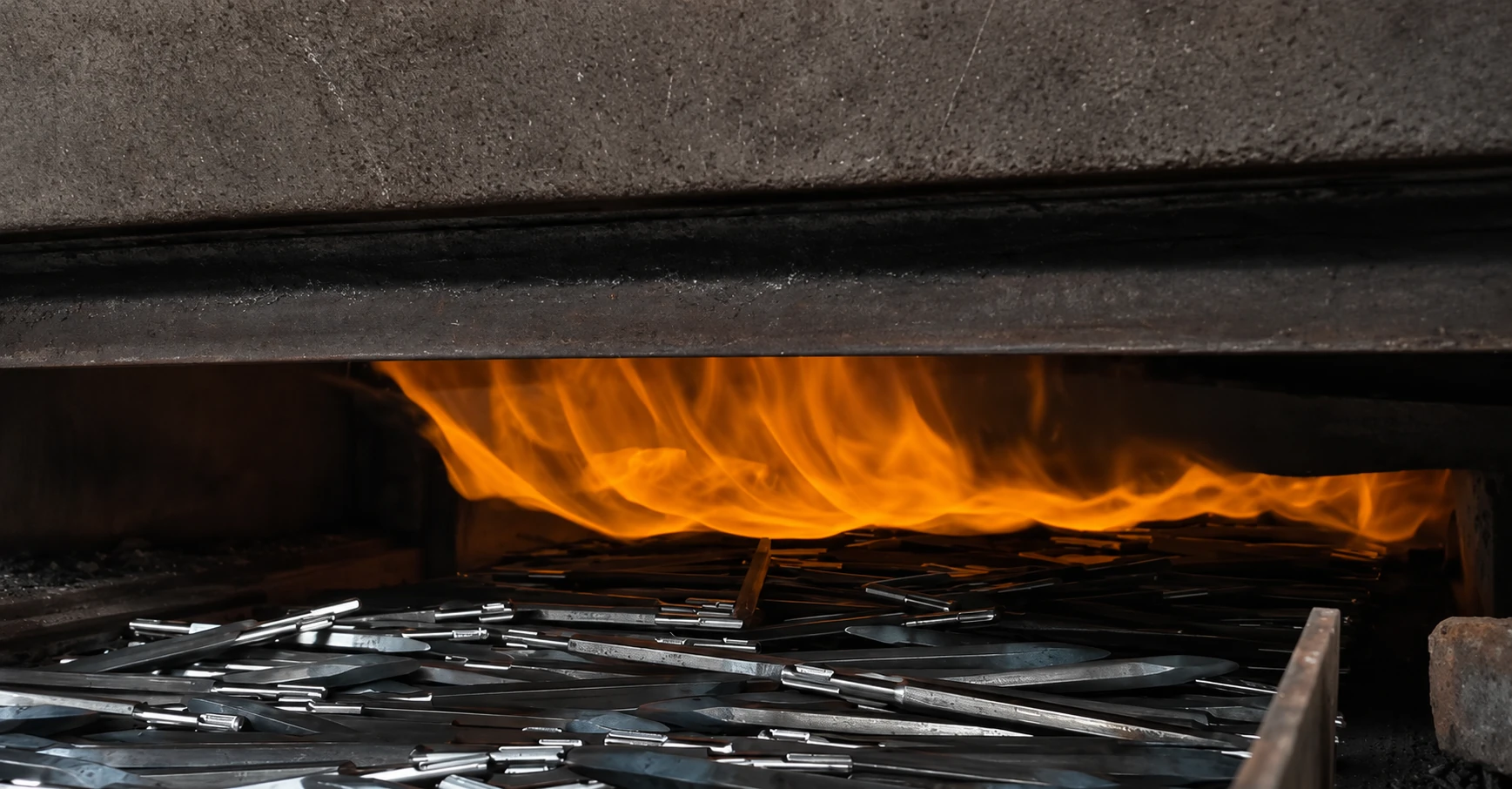
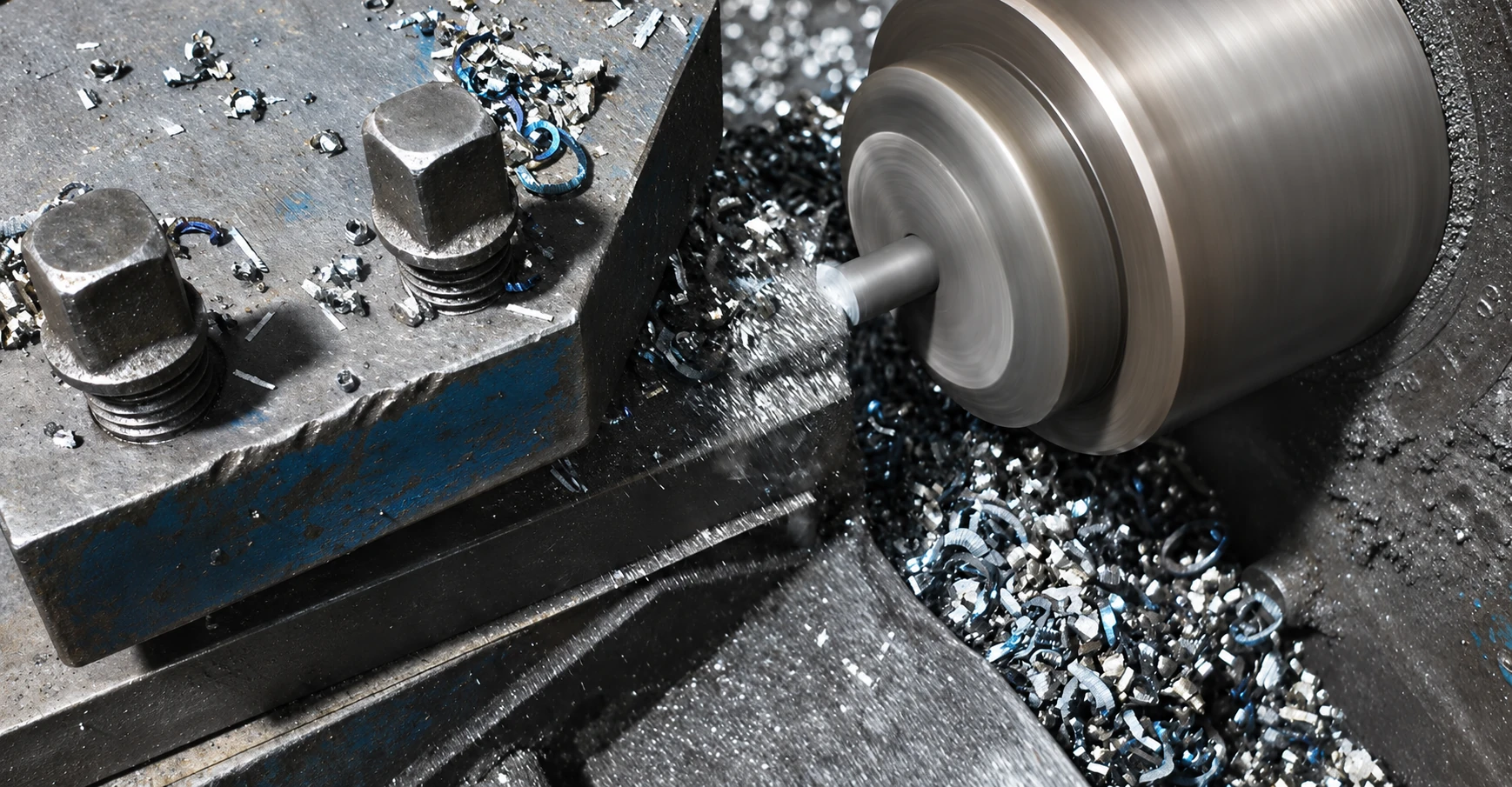
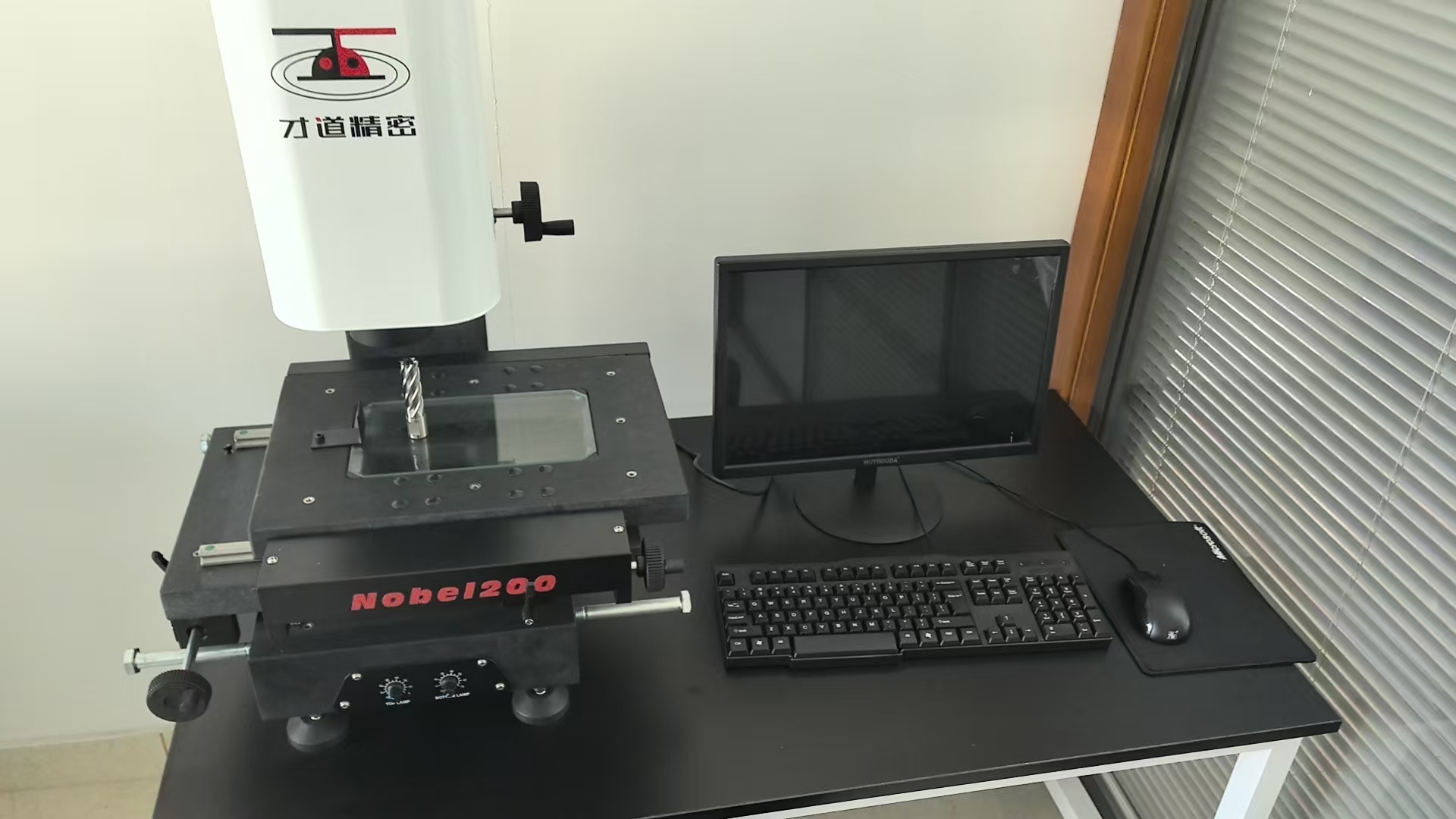
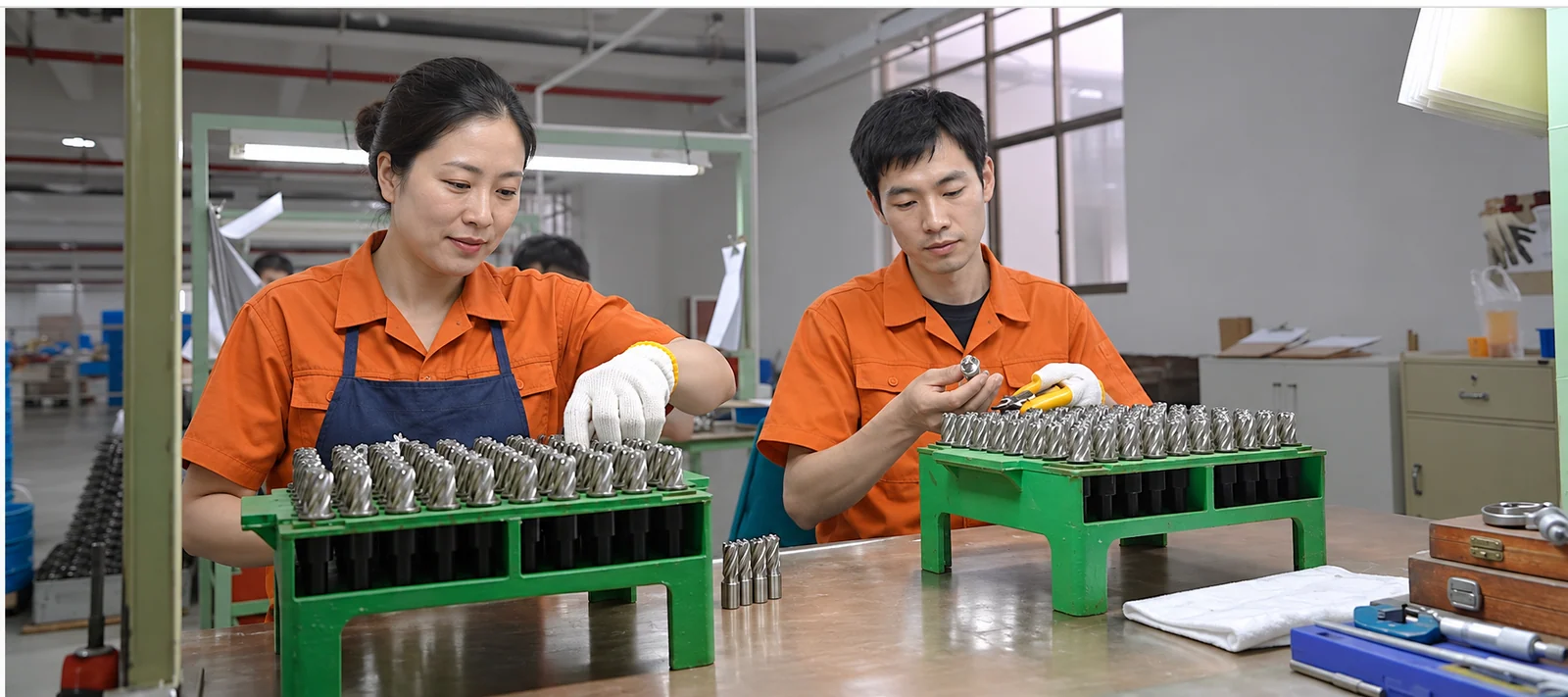
Shared AXIMET factory images show forming, heat-treatment equipment, machining and finishing across SDS and masonry accessories. For a clay spade enquiry, the review should focus on the head outline, the transition from head to body and the holder end. Attach the expected head shape and working width to the selected item. Where a buyer needs curvature or thickness information beyond the catalogue row, request it on an item-specific drawing rather than reading a measurement from a marketing photograph.
Use the accepted drawing or sample for receiving checks. Record where the width is measured and what overall length includes. Check the visible holder form and compare the head with the agreed outline. If a purchase has a documented hardness, material or inspection requirement, state it in the request and ask what records can accompany the sample or shipment. Shared optical, hardness and visual inspection equipment can inform the discussion. The quote or approval record should specify what applies to the chosen product.
Quality Control
For acceptance, compare overall length, working width, head shape, head-to-shaft alignment and the SDS Max connection. Inspect the working edge and transition as part of the complete tool.
A sample trial should record soil condition, access, hammer and intended result. Assess entry and control in the actual ground condition rather than transferring a result from a different soil or hammer.
Review the sample in the order it will be used
Confirm the item label, drawing and actual connection before considering the soil trial. Use the agreed measurement points for length and head width. Next, check the physical access at the opening using the machine and the approved setup. Record the condition of the material and the outcome sought before testing. The resulting sample record should show what was evaluated and what remains to be checked if the excavation conditions change.
A distributor can use this record to support a repeat sale. If a customer wants the same spade for a narrower trench, the accepted sample confirms the item identity but does not confirm the new access. Ask for the new opening and position of the hammer. If the same opening now contains a materially different layer, record the change as a new application condition. Keep this information in the sales note separately from the stocked item specification.
When a buyer needs several sample packs, identify the intended recipient and use for each one in the commercial brief. A sample for fit, a sample for the job and a sample for private-label approval serve different decisions. Ask whether one configuration and pack can cover those decisions or whether the requested packaging must be reviewed separately. Confirm that the final item code still identifies the approved head, shank and dimensions.
OEM & Packaging
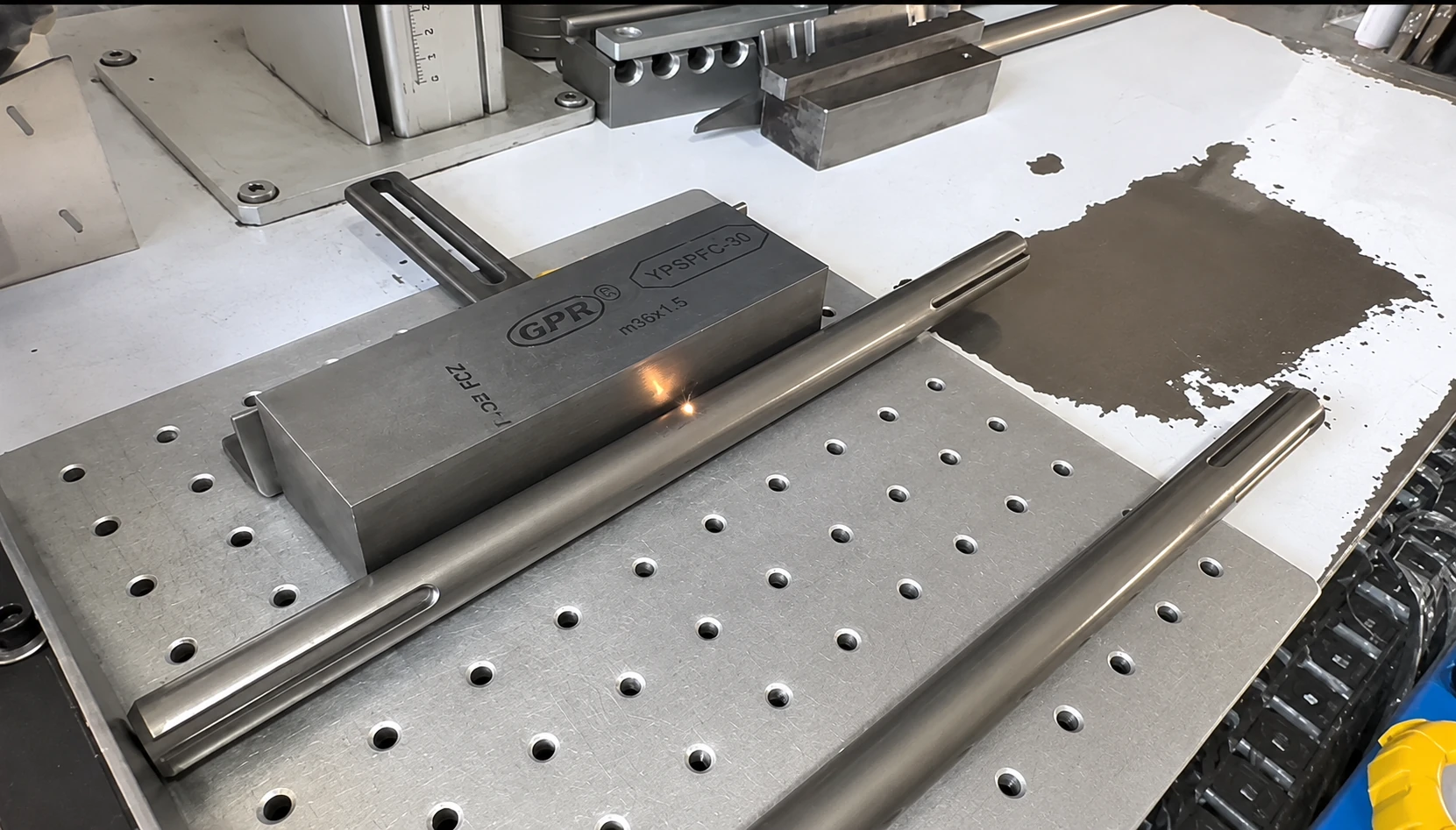
For private-label clay-spade enquiries, retain the 450 × 110 mm size and SDS Max connection in the item description. Identify the proposed marking location and packaging label text. A generic “spade” label should not obscure which digging head and interface the pack contains.
State the required quantity and units per pack, with protection requirements for the broad head. For a wider hammer-accessory assortment, keep the clay spade separately identified from breaking points and asphalt cutters so the tools are not picked by overall length alone.
Order this configuration as SDS Max, clay-spade head, 450 mm overall length and 110 mm working width, followed by quantity. Add the destination, pack units and any branding requirements in the same enquiry.
Specify a distributor order that can be repeated
For a wholesale range, identify the buyers and machine platforms the 450 × 110 mm item is intended to serve. A buyer may carry it alongside point and flat accessories for other work, but each should have its own item and operation description. Confirm the stock label can identify the spade form, SDS Max connection and both dimensions. This makes it easier to answer a later request for the same tool without relying on a broad term such as “shovel bit.”
Separate product marking, packaging and technical information in the enquiry. Provide buyer item references, artwork and language requirements and the desired marking position. State units per inner and outer pack, the desired protection for the head and holder, and whether the product is sold loose or individually packed. Ask for the selected configuration and packing description to appear on the quotation. Review those descriptions with the sample so receiving staff have a reference for both the tool and its label.
If an order is being repeated, include the prior item or sample reference and list any changes to the packaging or marking independently. A label revision need not change the dimensions, and a revised application may warrant a separate sample review. When several buyers share a shipment, keep the product code and quantity attached to each pack specification.
Frequently asked questions
What size is the SDS Max clay spade?
The listed overall length is 450 mm and the working width is 110 mm. It uses an SDS Max connection with an 18 mm shank diameter.
Is a clay spade the same as a point chisel?
No. The clay spade has a broad shovel-shaped working head for digging. A point chisel concentrates contact at a narrow tip for localized breaking.
Can this clay spade be selected for rock or concrete from its shape alone?
No. A shovel-shaped head does not establish suitability for rock or concrete breaking. Select the accessory around its intended task, ground condition and hammer.
Does 450 mm overall length mean 450 mm working depth?
No. Overall length includes the connection portion and is different from usable reach or excavation depth in an assembled setup.
What should a bulk clay-spade enquiry include?
List the SDS Max 450 × 110 mm configuration, quantities and pack units. Add the hammer model, soil condition, access restrictions and any marking requirements.
Get a Wholesale Quote
In the message field, state “SDS Max clay spade, 450 × 110 mm”, quantity, hammer model, soil condition and pack units. Add any head-protection, marking or private-label packaging requirements.
Send the information needed for a clay-spade quote
Include the complete SDS Max 450 × 110 mm clay spade description, quantity and hammer model. Describe the soil layer, the opening or trench dimensions, where the tool must reach and any retained boundary. List the requested sample quantity or inspection requirement separately from production quantity. Include photos or a sketch of the intended work when clearance is a deciding factor. If the requested geometry differs from the listed row, write that on a separate line so the supplier can evaluate it as a distinct enquiry.