Define what custom means before comparing options
For define what custom means before comparing options, record the requirement, controlled source, approval decision and every unresolved field before the purchase is released.
Buyers often use custom for three different scopes: selecting a standard model, applying OEM presentation, or changing technical configuration. Keeping these scopes separate prevents branding choices from overwriting controlled product data.
Within Custom vs Standard Magnetic Drill: Which Is Right for Your B2B Program?, the section “Define what custom means before comparing options” should become a documented procurement check rather than a general discussion. Define the application, named model or configuration, responsible reviewer and controlled source used for the decision. If a value is not present in an applicable product table, quotation or written confirmation, keep it open. A similar name, photograph or headline specification does not prove that two configurations are equivalent. This section primarily controls application and model identity.
Issue the same requirement sheet to every supplier and record inclusions, exclusions, deviations and pending answers in separate fields. This prevents a price difference from hiding a different machine, cutter interface, accessory package, electrical version or documentation scope. Product and factory images can support identification and process context, but they are not substitutes for model traceability, compatibility confirmation, inspection criteria or order-specific evidence.
Consider how the decision will be used after quotation. The receiving team should be able to verify product identity, quantity, marking, visible condition, electrical or interface references and agreed package contents. Warehouse and sales teams need the same controlled names so compatible machines, cutters and accessories are not mixed. For a repeat order, cite the approved revision and review any proposed substitute as a new controlled option.
Close “Define what custom means before comparing options” with a verifiable answer and an owner for every remaining action. Confirm with AXIMET any interface, performance statement, certificate, inspection record, delivery term, minimum quantity or private-label detail that remains open. Do not fill the gap with an industry assumption or transfer data from a nearby model. Keeping technical facts, commercial conditions and OEM presentation separate makes the approval more useful for procurement, quality control and replenishment.
Use a scope matrix for the decision
For use a scope matrix for the decision, record the requirement, controlled source, approval decision and every unresolved field before the purchase is released.
Begin with the existing model range. Escalate only the requirement that the standard configuration cannot meet.
Within Custom vs Standard Magnetic Drill: Which Is Right for Your B2B Program?, the section “Use a scope matrix for the decision” should become a documented procurement check rather than a general discussion. Define the application, named model or configuration, responsible reviewer and controlled source used for the decision. If a value is not present in an applicable product table, quotation or written confirmation, keep it open. A similar name, photograph or headline specification does not prove that two configurations are equivalent. This section primarily controls technical and commercial comparability.
Close “Use a scope matrix for the decision” with a verifiable answer and an owner for every remaining action. Confirm with AXIMET any interface, performance statement, certificate, inspection record, delivery term, minimum quantity or private-label detail that remains open. Do not fill the gap with an industry assumption or transfer data from a nearby model. Keeping technical facts, commercial conditions and OEM presentation separate makes the approval more useful for procurement, quality control and replenishment.
| Scope | Examples | Approval required |
|---|---|---|
| Standard selection | Existing model, confirmed accessories and electrical option | Application and order confirmation |
| OEM presentation | Logo, color, label, packaging and manual | Artwork and sample approval |
| Supply-package configuration | Selected cutters, pilot pins, adaptors and cases | Compatibility and packing list approval |
| Technical change | Capacity, speed, stroke, control, interface or electrical design | Feasibility, validation and controlled documentation |
Choose standard when it already fits the job
For choose standard when it already fits the job, record the requirement, controlled source, approval decision and every unresolved field before the purchase is released.
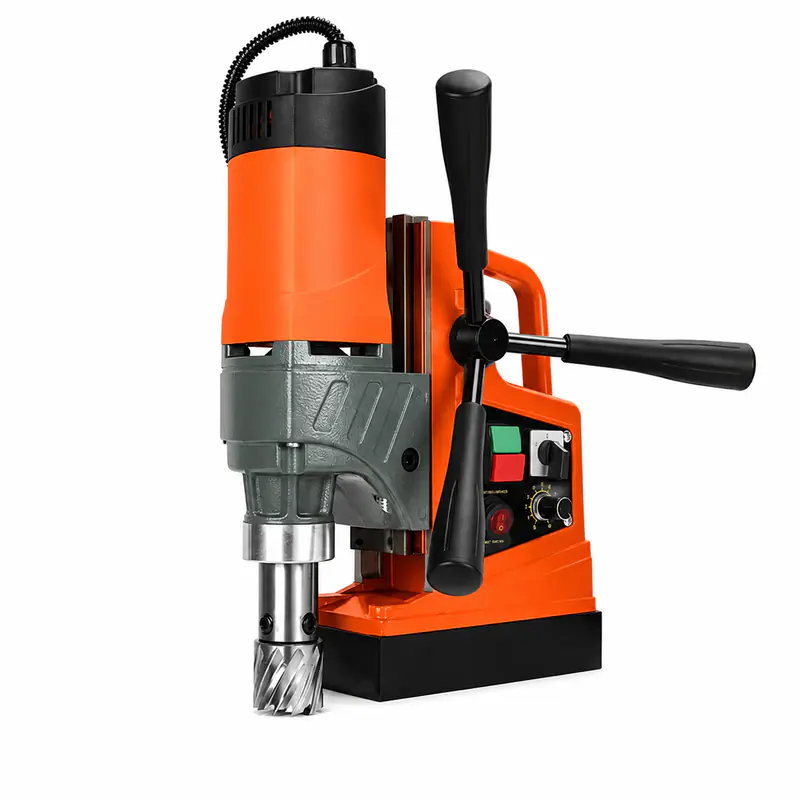
A standard model gives procurement a fixed specification reference and reduces unnecessary variation. Compare the 18 confirmed AXIMET model positions by hole requirement, workpiece, access, speed, stroke, weight and functions before requesting a change.
Within Custom vs Standard Magnetic Drill: Which Is Right for Your B2B Program?, the section “Choose standard when it already fits the job” should become a documented procurement check rather than a general discussion. Define the application, named model or configuration, responsible reviewer and controlled source used for the decision. If a value is not present in an applicable product table, quotation or written confirmation, keep it open. A similar name, photograph or headline specification does not prove that two configurations are equivalent. This section primarily controls evidence and acceptance.
Close “Choose standard when it already fits the job” with a verifiable answer and an owner for every remaining action. Confirm with AXIMET any interface, performance statement, certificate, inspection record, delivery term, minimum quantity or private-label detail that remains open. Do not fill the gap with an industry assumption or transfer data from a nearby model. Keeping technical facts, commercial conditions and OEM presentation separate makes the approval more useful for procurement, quality control and replenishment.
Use OEM presentation without changing product facts
For use oem presentation without changing product facts, record the requirement, controlled source, approval decision and every unresolved field before the purchase is released.
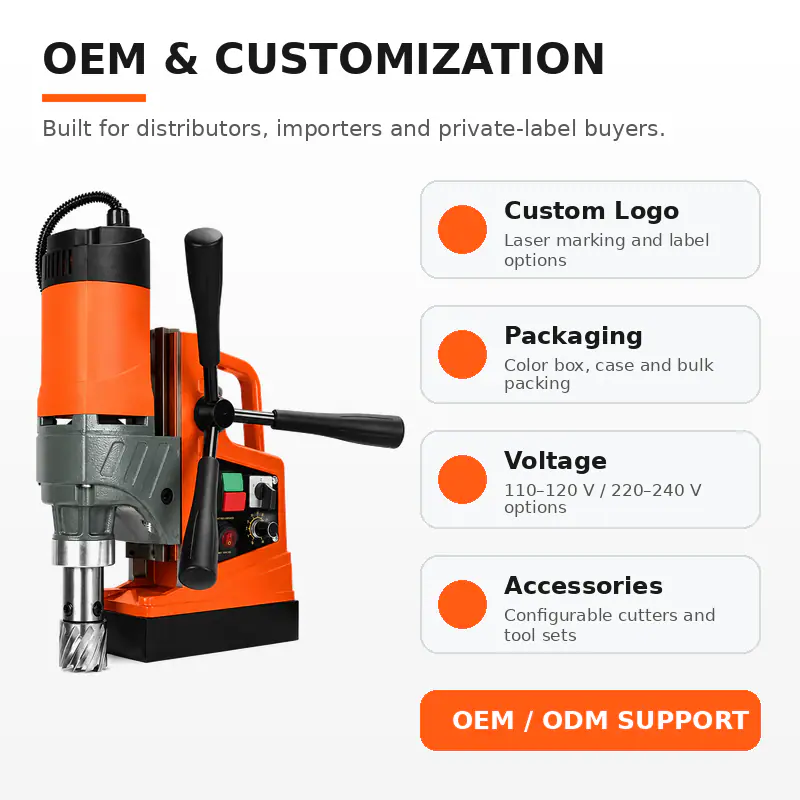
Confirmed AXIMET OEM scope includes coordination of logo, color, label, packaging and manuals. The approved artwork and market language should be attached to the same order record as the unchanged technical model.
Within Custom vs Standard Magnetic Drill: Which Is Right for Your B2B Program?, the section “Use OEM presentation without changing product facts” should become a documented procurement check rather than a general discussion. Define the application, named model or configuration, responsible reviewer and controlled source used for the decision. If a value is not present in an applicable product table, quotation or written confirmation, keep it open. A similar name, photograph or headline specification does not prove that two configurations are equivalent. This section primarily controls change control and repeat ordering.
Close “Use OEM presentation without changing product facts” with a verifiable answer and an owner for every remaining action. Confirm with AXIMET any interface, performance statement, certificate, inspection record, delivery term, minimum quantity or private-label detail that remains open. Do not fill the gap with an industry assumption or transfer data from a nearby model. Keeping technical facts, commercial conditions and OEM presentation separate makes the approval more useful for procurement, quality control and replenishment.
- Approved brand and logo files
- Color reference where applicable
- Rating and compliance label content
- Carton and packing-mark artwork
- Manual language and controlled model reference
- Sample or proof approval owner
Create a gate for real technical changes
For create a gate for real technical changes, record the requirement, controlled source, approval decision and every unresolved field before the purchase is released.
A requested technical difference must be reviewed for feasibility and cannot be promised from a blog page. Define the business reason, target application, required difference, validation evidence and document owner before commercial approval.
If a standard model satisfies the application, unnecessary technical variation can add approval, documentation and spare-part complexity without proven buyer value.
Within Custom vs Standard Magnetic Drill: Which Is Right for Your B2B Program?, the section “Create a gate for real technical changes” should become a documented procurement check rather than a general discussion. Define the application, named model or configuration, responsible reviewer and controlled source used for the decision. If a value is not present in an applicable product table, quotation or written confirmation, keep it open. A similar name, photograph or headline specification does not prove that two configurations are equivalent. This section primarily controls buyer risk and final approval.
Close “Create a gate for real technical changes” with a verifiable answer and an owner for every remaining action. Confirm with AXIMET any interface, performance statement, certificate, inspection record, delivery term, minimum quantity or private-label detail that remains open. Do not fill the gap with an industry assumption or transfer data from a nearby model. Keeping technical facts, commercial conditions and OEM presentation separate makes the approval more useful for procurement, quality control and replenishment.

Continue with the controlledmagnetic drill range,annular cutter families,AXIMET company and quality information, orsend a procurement requirement.
Frequently Asked Questions
What can AXIMET customize?
Confirmed scope includes logo, color, labels, packaging and manual coordination. Exact availability is confirmed for the selected order.
Is a private-label magnetic drill technically different?
Not necessarily. OEM presentation can use a controlled standard model without changing its specifications.
When should a buyer choose a standard model?
Choose standard when a confirmed model meets the application, function, electrical and accessory requirements.
Can capacity or speed be changed as ordinary OEM work?
No assumption should be made. Technical changes require separate feasibility, validation and documentation.
What should importers approve before production?
Approve the technical model, accessory scope, electrical version, artwork, labels, packaging, manuals and any validated changes.
How should distributors avoid too many variants?
Start with common local applications and add a variant only when documented demand and a clear requirement justify it.
Conclusion
The best B2B configuration is the least complex controlled option that meets the application and market requirement. Use standard models where they fit, apply OEM presentation as a separate approval stream, and gate genuine technical changes through documented feasibility and validation.