Start with a traceable model and application match
For start with a traceable model and application match, record the requirement, controlled source, approval decision and every unresolved field before the purchase is released.
Send the workpiece material and shape, hole diameter and depth, working position, available mounting area and required functions. The supplier should map these requirements to a specific model rather than offer a generic magnetic drill.
AXIMET’s confirmed comparison data covers 18 models with listed maximum drilling diameters from 13 mm to 120 mm and rated input from 1000 W to 2000 W. Those portfolio limits do not make every model suitable for every hole.
Within Magnetic Drill Supplier Checklist for Industrial Procurement Teams, the section “Start with a traceable model and application match” should become a documented procurement check rather than a general discussion. Define the application, named model or configuration, responsible reviewer and controlled source used for the decision. If a value is not present in an applicable product table, quotation or written confirmation, keep it open. A similar name, photograph or headline specification does not prove that two configurations are equivalent. This section primarily controls application and model identity.
Issue the same requirement sheet to every supplier and record inclusions, exclusions, deviations and pending answers in separate fields. This prevents a price difference from hiding a different machine, cutter interface, accessory package, electrical version or documentation scope. Product and factory images can support identification and process context, but they are not substitutes for model traceability, compatibility confirmation, inspection criteria or order-specific evidence.
Consider how the decision will be used after quotation. The receiving team should be able to verify product identity, quantity, marking, visible condition, electrical or interface references and agreed package contents. Warehouse and sales teams need the same controlled names so compatible machines, cutters and accessories are not mixed. For a repeat order, cite the approved revision and review any proposed substitute as a new controlled option.
Close “Start with a traceable model and application match” with a verifiable answer and an owner for every remaining action. Confirm with AXIMET any interface, performance statement, certificate, inspection record, delivery term, minimum quantity or private-label detail that remains open. Do not fill the gap with an industry assumption or transfer data from a nearby model. Keeping technical facts, commercial conditions and OEM presentation separate makes the approval more useful for procurement, quality control and replenishment.
Audit the quotation line by line
For audit the quotation line by line, record the requirement, controlled source, approval decision and every unresolved field before the purchase is released.
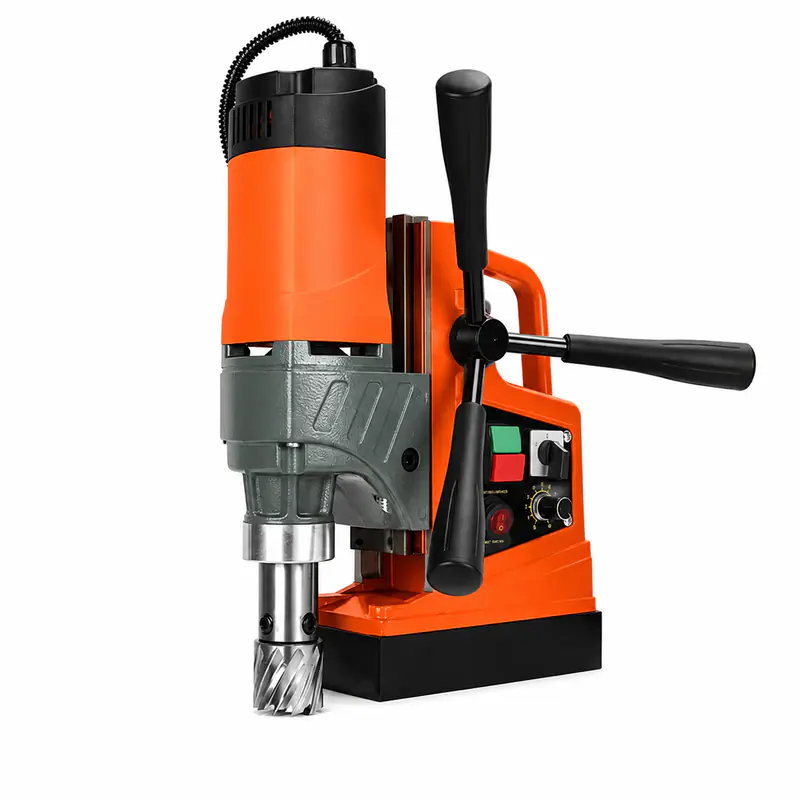
A useful quotation identifies the machine model, controlled capacity, electrical reference, cutter interface, included accessories and commercial presentation. Unknown items should be marked for confirmation instead of silently assumed.
Within Magnetic Drill Supplier Checklist for Industrial Procurement Teams, the section “Audit the quotation line by line” should become a documented procurement check rather than a general discussion. Define the application, named model or configuration, responsible reviewer and controlled source used for the decision. If a value is not present in an applicable product table, quotation or written confirmation, keep it open. A similar name, photograph or headline specification does not prove that two configurations are equivalent. This section primarily controls technical and commercial comparability.
Close “Audit the quotation line by line” with a verifiable answer and an owner for every remaining action. Confirm with AXIMET any interface, performance statement, certificate, inspection record, delivery term, minimum quantity or private-label detail that remains open. Do not fill the gap with an industry assumption or transfer data from a nearby model. Keeping technical facts, commercial conditions and OEM presentation separate makes the approval more useful for procurement, quality control and replenishment.
| Procurement checkpoint | Evidence to request | Risk if omitted |
|---|---|---|
| Model identity | Model code and matching specification row | Specifications may belong to another configuration |
| Application fit | Workpiece, diameter, depth and working position review | Headline capacity may not fit the setup |
| Cutter system | Cutter family, interface, pilot pin and adaptor | Machine and tool may not connect |
| Electrical | Voltage, frequency and plug in order documents | Destination-market mismatch |
| Supply scope | Included and optional items listed separately | Landed comparison becomes unreliable |
Check QC evidence that relates to the product
For check qc evidence that relates to the product, record the requirement, controlled source, approval decision and every unresolved field before the purchase is released.
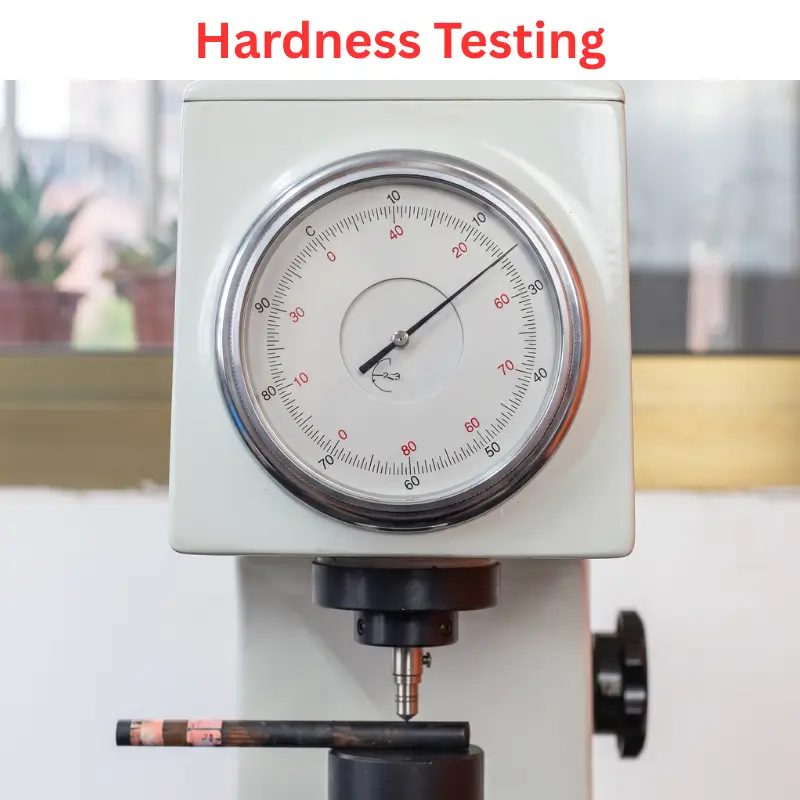
Relevant controls in confirmed AXIMET materials include material and dimensional inspection, hardness and runout testing, machine-function checks, and drilling or cutting tests. Ask which records apply to the quoted machine and order rather than accepting a generic quality slogan.
Certification names or test reports should only be attached when they apply to the ordered product and destination requirements.
Within Magnetic Drill Supplier Checklist for Industrial Procurement Teams, the section “Check QC evidence that relates to the product” should become a documented procurement check rather than a general discussion. Define the application, named model or configuration, responsible reviewer and controlled source used for the decision. If a value is not present in an applicable product table, quotation or written confirmation, keep it open. A similar name, photograph or headline specification does not prove that two configurations are equivalent. This section primarily controls evidence and acceptance.
Close “Check QC evidence that relates to the product” with a verifiable answer and an owner for every remaining action. Confirm with AXIMET any interface, performance statement, certificate, inspection record, delivery term, minimum quantity or private-label detail that remains open. Do not fill the gap with an industry assumption or transfer data from a nearby model. Keeping technical facts, commercial conditions and OEM presentation separate makes the approval more useful for procurement, quality control and replenishment.
Separate OEM presentation from technical configuration
For separate oem presentation from technical configuration, record the requirement, controlled source, approval decision and every unresolved field before the purchase is released.
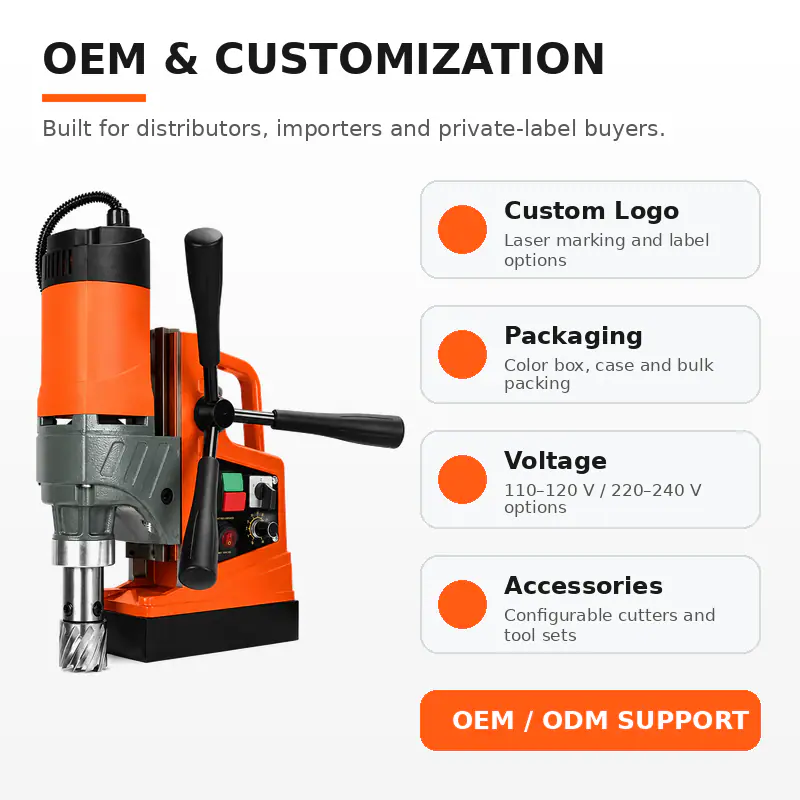
AXIMET has confirmed support for logo, color, label, packaging and manual coordination. These options do not automatically change motor, capacity, speed, stroke or interface. Record branding decisions in a separate approval block and keep the technical model fixed.
Within Magnetic Drill Supplier Checklist for Industrial Procurement Teams, the section “Separate OEM presentation from technical configuration” should become a documented procurement check rather than a general discussion. Define the application, named model or configuration, responsible reviewer and controlled source used for the decision. If a value is not present in an applicable product table, quotation or written confirmation, keep it open. A similar name, photograph or headline specification does not prove that two configurations are equivalent. This section primarily controls change control and repeat ordering.
Close “Separate OEM presentation from technical configuration” with a verifiable answer and an owner for every remaining action. Confirm with AXIMET any interface, performance statement, certificate, inspection record, delivery term, minimum quantity or private-label detail that remains open. Do not fill the gap with an industry assumption or transfer data from a nearby model. Keeping technical facts, commercial conditions and OEM presentation separate makes the approval more useful for procurement, quality control and replenishment.
Use a supplier scorecard before approval
For use a supplier scorecard before approval, record the requirement, controlled source, approval decision and every unresolved field before the purchase is released.
Score only what can be evidenced, and record open points instead of turning them into assumed strengths.
Within Magnetic Drill Supplier Checklist for Industrial Procurement Teams, the section “Use a supplier scorecard before approval” should become a documented procurement check rather than a general discussion. Define the application, named model or configuration, responsible reviewer and controlled source used for the decision. If a value is not present in an applicable product table, quotation or written confirmation, keep it open. A similar name, photograph or headline specification does not prove that two configurations are equivalent. This section primarily controls buyer risk and final approval.
Close “Use a supplier scorecard before approval” with a verifiable answer and an owner for every remaining action. Confirm with AXIMET any interface, performance statement, certificate, inspection record, delivery term, minimum quantity or private-label detail that remains open. Do not fill the gap with an industry assumption or transfer data from a nearby model. Keeping technical facts, commercial conditions and OEM presentation separate makes the approval more useful for procurement, quality control and replenishment.
- Controlled model and specification mapping
- Application and accessory compatibility review
- Relevant QC and inspection evidence
- Clear included-versus-optional scope
- Electrical, labeling and manual confirmation
- Documented change and sample approval path
- Named owner for technical and commercial questions
Continue with the controlledmagnetic drill range,annular cutter families,AXIMET company and quality information, orsend a procurement requirement.
Frequently Asked Questions
What documents should a magnetic drill supplier provide?
Request the model specification, quotation scope, electrical configuration, accessory list, applicable inspection evidence and agreed labeling or manual files.
Should I compare suppliers by motor power?
No. Compare hole range, depth, workpiece, mounting, speed, stroke, functions, interface and supply scope together.
How do I verify annular cutter compatibility?
Provide the machine model, cutter material, diameter, depth, shank and pilot-pin requirement for confirmation as one system.
What QC checks matter?
Use product-relevant evidence such as dimensional, hardness, runout, machine-function and drilling or cutting checks where applicable.
Can OEM packaging replace technical approval?
No. Branding and packaging are commercial presentation; the technical model and specification still require separate approval.
What should be fixed before a purchase order?
Fix the model, electrical setup, included accessories, quantity, packaging, labels, manuals and any approved changes in the order documents.
Conclusion
Supplier evaluation should reduce ambiguity before the order, not merely compare claims. A controlled model mapping, application review, compatible cutter package, relevant inspection evidence and clear commercial scope give procurement teams a more reliable basis for approval.